FRACTURE FILLED DIAMONDS
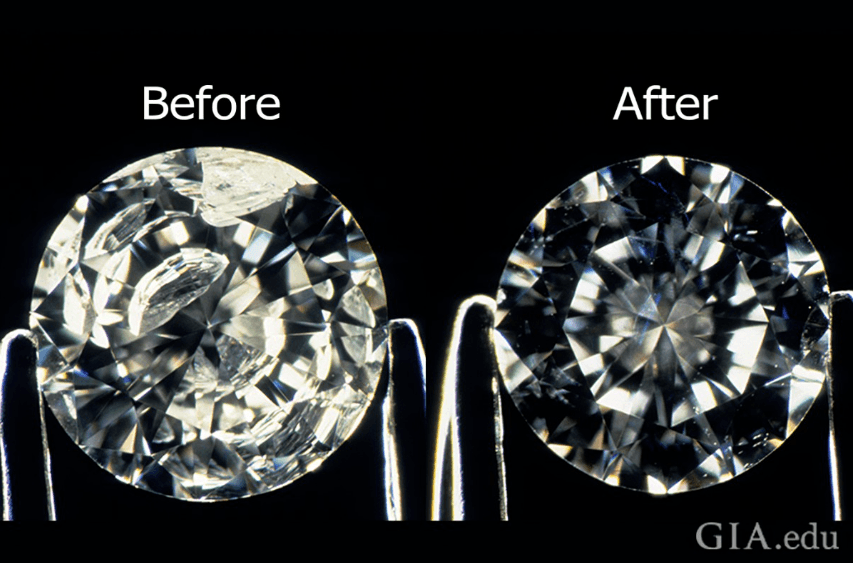
Fracture filling is a technique that improves the appearance of a diamond by injecting a substance into its open cracks or inclusions. In most cases, it is a clear resin. Open inclusions that originate on the surface of a diamond allow the substance to be injected into the stone to subsequently improve its appearance. The substance is similar to the diamond itself and is referred to as a “filler”. Fracture filling was invented by Zvi Yehuda in 1982 and can make diamonds look more clear, but also slightly less colorful. A diamond that once appeared to be “unsalable” because the inclusions may have been “hard” and easily seen by the naked eye, now can find a home with those who may accept a “treated” diamond. Fracture filled diamonds can be identified by looking for flash effects(almost like a rainbow inside the diamond), unknown substances, or air bubbles inside them.
Fracture filling diamonds have some pros and cons that you should consider before buying them.
Some of the pros are:
- Fracture filling can make diamonds look more clear (less imperfect) by hiding their cracks or inclusions.
- Fracture filling can allow you to get a higher-carat weight diamond for a lower price than a non-enhanced diamond of the same quality.
- Fracture filling can preserve the natural origin of the diamond, unlike other treatments that alter its structure or color.
Some of the cons are:
- Fracture filling is not permanent and can be damaged by heat, pressure, chemicals, or cleaning methods
- Fracture filling can affect the brilliance or color of the diamond by creating odd optical effects or making it cloudy or hazy over time.
- Fracture filling can be hard to detect without professional equipment and may not be disclosed by some sellers.
- Fracture-filled stones are not sought after and as such the value of a diamond is GREATLY diminished with treatment, just like a laser-drilled stone.
*Some links on our site may earn us a small commission at NO EXTRA cost to you, helping us keep our content free*