4C'S THE DIAMOND BASICS
The 4Cs, is it the beginning or the end, or truly just the beginning of the end? At  we know that it is just the beginning and by no means is it the end. The complexity of diamonds is much more than a rudimentary concept created in the 1950s to help market diamonds. Regardless of this, we present our interpretation of the 4Cs and a touch more as we endeavor to educate.
1. CUT is of paramount importance!
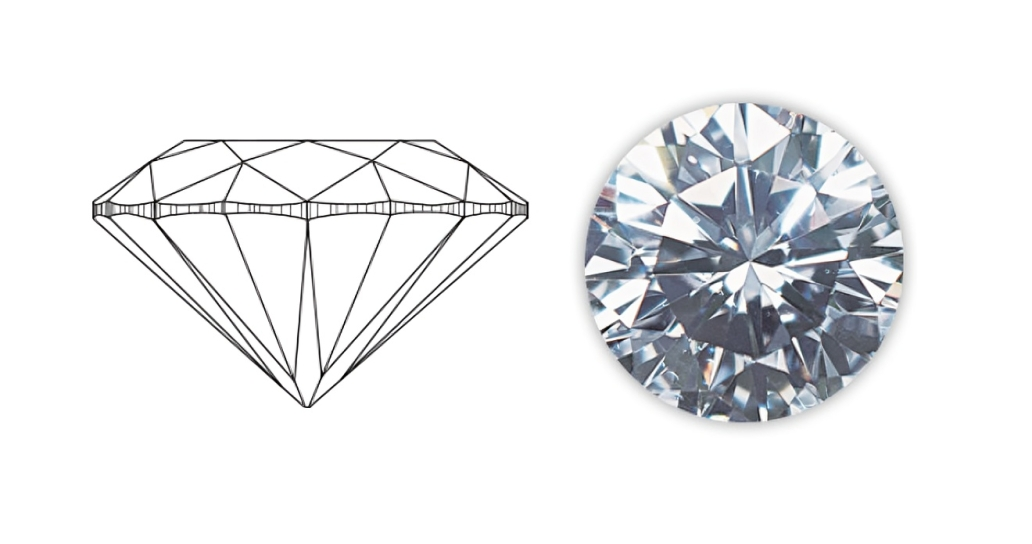
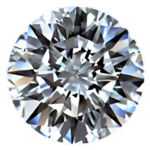
CUT refers to how a diamond’s facets are aligned/placed/proportioned/polished to maximize the diamond's brilliance and sparkle. It is very simple if a diamond is poorly CUT, the diamond will appear lackluster, without fire, scintillation, and brilliance(factors that are determined by proportion and facet alignment).
Excellent
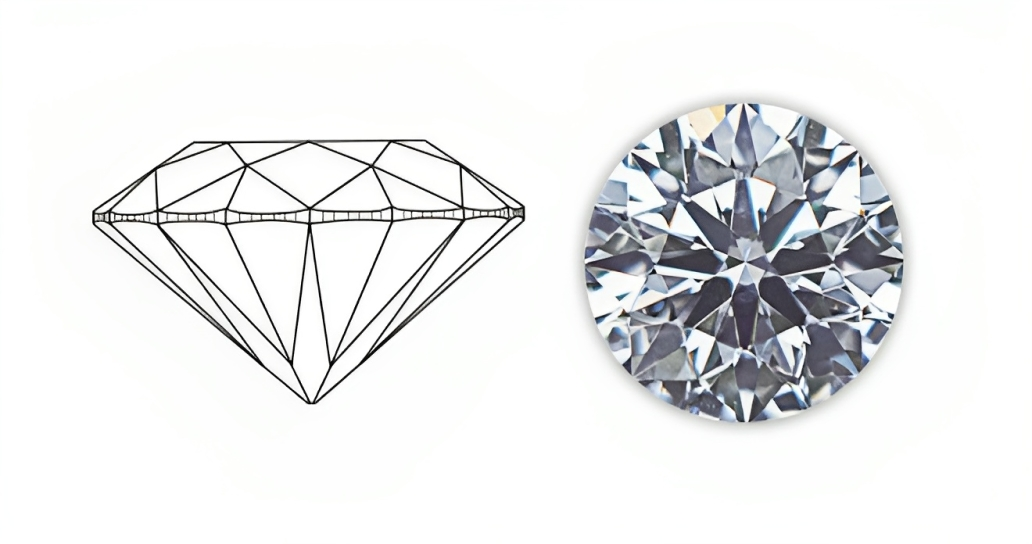
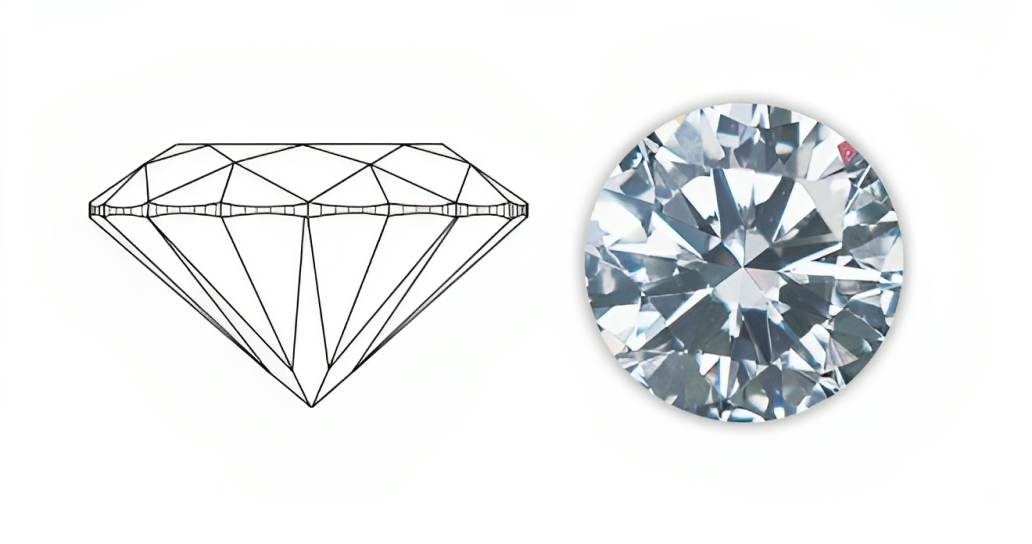
The diamond, which has an even pattern of bright and dark areas, scores in the top category for all grade-setting determinants.
Diamond
Cut Grading
Move the slider to view examples of different diamond cut grades. Click images to view different cuts.
GIA Cut Scale
- Excellent
- very good
- good
- fair
- poor
2. CARAT = WEIGHT
Carat = Weight of the diamond. 1 CARAT is equal to 200 milligrams. There are 100 points for each CARAT. A diamond that weighs 100 points actually weighs 1 CARAT. A diamond that weighs .75 = one 3/4 CARAT and so on. The heavier the CARAT weight, the rarer that diamond becomes within its category and thus the more expensive it will be.
FUN FACT: The origin of CARAT actually comes from when a CAROB BEAN was used as a unit of measurement in ancient times.
*Contrary to popular belief, CARAT DOES NOT EQUAL SIZE! CARAT IS EQUAL TO THE WEIGHT OF THE DIAMOND. SIZE IS EQUAL TO THE ACTUAL MILLIMETER MEASUREMENTS OF THE DIAMOND.
3.00mm.
-
+
3.00mm.
-
+
Diamond images are for reference only and may vary based on screen size.
3. CLARITY = PURITY
Clarity = Purity scale that is associated with how “clean” or “imperfect” a diamond is. The diamond CLARITY grading scale is:
FL = Flawless
IF = Internally Flawless
VVS1 = Very Very Slightly Included 1
VVS2 = Very Very Slightly Included 2
VS1 = Very Slightly Included 1
VS2 = Very Slightly Included 2
SI1 = Slightly Included 1
SI2 = Slightly Included 2
I1 = Imperfect 1
I2 = Imperfect 2
I3 = Imperfect 3
CLARITY is extremely important when determining the value and beauty of a diamond. Very often CLARITY plays a direct role in light performance(brilliance or lack thereof) as imperfections directly impact rays of light. Imagine water(ray light)running down a stream and the water hits a rock(an imperfection in a diamond), it then must change course and is forced in another direction.
The fewer imperfections you have, all else being equal, the more brilliance and sparkle a diamond should have.
CLARITY not only may play a role in light performance, but it also may directly affect the integrity of the diamond. A heavily imperfect stone, or even a stone with one inclusion, may have one or multiple “stress” points. Open inclusions such as Feathers, Etched channels, Indented Naturals, Knots, and Cavities are inclusions one should pay particular attention to. The location and size of these inclusions could make the diamond susceptible to breakage. will discuss all types of inclusions and issue our thoughts on each.
Diamond grading, to this point, is subjective(it is an individual's opinion based on the interpretation of guidelines). Diamond grading laboratories vary greatly in their own measuring practices and even within themselves, there are tremendous inconsistencies. The GIA, EGL, GCAL, IGI, HRD and others have developed their own standards for grading. Though on its face, they conform to the same grading scales, the grades themselves vary greatly from lab to lab.
It is documented that the GIA, Gemological Institute of America, maintains the most strict grading standards throughout the industry(related to COLOR and CLARITY grading). Translated simply: if you take a stone from any of the labs other than GIA and then submit that stone to GIA for grading, there is an extremely high likelihood that the diamond will come back with a downgraded color or clarity or both!
FL
FLAWLESS
No inclusions and no blemishes visible to a skilled grader using 10x magnification.
Diamond
Clarity Grading
Move the slider to view examples of different diamond clarity grades. Click marker for more information.
GIA Cut Scale
- FL
- IF
- VVS1
- VVS2
- VS1
- VS2
- SI1
- SI2
- I1
- I2
- I3
4. Color
Understand that COLOR, though critical in having a direct effect on the price of a diamond, IS NOT THE MOST VISUALLY IMPORTANT FACTOR, when selecting a diamond. You will be able to find COLOR representations from and you will note that COLOR is extremely difficult to recognize with the naked eye. The question you will have to answer for yourself will be, “Do I need to buy an F color IF I CAN’T SEE THE DIFFERENCE BETWEEN that and a G or H color? “
Color is graded from D all the way to X, Y, and Z. As you descend down the scale, the diamond color begins to show as a yellow or greenish yellow in color….to the untrained eye, the lower the color, the more it translates to a “warm” feeling in the diamond, whereas a D, E or F(COLORLESS) have a feeling equated to “brightness”.
*Some links on our site may earn us a small commission at NO EXTRA cost to you, helping us keep our content free*