PRECIOUS COLORED GEMS
SAPPHIRES
A sapphire is a precious gemstone that is a variety of the mineral corundum. It is composed of Aluminum oxide with trace amounts of other elements such as magnesium, titanium, vanadium, chromium, iron, and gallium. Sapphire is usually thought of as a blue stone, but it can also be other colors such as white, pink, yellow, green, purple, or orange.
Quick Tips:
- Best Online Retailers: Lebish and James Allen
- Color: Strong vivid velvety blue is best
- Clarity: The fewer and less visible the inclusions, the more valuable the sapphire.
What to look for when buying a sapphire
Natural blue sapphires are beautiful and valuable gemstones that come in different shades of blue. Some of the factors to look for when buying a natural blue sapphire are:
- Color: This is the most important element when assessing the value of a sapphire. The most sought after and prized color is a strong vivid velvety blue to violet blue in medium to medium-dark tones. The best color for a natural blue sapphire is an intense, velvety, deep royal blue, which is considered AAA quality. A sapphire can only be classified as blue if the modifying colors take up no more than 15% of the overall color.
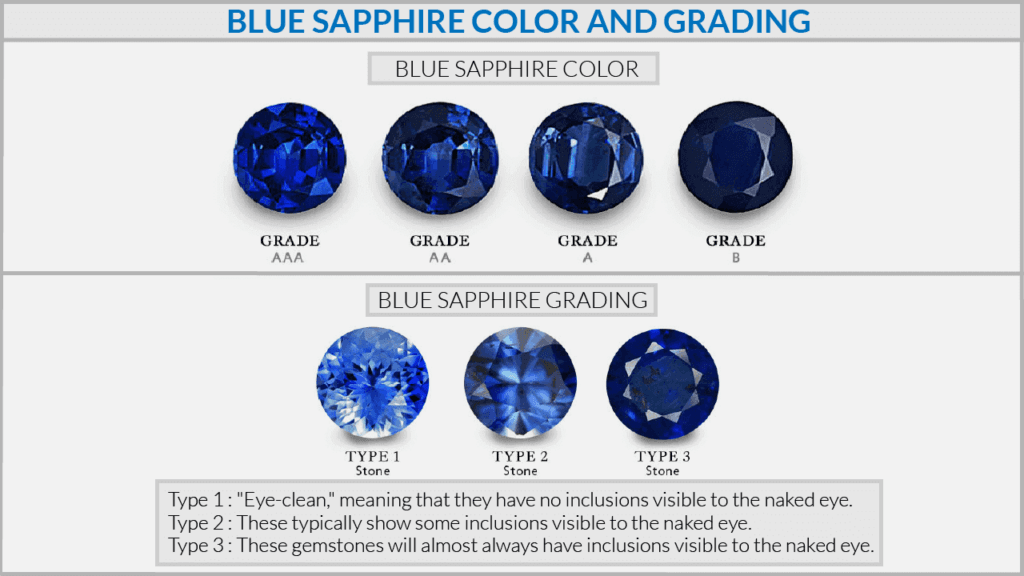
- Origin: The origin of a sapphire can affect its price and quality. Some of the most famous and desirable origins are Kashmir, Burma, Sri Lanka, Madagascar, and Australia. Kashmir sapphires are known for their exceptional color and rarity and are generally the most expensive ones. When buying or selling a certified Kashmir blue sapphire, it's crucial to demonstrate where the gem originated; this is accomplished via the review by a reputable grading laboratory.
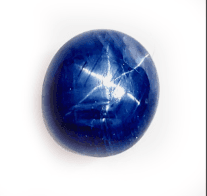
- Clarity: Clarity refers to the amount and visibility of inclusions or flaws in a sapphire, just as in a diamond. Inclusions can affect the brilliance and transparency of a sapphire, and lower its value. However, some inclusions can also enhance the beauty and uniqueness of a sapphire, such as the silk inclusions that create a star effect in star sapphires. Generally, the fewer and less visible the inclusions, the more valuable the sapphire.
- Cut: Cut refers to the shape and proportions of a sapphire. A well-cut sapphire should maximize the color, brilliance, and fire of the gem, and minimize the appearance of inclusions. Some of the common shapes for sapphires are oval, round, cushion, pear, marquise, and emerald.
How to determine if a sapphire is real
There are different ways to determine if a sapphire is real or synthetic, such as looking for flaws, performing a breath test, checking for scratches, searching for bubbles or lines, and asking a jeweler or getting it certified at a grading laboratory. A real sapphire will: usually have some imperfections, clear up quickly after being fogged, resist scratching, will not have air bubbles or intersecting lines, and should be certified by a gemologist.
RUBIES
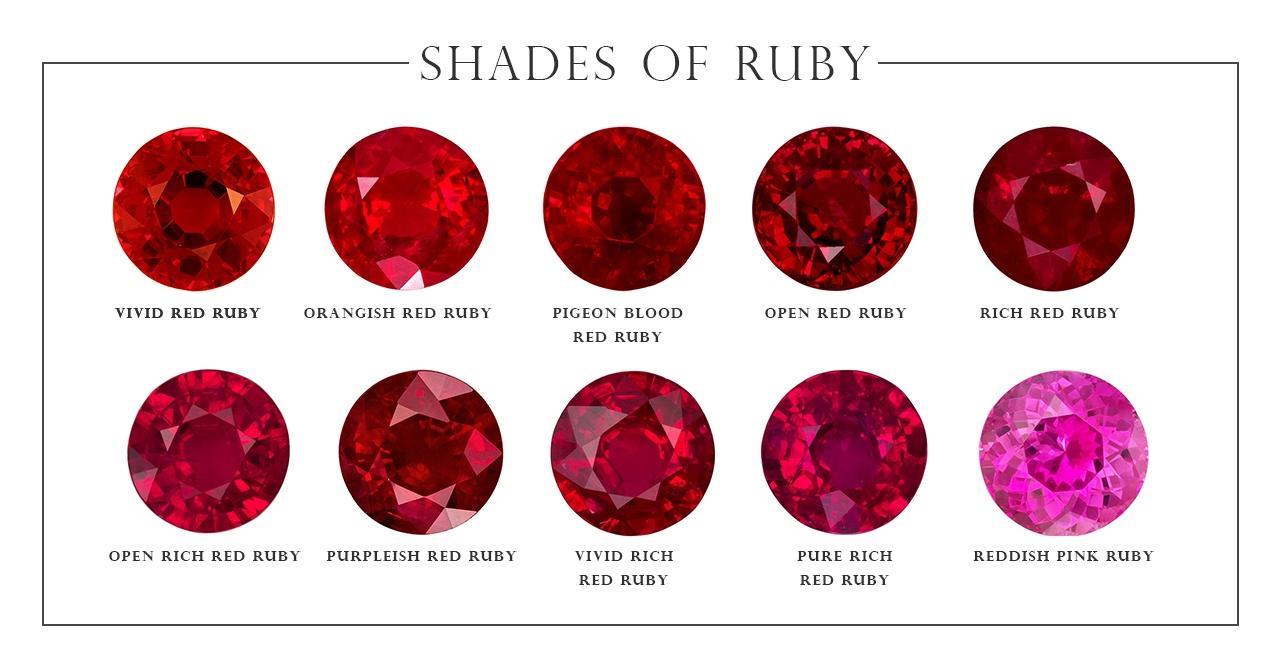
Ruby is a pinkish-red to blood-red colored gemstone, a variety of the mineral corundum(aluminum oxide). The color comes from traces of chromium. There can be quite a variety of range in colors from blood-red to orangy-red, purple-red, brown-red or even pink.
Quick Tips:
- Best Online Retailers: Lebish and James Allen
- Color: The color should be vivid, intense, and uniform
- Clarity: The fewer and less visible the inclusions, the more valuable the ruby
What to look for when buying a ruby
When buying a ruby, you should look for the following factors:
- Color: The color of a ruby is the most important factor in determining its value and quality. The most prized rubies have a blood-red color with a slight hint of blue. The color should be vivid, intense, and uniform. The GIA grades color according to hue, saturation, and tone. When in search of a gemstone such as a ruby, you may find a wide variety of options here: James Allen
- Clarity: Natural rubies will have some type of inclusions or flaws, which can affect their transparency and brilliance. However, some inclusions can also create desirable effects, such as the star ruby phenomenon1. The fewer and less visible the inclusions, the more valuable the ruby.
- Cut: Rubies come in different cuts, such as round, oval, pear, marquise, cushion, emerald, and princess. The cut refers to the shape, symmetry, proportions, and polish of the ruby, as well as how it reflects light and displays color The cut should enhance the beauty and durability of the ruby.
- Carat: Carat is the unit of weight for gemstones. The larger the ruby, the more rare and expensive it is. However, carat is not the only factor that affects the price of a ruby. Color, clarity, and cut are also important. A small ruby with high-quality color and clarity can be more valuable than a large ruby with low-quality color and clarity.
- Enhancements: Most rubies undergo some type of enhancement or treatment to improve their color, clarity, or durability. Some common enhancements are heat treatment, fracture filling, diffusion, and irradiation. Enhancements can affect the value and quality of the ruby, as well as how it should be cared for. You should always ask about the enhancements the ruby has undergone and how that may affect its properties and value.
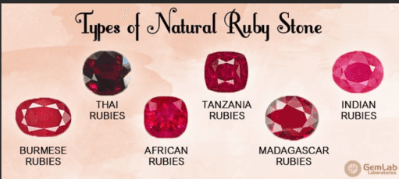
- Origin: The origin of a ruby can also affect its value and quality. Some of the most famous and sought-after sources of rubies are Burma (Myanmar), Thailand, Sri Lanka, Madagascar, Tanzania, and Mozambique. However, origin is not a guarantee of quality, and you should always judge a ruby based on its individual characteristics.
How to determine if a ruby is real
There are several ways to tell if a ruby is real, such as:
- Checking the color and shine: Real rubies have a deep, vivid, almost "stoplight" red color and glow with a fire-like brilliance. Fake rubies are often dull, and not bright.
- Comparing the ruby to a shard of red glass: Rubies and other varieties of sapphire are often faked as glass. If you have a piece of red glass, compare it to your ruby. If they look very similar, then the ruby is probably fake.
- Look for flaws/inclusions! Real rubies usually have some inclusions or flaws that are visible under magnification. These can be tiny bubbles, cracks, or mineral traces. Fake rubies are often flawless or have artificial-looking inclusions.
- Using the scratch test: Rubies are very hard and durable, ranking 9 on the Mohs scale of hardness. They can scratch almost any other material, including steel and glass. Fake rubies are usually softer and can be scratched by these materials.
- Using the rub test: Rub the ruby firmly on a clean white surface, such as a piece of paper. If the ruby leaves a red mark on the surface, then it is fake. Real rubies will not leave any color behind.
- Price test: If the ruby is too cheap, then it is likely not a real ruby. Rubies are rare and valuable gems, and their prices reflect that. A high-quality ruby can cost thousands of dollars per carat, while a low-quality ruby can cost a few hundred dollars or less.
EMERALDS
A green emerald is a type of beryl mineral that has a rich, distinctly green color. The green color is derived from impurities of chromium or vanadium in the crystal structure. Emeralds are one of the most popular and valuable gemstones in the world. They are found in igneous, metamorphic, and sedimentary rocks in a few locations worldwide. The two best regions in the world for green emerald gemstones are Colombia and Zambia. Colombia is famous for producing the finest and most expensive emeralds in the world, with a vivid green color and high clarity. Zambia is known for mining deep green emeralds that are similar to those from Colombia, but smaller and clearer2. Other countries that produce emeralds are Brazil, Zimbabwe, Russia, Pakistan, Afghanistan, Madagascar, Ethiopia, and Zimbabwe. A brilliant website for emeralds is James Allen. They have very clear and comparable images and pricing to make it as easy to understand as possible.
Quick Tips:
- Best Online Retailers: Lebish and James Allen
- Color: Desired is a vivid and vibrant green hue, medium to dark tone, high saturation
- Clarity: Avoid too many as they will impact transparency and or durability
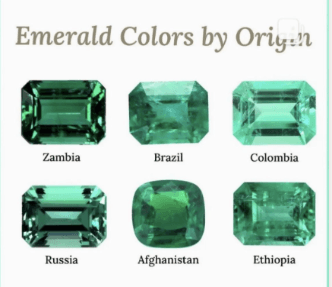
credit www.artofit.com
What to look for when buying an emerald
When buying a green emerald, you should look for the following factors:
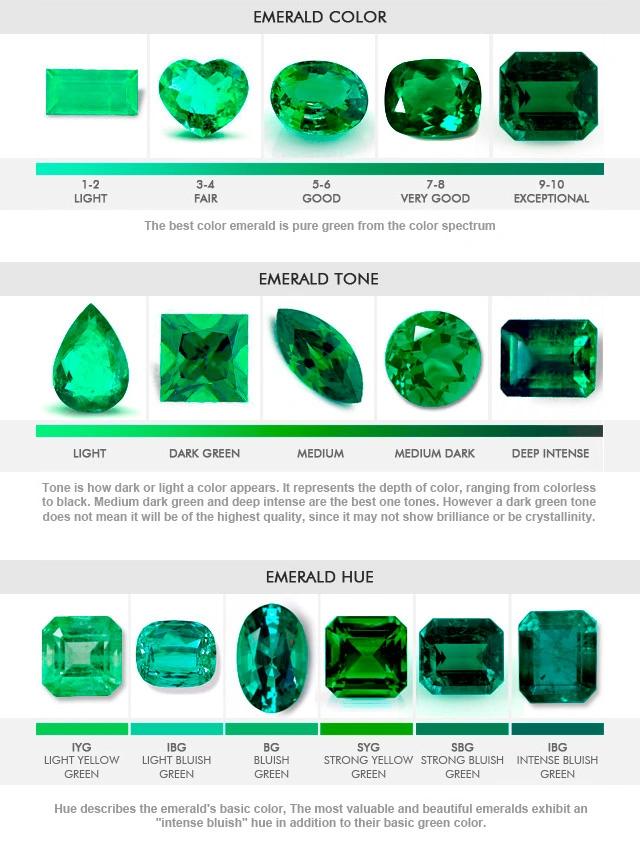
- Color: The color of an emerald is the most important quality factor. You should look for a vivid and vibrant green hue, with a medium to dark tone and a high saturation. You should also avoid emeralds that have too much blue or yellow in their color, or that have uneven color distribution.
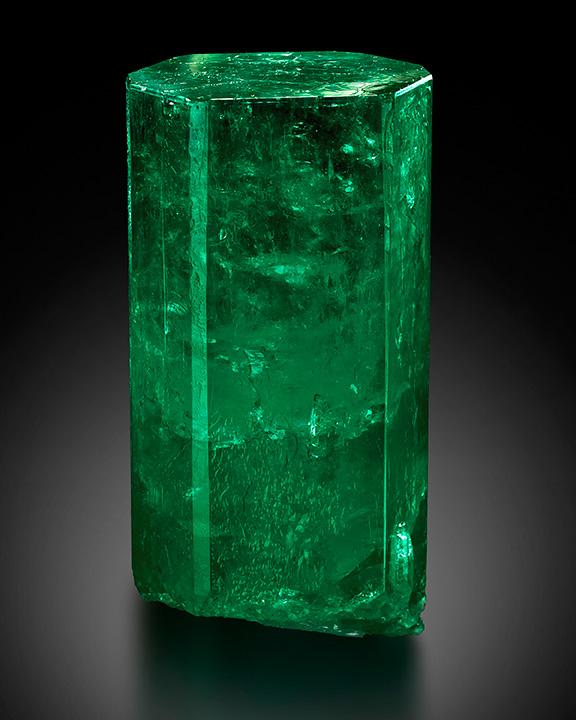
- Clarity: The clarity of an emerald refers to the amount and visibility of inclusions or fractures in the stone. Inclusions are natural and common in emeralds, and they are sometimes called the jardin (garden) of the stone. However, you should avoid emeralds that have too many or too large inclusions that affect the transparency or durability of the stone. You should also be aware that some emeralds are treated with oils or resins to improve their clarity, and this may affect their value and care.
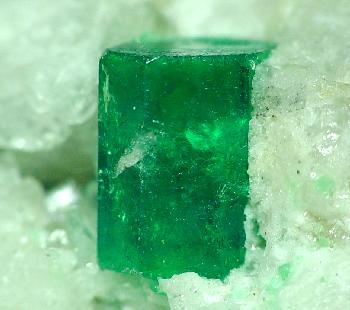
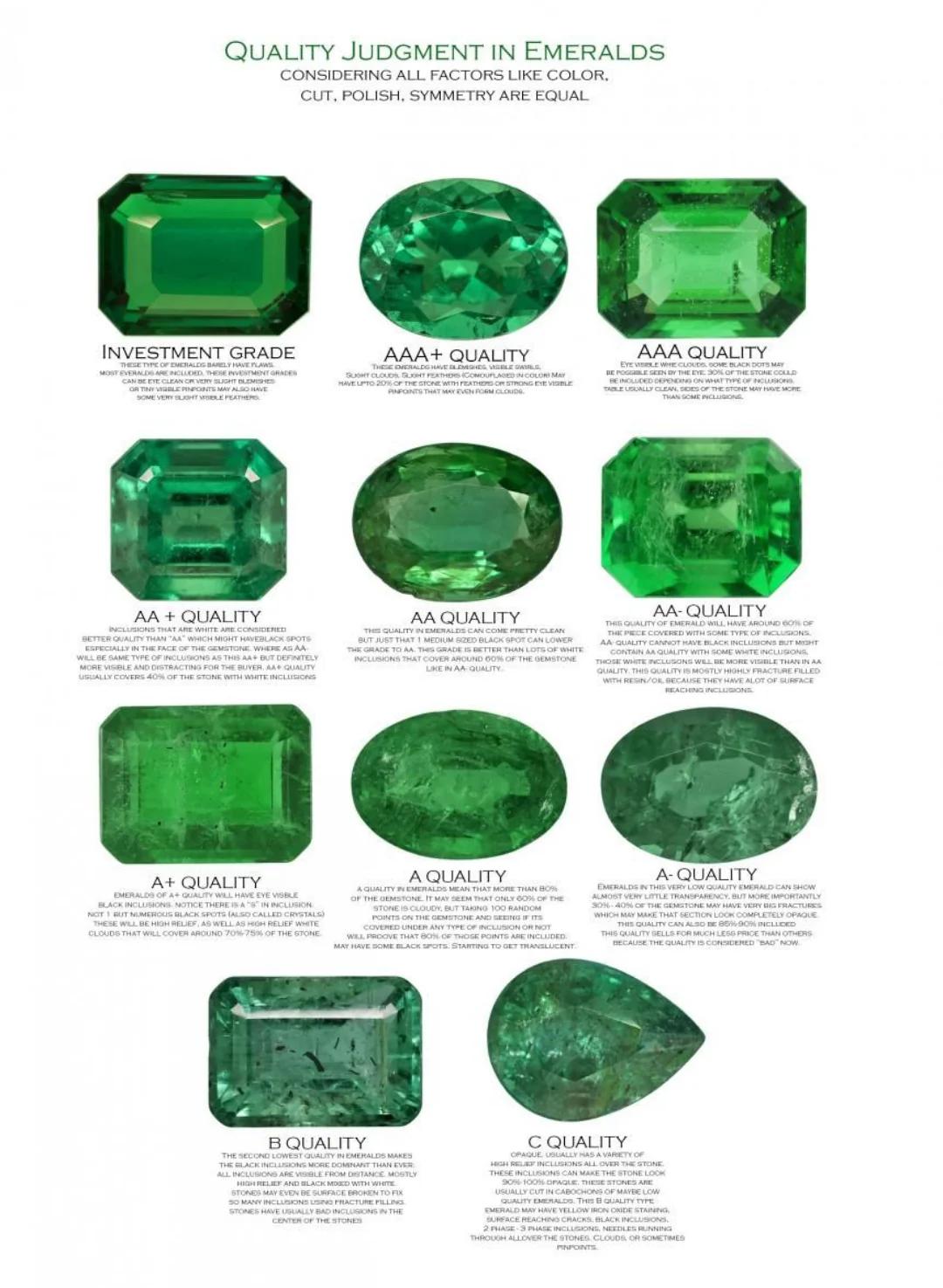
Credit: Navneetgems
- Carat: The carat of an emerald is the weight of the stone, and it affects the price and rarity of the stone. Larger emeralds are more rare and expensive than smaller ones, especially if they have good color and clarity. However, you should also consider the cut and shape of the emerald, as some cuts may make the stone look bigger or smaller than its actual carat weight.
- Cut: The cut of an emerald is the shape and style of the facets on the stone. The cut affects the brilliance, symmetry, and proportions of the stone, and it can also enhance or reduce the color and clarity of the stone. The most common cut for emeralds is the emerald cut, which is a rectangular or square shape with truncated corners and parallel facets. This cut is suitable for emeralds because it minimizes the pressure on the stone and reduces the risk of chipping or cracking. Other popular cuts for emeralds are oval, round, pear, and marquise.
Check out some extremely well-organized sites at Green Emerald Gemstones | JamesAllen.com
How to determine if an emerald is real
There are several ways to tell if an emerald is real, such as checking its color, inclusions, sparkle, and the water test. The water test is a simple way to check an emerald's authenticity; by placing the emerald in a glass of water and observing its color, a real emerald will radiate green light, while a fake emerald will not. Another way to use water is to place a drop of water on the stone and see if the droplet retains its shape. A real emerald will keep the water drop intact, while a fake emerald will disperse it. However, the best way to determine a genuine emerald is to take it to a gemstone dealer or send it to a legitimate grading laboratory.
*Some links on our site may earn us a small commission at NO EXTRA cost to you, helping us keep our content free*