GIA CUT GRADE EXPLAINED
Summary:
-The GIA ONLY gives a cut grade to Round Brilliant Diamonds. With thousands and thousands of round brilliants evaluated over a number of years, the GIA came up with their own proprietary Cut Grade system that was implemented in 2006.
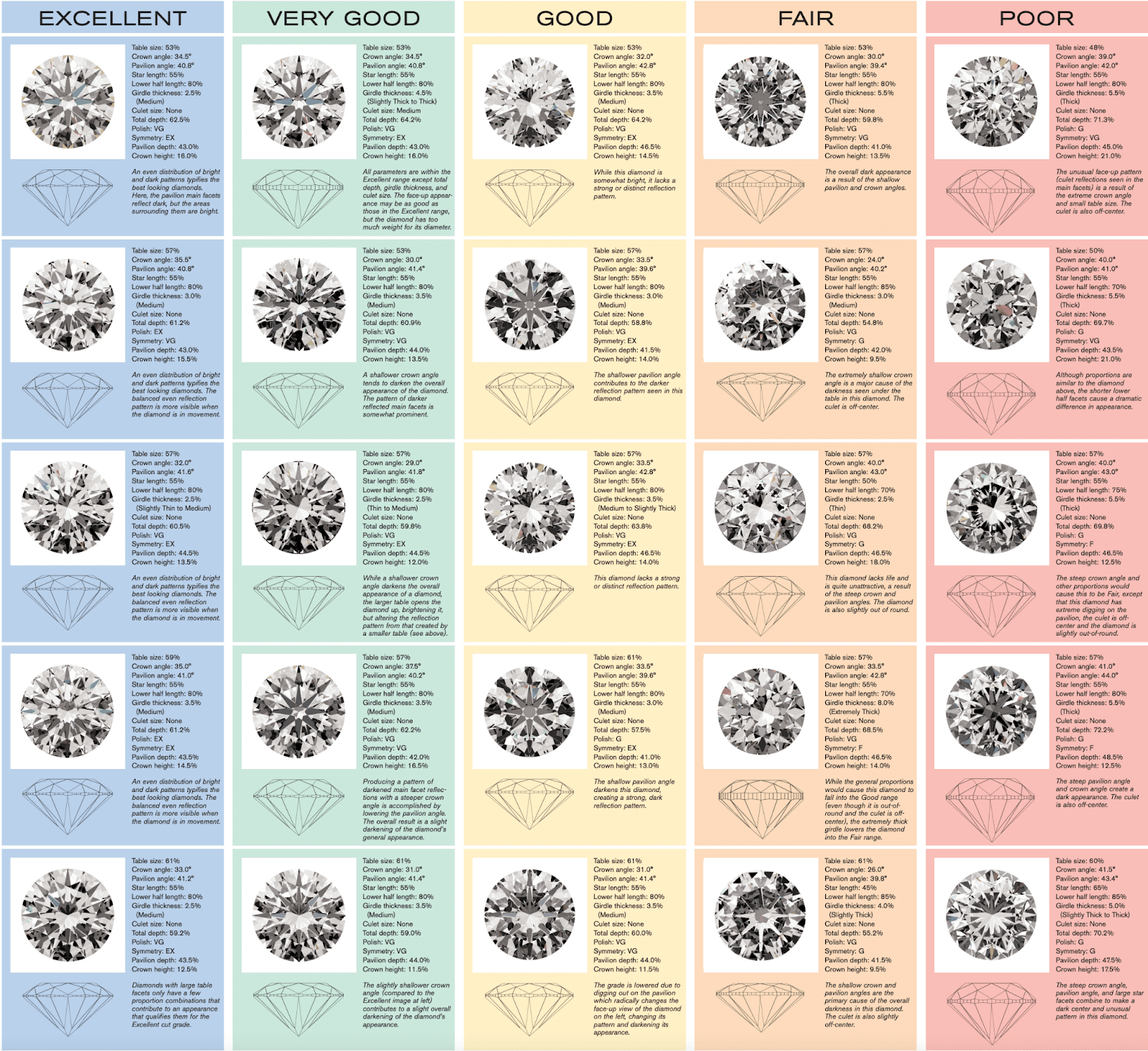
-The range of the cut Grade is Excellent, Very Good, Good, Fair, Poor(glossary).
-The GIA determines the cut grade for round brilliant diamonds by measuring specific parameters and through visual observations that are used to evaluate the face-up appearance, design, and craftsmanship of a diamond. In addition, computer modeling and observation testing are used to predict and compare the brightness, fire and scintillation of the diamond.
-The GIA uses a deductive system where the lowest value for any of the seven components determines the cut grade. There are:
Brightness: The total light reflected from the diamond
Fire: The amount of colored light reflected from the stone
Scintillation: The pattern of light and dark areas, and the flashes of light when light moves across a diamond's facets
Weight ratio: How well the diamond is designed for durability and optimal weight
Durability: The diamond's girdle thickness, which affects its durability
Polish: The shine of the diamond's surface
Symmetry: The symmetry of the diamond's facet arrangement, including the angles and relative positions of all the facets
- Learn more about gia at cut-grade
When choosing a GIA diamond, be sure to buy from a high-quality diamond vendor, like Blue Nile or James Allen.
Excellent
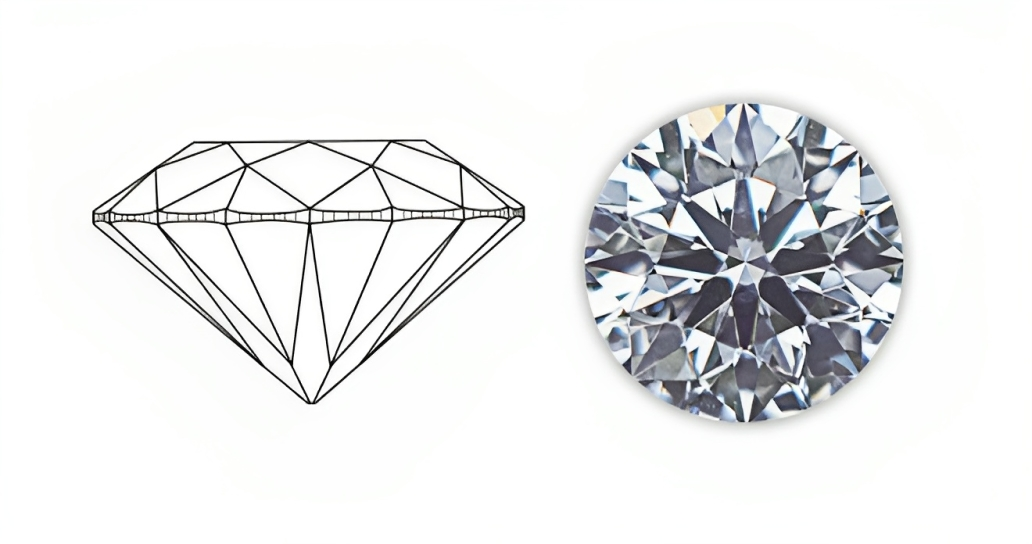
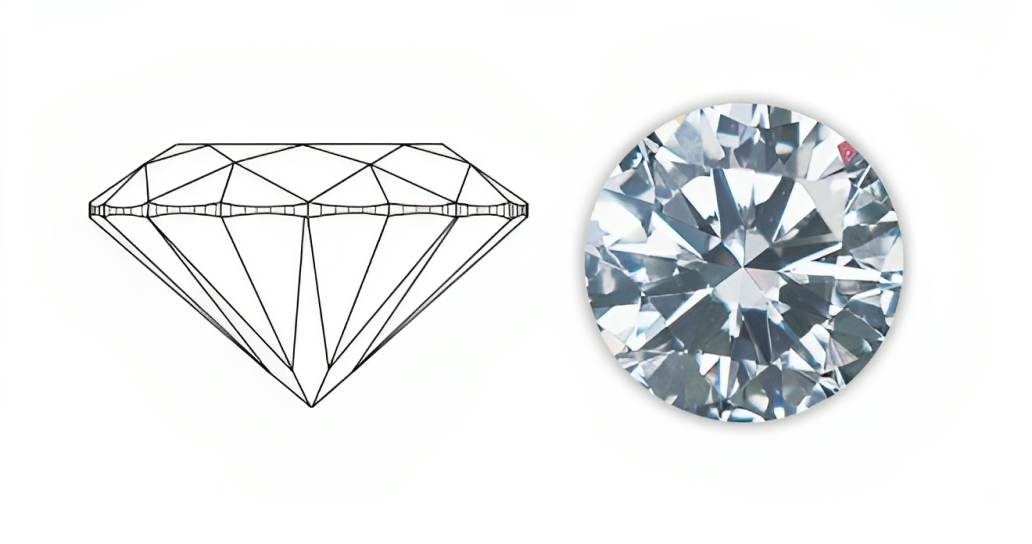
The diamond, which has an even pattern of bright and dark areas, scores in the top category for all grade-setting determinants.
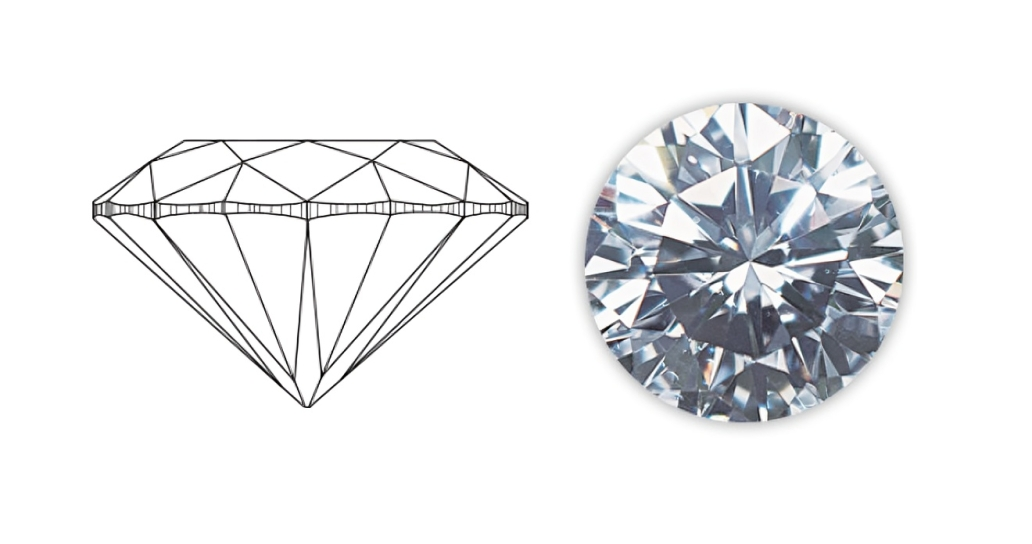
Diamond
Cut Grading
Move the slider to view examples of different diamond cut grades. Click images to view different cuts.
GIA Cut Scale
- Excellent
- very good
- good
- fair
- poor
Although a diamond might earn the top designation from the GIA or AGS, just having a certificate say Excellent, doesn’t always mean it is a beautiful diamond in person. Well over 60% of diamonds online have this designation making the consumer believe they are truly getting an "excellent" product. Unfortunately this is not the case. Some read well, but are actually poor quality, like this, while others are stunning like this 1.5-1.59 D-H VS1 Round Round Brilliant from James Allen.
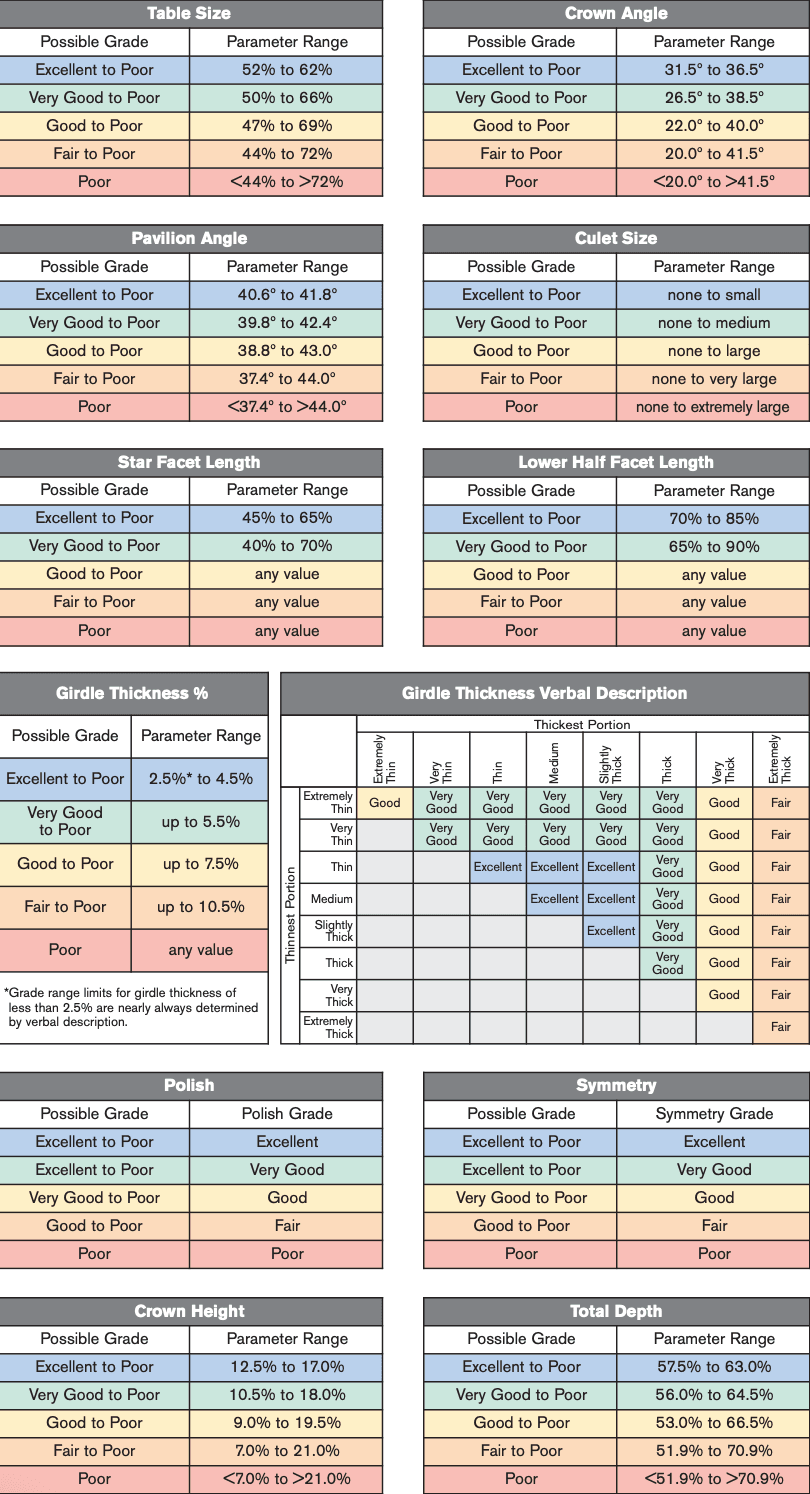
Below are detailed charts and tables with accompanying definitions for the deep dive!
Grading System Definitions
Brightness
Brightness is the result of all internal and external reflections of white light. Note that if there is light leakage through the pavilion facets due to the chosen proportions, there is less light reflected through the crown facets making the diamond appear less bright.Fire
Results when white light is dispersed into its spectral colors, which appear to the observer as areas of extremely bright and distinct colors.Scintillation is a little like Fire is.
Sparkle is the appearance or extent of spots of white or colored light that flash as the diamond, the observer, or the light source moves.
Pattern is the relative size, arrangement, and contrast of bright and dark areas that result from a diamond's internal and external reflections when it is viewed face-up. Note that pattern is also affected by light leakage; the manner in which it is affected depends on the overall proportion combination. Pattern includes aspects of tilt, such as at what point of tilt a "fish-eye" pattern appears to the observer. Culet size is part of pattern since a very large culet would be a light or dark spot in the center of the pattern.
Weight Ratio
Is a comparison of a diamond's weight to its diameter. A diamond can have too much or too little weight for its diameter. The girdle thickness is an impor-tant factor for weight ratio if the thickness adds a substantial increase in weight. Total depth percentage helps evaluate the weight ratio (see the Parameter Tables at bottom of page).Durability
Is the potential risk of damage due to vulnerable thin girdles or points. GIA does not consider a shallow crown a durability risk unless the girdle thickness is very thin. Unusually thin girdles create a high risk for damage in normal jewelry wear.Polish
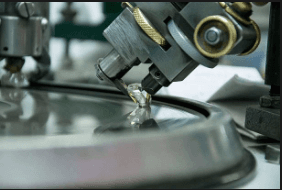
Describes the quality of the surface condition of the facets of a diamond. Polish plays a key role in the determination of a diamonds brilliance, fire and scintillation.The polishing process involves several steps:Planning: The cutter will figure out the best possible diamond shapes to maximize the yield of the rough gemstone and minimize rough diamond loss.
Cleaving: The cutter will split the rough into various pieces that can be worked on separately.
Bruiting: The cutter will shape the diamond into a round outline by rubbing two diamonds together.
Polishing: The cutter will polish each facet of the diamond using a spinning disk with abrasive.
Monitoring: The cutter will check the quality and symmetry of the polished diamond using various tools and techniques. There are different types of abrasives used to polish diamonds depending on the stage of polishing and the desired finish. Some common abrasives are:
Diamond Paste: A fine paste made of diamond powder and other raw materials. It is used for grinding and polishing with good lubrication and cooling properties.
Diamond Mesh: A mesh made of diamond crystals bonded to a backing material. It is used for cutting, grinding, and shaping hard materials like stone, glass and metal.
Diamond Cloth: A cloth impregnated with diamond particles. It is used for polishing all surface contours with flexibility and durability.
Cubic Boron Nitride (CBN) A synthetic abrasive that has similar properties to diamond but is more resistant to heat and chemical wear. It is used for grinding hard materials that react with diamonds, such as steel, iron, and nickel.
Symmetry
Is the exactness of the shape of a diamond, and the symmetrical arrangement and even placement of the facets. Symmetry has two aspects:Proportion symmetry is an evaluation of the alignment and balance of the stone's table, culet, girdle outline, and angles.
Facet symmetry is an evaluation of the shape, placement, and presence or absence of the facets themselves.
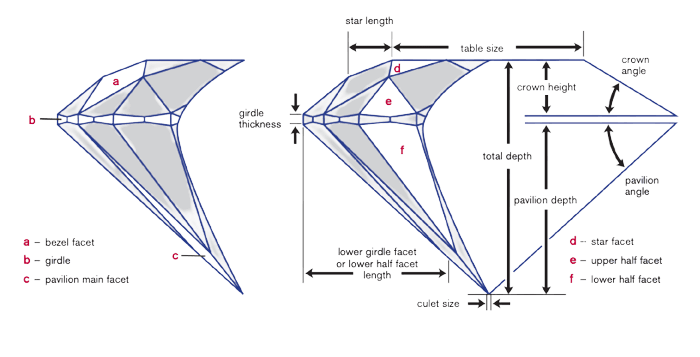
The facets and proportions of a standard round brilliant include bezel facet, girdle, pavilion main facet, star facet, star facet length, upper half facet (or upper girdle facet), table size, crown angle, crown height, girdle thickness, pavilion angle, pavilion depth, lower half facet (or lower girdle facet), lower half facet length, culet size, pavilion depth, and total depth.
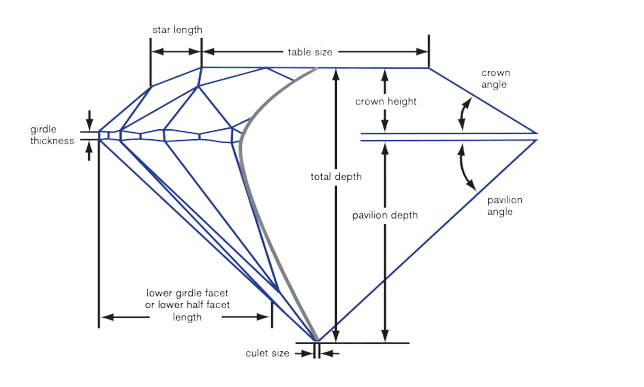
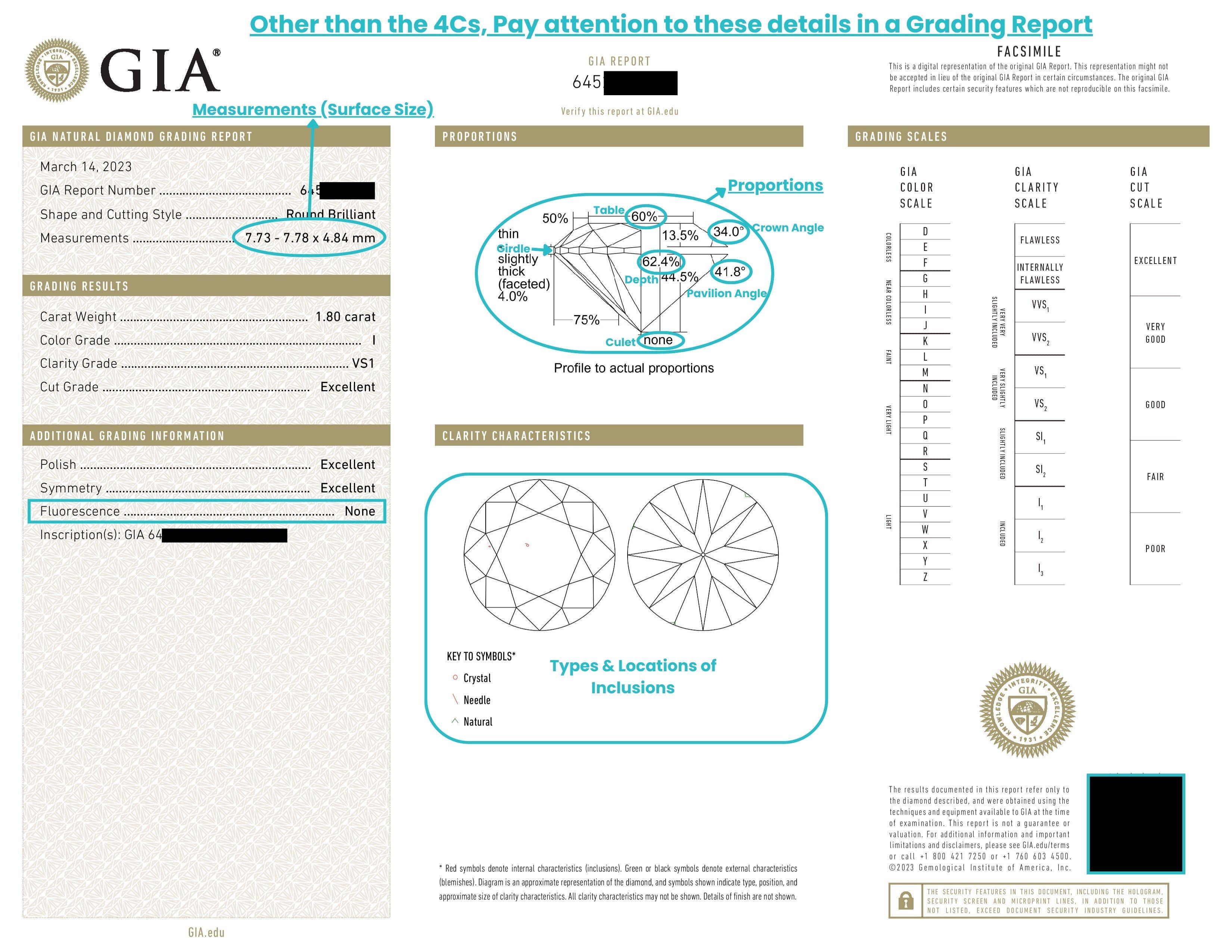
GIA Diamond Grading Reports include a graphic scaled to depict the actual parameters of the following factors: table size, crown angle, pavilion angle, crown height, pavilion depth, star length, lower half length, girdle thickness, culet size, and total depth. For more information on GIA's Cut Grading System.
Credit: www.gia.edu
Credit: www.gia.edu
Although a diamond might earn the top designation from the GIA or AGS, just having a certificate say Excellent, doesn’t always mean it is a beautiful diamond in person. Well over 60% of diamonds online have this designation making the consumer believe they are truly getting an "excellent" product. Unfortunately this is not the case. Some read well, but are actually poor quality, like this(link to poor stone), while others are stunning like this 1.5 Carat Round Brilliant from James Allen.
*Some links on our site may earn us a small commission at NO EXTRA cost to you, helping us keep our content free*