Diamond Price Per Carat Calculator: Compare Fairly
Use total price and carat weight to compare two stones in the same lane.
Free expert guidance by email or video chat.
No pressure, No sales pitch. Just honest help from diamond experts.
Price is only useful when the comparison is fair. Same lane first, then the math starts to mean something.
By Josh Allen, Co-Founder of YourDiamondGuys.com. Fifth generation diamantaire with 30+ years in the global diamond trade. Former supplier to Tiffany & Co., Cartier, and Harry Winston.
Most bad diamond buys start with the wrong comparison. A buyer sees a sale price, checks the carat weight, then assumes the lower number wins. That is how weak stones sneak into the conversation.
Fair value starts by comparing the same kind of diamond. Natural to natural. Lab grown to lab grown. Same shape family. Similar size range. Similar report confidence. Then you look at cut, color, clarity, spread, fluorescence, seller terms, and the real all in cost.
For natural diamonds, I start with GIA. That gives the conversation a stricter baseline before anyone gets excited about a discount.
This page is the parent guide for diamond pricing. It connects price per carat, carat weight, cut quality, shape, GIA report confidence, color, clarity, fluorescence, treatments, seller channel, payment terms, hidden costs, appraisal value, resale value, lab grown pricing, and timing into one buying decision.
Start with total price, carat weight, price per carat, and shape so you compare the same kind of stone.
Use cut, color, clarity, fluorescence, treatments, and grading confidence to separate value from hidden risk.
Add seller channel, payment terms, taxes, setting fees, shipping, appraisal claims, upgrade policy, and resale reality.
Trade insider moment: inside the trade, nobody prices a diamond from one line on a certificate. We look at the make, the spread, the supplier context, the report, the actual video, and why that stone is sitting at that number. Price is a clue. It is not proof.
This is the order I like for buyers. It keeps you from comparing a clean, well cut stone against a cheaper diamond that only looks good on paper.
| Pricing Factor | What It Changes | Buyer Move |
|---|---|---|
| Carat and price per carat | Total spend, size jump premiums, and weight efficiency | Use the price per carat calculator after you match the diamond lane. |
| Shape | Demand, rough yield, face up spread, and cut risk | Check diamond price by shape before treating a round, oval, cushion, and emerald cut like equal products. |
| Cut quality | Brightness, leakage, face up size, and premium value | Pay more for proof, not a pretty label. Weak cut can make a lower price per carat expensive. |
| Color and clarity | Visible whiteness, eye clean value, and paper grade premiums | Stop paying when your eye stops seeing the upgrade. Use color and clarity as value filters, not trophies. |
| Grading and treatments | Confidence in the stated grade and future liquidity | Avoid soft grading and treated diamonds when the price only works because the risk is buried. |
| Seller channel and payment terms | Markup, return safety, wire price, financing cost, and policy value | Compare the real total, not the sticker. Fees and terms can erase a cheaper listing. |
Use these numbers as a ballpark, not a quote. The market moves, and two diamonds in the same size range can price very differently once cut, shape, GIA report details, color, clarity, fluorescence, seller terms, and total cost enter the picture.
The trade shortcut is price per carat. Total diamond price equals carat weight times price per carat. That is why a 1.05 carat diamond at $9,800 per carat comes out to $10,290 before the setting, tax, shipping, appraisal, or protection cost.
| Natural Diamond Size Range | Useful Pricing Orientation | Buyer Takeaway |
|---|---|---|
| 0.70 to 0.89 carat | Often a strong value lane, with the current YDG pricing guide noting a broad $3,500 to $9,000 range. | Compare stones inside the same size category. A 0.88 can carry more pressure than a 0.72 because it sits closer to the next bracket. |
| 0.90 to 0.99 carat | This is the classic almost one carat lane. | You can get a similar look to many 1.00 carat diamonds without always paying the one carat threshold premium. |
| 1.00 to 1.49 carat | The current YDG guide puts many 1 carat diamonds around $5,500 to $10,000 on average, with higher prices for top color, clarity, and cut. | Do not compare a clean, well cut GIA stone against a weaker one just because both say 1 carat. |
| 1.50 to 1.99 carat | Pricing jumps as stones approach the 2 carat category. | A beautiful 1.70 to 1.90 carat diamond can give strong visual size without paying the full 2 carat threshold. |
| 2.00 to 2.99 carat | The current YDG guide notes that 2 carat diamonds can easily range from $16,000 to $50,000 and beyond. | This is where cut, spread, fluorescence, and report strictness matter a lot. The cheapest listing can become the expensive mistake. |
| 3.00 carat and larger | The current YDG guide gives broad reference ranges of $25,000 to $100,000 plus for 3 carat diamonds and $40,000 to $200,000 for many 4 carat diamonds. | At this size, rarity magnifies every quality issue. Make the diamond prove itself on report, video, proportions, and seller terms. |
One trade trick worth knowing: special weights can be your friend. A great 1.40 carat or 2.80 carat diamond can face up close to the next major size while avoiding part of the next bracket premium. It still has to be a good stone. The weight alone does not make it smart.
It does not quote every live diamond, replace a stone review, or pretend natural and lab grown diamonds move in the same market. It gives you the decision framework before you trust a listing, a sale price, or an appraisal number.
Do not read these guides like homework. Use them like a buying route. Start with the math, then move toward the risks that can make the math lie.
Use total price and carat weight to compare two stones in the same lane.
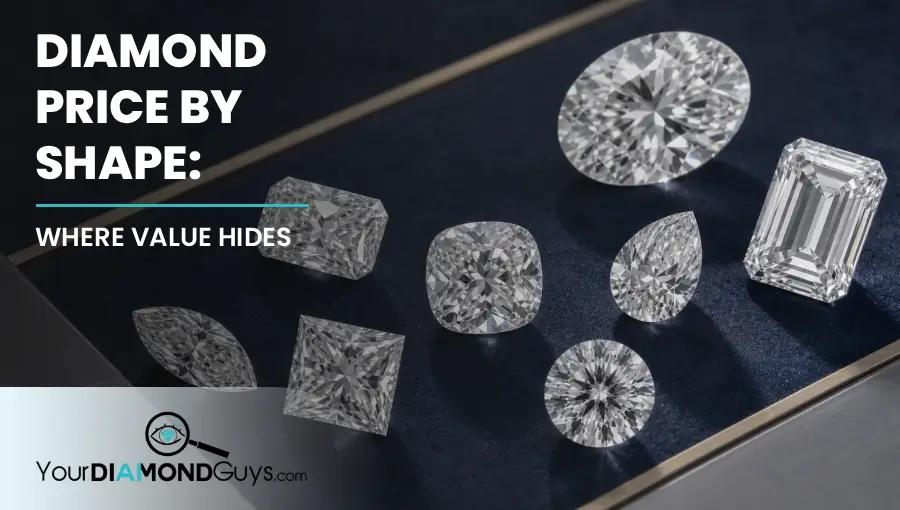
See why round, oval, cushion, emerald, pear, marquise, and princess cuts price differently.
Compare seller overhead, service, inventory model, and real buyer protection.
Understand why wholesale language usually sounds better than it is for retail buyers.
Learn how a soft report can make the discount look smarter than the stone.
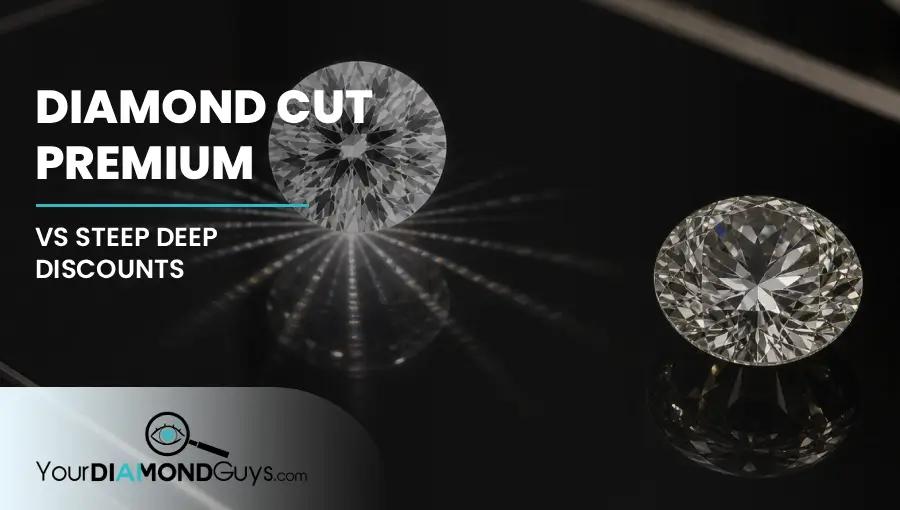
Separate a real cut premium from a cheaper stone hiding weight in the wrong place.
Pay for clean to the eye, not just a more expensive clarity label.
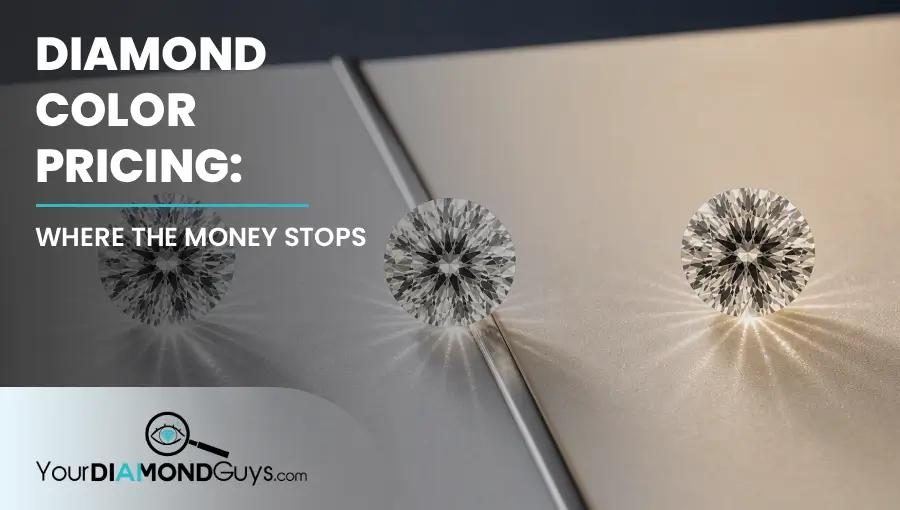
Know when higher color grades stop helping the look enough to justify the spend.
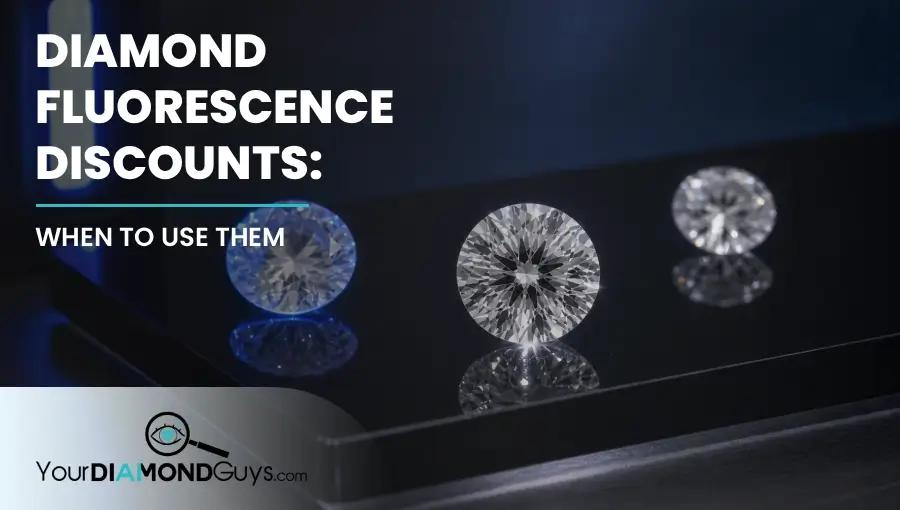
Use fluorescence discounts carefully, especially when body color and transparency are part of the deal.
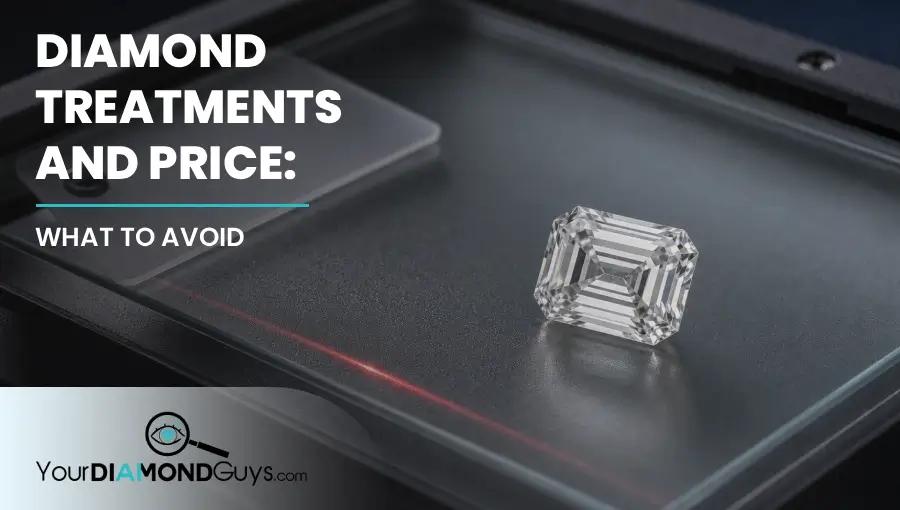
Spot treatments that lower cost because they lower confidence, durability, or resale appeal.
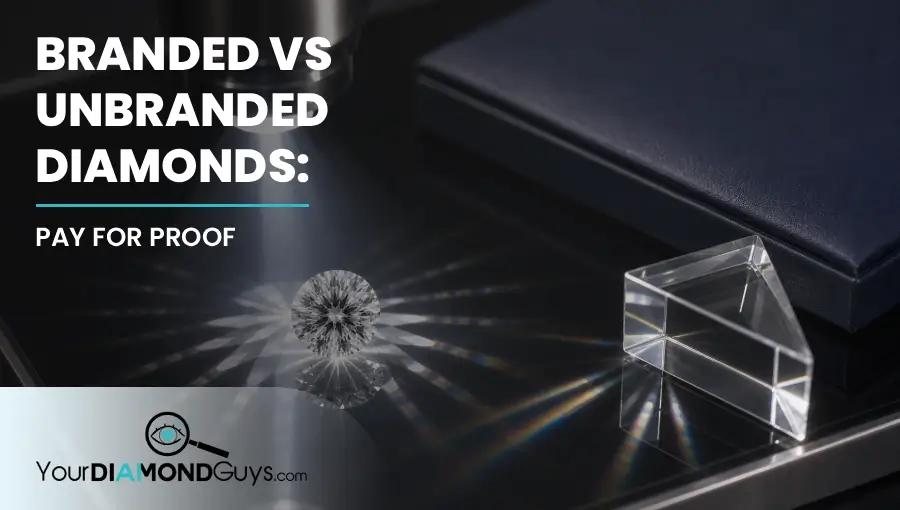
Pay for a brand only when the proof behind the premium is real.
Compare payment terms by the final number, not the advertised discount.
Add the fees before you call one diamond cheaper than another.
Choose the buying channel that gives you price clarity and enough protection.
Understand why appraisal value and fair purchase price are not the same number.
Check whether an upgrade policy actually protects future value.
Set realistic resale expectations before you confuse retail price with cash value.
Compare lab grown prices with the right expectations about future value.
Use timing to avoid pressure, not to chase a fake magic buying day.
Compare proof, price, return terms, service, and who helps judge the actual stone before money moves.
Use report strictness before you compare prices, especially for natural diamonds where GIA has to be the starting line.
Compare marketplaces, major retailers, private sourcing, and local jewelers by proof, policy, service, and final price.
A diamond is fairly priced when the beauty, report confidence, cut quality, size, risk, seller terms, and total cost all make sense together.
That sounds simple. It is not how most listings are sold. Sellers like the one number that makes their stone look best. Carat weight. Discount. Appraisal value. Brand name. Monthly payment. Pick the wrong number and you can miss the real cost.
Say you are comparing two 1.50 carat round natural diamonds. Both are G color and VS2 on paper. One costs less. Easy winner, right?
Not yet. The cheaper stone has a deeper build, smaller face up spread, medium fluorescence, and a video that goes dark in motion. The higher priced stone has better proportions, cleaner movement, stronger spread, and a cleaner seller policy.
The cheaper diamond can still be the worse buy. That is the part most spreadsheets miss.
Use these sites as comparison tools, not automatic recommendations. I would compare similar stones on Ritani and Blue Nile, then use the guides here to judge the report, video, spread, seller terms, and total cost before trusting the price.
Questions? Reach out directly for a free consultation, or drop them in the Diamond Buyers Academy community — Rob and Josh answer personally.
Send us the stones you are comparing. Rob or I can look at the report, video, measurements, and price per carat, then tell you which diamond deserves more attention.
*Some links on our site may earn us a small commission at NO EXTRA cost to you, helping us keep our content free*