INCLUSION DEFINITIONS FOR DIAMONDS
WHAT IS AN "IMPERFECTION" IN A DIAMOND?
An imperfection in a diamond is a physical feature or characteristic that detracts from the diamond's overall quality and appearance. These imperfections are also known as "inclusions" or "blemishes" and they can occur naturally as the diamond forms within the earth or as a result of the diamond-cutting process. Imperfections can vary in size, shape, color, and location within the diamond.
Two main types of imperfections can occur in diamonds: inclusions and blemishes. Inclusions are internal imperfections that occur within the diamond, while blemishes are external imperfections that occur on the surface of the diamond.
Inclusions can take many forms, including crystals, clouds, feathers, or needles. Some inclusions may be visible to the naked eye, while others may only be visible under magnification. Inclusions can also affect the clarity of the diamond, which is a measure of how clear or free of imperfections the diamond appears. The clarity of a diamond is graded on a scale ranging from "flawless" to "included," with the former being completely free of inclusions and the latter having visible inclusions that can affect the diamond's appearance.
Blemishes can also take many forms, including scratches, pits, chips, or nicks. These imperfections can affect the surface of the diamond and may be visible to the naked eye or under magnification. Blemishes can also affect the overall appearance of the diamond.
Can a SI1 purity stone look better than a vs2?
Absolutely!!
Cavity
A cavity in a diamond is a type of inclusion, which is a natural or man-made imperfection within that particular diamond. A cavity is a void or a small hole that is present on the surface or within the diamond.
Cavities can be caused by a variety of factors, including natural crystal growth patterns, physical damage to the diamond during the mining or cutting process, or by treatments such as laser drilling or fracture filling.
In general, cavities are considered to be negative characteristics that can affect the clarity and value of a diamond, particularly if they are visible to the naked eye. However, the impact on the diamond's value will depend on the size, location, and extent of the cavity, as well as other factors such as the diamond's overall quality and rarity.
 choose to avoid diamonds with cavities. Think of a hole in your tooth, is that something you want?
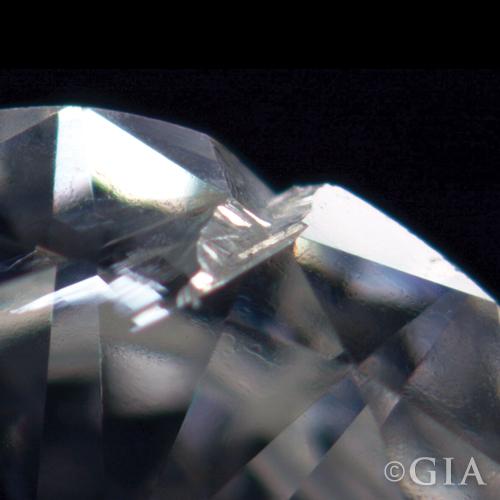
Knot
A knot in a diamond refers to a small, included crystal that can appear on the surface or inside that particular diamond. Knots can also be caused by small diamond crystals that are attached to the main crystal during the diamond's formation process.
Knots can affect the clarity of a diamond and may be visible to the naked eye or only under magnification. The presence of a knot can negatively impact a diamond's value, as diamonds with fewer or no inclusions are generally considered to be of higher quality and therefore more valuable.
When a diamond is graded for its clarity, the presence and location of any knots are taken into account. The Gemological Institute of America (GIA) uses a clarity scale that ranges from Flawless (no inclusions or blemishes visible under 10x magnification) to Included (inclusions visible to the naked eye). Diamonds with knots are typically graded in the Included range and are less desirable than those without knots of the same size, cut, color, and clarity. choose to avoid diamonds with knots.
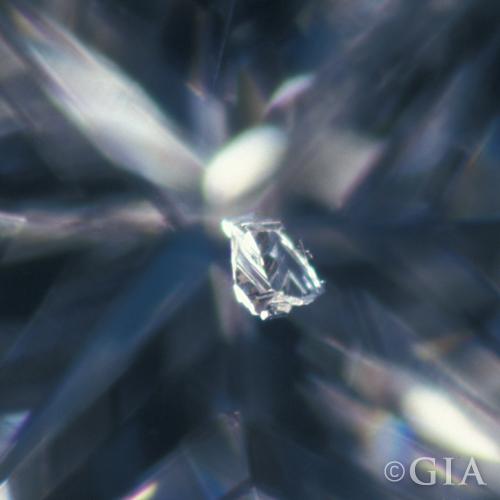
Etched Channel
An etched channel in a diamond is a microscopic thin hollow channel or groove that begins on the surface of the diamond and extends inward. It is a natural inclusion that forms when high temperature fluids “eat into” the stone's crystalline structure. Etched channels are usually too small to be visible to the naked eye and are typically viewed under a microscope. Etched(naturally occurring) channels are often mistaken for laser drill holes(man-made). choose to avoid diamonds with etched channels. Think of a tiny tunnel running into the diamond itself.
Bruise
A bruise on or within a diamond is a type of inclusion or blemish that appears as a localized area of damage on the surface or within that particular diamond. Bruises can be caused by a variety of factors, including impact, pressure, or damage during the diamond cutting and polishing process.
Bruises can appear as small or large marks on the diamond's surface or as areas of whitish or cloudy discoloration within the diamond. Depending on the size and severity of the bruise, it can affect the diamond's clarity and overall appearance and may reduce its value.
When a diamond is graded for its clarity, the presence and location of any bruises are taken into account. The Gemological Institute of America (GIA) uses a clarity scale that ranges from Flawless (no inclusions or blemishes visible under 10x magnification) to Included (inclusions visible to the naked eye). Diamonds with visible bruises are typically graded in the Included range, which can lower their value.
While it's not always possible to remove a bruise from a diamond, skilled diamond cutters and polishers may be able to minimize the appearance of a bruise by strategically removing small amounts of material from the diamond's surface.
choose to avoid diamonds with a bruise. Think of a “damaged” stone.
Needle
A needle in a diamond is a type of inclusion that appears as a long, thin crystal or rod inside that particular diamond. Needles can be caused by a variety of factors, including irregular crystal growth, stress during the diamond's formation, or damage during the diamond cutting and polishing process.
Needles can appear as straight or curved lines within the diamond and may be visible to the naked eye or only under magnification. Depending on the size and number of needles, they can affect the diamond's clarity and overall appearance and may reduce its value.
When a diamond is graded for its clarity, the presence and location of any needles are taken into account. The Gemological Institute of America (GIA) uses a clarity scale that ranges from Flawless (no inclusions or blemishes visible under 10x magnification) to Included (inclusions visible to the naked eye). Diamonds with visible needles are typically graded in the Included range, which can lower their value.
do not have a problem with small non-visible needles IF the location is not center. A needle is just as it sounds….think of a tiny, thin needle and that is what the inclusion looks like.
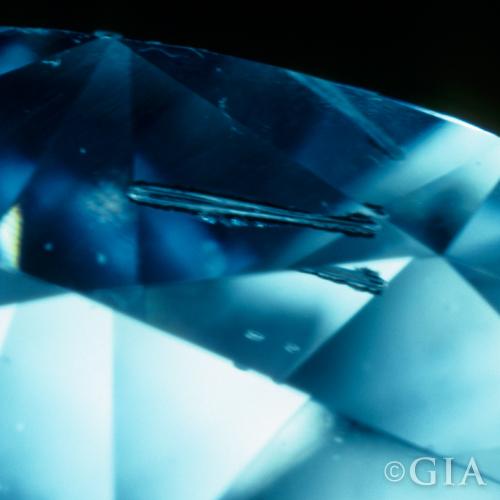
Crystal
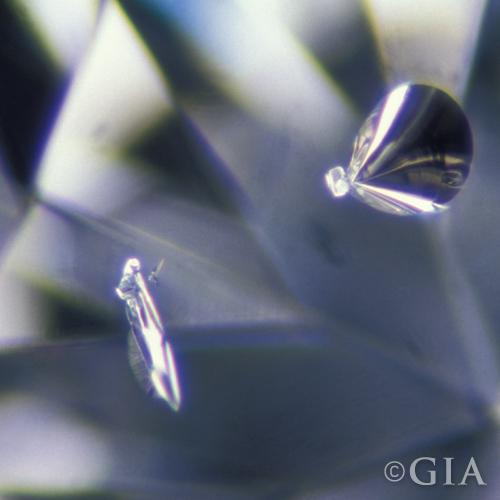
A crystal in a diamond is a type of inclusion that appears as a small, solid mineral crystal inside the diamond. Crystals can be formed within a diamond during its formation process, or they can be trapped within the diamond during its growth.
Crystals can appear in a variety of shapes and colors and may be visible to the naked eye or only under magnification. Depending on the size and number of crystals, they can affect the diamond's clarity and overall appearance and may reduce its value.
When a diamond is graded for its clarity, the presence and location of any crystals are taken into account. The Gemological Institute of America (GIA) uses a clarity scale that ranges from Flawless (no inclusions or blemishes visible under 10x magnification) to Included (inclusions visible to the naked eye).
choose to avoid diamonds with center crystals of colors other than white that are located on the table. Black center crystals are not desirable and, in many instances, are easily seen with the naked eye. Crystals are common and if very small, located on the crown, and IF THEY DO NOT REFLECT, we are much more forgiving and accepting of a crystal.
Feather
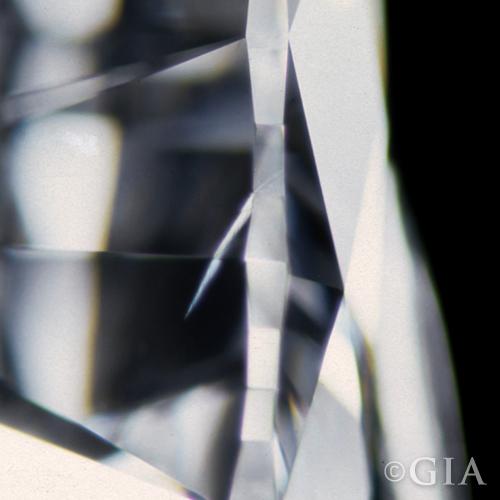
A feather in a diamond is a type of inclusion that appears as a crack or fracture within that particular diamond and generally extends to the surface of the diamond. Feathers can be caused by a variety of factors, including stress during the diamond's formation or damage during the diamond cutting and polishing process.
Feathers can appear in a variety of shapes and sizes and may be visible to the naked eye or only under magnification. Depending on the size and location of the feather, it can affect the diamond's clarity and overall appearance and may reduce its value.
When a diamond is graded for its clarity, the presence and location of any feathers are taken into account. The Gemological Institute of America (GIA) uses a clarity scale that ranges from Flawless (no inclusions or blemishes visible under 10x magnification) to Included (inclusions visible to the naked eye). Diamonds with visible feathers are typically graded in the Included range, which can lower their value.
do not have a problem with feathers as long as they are NOT located in the center of the stone, are white, small, and do not affect the integrity of the diamond itself. We DO NOT like feathers that severely break the surface.
Cloud
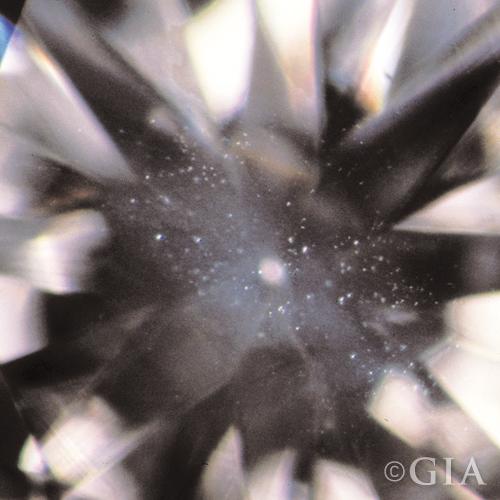
In the context of a diamond, a cloud is a type of inclusion that appears as a group of tiny, closely packed pinpoints or crystals within the diamond. Clouds can be caused by a variety of factors, including irregular crystal growth or damage during the diamond cutting and polishing process.
Clouds can appear in a variety of shapes and sizes and may be visible to the naked eye or only under magnification. Depending on the size and density of the cloud, it can affect the diamond's clarity and overall appearance and may reduce its value.
When a diamond is graded for its clarity, the presence and location of any clouds are taken into account. The Gemological Institute of America (GIA) uses a clarity scale that ranges from Flawless (no inclusions or blemishes visible under 10x magnification) to Included (inclusions visible to the naked eye). Diamonds with visible clouds are typically graded in the Included range, which can lower their value.
do not have a problem with SMALL clouds as long as they do not affect the brilliance and scintillation of a diamond. SOME clouds can make a diamond look "sleepy" or "hazy" in which instance it would be best to avoid the diamond.
Chip
A chip on a diamond is a type of blemish that appears as a small, shallow indentation or nick on the surface of that particular diamond. Chips can be caused by accidental impacts or damage during the diamond cutting and polishing process.
Chips can appear in a variety of shapes and sizes and may be visible to the naked eye or only under magnification. Depending on the size and location of the chip can affect the diamond's appearance and overall value.
choose to avoid diamonds with a chip. We would require a chip to be repaired by a diamond cutter and the diamond re-certified by the grading laboratory before we would consider the diamond.
Indented Natural
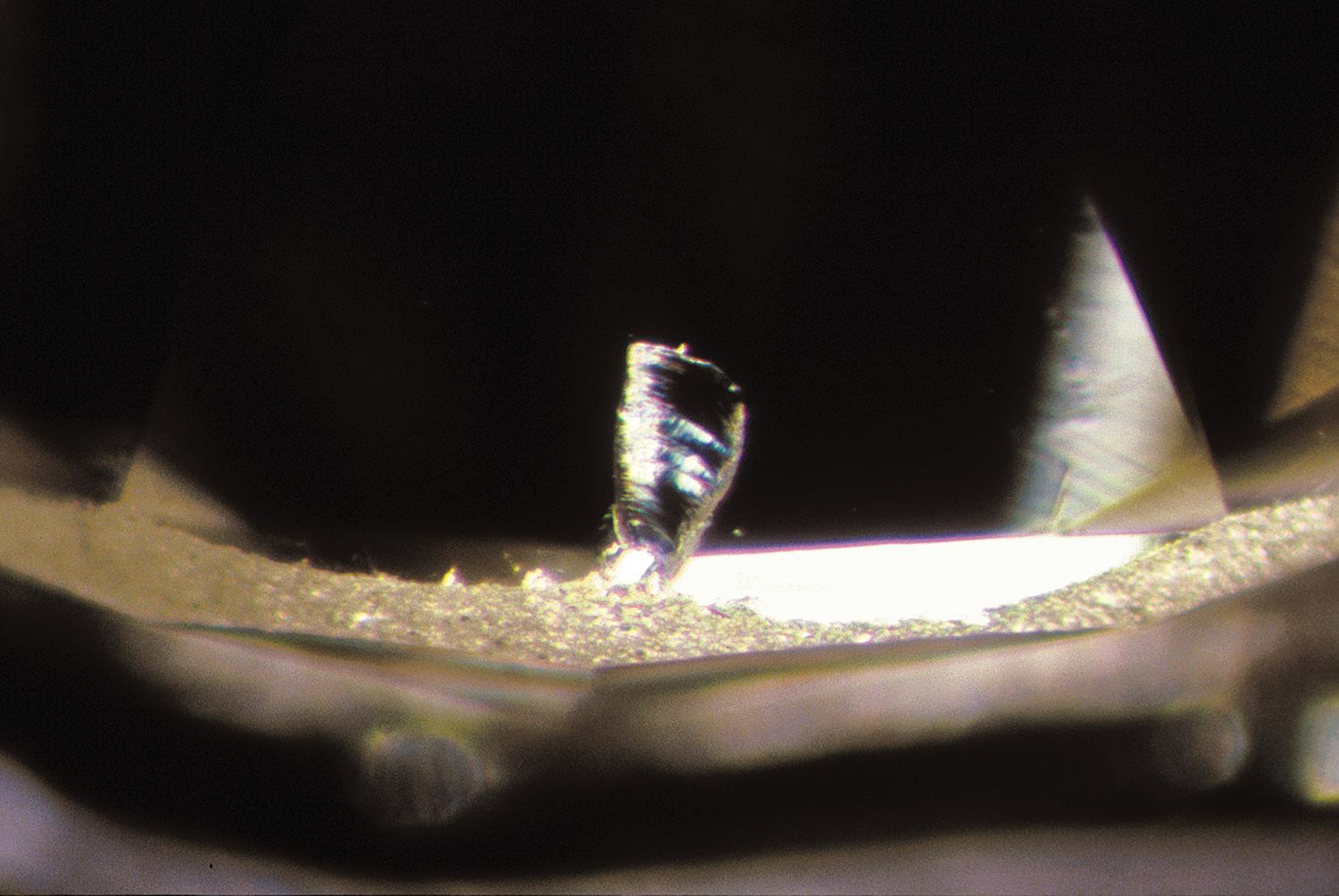
An indented natural on a diamond is a type of blemish that appears as a small, shallow depression on the surface of the diamond, usually located near the girdle (the narrow band around the perimeter of the diamond). An indented natural occurs when the rough diamond crystal's natural surface is left unpolished to retain more of the diamond's weight during the cutting process.
Indented naturals are usually small and shallow, and may be visible to the naked eye or only under magnification. Depending on the size and location of the indented natural, it may or may not affect the diamond's appearance and value.
When a diamond is graded for its clarity, the presence and location of any indented naturals are taken into account.
choose to only accept indented naturals if they are truly microscopic. Some indented naturals are large and feel like a "chip" on the diamond, we would avoid any substantial indented natural.
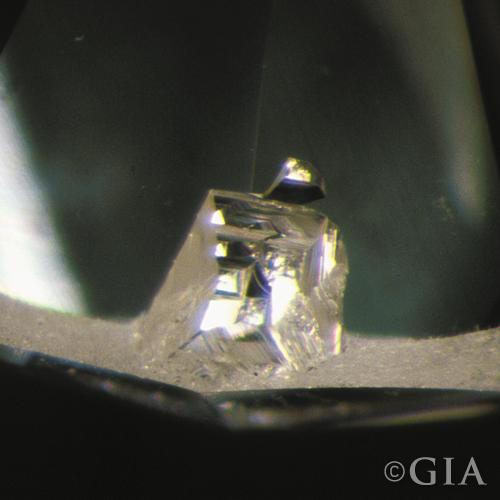
Internal Graining
Internal graining within a diamond refers to a series of microscopic lines or ridges that can be visible under magnification within that diamond's crystal structure. These lines or ridges are usually caused by irregularities in the diamond's crystal growth and can appear as lines, curves, or hazy areas within the diamond.
Internal graining can appear in various forms and patterns and may be colorless, white, or colored, depending on the orientation of the lines or ridges. While internal graining may not be visible to the naked eye, it can affect the diamond's clarity and overall appearance and may lower its value.
choose to avoid diamonds with internal graining IF the diamond is D, E, or F in color or VS1 or better clarity. IF the diamond is lower than the aforementioned, graining WILL BE ACCEPTABLE IF IT DOES NOT CAUSE ANY NEGATIVE VISUAL APPEARANCE OF "SLEEPY", "HAZY" OR "CLOUDY".
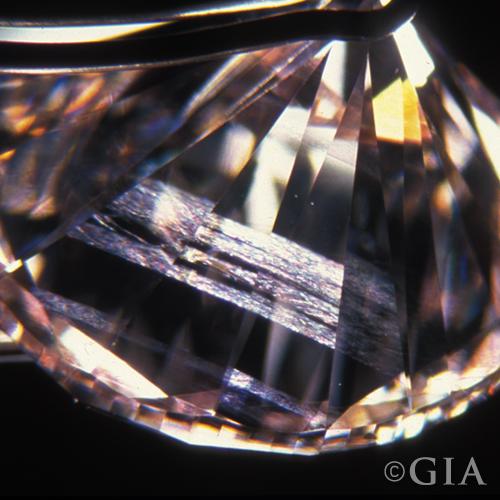
Graining
Graining on a diamond refers to a visual effect caused by irregularities in that diamond's crystal structure. It can appear as a pattern of faint lines, ridges or streaks, and may be visible under magnification.
Graining in a diamond can be caused by several factors, such as crystal irregularities or variations in the diamond's growth, and can appear in various forms and patterns. Graining can be colorless or have a milky appearance, and can affect the diamond's clarity and overall appearance, potentially lowering its value.
choose to avoid diamonds with graining IF the diamond is D, E, or F in color and VS1 or better clarity. IF the diamond is lower than the aforementioned, graining WILL BE ACCEPTABLE IF IT DOES NOT CAUSE ANY NEGATIVE VISUAL APPEARANCE OF "SLEEPY", "HAZY" OR "CLOUDY".
Grain Center
In the context of a diamond, a grain center is a type of inclusion that appears as a small, dark, or light-colored spot in the diamond's crystal structure. Grain centers are often caused by irregularities or distortions in the diamond's crystal lattice, and can be visible under magnification.
Grain centers can appear in various forms and patterns, and may be colorless, white, or colored, depending on the orientation and size of the grain center. While grain centers may not be visible to the naked eye, they can affect the diamond's clarity and overall appearance and may lower its value.
choose to avoid diamonds with grain center IF the diamond is D, E, or F in color and VS1 or better clarity. IF the diamond is lower than the aforementioned, graining WILL BE ACCEPTABLE IF IT DOES NOT CAUSE ANY NEGATIVE VISUAL APPEARANCE OF "SLEEPY", "HAZY" OR "CLOUDY".
Internal laser drilling
Internal laser drilling is a diamond treatment process used to improve the diamond's appearance and clarity by removing or reducing the appearance of inclusions within the diamond. During the process, a laser beam is used to create a narrow tunnel or channel from the surface of the diamond to the inclusion inside the diamond.
Once the channel is created, the inclusion can be removed or treated using various techniques, such as bleaching or filling with a substance to make the inclusion less visible. This process can help to improve the diamond's clarity and overall appearance, making it more desirable to buyers.
It's worth noting that internal laser drilling is considered a diamond treatment, and as such, it can impact the value and integrity of the diamond. Diamonds that have undergone internal laser drilling should be disclosed as such to potential buyers, as the process can affect the diamond's durability, long-term stability, and of course, value. As with any diamond treatment, it's important to consult with a reputable jeweler or diamond expert before purchasing a diamond that has undergone internal laser drilling.
choose to avoid diamonds with laser drilling.
Laser Drill Hole
A laser drill hole is a small, narrow hole in a diamond that has been created using a laser beam. The laser beam is used to drill a channel or tunnel from the surface of the diamond down to an inclusion located inside the diamond. Once the channel is created, the inclusion can be removed or treated to improve the diamond's clarity and overall appearance.
This process is most often used in an attempt to "remove" a black crystal inclusion that is visible to the naked eye. The laser drill hole will allow acid to be introduced to the channel created and that will "clean", or remove, the black from inside the diamond.
Laser drill holes are a type of diamond treatment, and are often used to remove or reduce the appearance of inclusions in a diamond. The process can artificially help to improve the diamond's clarity and make it more desirable to buyers.
It's worth noting that laser drill holes can affect the value and integrity of the diamond, and they should be disclosed as such to potential buyers. Additionally, while the process is considered safe, it's important to ensure that the diamond is not damaged during the drilling process. As with any diamond treatment, it's important to consult with a reputable jeweler or diamond expert before purchasing a diamond that has undergone laser drilling.
choose to avoid diamonds with laser drill holes.
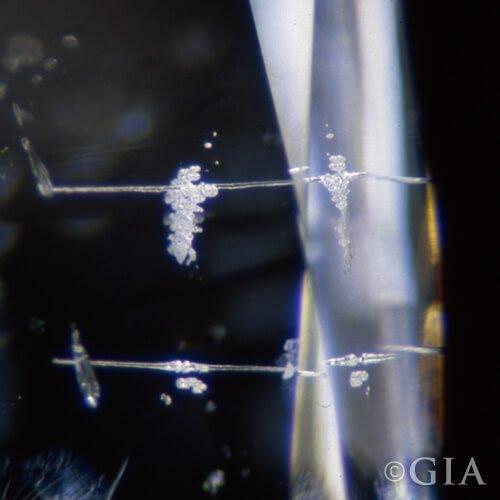
Pinpoint
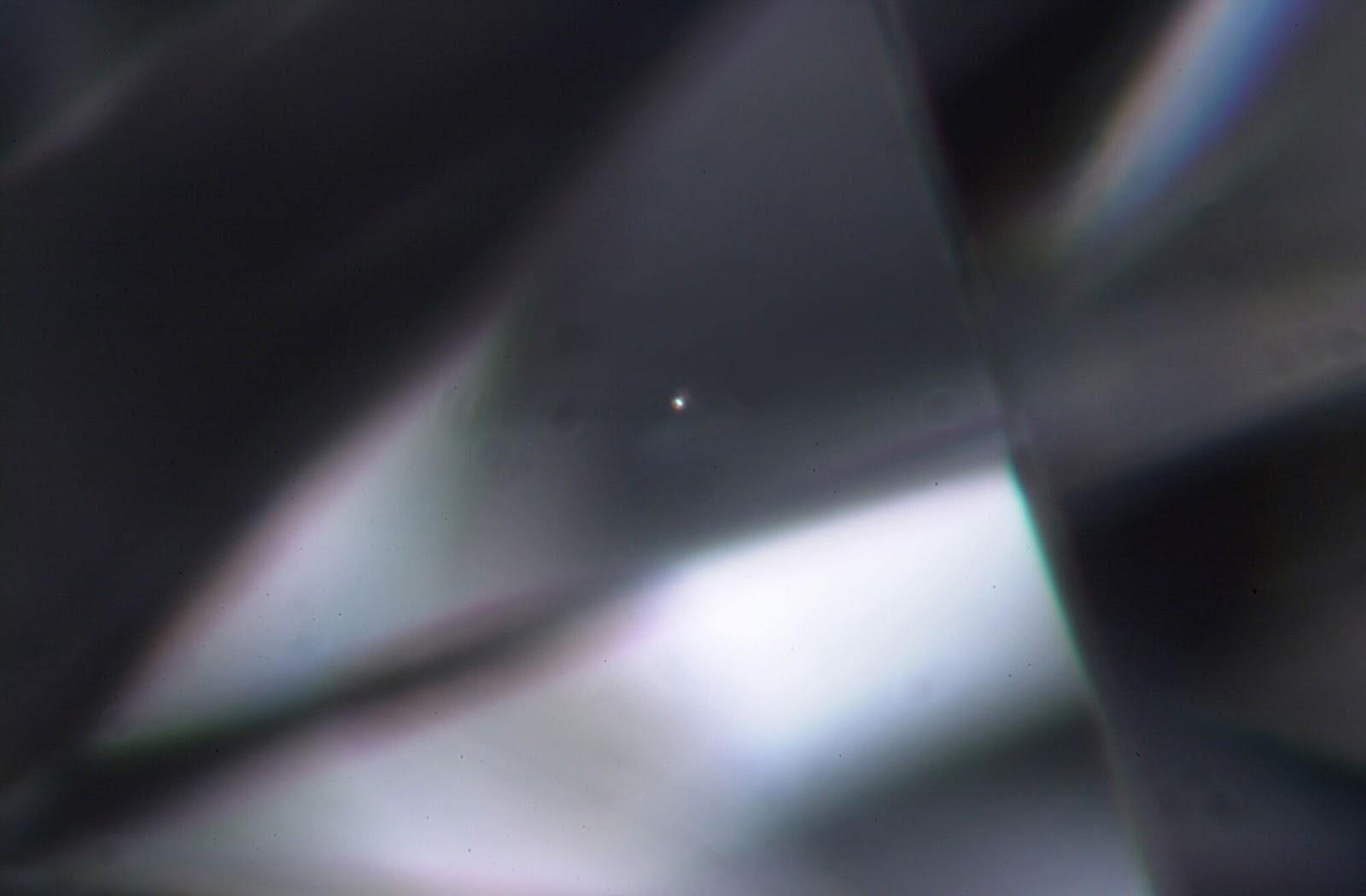
A pinpoint in a diamond is a very small inclusion that appears as a tiny dot when viewed under magnification. Pinpoints are one of the most common types of inclusions found in diamonds and are typically not visible to the naked eye.
Pinpoints can be caused by a variety of factors, such as crystal irregularities, gas bubbles or other mineral inclusions that were trapped inside the diamond during its formation. Pinpoints can be colorless, white or dark, and can be found in various locations within the diamond.
When a diamond is graded for its clarity, the presence and location of pinpoints are taken into account.
While pinpoints may be visible under magnification, they do not usually affect the diamond's overall beauty or brilliance.
do not have a problem with small non-visible pinpoint inclusions. Again, the preference will NOT BE IN THE CENTER of the diamond, and non-reflecting. Generally, pinpoints are acceptable to us, especially if a white inclusion as opposed to black.
Twinning Wisp
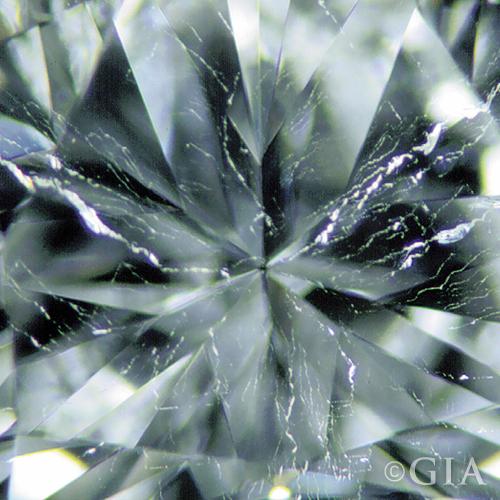
A twinning wisp in a diamond is another type of inclusion that may be found in some diamonds. It appears as a thin, wispy line that meanders through the diamond, sometimes in a branching pattern. The twinning wisp is formed when the diamond is growing, and there is a slight shift or change in crystal orientation. This causes a "twin plane" to form within the diamond, which can trap small mineral crystals, creating the wispy inclusion.
Twinning wisps are typically not visible to the naked eye, and they are often found in diamonds with higher clarity grades. When visible under magnification, the twinning wisps can create a unique and interesting pattern within the diamond.
As with all inclusions, twinning wisps can affect a diamond's value depending on its size, location, and number. When a diamond is graded for clarity, the twinning wisp will be taken into account, and a diamond with large or numerous twinning wisps may receive a lower clarity grade.
do not have a problem with many twinning wisp inclusions IF they are white, and do not affect the brilliance, sparkle and scintillation of the diamond. We prefer a twinning wisp(generally dispersed inclusion) over a strong crystal(substantial singular inclusion). TWINNING WISP WILL BE ACCEPTABLE IF IT DOES NOT CAUSE ANY NEGATIVE VISUAL APPEARANCE OF "SLEEPY", "HAZY" OR "CLOUDY".
*Some links on our site may earn us a small commission at NO EXTRA cost to you, helping us keep our content free*