Glossary
AGS
The American Gem Society (AGS) is a reputable gemological grading laboratory founded in 1934. Renowned for its rigorous standards, AGS evaluates diamonds based on cut, color, clarity, and carat weight. Utilizing advanced techniques, AGS provides precise assessments and comprehensive reports, offering consumers and the jewelry trade trusted information for informed purchases.
Once viewed as a competitor of the GIA, today AGS is owned and operated by the GIA.
Abrasion
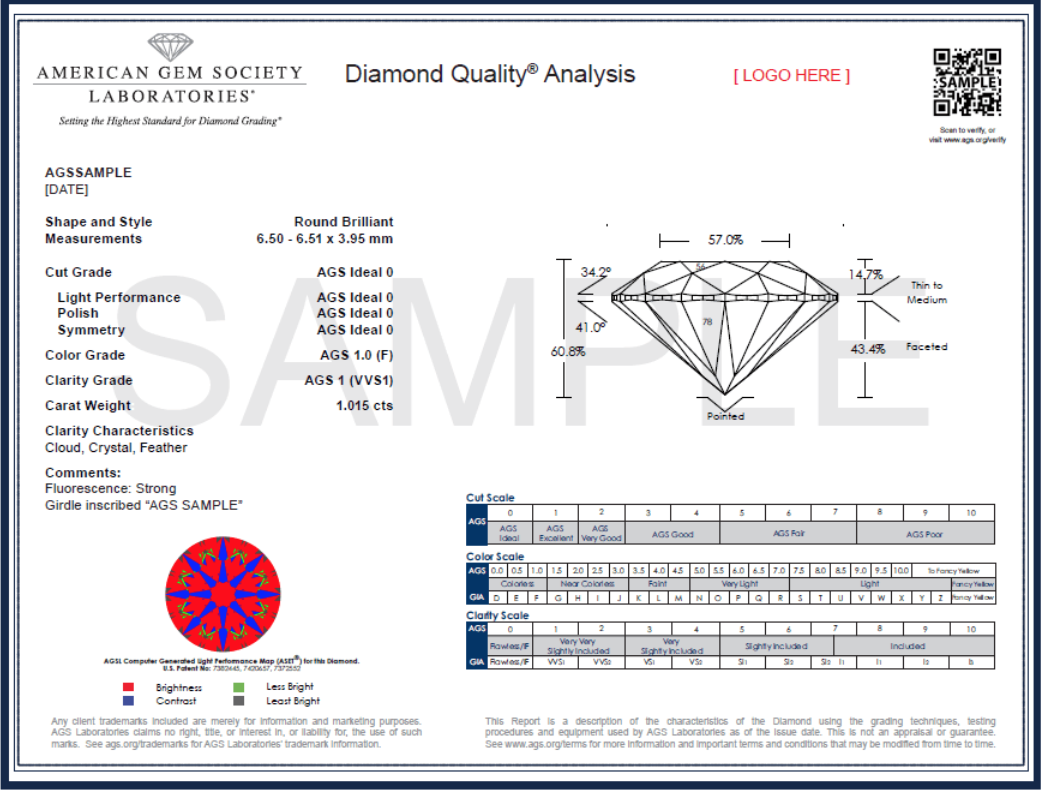
Most often found near the girdle of a diamond, it is an unpolished, white, feathery area. May appear to be tiny nicks on the diamond.
Asscher
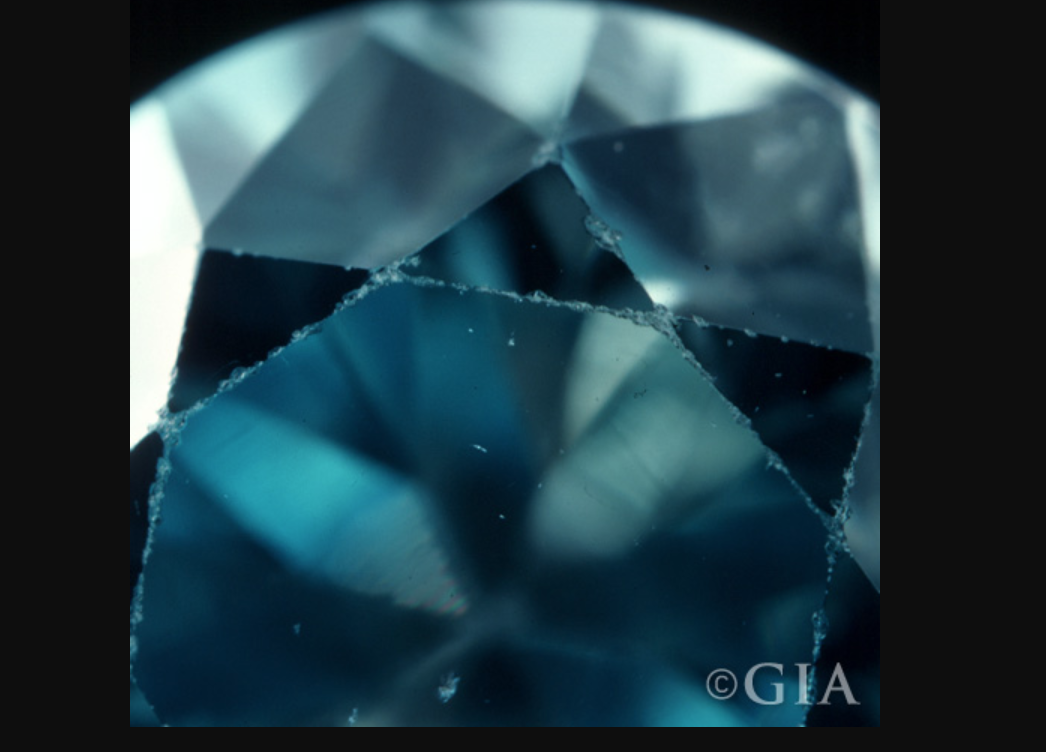
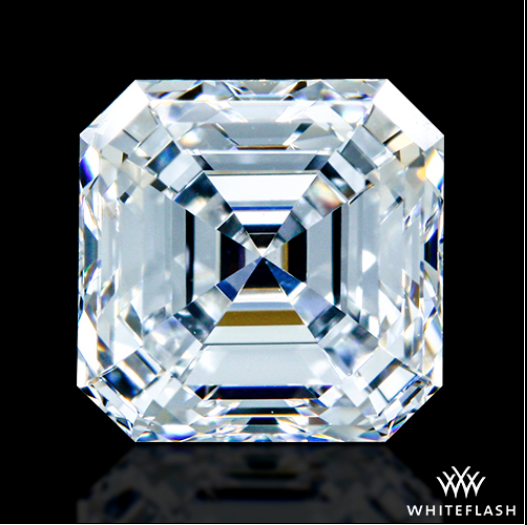
Square step cut with clipped corners.
AGS 0
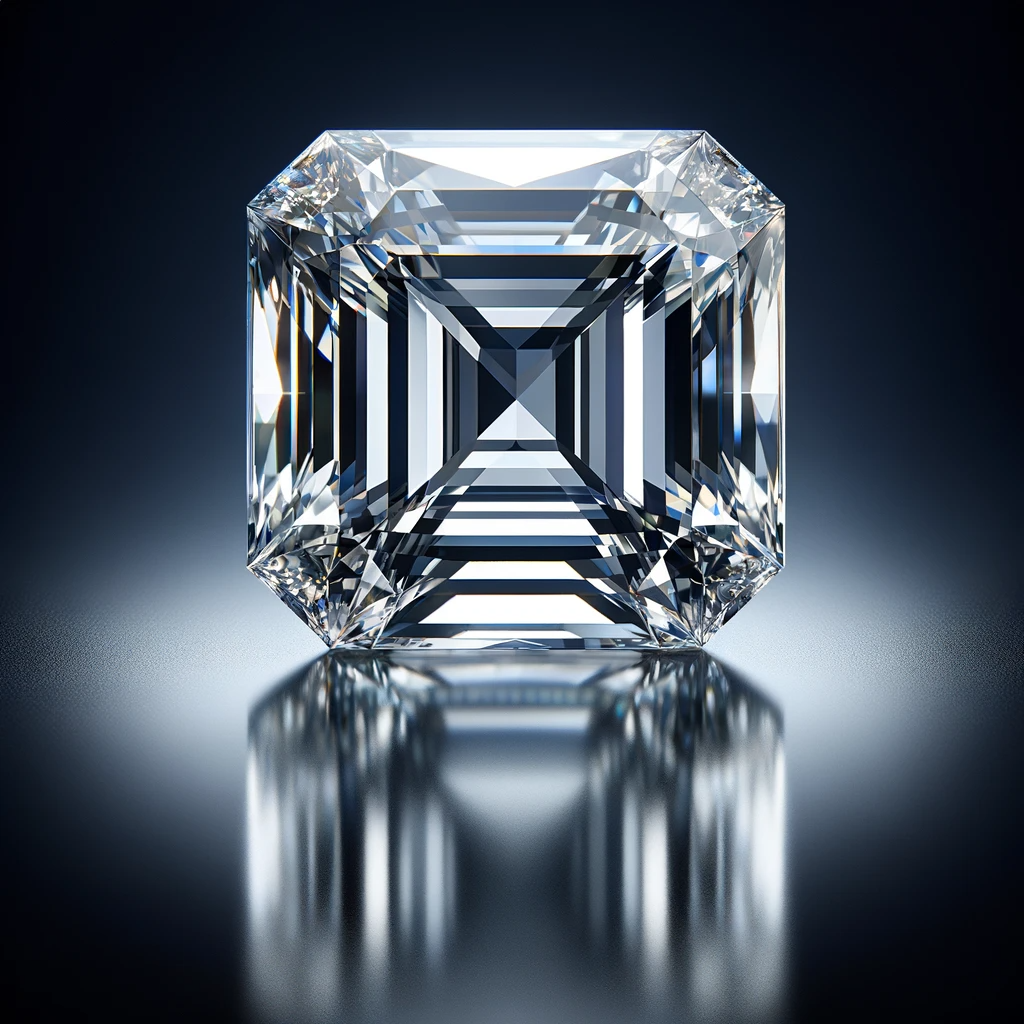
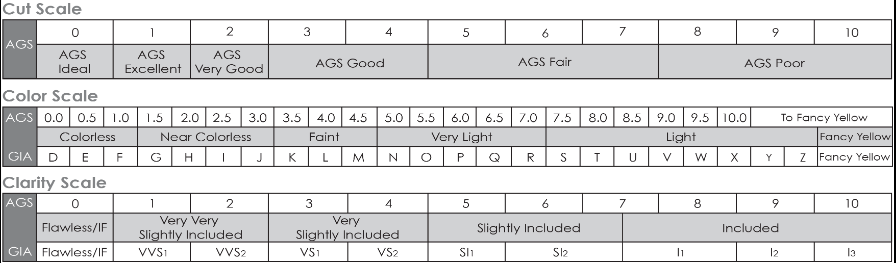
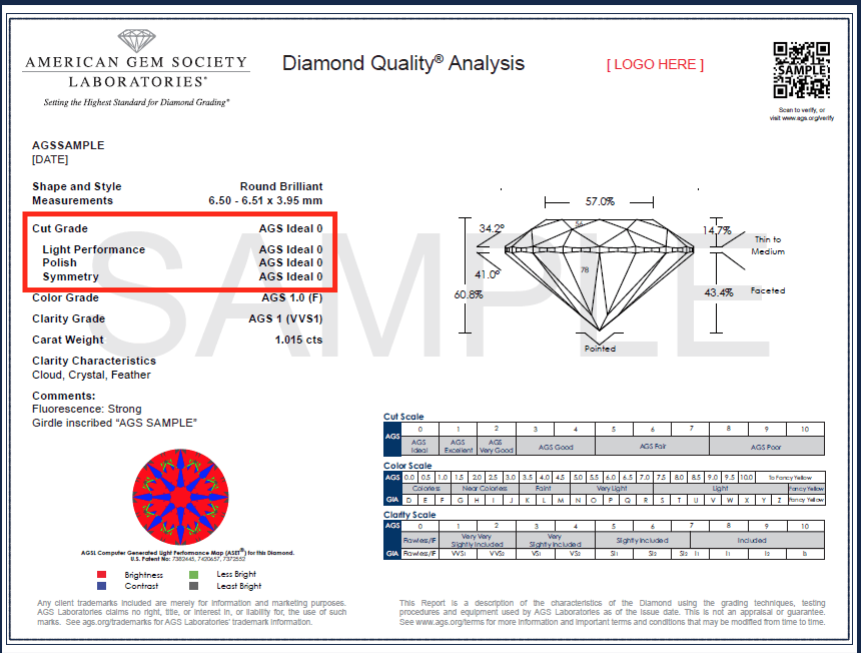
The top grade in the AGS system, it usually refers to cut quality, but color and clarity are also graded on the same 0-10 scale. See also Triple Zero.
Ags Grading Scale
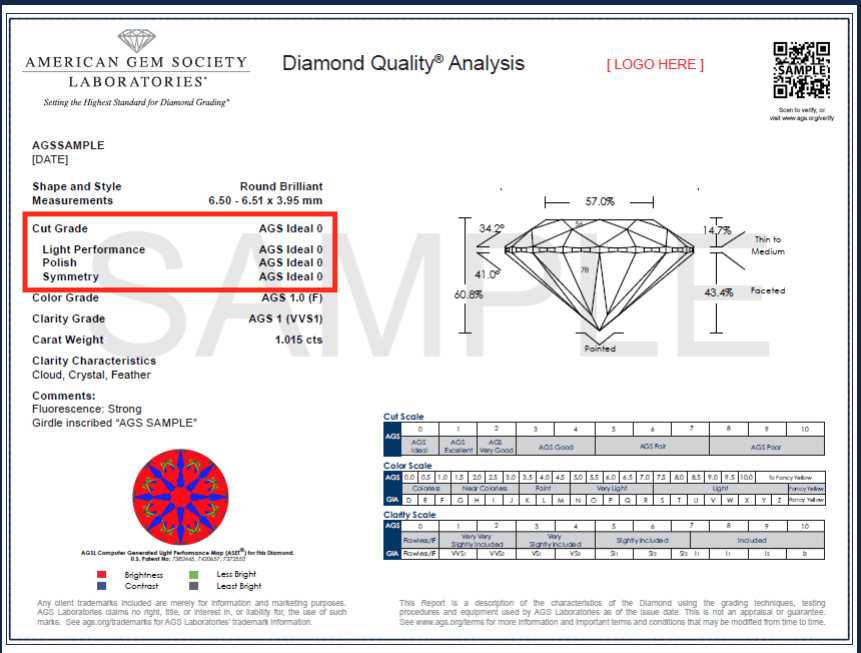
Evaluation is done on a 0-10 scale with 0 being ideal, or “zero deductions”. In addition to cut quality, color and clarity are also graded on the numerical scale but the GIA equivalents are also stated on the report. See also Triple Zero.
AGSL
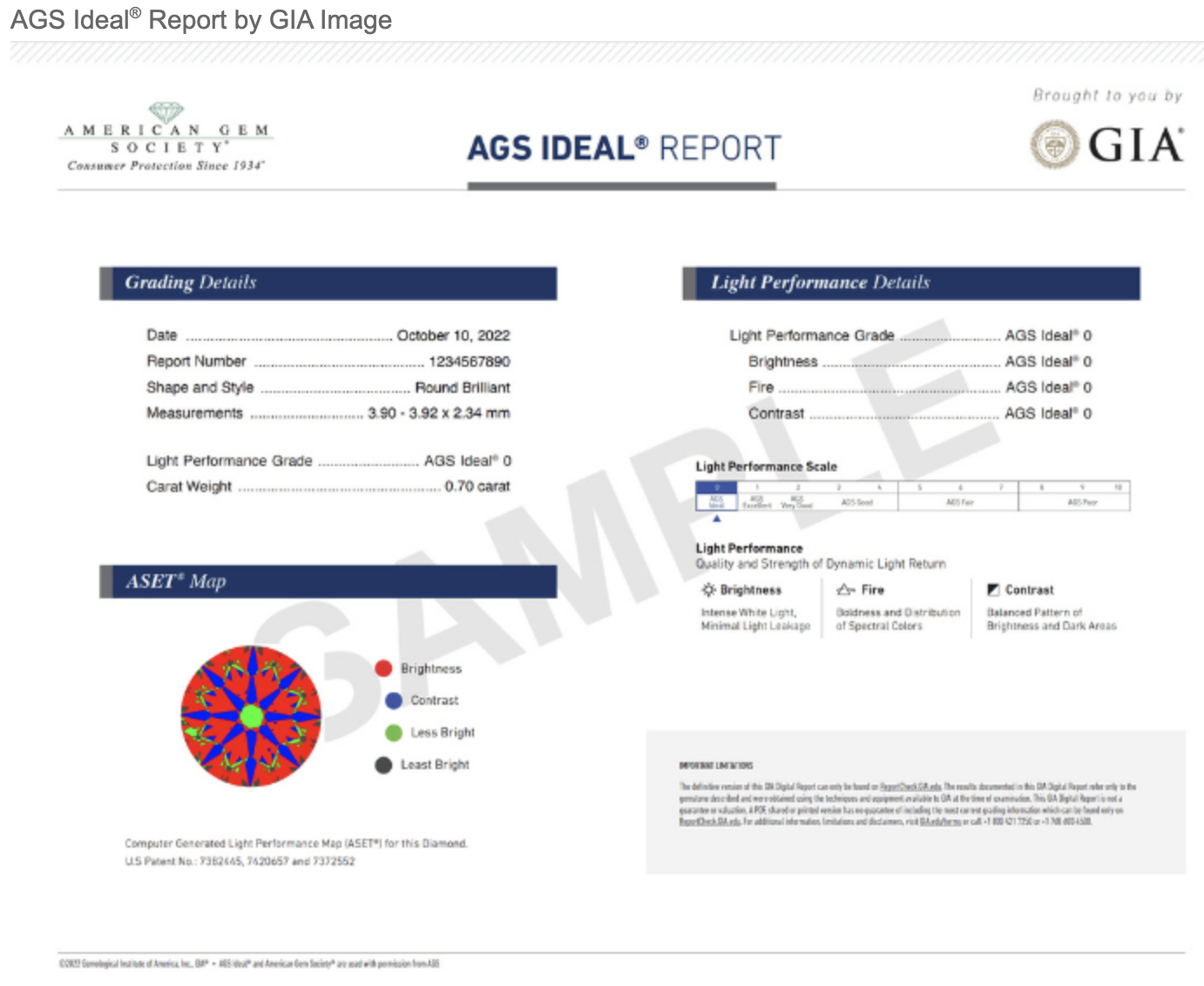
(American Gem Society Laboratories) A US based laboratory considered the foremost authority on diamond light performance cut grading and serving clients worldwide.
Artisanal mining
Rudimentary digging at the surface of alluvial deposits by individual diggers using simple tools. Artisanal diggers are vulnerable to those who would prey on them. The Diamond Development Initiative is specifically designed to help artisanal miners.
ASET
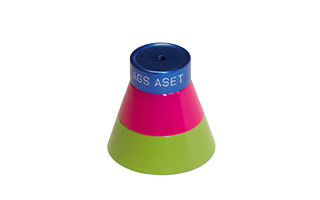
ASET Angular Spectrum Evaluation Tool, the graphical foundation of the AGS light performance cut grading system. A simple hand-held reflector device can be used to assess light return, contrast and leakage in loose diamonds and diamonds set in jewelry.
Bezel
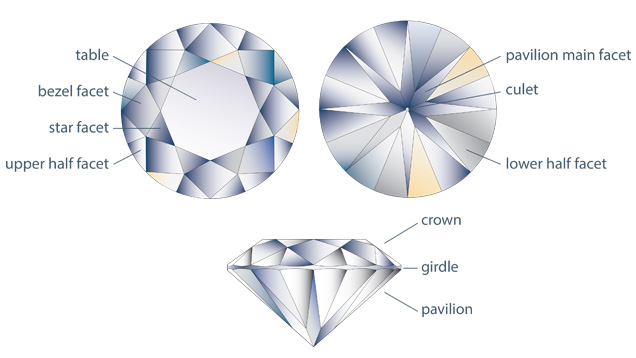
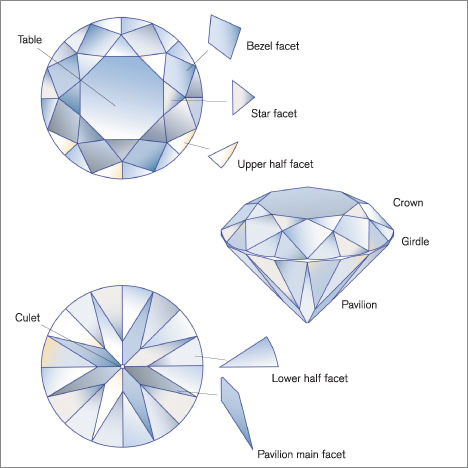
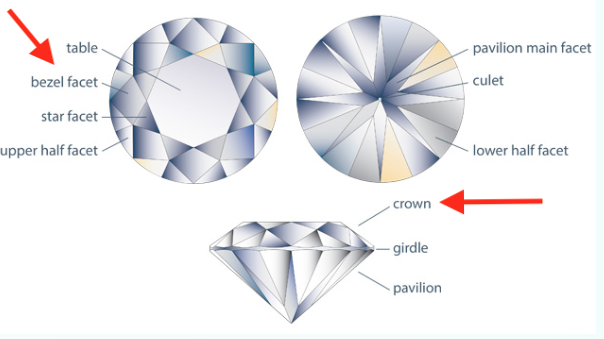
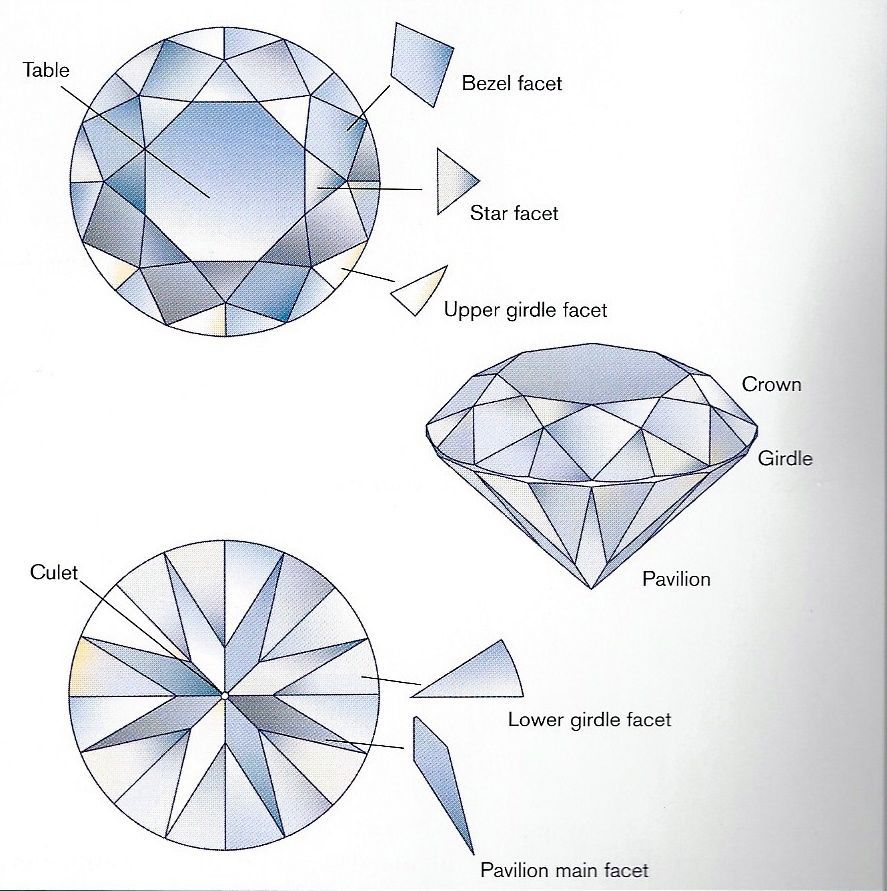
These are the main facets located on the crown of the diamond. The 8 “kite” shaped facets on the round stone are an example.
Bezel Facets
The kite shaped facets located between the table and the girdle of a diamond.
Bezel Setting
A bezel set ring is a type of setting where the stone is set into a metal “frame” or “collarette”. An example would be this beautiful piece from Brilliant Earth or James Allen. The metal frame is usually made of metal such as gold or platinum, and is designed to fit snugly around the stone. This type of setting is popular for its modern, sleek look, and is often used for engagement rings and other pieces of jewelry.

Bearded girdle
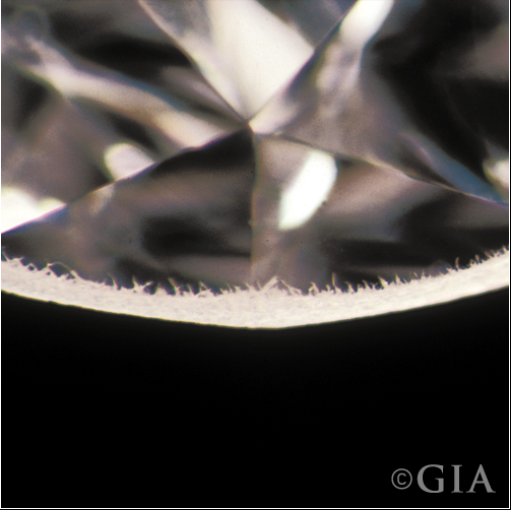
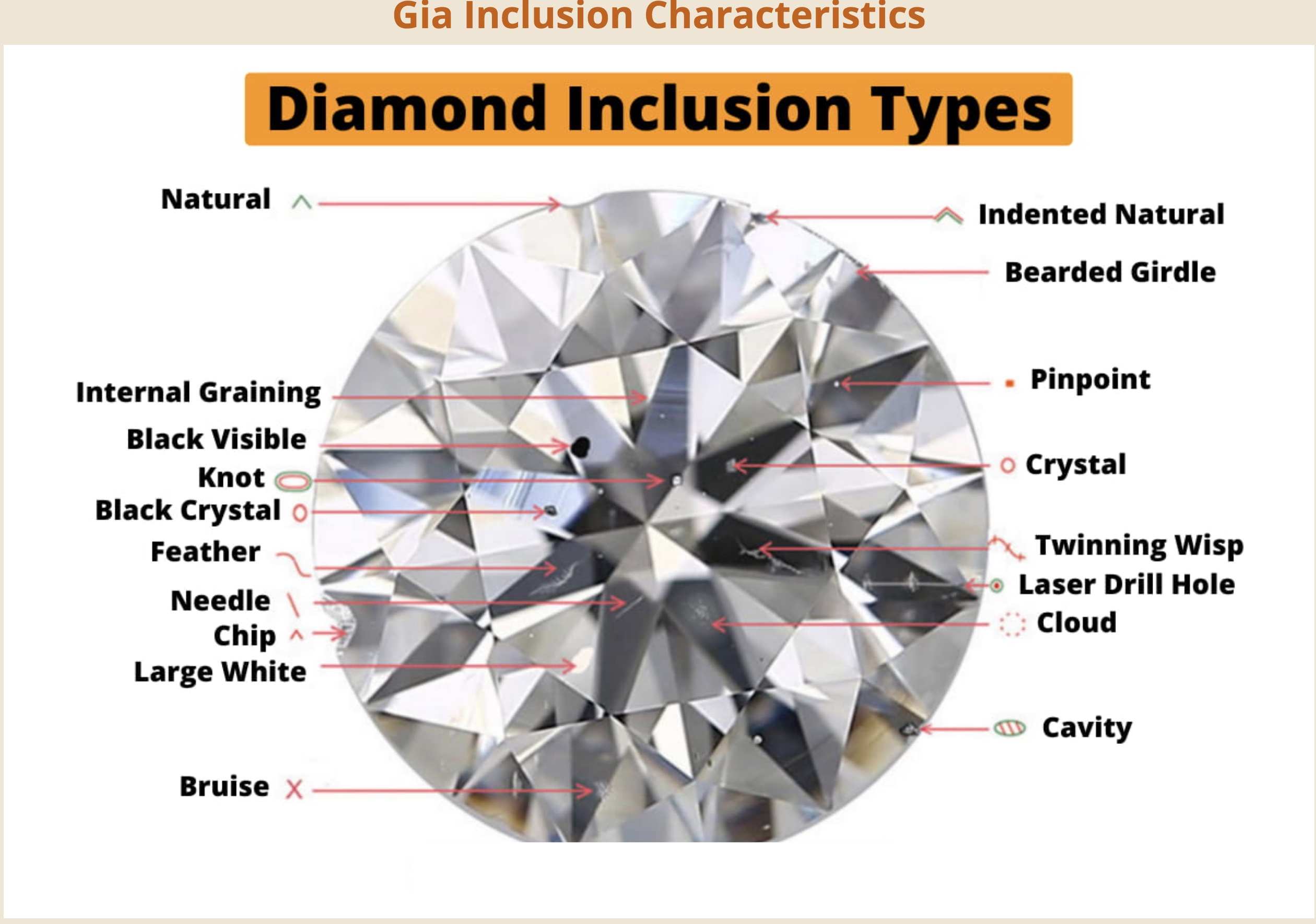
A “rough” girdle. Generally a series of minute feathers at the girdle that often result during the cutting process.
Bruise
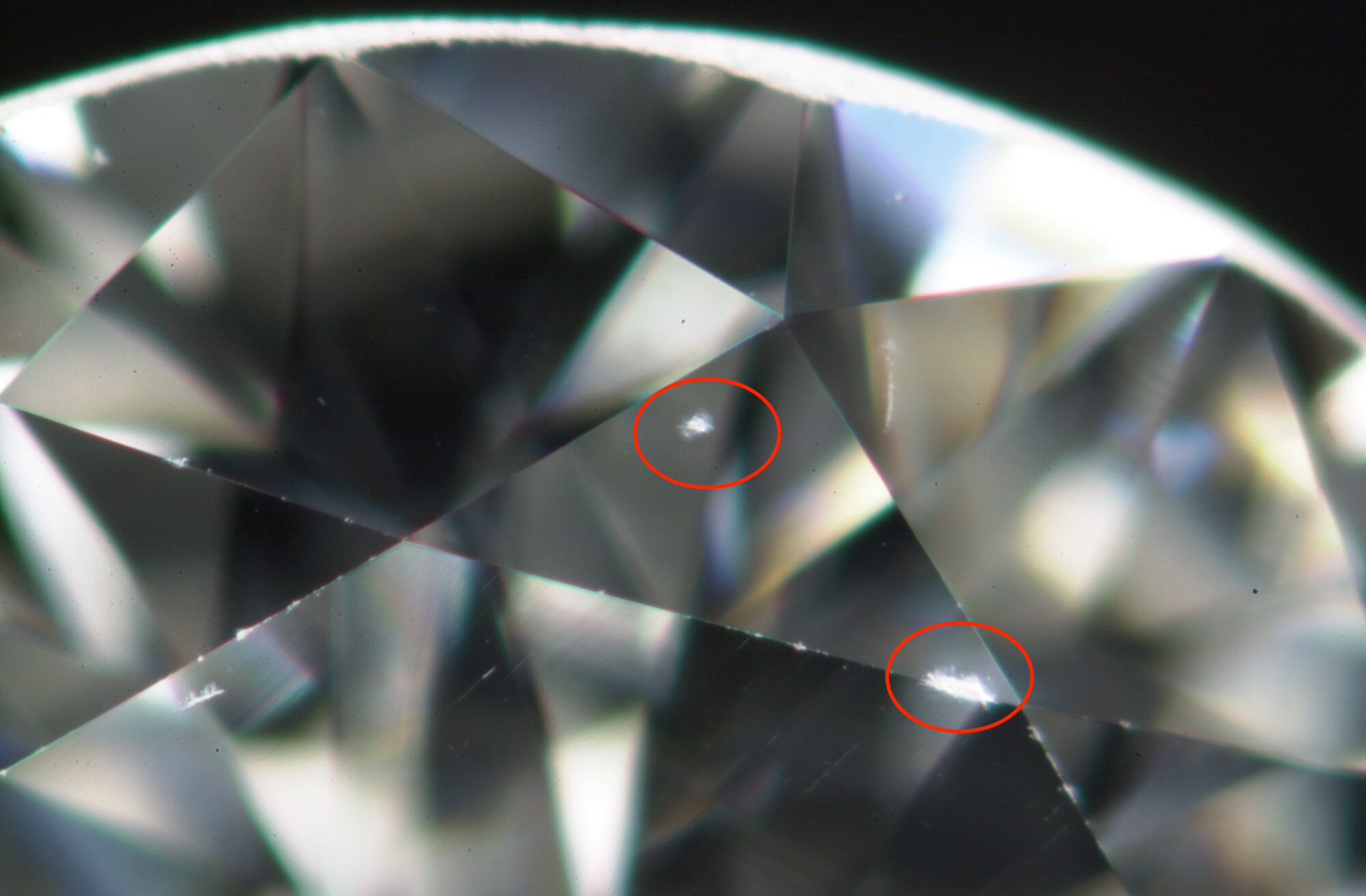
Occurs at impact. Generally a small area with root-link feathers. Indication of a “Bruise” will appear in the Key-to-Symbols area of the GIA grading report.
Baguette
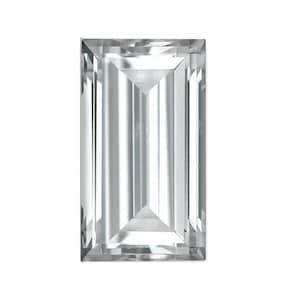
Very elongated (like the namesake French bread), step cut, normally used as accent stones. They can be tapered or straight.
Blocking
A preliminary step in diamond cutting where the basic proportions and symmetry of the diamond are established and the first 8 facets on both crown and the pavilion are placed.

Branded diamonds
Proprietary cuts that feature unique facet arrangements and/or a unique set of characteristics and qualities. Hearts on Fire, A CUT ABOVE®, Leo, and Lucida are examples of branded diamonds.

Brilliance
The effect created by light return as a result of a combination of brightness and positive contrast.
Brilliant
Brillianteering
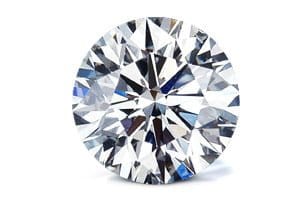
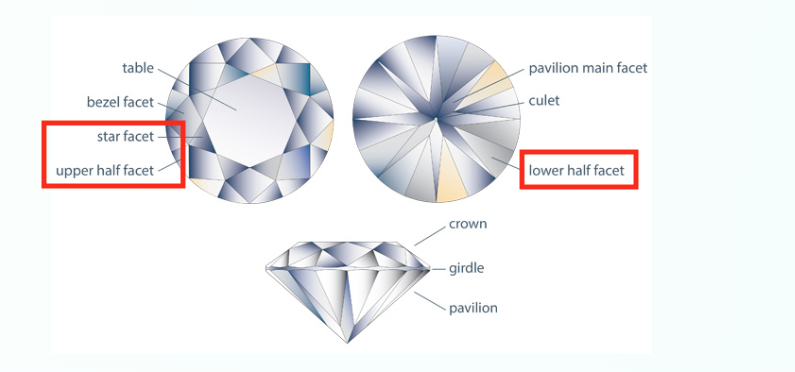
The process of cutting the final forty facets on the diamond including the upper and lower girdle and star facets.
Brown Material
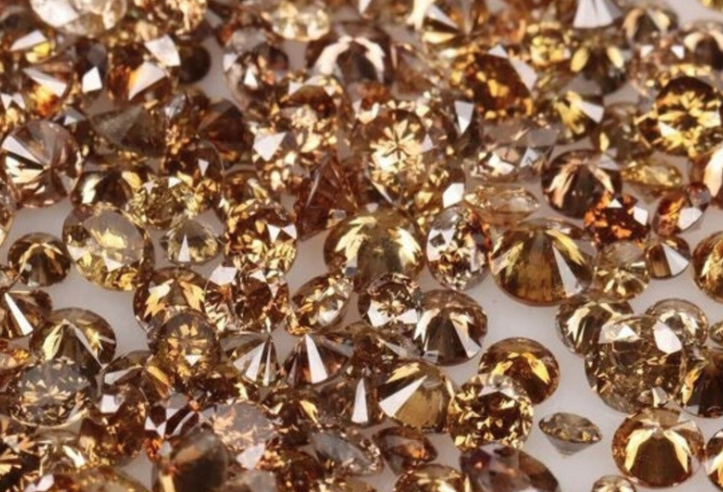
Typically refers to the presence of brown coloration within the stone. This can ranges from very very light brown to very dark brown. This material is known in the industry to possess a much lesser value than white diamonds.
Bangle Bracelet
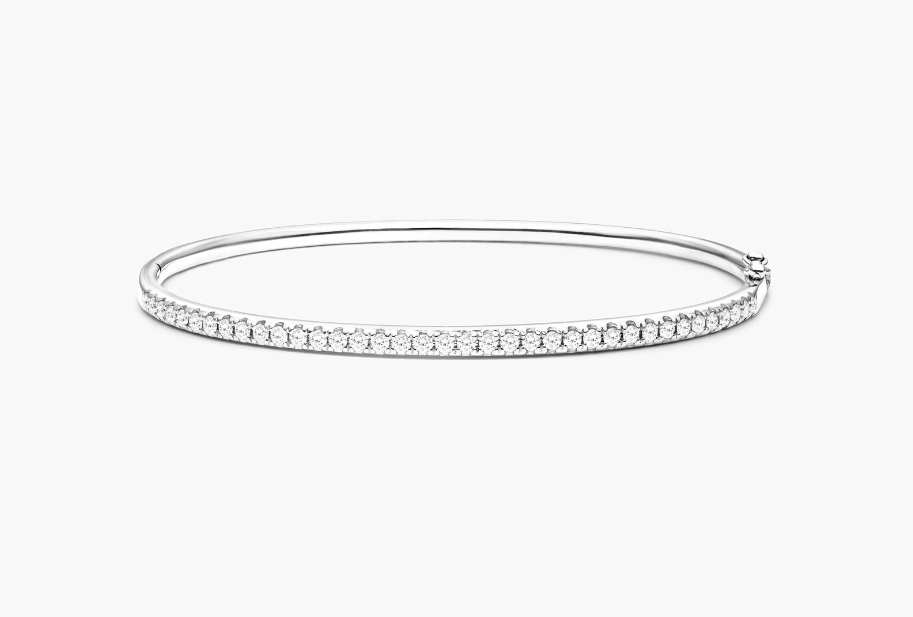
Making a major comeback in the last 10 years, the bangle bracelet is a type of jewelry that is worn around the wrist. It can be both plain and with gemstones. A cool example of this is the single row diamond bangle from James Allen. A bangle is typically made with a solid band of metal or other material that is worn around the wrist. Different versions of the bangle are offered with one being a solid bracelet with no hinge or opening and others that do. Check this stunner from Brilliant Earth. Bangle bracelets often come in various shapes and sizes and can be made from a variety of materials such as gold, platinum or silver. Bangle bracelets are popular pieces of jewelry that can be worn for both casual and formal occasions.
CAD(Computer Aided Design)
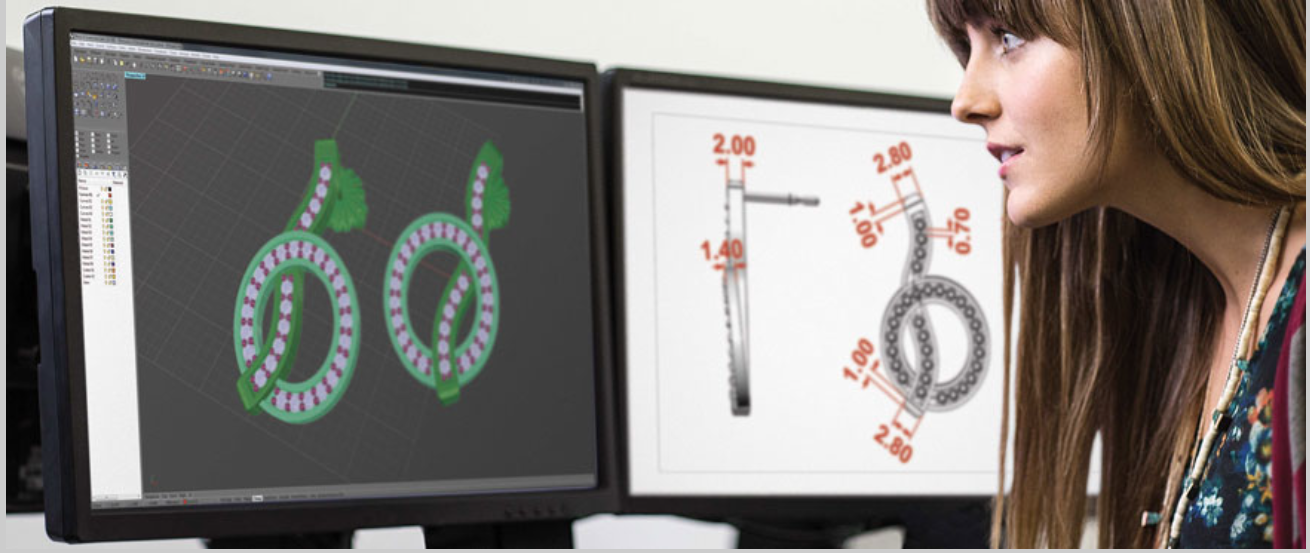
A software program used by jewelry designers and manufacturers to create detailed designs and models of jewelry pieces. CAD is used to create intricate designs quickly and accurately and to test the functionality of the designs before they are produced. CAD also allows designers to create virtual prototypes to test the design before it is made. It is an invaluable tool for jewelry designers and manufacturers.
Cathedral
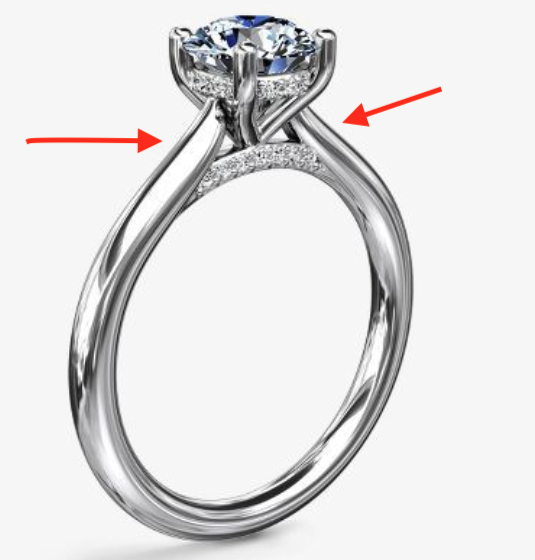
A cathedral ring setting is a type of setting that features two “wings” that extend from either side of the center diamond or gemstone, like these rings from James Allen and Blue Nile. The wings are usually set with diamonds and can be plain or embellished with diamonds or engravings. This setting gives the ring a regal, elegant look, and is a popular choice for engagement rings. The cathedral setting is also known as a “raised” setting.
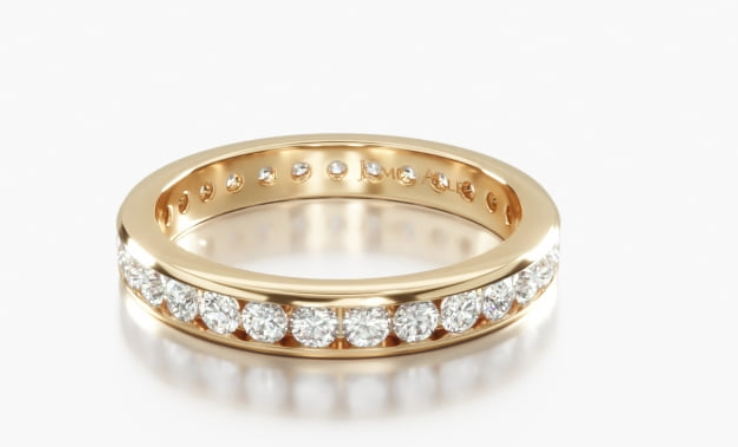
Channel Set
Channel setting is a type of setting where diamonds or other gemstones are set into a narrow groove in the metal of the jewelry. The stones are set side by side, with the edges of the stones touching, creating a smooth, continuous surface. This type of setting is popular for its modern, sleek look, and is often used for engagement rings and other pieces of jewelry. Here are two examples of channel set from JamesAllen and Whiteflash.
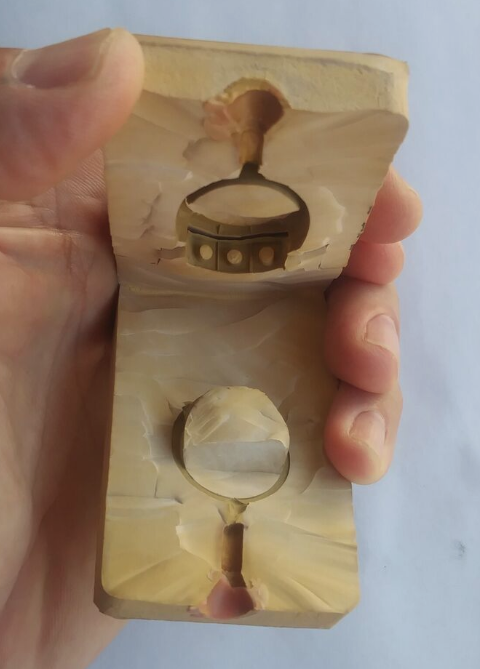
Casting:
In jewelry making, casting refers to the process of creating metal objects by pouring molten metal into a mold and allowing it to solidify. This technique allows jewelers to replicate intricate designs and shapes with precision. The mold can be made of various materials, such as rubber or investment (a plaster-like substance). Once the metal has cooled and solidified within the mold, the jeweler can then remove the casting, finishing and polishing it to achieve the desired final product. Casting is a versatile method used to produce a wide range of jewelry pieces.
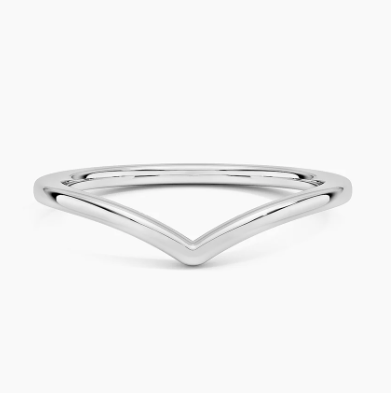
Chevron Ring
Refers to a V-shaped or inverted V-shaped pattern commonly used in design elements, particularly in settings for gemstones such as diamonds. This distinctive pattern can be seen in various jewelry pieces, including rings, necklaces, and bracelets. A chevron setting involves arranging gemstones in a manner that forms a V shape, adding a unique and stylish touch to the overall design. The chevron pattern is versatile and can be crafted with a single chevron or incorporated into more intricate and elaborate jewelry designs. It is a popular choice for those seeking geometric and eye-catching aesthetics in their jewelry.
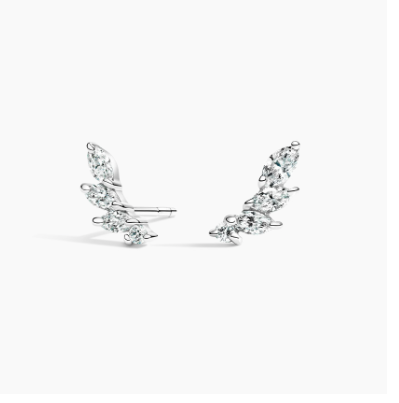
Crawler
Big moves in the past few years with influencers and celebrities rocking this fashion piece. An earring crawler is a type of earring that travels up your earlobe instead of hanging down. They can be worn with a single-hole piercing and come in various styles. Examples of earring crawlers can be found at Brilliant Earth.
Comments Section of GIA Report
The comments section of a GIA (Gemological Institute of America) grading report may include additional information or observations that don't fall under the standard 4 Cs (Cut, Color, Clarity, and Carat weight). It can provide details about fluorescence, additional grading information, or any unique characteristics of the diamond. The comments section adds context to the diamond's overall assessment. Often, the GIA will comment about additional clouds, graining or pinpoints that may exist in the diamond.
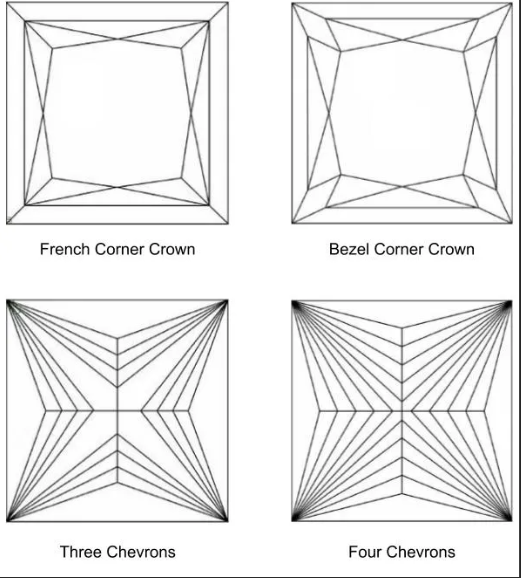
Chevrons
These are the “V” shaped facets located on the Pavillion of a Princess cut diamond.
Crown
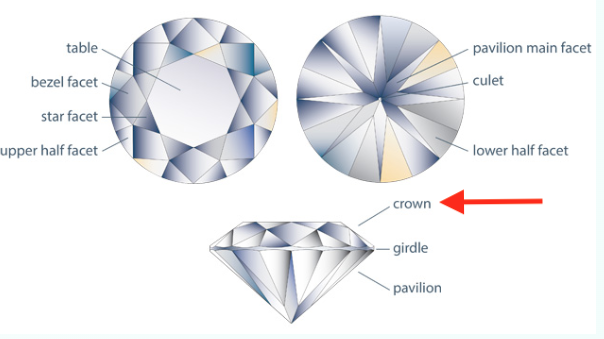
The area located above the girdle and below the table of a diamond. Generally all diamonds worn today have a crown they are not “flat”.
Crown angles
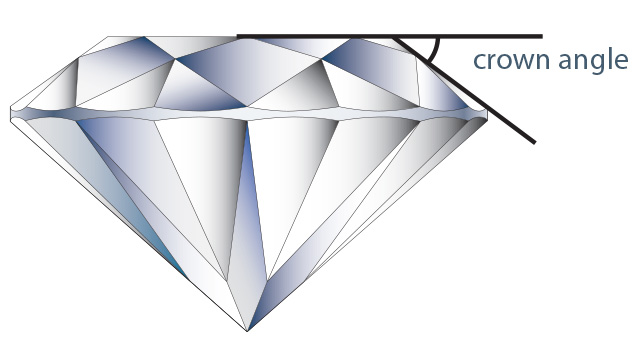
The crown angle on a diamond refers to the angle between the girdle plane (the widest part of the diamond) and the bezel facets of the crown (the upper part of the diamond, above the girdle). Specifically, it is the angle formed by the line of the girdle and the line of the crown facets when viewed from the side of the diamond.The crown angle is one of the measurements used to assess the diamond's cut quality. It, along with other factors like table percentage and pavilion angle, influences how light interacts with the diamond. Well-proportioned crown angles contribute to optimal light reflection, dispersion, and brilliance, resulting in a diamond with attractive visual characteristics.
Crown Height
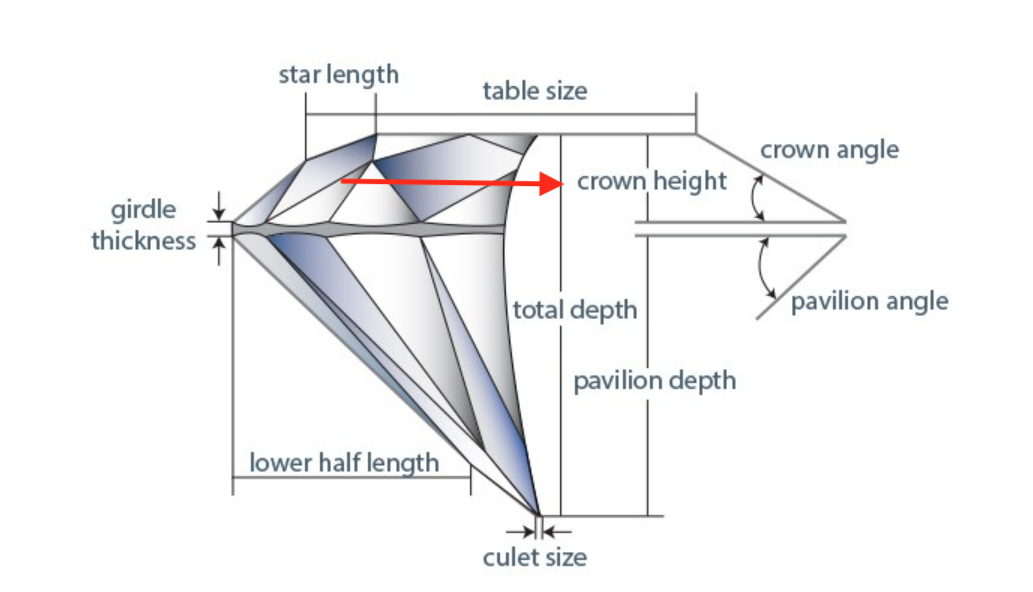
The crown height of a diamond is the vertical measurement from the table (the flat top facet) to the girdle, which is the outer edge where the top (crown) and bottom (pavilion) portions of the diamond meet. It represents the height of the diamond's upper section, also known as the crown. Crown height is an important factor in assessing a diamond's proportions and overall cut quality. Along with other measurements such as table size, pavilion depth, and angles, the crown height influences how light interacts with the diamond. Well-proportioned crown height contributes to optimal light reflection, dispersion, and brilliance, enhancing the diamond's visual appeal.Different diamond cuts may have variations in crown height based on the overall design, and assessing this measurement is crucial when evaluating a diamond's quality and aesthetics.
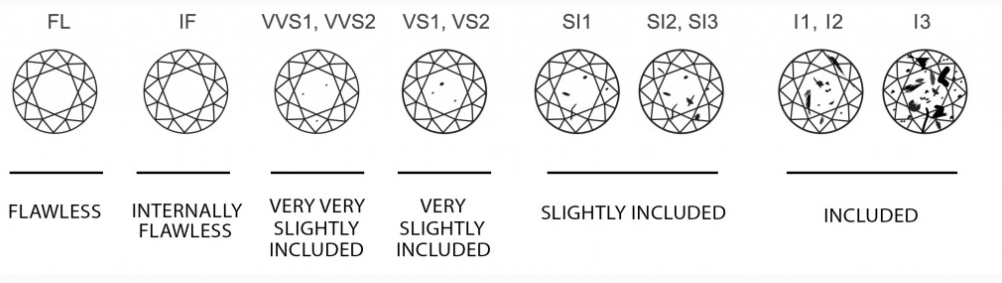
Clarity
Diamond clarity refers to the presence of internal and external imperfections, often called inclusions and blemishes, respectively. These natural characteristics are formed during the diamond's growth process. Clarity is graded on a scale established by gemological organizations like GIA (Gemological Institute of America), ranging from "Flawless" (no visible imperfections under 10x magnification) to various levels of inclusion, such as "Very, Very Slightly Included" (VVS), "Very Slightly Included" (VS), "Slightly Included" (SI), and "Included" (I). A higher clarity grade typically indicates a more valuable diamond, but the impact on appearance depends on the size, location, and nature of the imperfections.
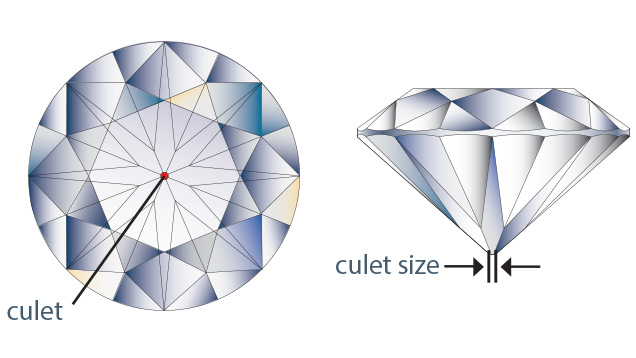
Culet
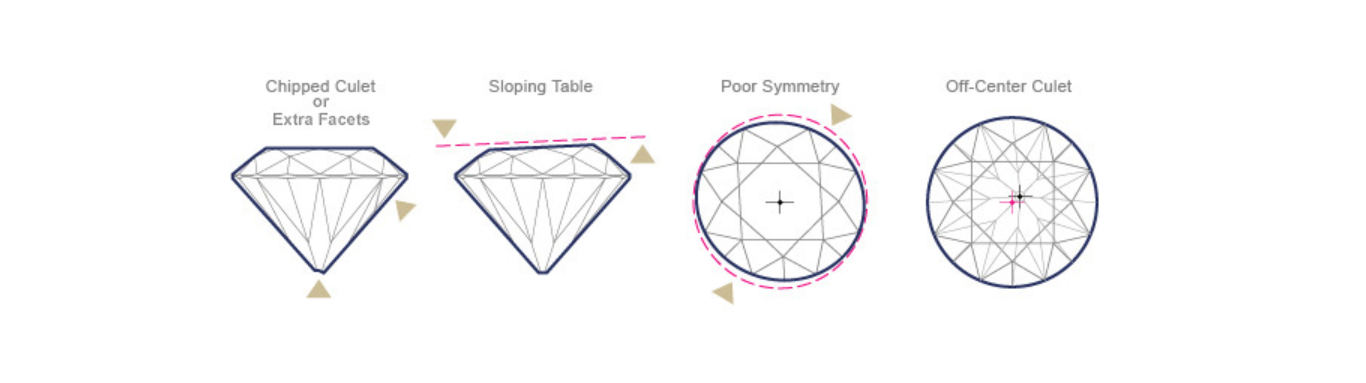
The culet is the small facet at the bottom of a diamond's pavilion (bottom portion). It is essentially a point or a tiny facet that may be present or absent. The culet can impact the appearance of a diamond, especially in terms of light reflection. A well-proportioned culet contributes to the diamond's brilliance, while a large or noticeable culet might affect its overall visual appeal. Culets are graded from "None" to "Large" based on their size and visibility.
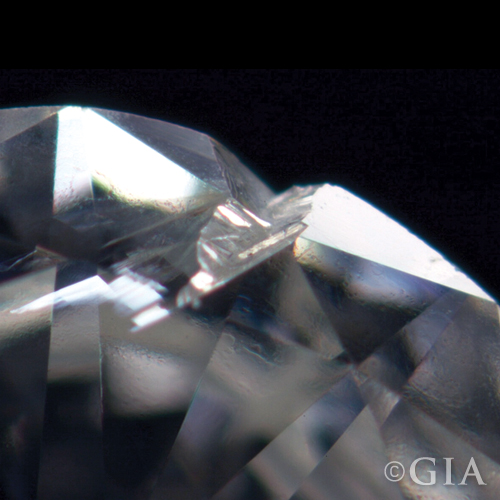
Cavity
Not unlike what you think of when you have a cavity in your tooth; simply put, it is a hole in the diamond. It may be caused by a myriad of factors all of which are not a positive as the integrity of the diamond may be compromised. Indication of a “Cavity” will appear in the Key-to-Symbols area of a GIA grading report.
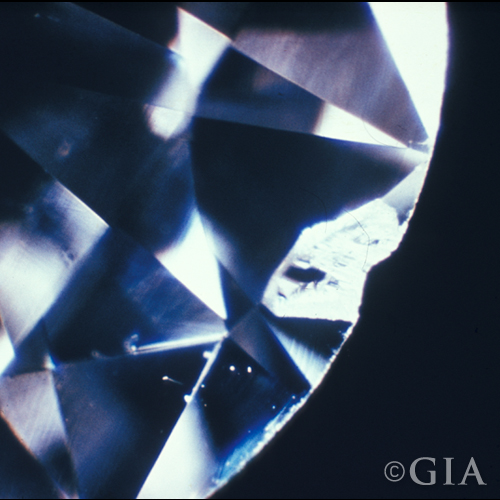
Chip
Just as it sounds, a “Chip” is a stone that has been damaged and not repaired. Generally it appears on the girdle but may happen anywhere a diamond is exposed. We do not recommend purchasing a diamond with a “Chip" and suggest it be repaired before purchase. Indication of a “Chip” will appear in the Key-to-Symbols area of the GIA grading report.
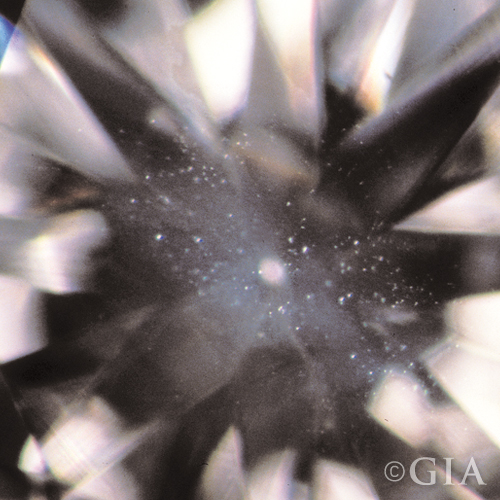
Cloud
Is a type of inclusion that is a “cluster” of pinpoints. These are generally minute but when together they can affect the brilliance/sparkle of a diamond. Small “clouds” that are translucent, are of limited concern, however larger “clouds” are not a positive. “Clouds” will be noted in the Comments section and/or the Key-to-Symbols area of the GIA grading report.
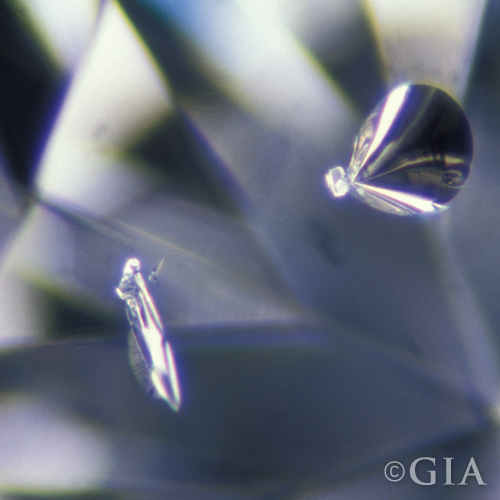
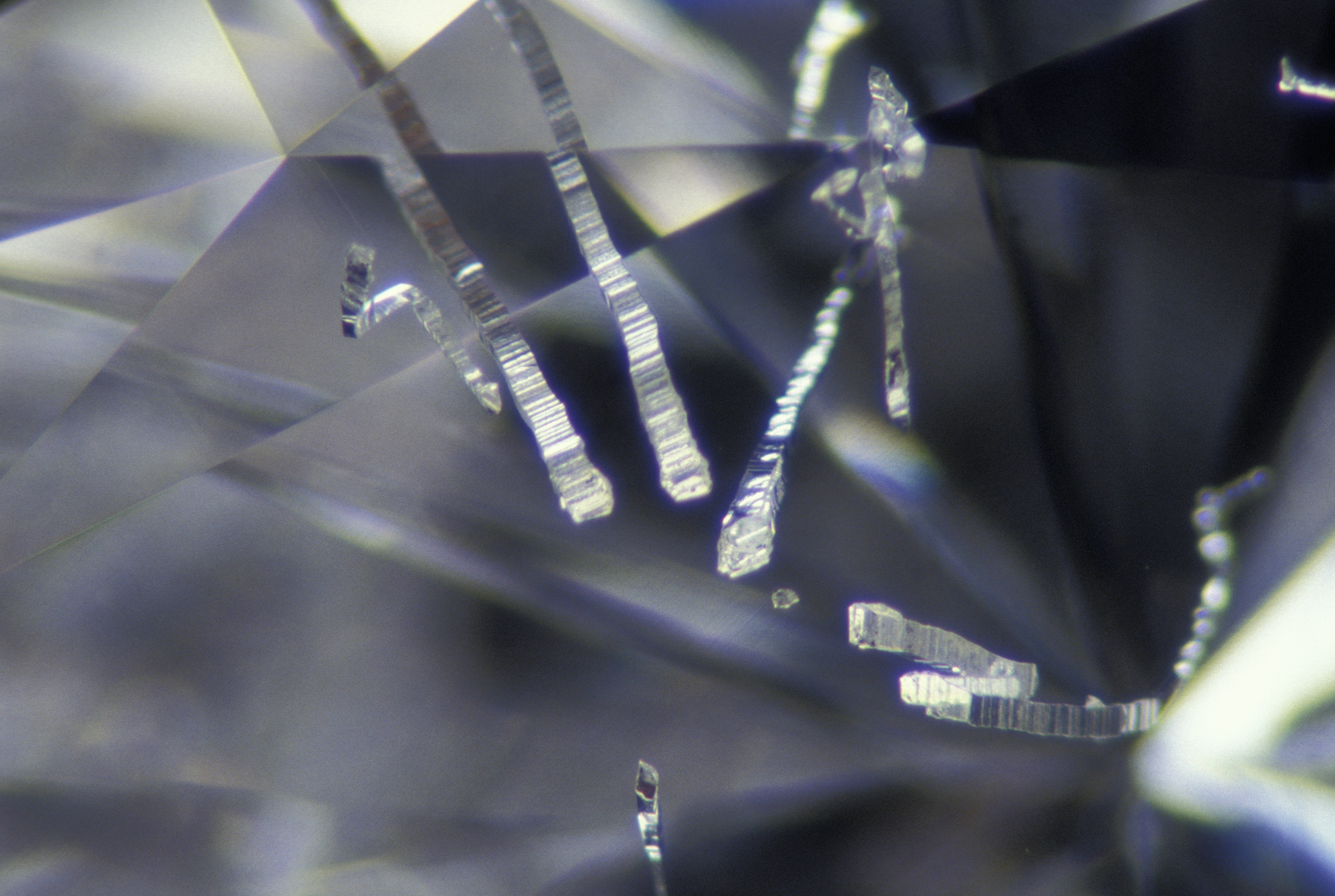
Crystal
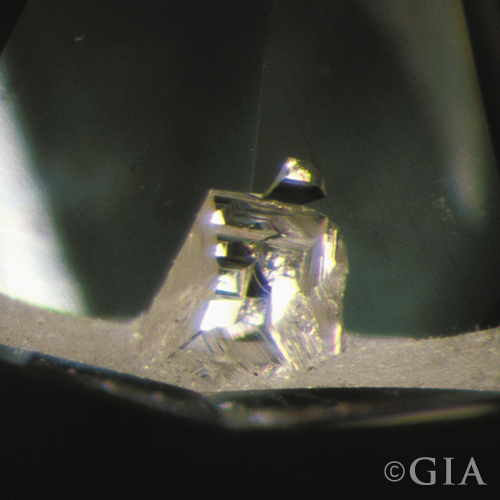
Is a type of imperfection that exists in many diamonds. Often the color is black(a negative as it is more likely to be seen with the naked eye). Depending on the color, location and size of the imperfection, pricing for a similar graded stone may vary greatly. Indication of a “Crystal” will appear in the Key-to-Symbols area of the GIA grading report.
Carat
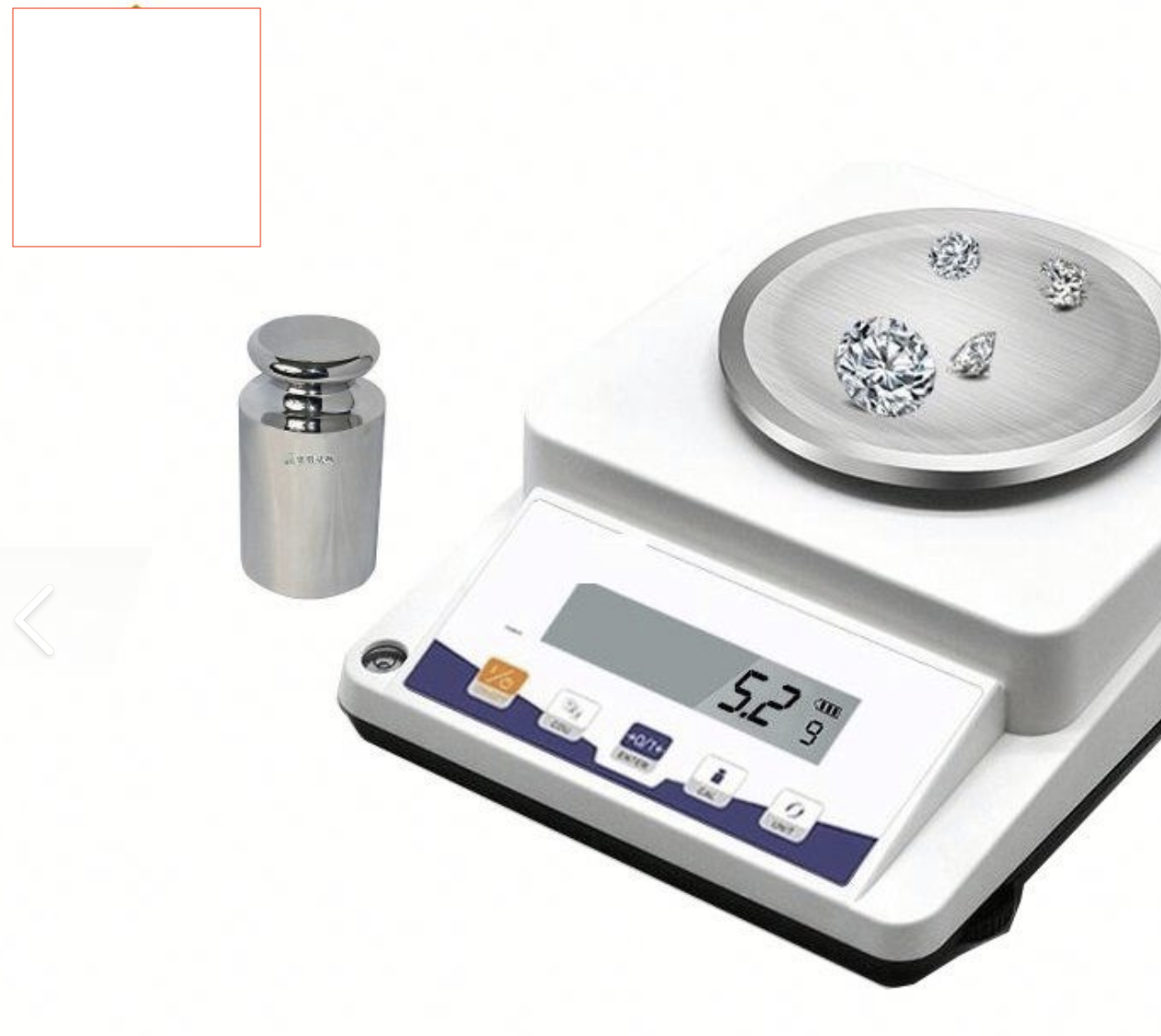
A unit of weight: 1.00 carat = .20 grams. Carat weight is widely equated to diamond size, however diamonds can have exactly the same weight and significantly different dimensionality, depending on cut proportions.
Certificate
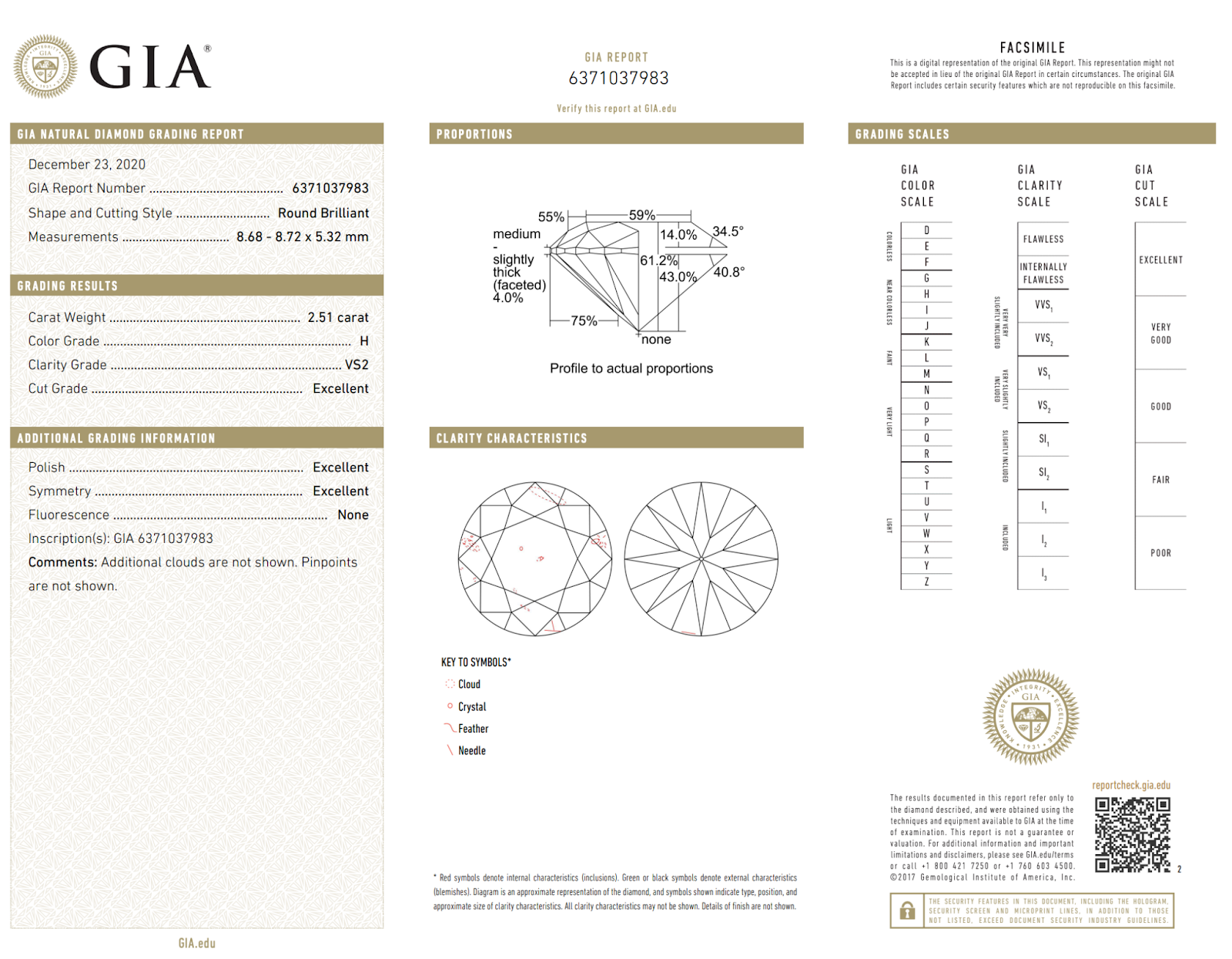
Common term for a gemological laboratory report.
Certified gemologist (AGS)
The credential awarded to a student who has completed the GIA graduate gemology program and the AGS diamond program and is employed by an AGS member store.
Coating
A thin layer of synthetic diamond over a non-diamond material designed to defeat certain types of diamond testers and/or to give a material better resistance to scratching.
Color
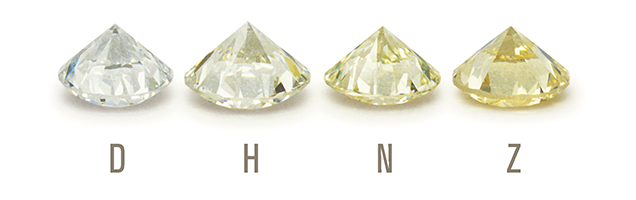
The color of a diamond refers to the presence or absence of color in the stone. In the context of diamonds, color is one of the key factors used to assess and grade their quality. The Gemological Institute of America (GIA) and other grading laboratories use a color scale that ranges from D (colorless) to Z (light yellow or brown).Diamonds with less color are generally more valuable, and the most highly prized diamonds are those that appear colorless. As you move down the color scale, diamonds may exhibit increasing levels of yellow or brown tint. Beyond the Z range, diamonds with more distinct and intense colors are classified as "fancy colors. The evaluation of a diamond's color is often done in controlled lighting conditions, and it plays a significant role in determining the overall quality and value of the diamond.
Conflict diamonds
Diamonds illicitly obtained and involved in fueling conflict between militant groups and legally established governments. The Kimberley Process was instituted in 2002 to stem the flow of conflict diamonds.
Contrast
The differential brightness between adjoining facets which contributes to the perception of brilliance, fire and scintillation.
Cubic zirconia (CZ)
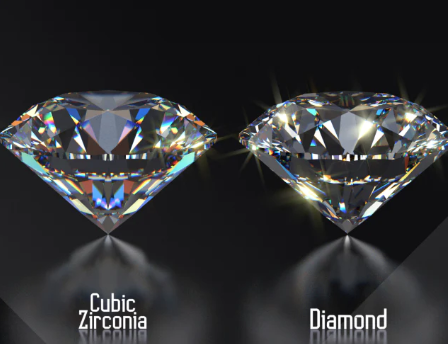
The most popular lab grown imitation diamond (simulant) on the market today.
Cushion
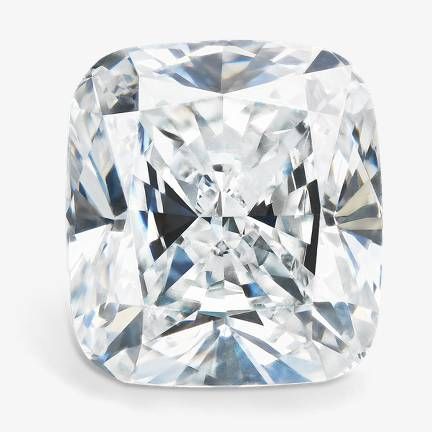
A cushion cut diamond is a popular diamond shape characterized by its rounded corners and larger facets, which enhance the stone's brilliance and fire. It combines a square cut with rounded corners, resembling a pillow or cushion, hence the name. This cut has been in existence since the 19th century and has a classic, romantic appeal. The cushion cut is often chosen for engagement rings and other fine jewelry due to its unique blend of vintage charm and modern sophistication.
Cut
Crown Facets (Upper Part)
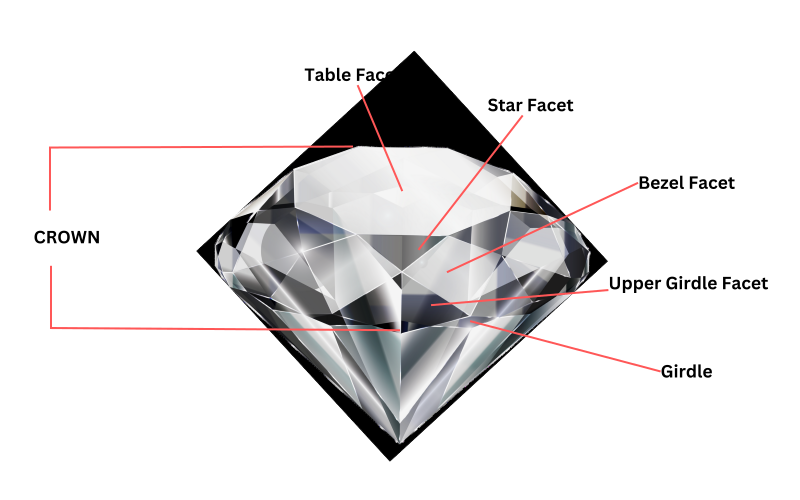
The crown facet of a diamond refers to the upper part of the gemstone, situated above the girdle. It consists of several individual facets that play a crucial role in the overall appearance and brilliance of the diamond.
Cultured Pearl
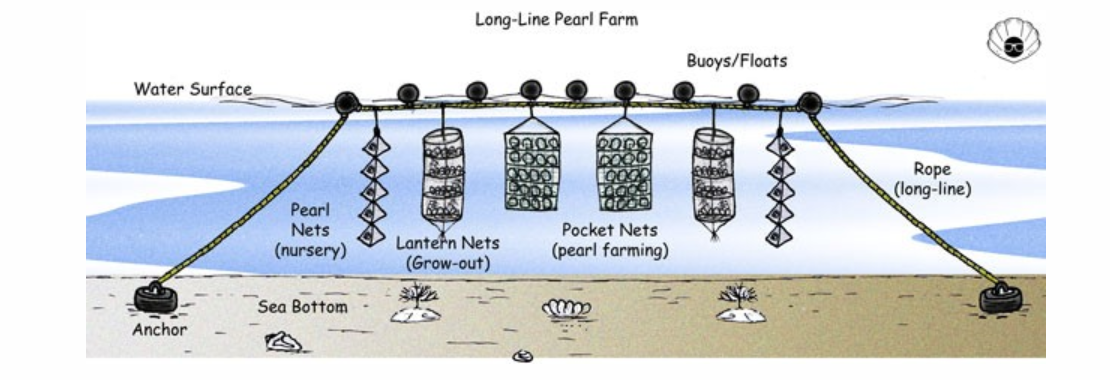
A cultured pearl is a pearl that is intentionally grown and produced with human intervention. Unlike natural pearls, which form spontaneously in the wild when an irritant enters a mollusk, cultured pearls are created through a controlled process.
In pearl cultivation, a technician implants a nucleus (often a bead or piece of shell) into the mollusk, triggering the formation of layers of nacre around it. This process simulates the natural pearl-growing environment. Cultured pearls can be produced in various types of mollusks, including oysters and mussels. They have become the predominant source of pearls in the market due to the ability to control and predict their production. Cultured pearls come in a wide range of sizes, shapes, and colors, offering versatility in jewelry design.
Certified
In the diamond business, a certified diamond is one that has undergone evaluation by a gemological laboratory, providing an unbiased assessment of its quality. Certification involves obtaining a detailed grading report from recognized laboratories like GIA, IGI, or AGS. This report includes essential information about the diamond, such as carat weight, cut, color, and clarity. The certification process adds transparency to transactions, offering both buyers and sellers an objective understanding of the diamond's attributes. It allows for standardized evaluation and comparison of diamonds, aiding informed decision-making. Buyers are encouraged to verify the credentials of the certifying laboratory and review the grading report to ensure the diamond meets their desired standards.
Cut Grades
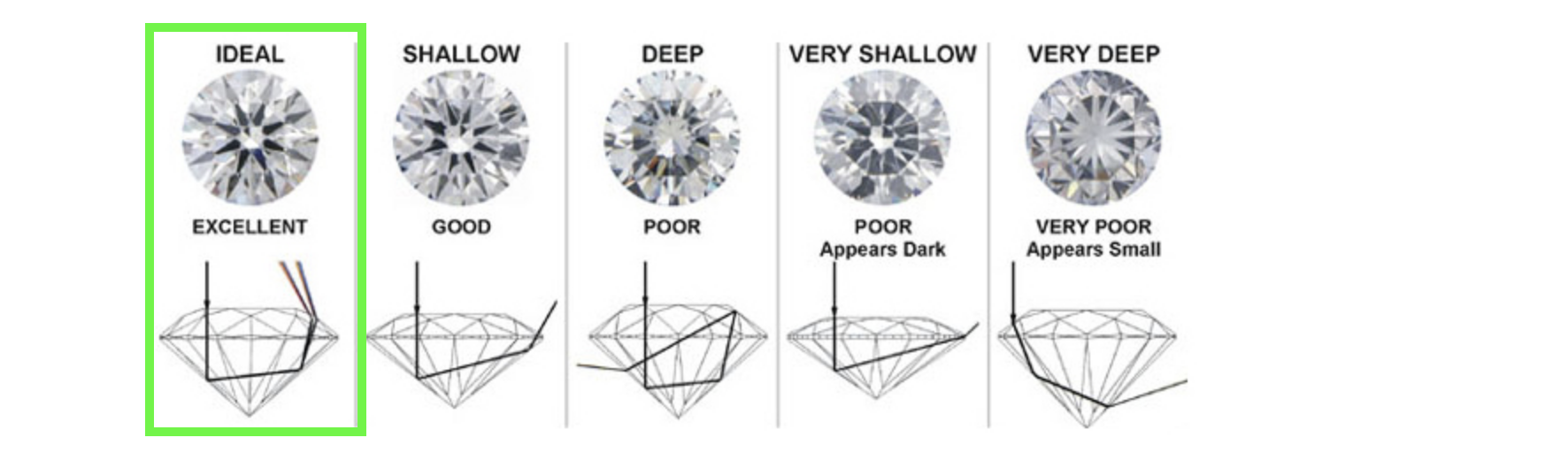
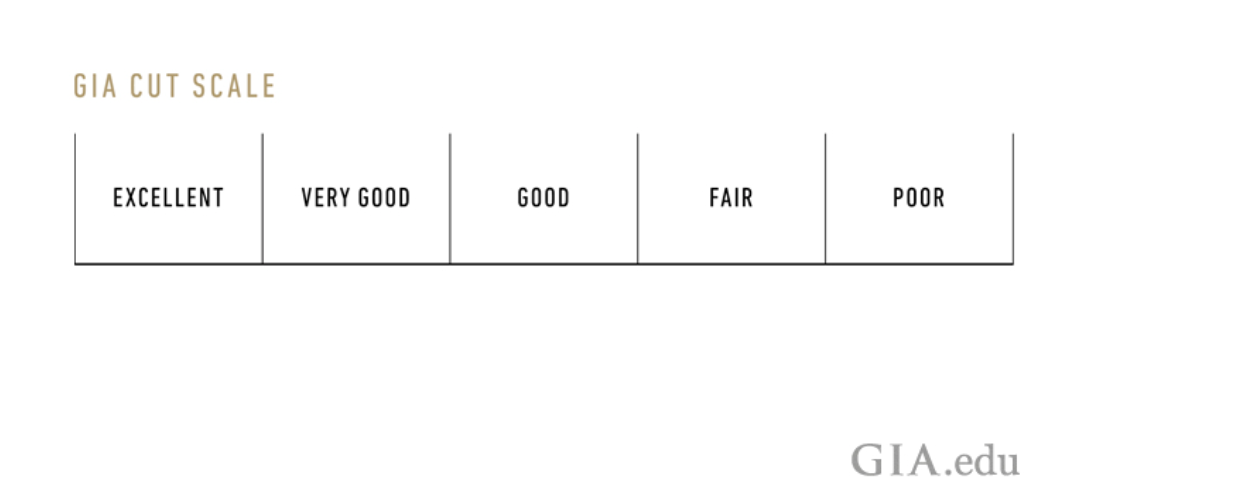
A diamond's "cut grade" refers to the evaluation of how well a diamond has been cut and shaped from its rough form. The cut grade is a crucial factor in assessing the diamond's overall appearance and how effectively it interacts with light. Various aspects of the diamond's cut are considered in determining its grade, including the proportions, symmetry, and the quality of facets. The Gemological Institute of America (GIA) and other gemological laboratories typically use cut grades such as Excellent, Very Good, Good, Fair, and Poor to communicate the quality of a diamond's cut.
An Excellent cut reflects light exceptionally well, resulting in a diamond with maximum brilliance and sparkle, while lower cut grades may exhibit reduced light performance.A diamond's cut grade is one of the 4Cs (cut, color, clarity, and carat weight) used to evaluate and communicate the diamond's quality, and it significantly influences its visual appeal and value.
Carat Weight
Measurement of how much a diamonds “weighs”. Derived from the carob seed which was historically used as counterweights on balance scales to measure precious stones. In ancient times, carob seeds were known for their relatively uniform size and weight. Merchants would use these seeds to balance and weigh gemstones, and over time, the term "carat" became a standard unit of weight for gemstones. One carat is equivalent to 200 milligrams or 0.2 grams.
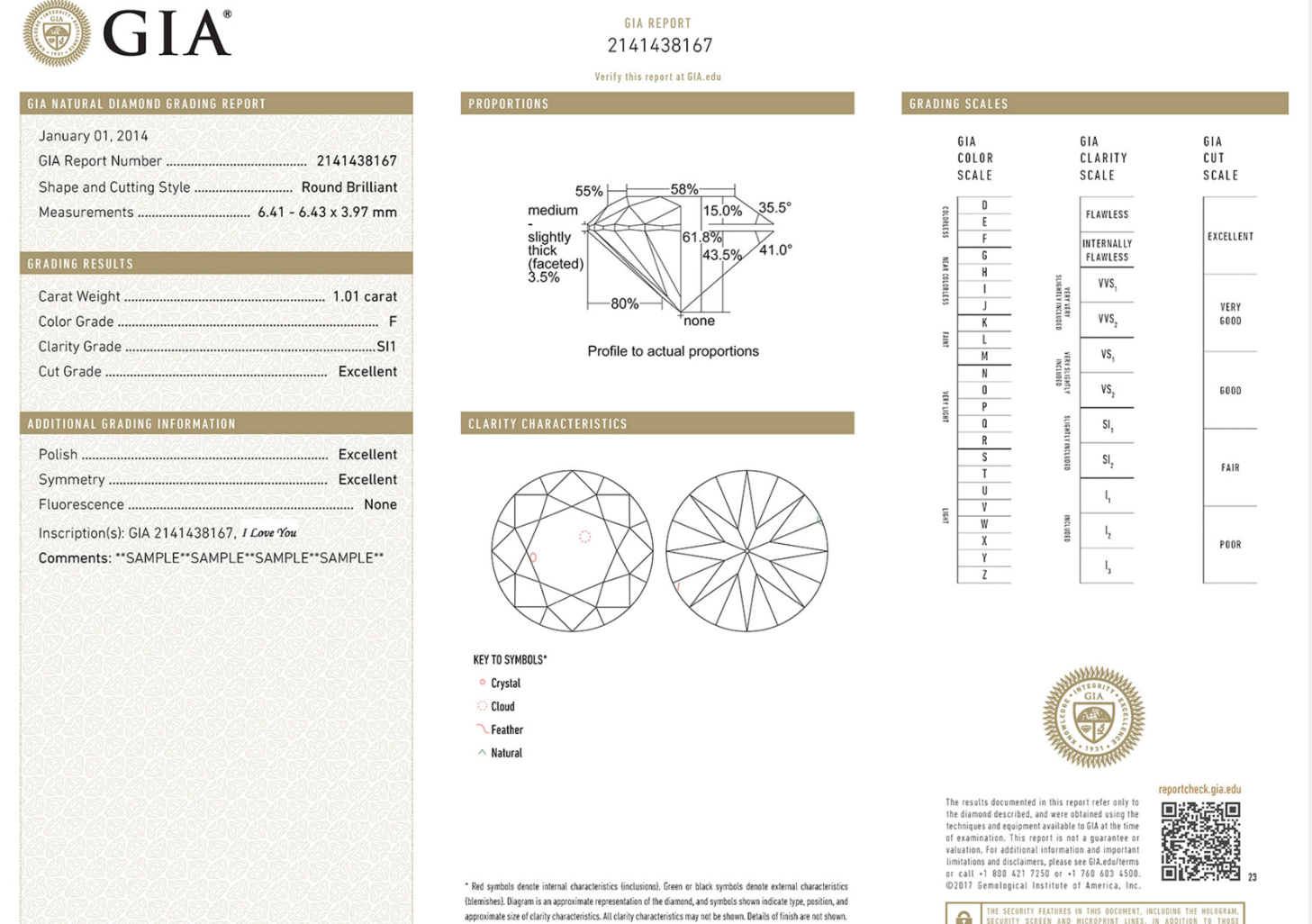
Diamond Grading Report
Most often a 3rd party grading report provided by an independent grading laboratory. The most respected laboratories in the united states include the gemological institute of america (GIA) and the american gem society (AGS) and the international gemological institute (IGI). These reports include a 4Cs assessment, plotted clarity diagram and proportions diagram. GIA a report number and often a laser inscription available at an additional charge.
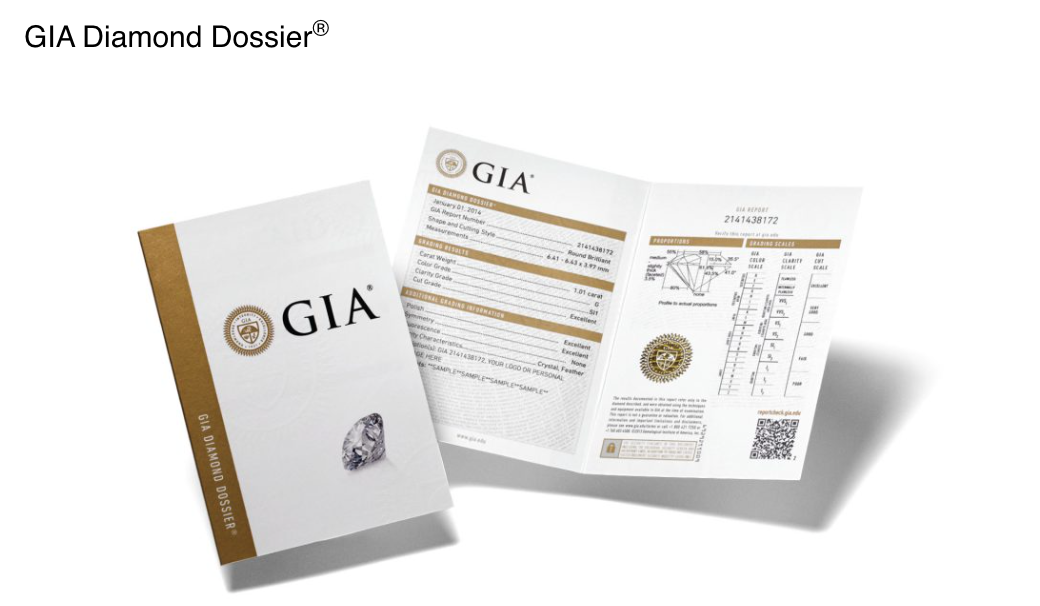
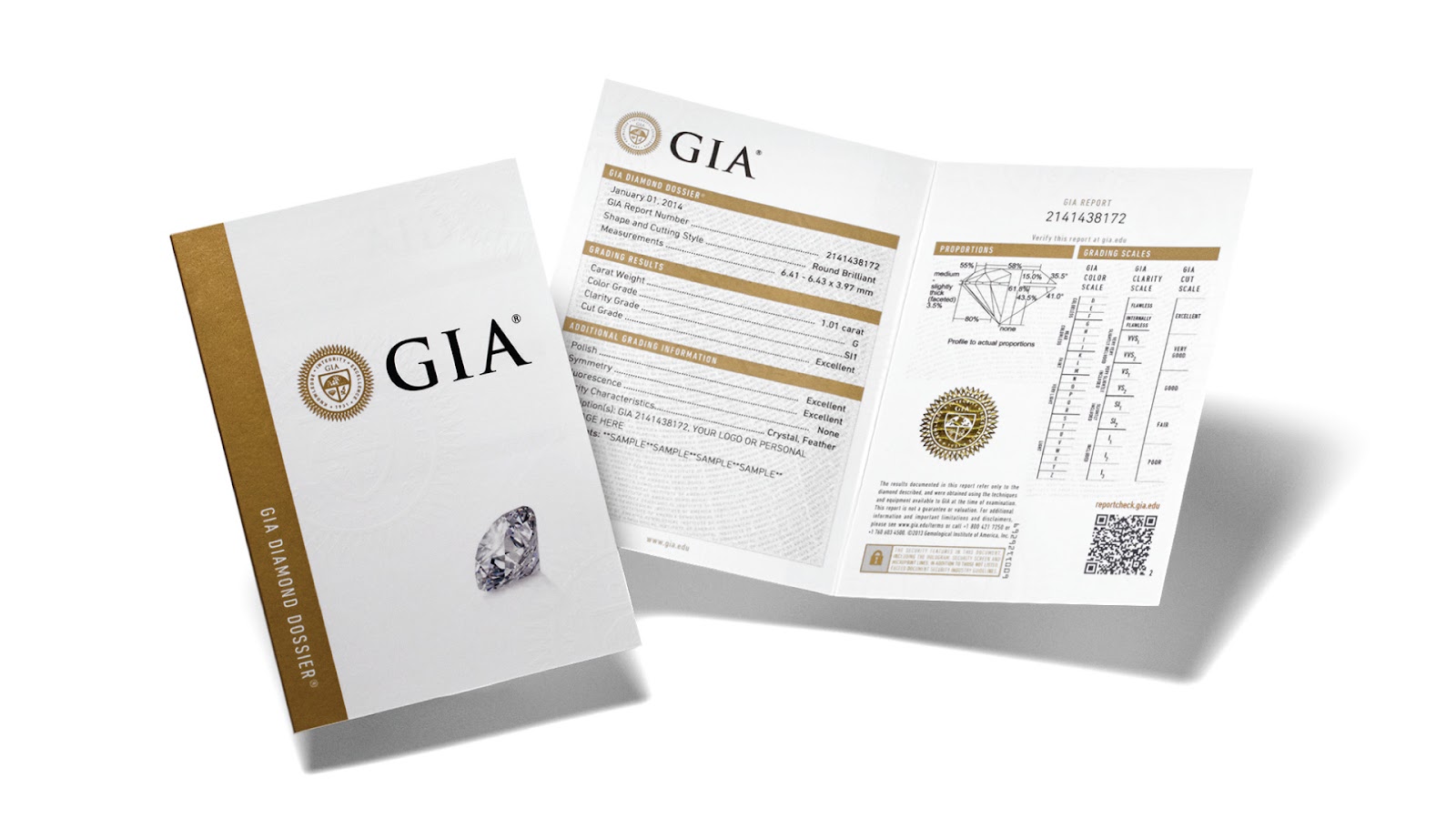
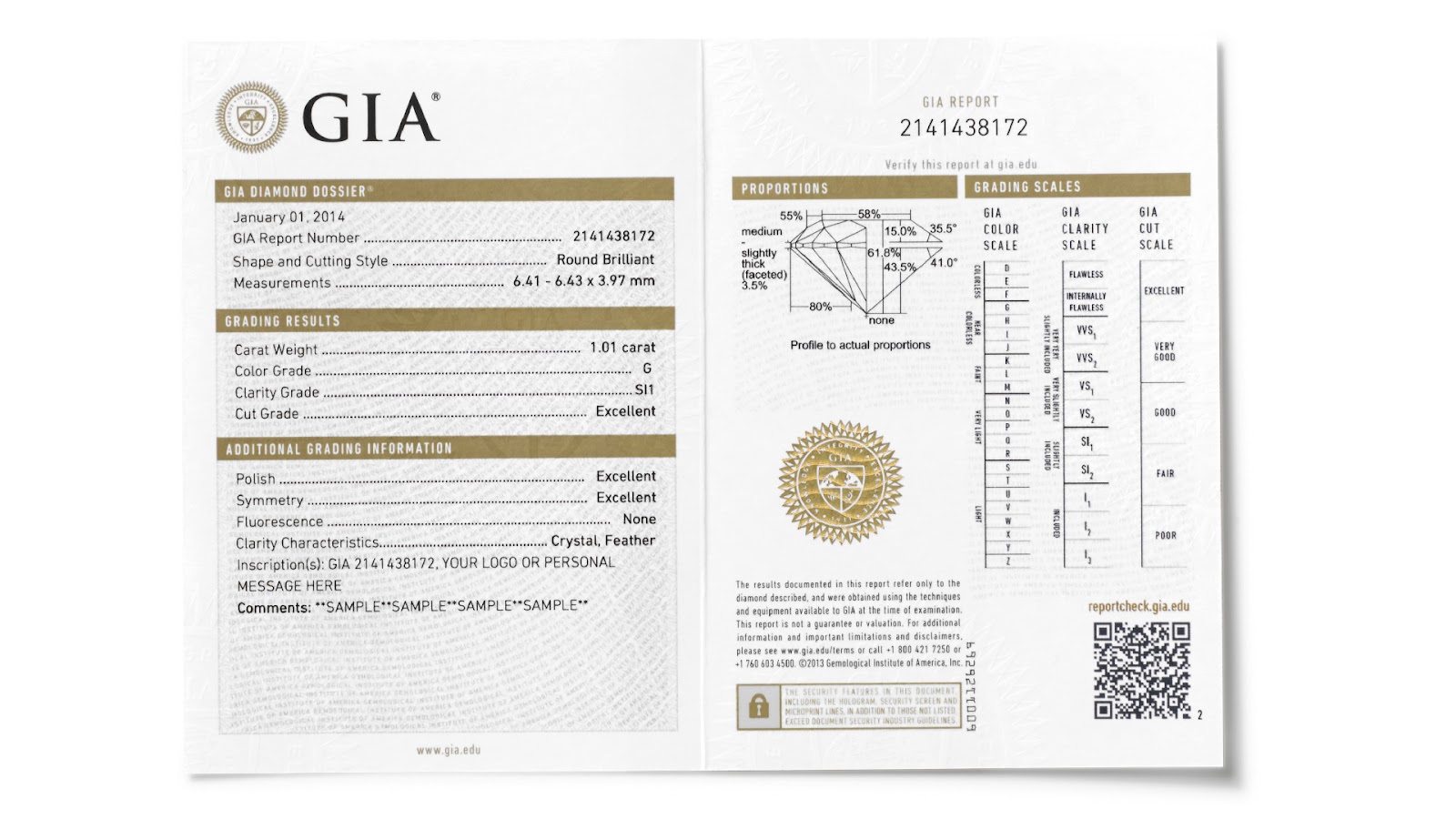
Diamond Dossier®
Includes 4Cs assessment, proportions diagram and laser inscription of the GIA report number used for stones below 1 carat. For untreated color only.
Diamond Origin Report
Includes 4Cs assessment with plotted diagram, confirmation of geographic origin, and laser inscription of GIA report number. This service is only for eligible diamonds that have gone through rough analysis with GIA before polishing.
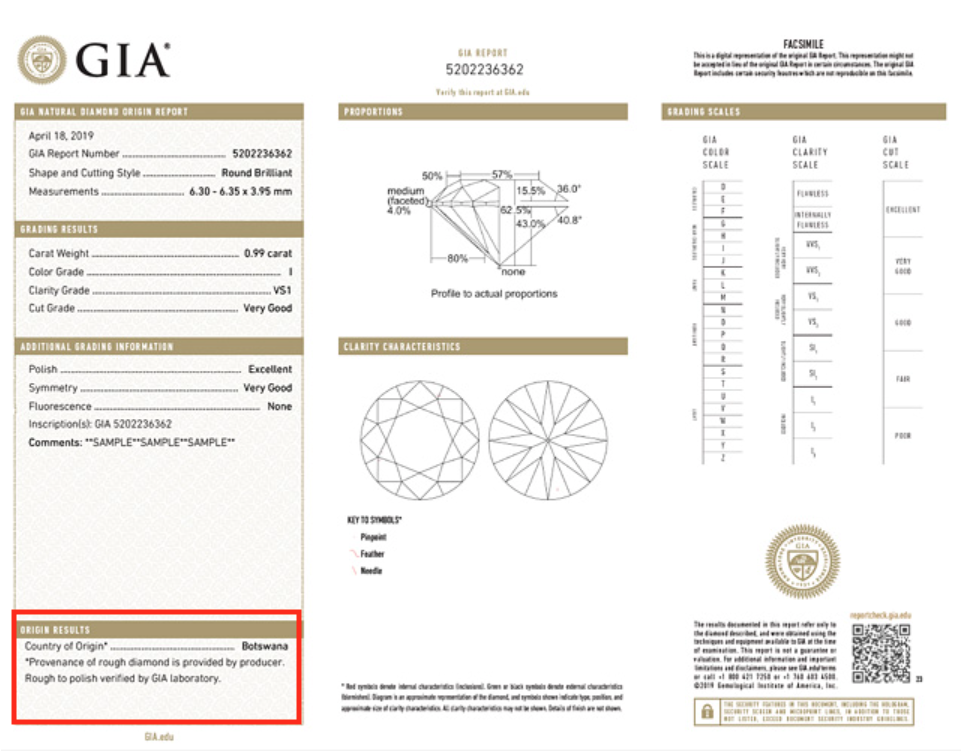
Diamond Report
Digital-only report includes 4Cs assessment and digital photograph. For untreated color only. GIA report number laser inscription available at an additional charge. Digital report accessible through GIA Report Check.

Diamond Focus™ Report
Digital-only report includes 4Cs assessment and laser inscription of GIA report number. For round brilliant cut and untreated color only. Digital results and PDF of report available through GIA Report Check. May not be eligible for certain Follow-Up Services. See GIA.edu/diamond-grading for full submission guidelines.
Diamond Shape
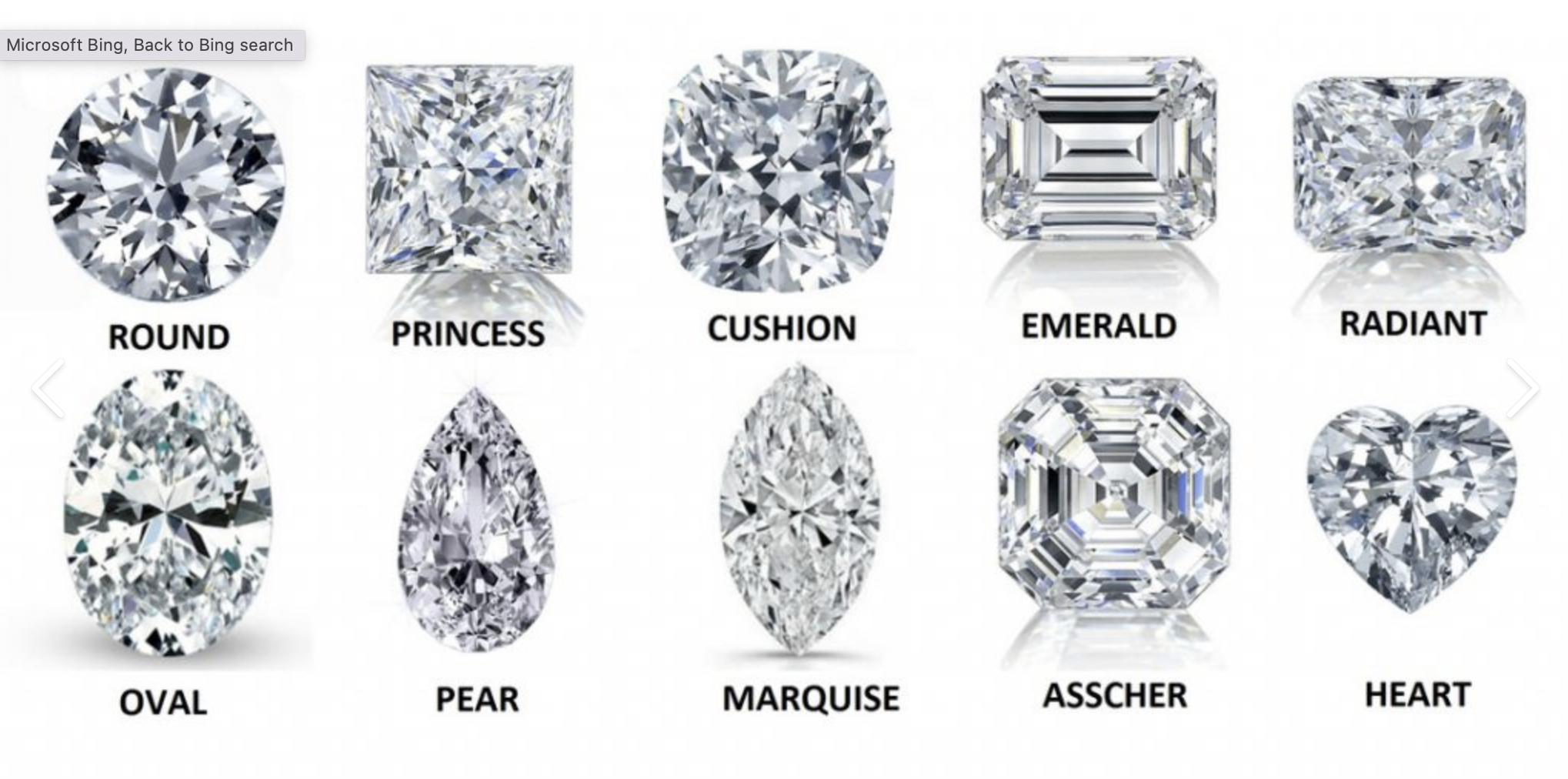
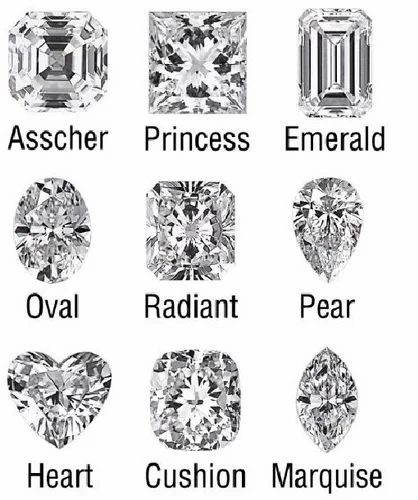
The shape of a diamond refers to its geometric outline as seen when viewed from the top. Common diamond shapes include round, princess, emerald, asscher, cushion, marquise, pear, oval, and heart. The choice of shape is a subjective preference and does not impact the diamond's grading in terms of the 4 Cs (Cut, Color, Clarity, and Carat weight).
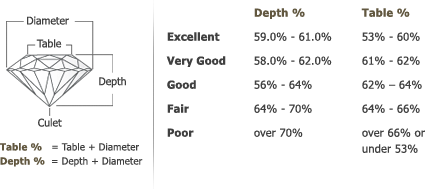
Depth percentage
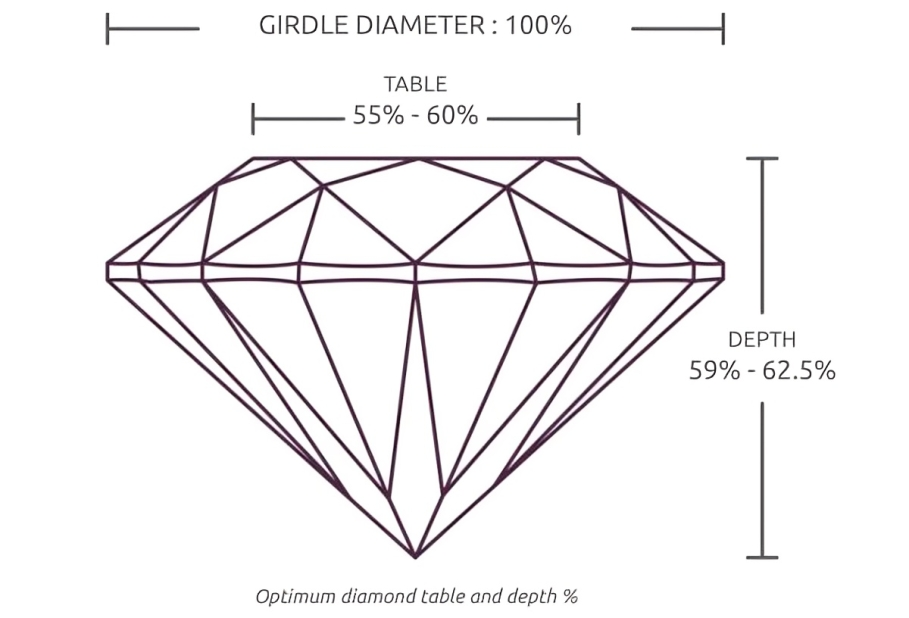
The depth percentage in diamonds refers to the height of the diamond (measured from the culet to the table) in relation to its average diameter. It is expressed as a percentage and is a crucial factor in assessing the diamond's cut quality. The depth percentage is calculated by dividing the depth of the diamond by the average diameter and multiplying by 100. An ideal depth percentage can vary, but it is generally recommended to fall within a certain range for optimal light reflection and brilliance.
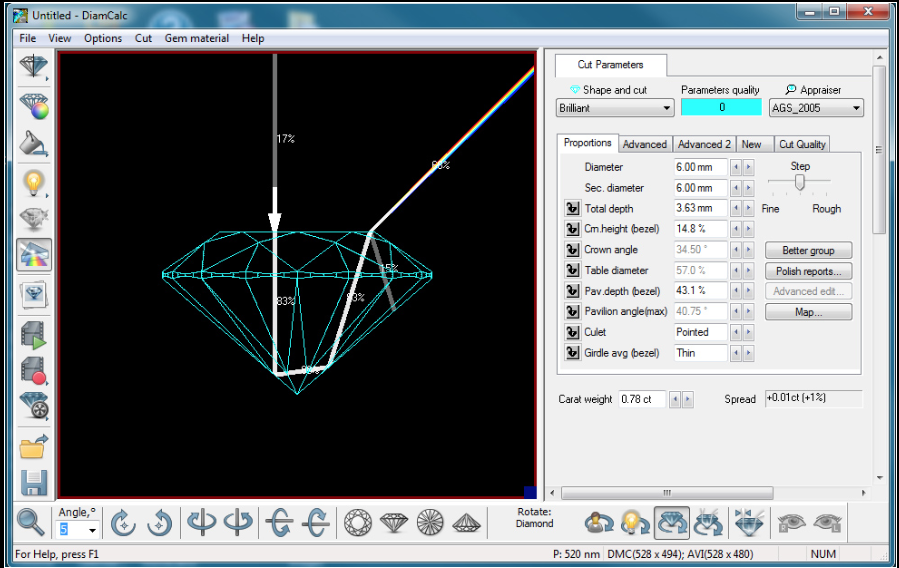
Diamcalc
Robust diamond analytics program designed by Octonus Software in Russia to study diamond light performance.
Diamond detector
An instrument designed to indicate whether a stone is a diamond or some other substance.
Diamondsure
Detection device developed by DeBeers to identify natural diamonds and refer suspected synthetic or treated diamonds for further testing.

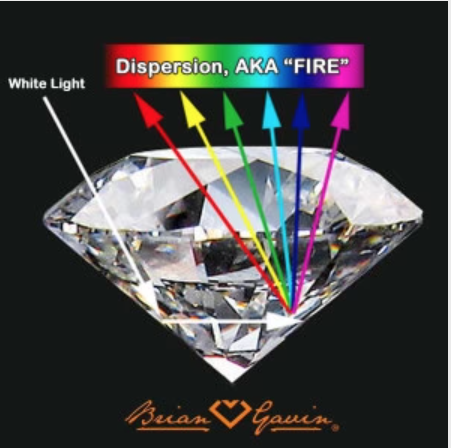
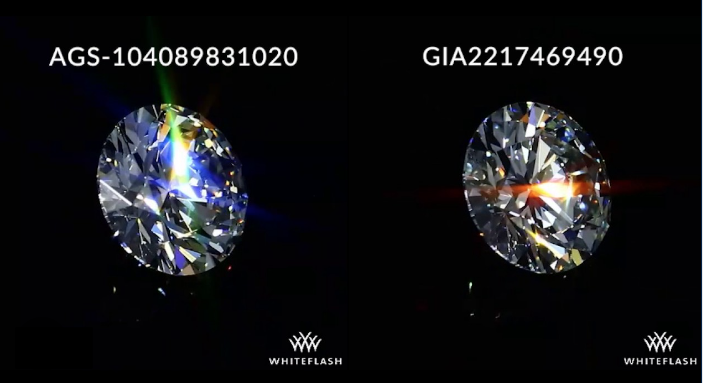
Dispersion
The prismatic separation of white light into its individual color components as a result of refraction. The resulting colored sparkles produced by the crown are referred to as Fire.
Dossier
A slightly scaled down GIA document for diamonds under one carat. The report does not include a stone plot but the diamond is laser inscribed for identification purposes.
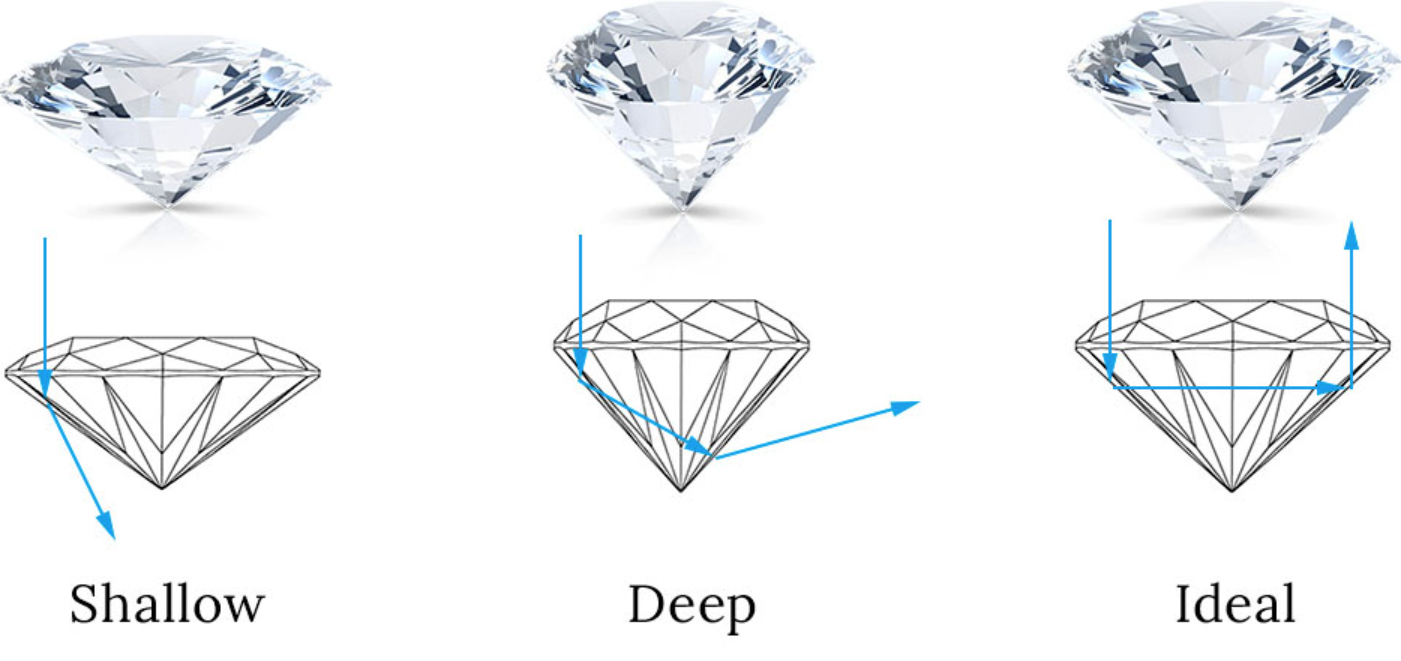
Deep
Diamonds that are proportioned with a combination of a high pavilion angle and steep crown, and which usually have light performance deficits and/or other problems.
Etched channel
Is a type of inclusion in a diamond. Often mistaken for a laser drill hole in the diamond, an “Etched Channel” is naturally formed and often appears in a straight line inside the diamond. Depending on the location of an “Etched Channel”, may determine if there is an integrity issue. This being said, the majority of diamonds do not possess this type of inclusion and it is easy to avoid. Indication of an “Etched Channel” will appear in the Key-to-Symbols area of the GIA grading report.
Extra facet
Is just as it sounds 😋 Normally it wouldn’t be there BUT the cutter put it there to either remove/hide an imperfection, a natural or an indented natural or chip etc. When shopping for FINE diamonds, an “Extra Facet” is easily avoidable. Indication of an “Extra Facet” will appear in the Key-to-Symbols area of the GIA grading report.
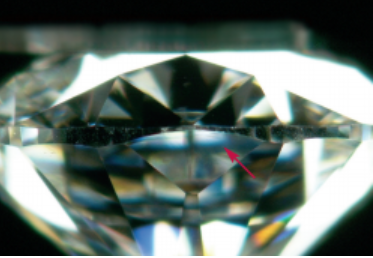
EGL
(European Gemological Laboratories) A collection of independent or loosely affiliated labs operating in several international markets.

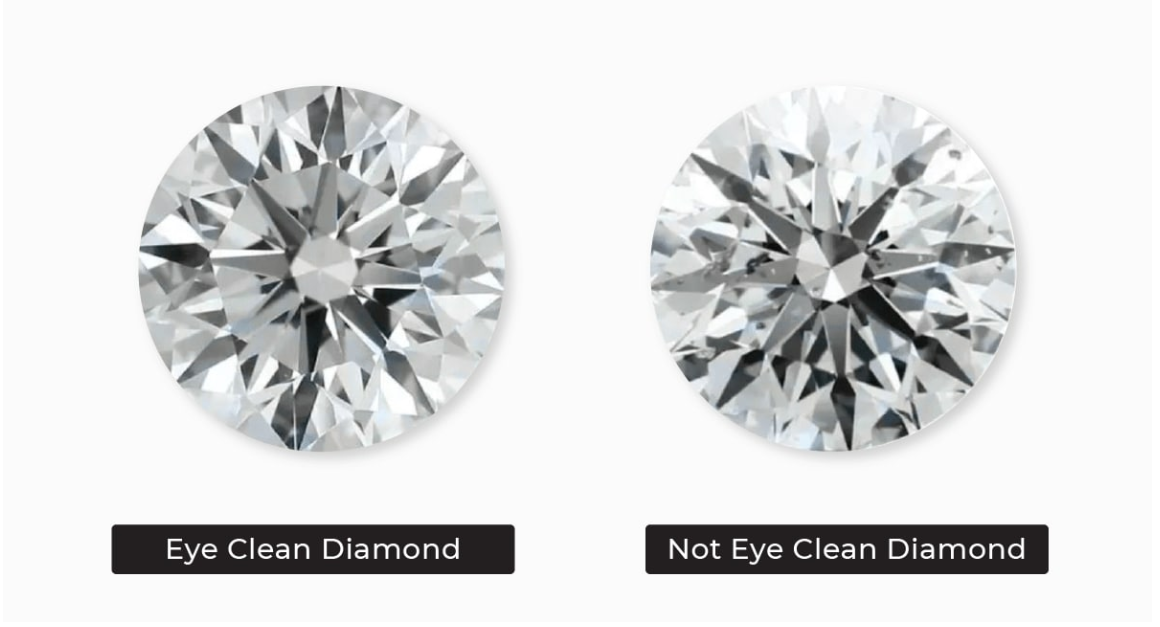
Eye-clean
An eye-clean diamond is characterized by its lack of visible imperfections when viewed with the naked eye. Despite the presence of microscopic inclusions or blemishes that might be detectable under magnification, the diamond's overall appearance remains clear and unblemished to the casual observer.
Ekati Mine
The Ekati Diamond Mine is a diamond mine located in the Northwest Territories of Canada. It is situated approximately 300 kilometers northeast of Yellowknife, the capital city of the Northwest Territories. Ekati is one of Canada's first diamond mines and has been in operation since 1998.The mine is known for producing high-quality diamonds, including both gem and industrial-grade stones. It consists of multiple kimberlite pipes, which are volcanic rock formations that often contain diamonds. The Ekati mine has played a significant role in the Canadian diamond industry and has contributed to Canada becoming one of the world's leading producers of diamonds.

Facet
A diamond facet is a flat, polished surface on the exterior of a diamond. Facets are carefully cut and polished during the diamond-cutting process to enhance the stone's brilliance and sparkle. A typical round brilliant-cut diamond, for example, has 57 or 58 facets, each contributing to the overall appearance of the gem. The facets are divided into two main parts: the crown (upper portion) and the pavilion (lower portion).
The crown facets include the table (the flat top facet) and various star, bezel, and upper girdle facets. The pavilion facets consist of the main pavilion facets, lower girdle facets, and the culet (the small facet at the bottom tip).The arrangement and angles of these facets are crucial in determining a diamond's cut quality. Well-cut diamonds allow for optimal reflection, refraction, and dispersion of light, resulting in the desired brilliance and fire.
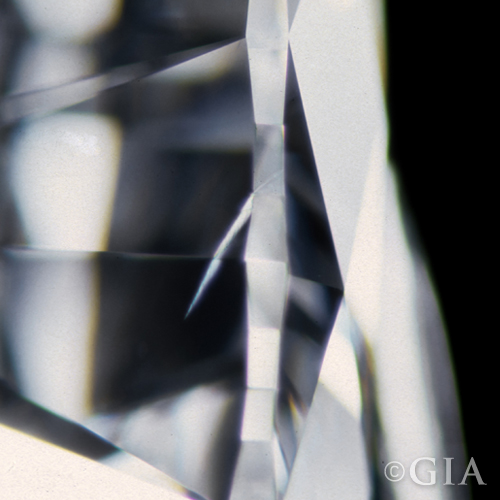
Feather
Is a type of fissure inclusion in a diamond. By definition, a “feather” “breaks the surface” of a diamond. Some “feathers” are troublesome as they may affect the integrity of the diamond. Others are no issue and surface break detection is non-discernable. Location of a “feather” is also paramount when determining if a diamond is viable. Indication of a “feather” will appear in the Key-to-Symbols area of the GIA grading report.
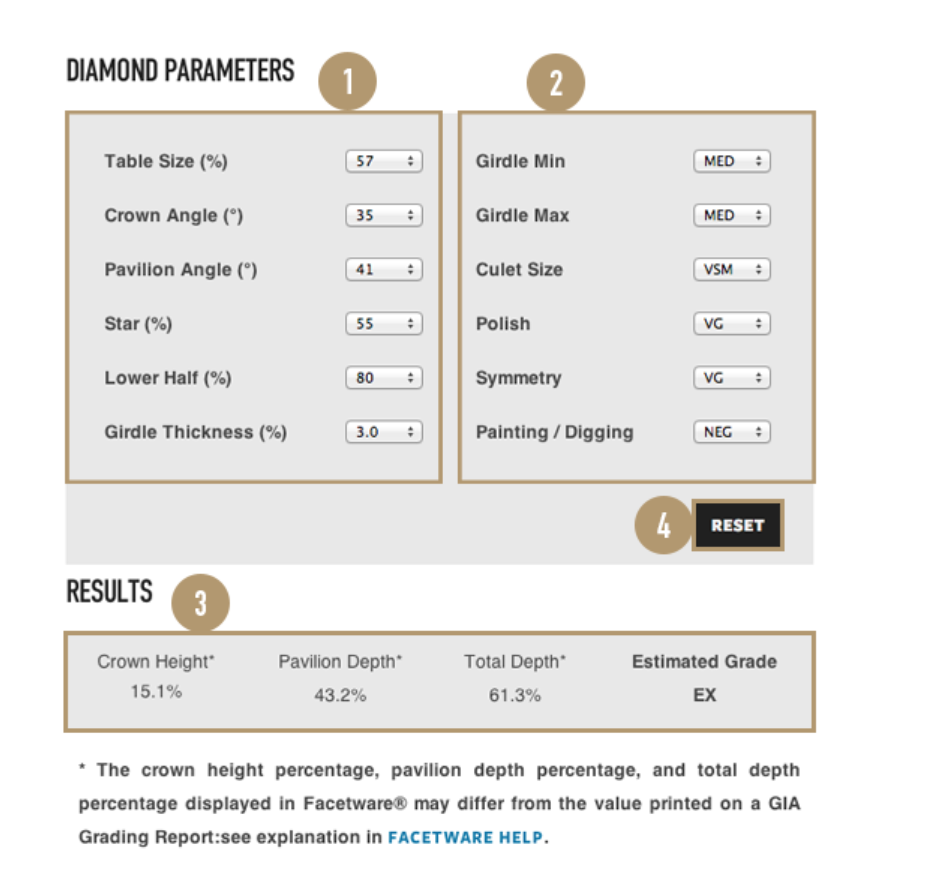
Facetware
Cut grade software from GIA that will give a prediction of overall cut grade based upon basic inputs from a GIA report or other source.
Faceup appearance
The impressions the diamond makes when viewed through the table with the naked eye.
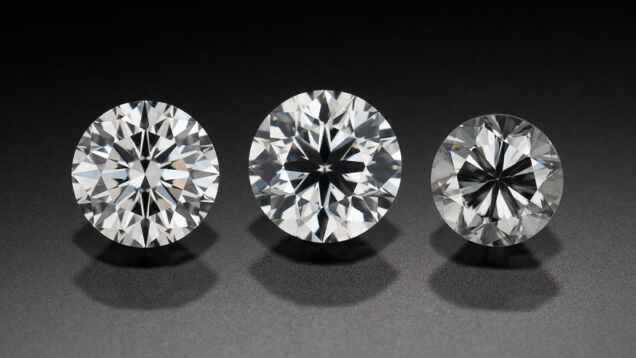
Fancy color
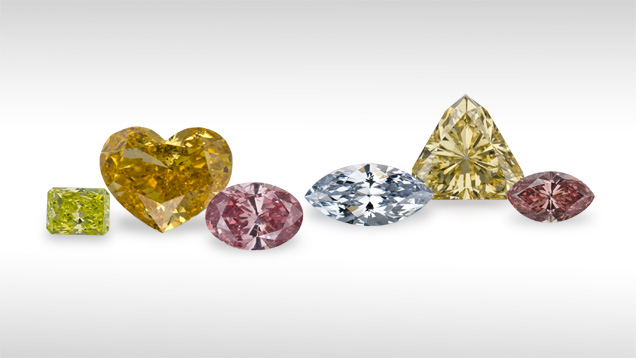
Refers to diamonds with body color beyond the normal range (beyond Z). Fancy color diamonds have their own grading system.
Fancy shape
Any non-round diamond is referred to as a fancy shape.
Fire (dispersion)
Colored sparkles created by refraction and the dispersion of white light into its individual components.
Fluorescence
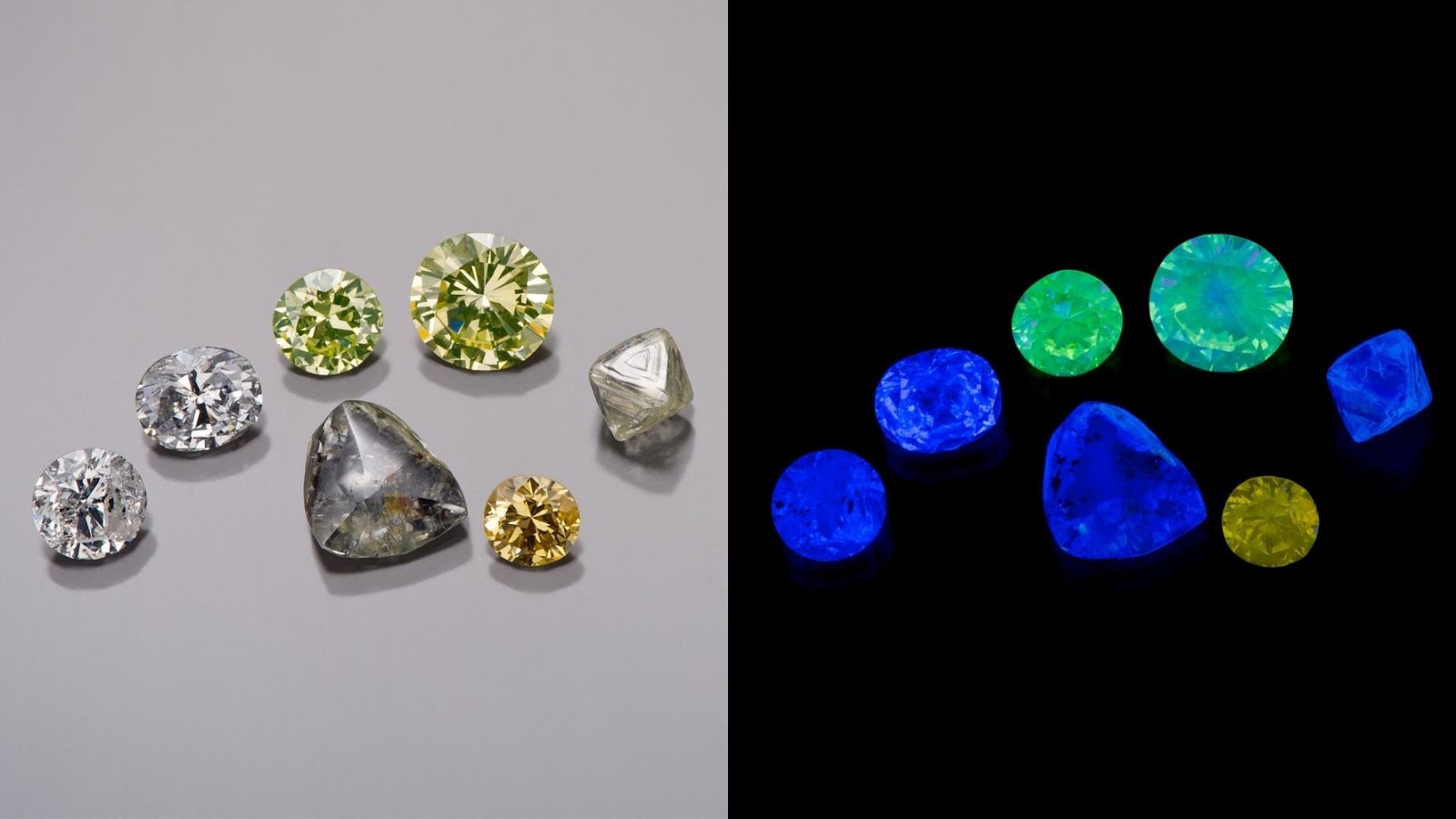
Diamond fluorescence is the visible light emitted by some diamonds when exposed to ultraviolet (UV) light. It appears as a soft glow, usually blue, although other colors can occur. Fluorescence is graded on a scale from "None" to "Very Strong" in terms of its intensity. While fluorescence can affect a diamond's appearance in certain lighting conditions, its impact on value is subjective, and some people prefer or are indifferent to fluorescence. The perceived value of a diamond graded D - G in color with NO fluorescence is greater than that of a diamond of similar color and quality that possesses fluorescence.
Filling
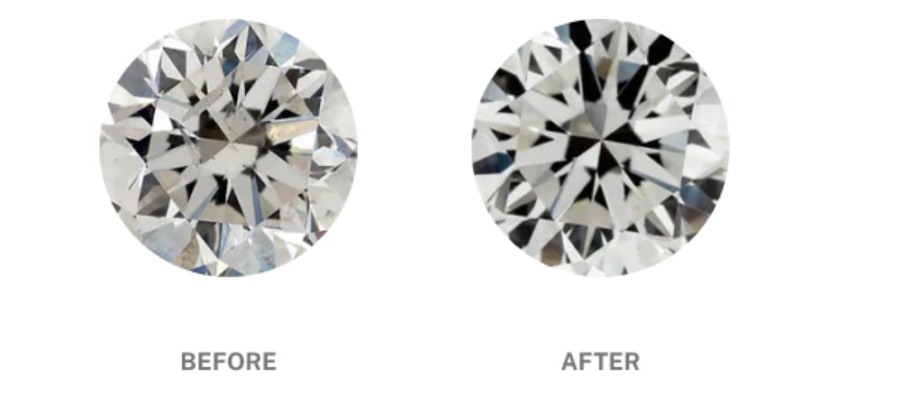
Introducing a substance into breaks in a diamond in order to improve its appearance. Fillings are not permanent and can be altered or removed by heat and ultrasonic cleaning.
Finish
Symmetry and Polish are together considered as finish characteristics and are indicative of the care and craftsmanship of the cutter.
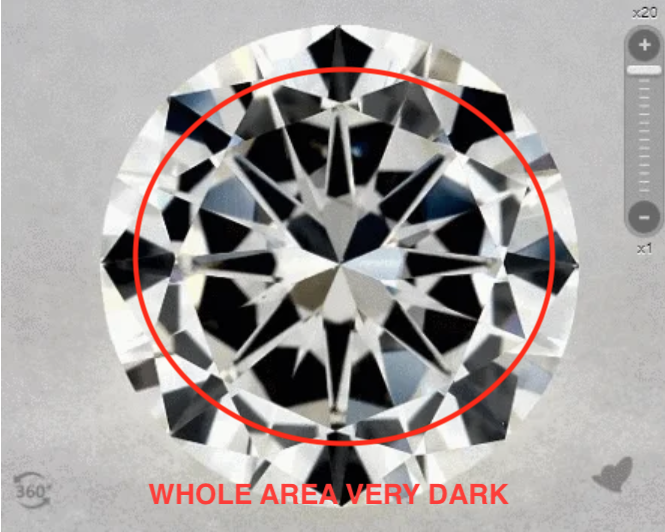
Fisheye
The term "fisheye" refers to a specific visual effect caused by a poor diamond cut, particularly in the context of a diamond's pavilion. A fisheye effect occurs when the pavilion is cut too shallow or with incorrect angles, resulting in light passing through the table facet and exiting the pavilion without proper reflection. The visual result is a circular, fishbowl-like area in the center of the diamond that lacks brilliance and appears washed out or dull. This effect is undesirable in diamonds, as it detracts from the stone's sparkle and overall visual appeal. A well-cut diamond, on the other hand, reflects light back through the crown facets, creating a lively and brilliant appearance.

French Pave
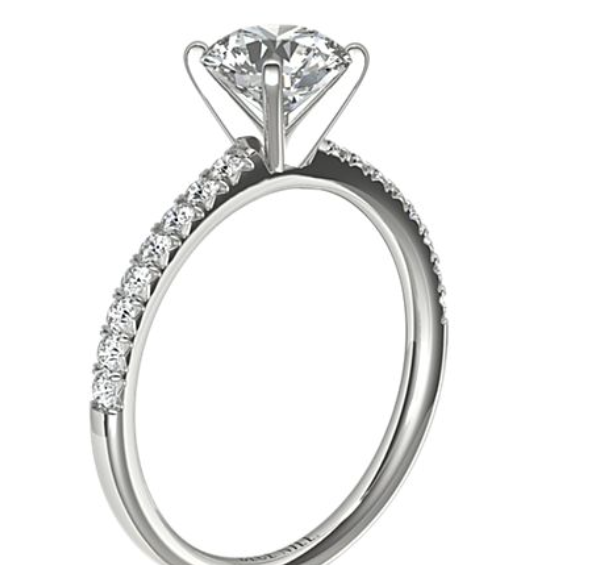
Very similar to the other pave styles, however In French pavé settings, the metal forms a “fishtail” or a small U or V shape underneath each diamond, exposing the sides of the diamonds. Each diamond, exposes the sides of the diamonds, like this ring from Blue Nile.
GCAL
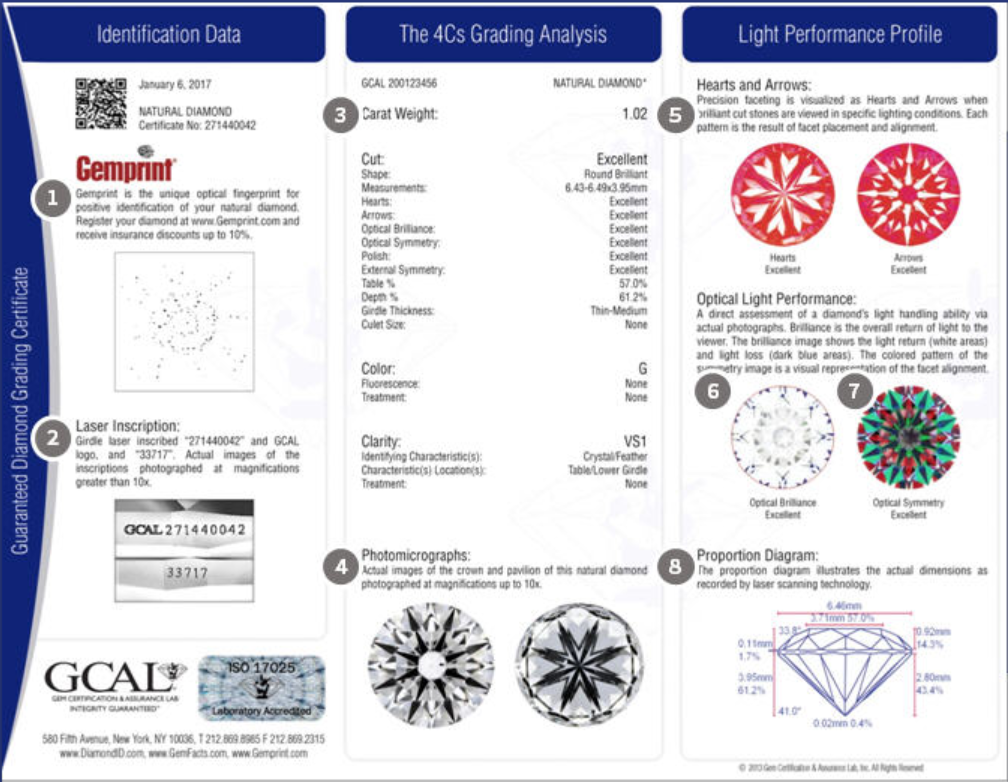
The Gem Certification & Assurance Lab (GCAL) is a prominent gemological grading laboratory. Founded in 2001, GCAL specializes in diamond grading, offering comprehensive and reliable assessments of cut, color, clarity, and carat weight. Known for its accuracy and integrity, GCAL provides certification that instills confidence in consumers and the jewelry trade.
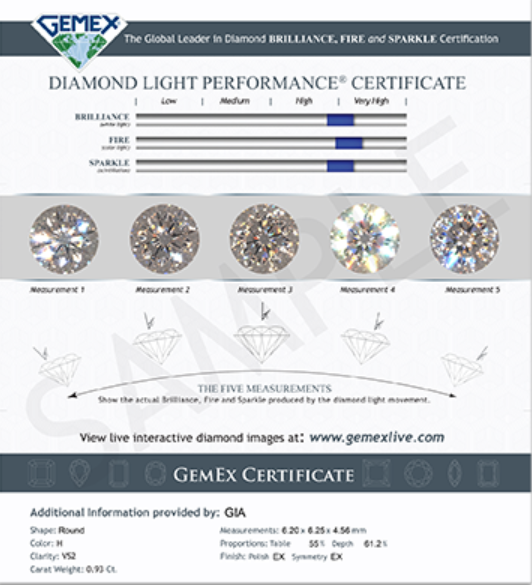
Gemex
GemEx, founded in 1998, pioneered the concept of scientifically measuring diamonds for light performance. Using a unique lighting technology developed by engineers called the imaging Spectrophotometer, GemEx can determine and quantify the brilliance, fire, and sparkle of every diamond they certify.
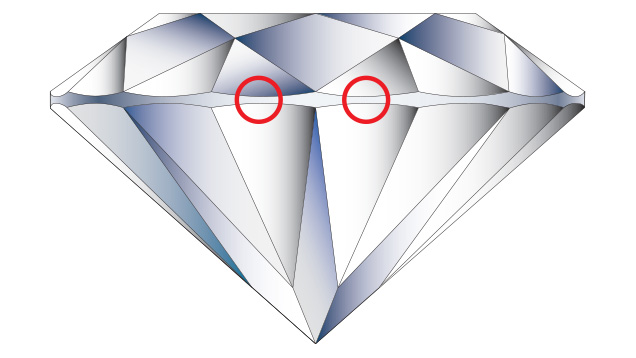
Girdle
This is the “waistline” of the diamond. It separates the “top” from the “bottom” or the Pavilion from the Crown.
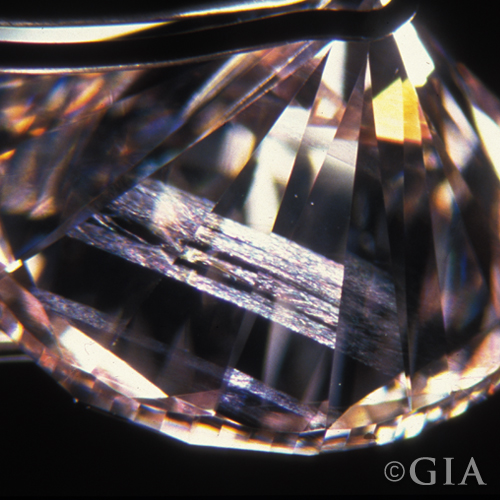
Graining
Simply put, “graining” is easier shown in a picture than it is left to the imagination of an explanation, but I will try! “Graining” may exist either internally or externally on/in a diamond. It may be eye visible in which case you would want to avoid a diamond with such. “Graining” may cause a diamond to appear a bit hazy or gray, not a desired result. “Graining” may show itself as “translucent lines” running through the diamond, almost as if you are looking at waves on the surface of the water. Indication of “Graining” will appear in the Comments area of the GIA grading report.
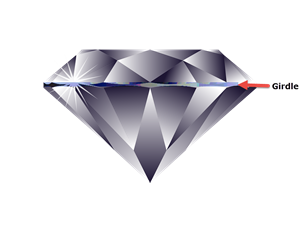
Girdle Facet - (Middle Part/ Beltline)
The outermost edge of the diamond, separating the crown from the pavilion.
GGG
(Gadolinium Gallium Garnet) Followed YAG as an early lab grown simulant and preceded CZ.
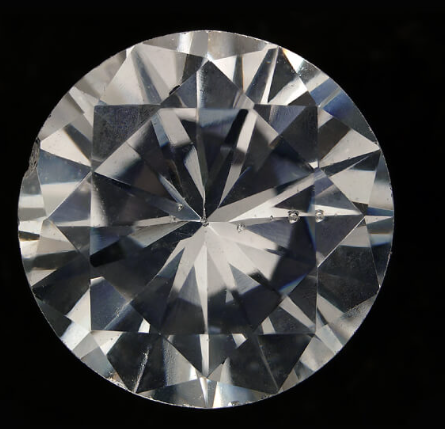
GIA
(Gemological Institute of America) The most widely known and respected gemological laboratory, GIA created the grading scales for diamond color and clarity used by the international diamond trade.

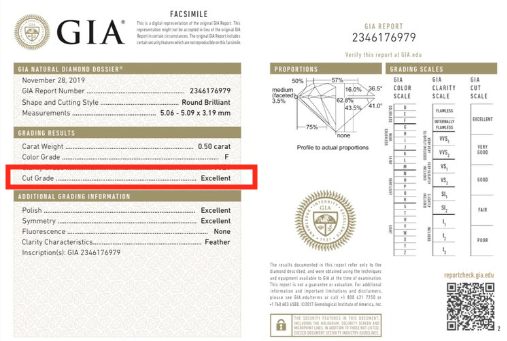
GIA Excellent
The top grade in the GIA cut grade system. Some equate diamonds graded GIA Excellent with ideal cuts but there are important caveats.
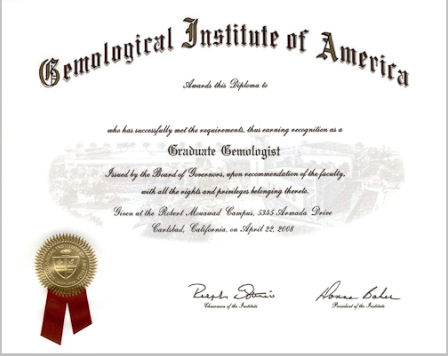
Graduate gemologist (GIA)
The credential issued to a student who has successfully completed the entire set of courses offered by the Gemological Institute of America and passed the final exam. The credential is commonly abbreviated GG.
Golconda
In actuality, golconda was a region in india that had numerous diamond mines. Those mines consistently yielded what was considered to be the finest diamonds in the world. Over time, those mines ceased to exist, either because of lack of production or submergence to bodies of water. Today, in the diamond business, the term "Golconda" is often associated with high-quality diamonds and is used to describe diamonds that are exceptionally clear and colorless. Golconda itself does not refer to a specific grading category, the term is used more broadly to signify diamonds of extraordinary quality, often characterized by their exceptional clarity and color. Today, the Golconda designation is a historical and romanticized term in the diamond trade, symbolizing diamonds of the highest caliber.
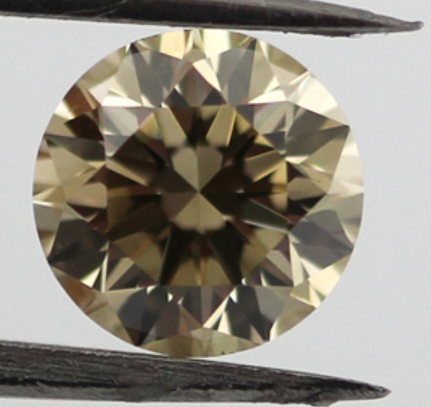
Green Material
Not “fancy” color and undesirable color of rough(material). This can severely impact the diamond’s visual appeal.
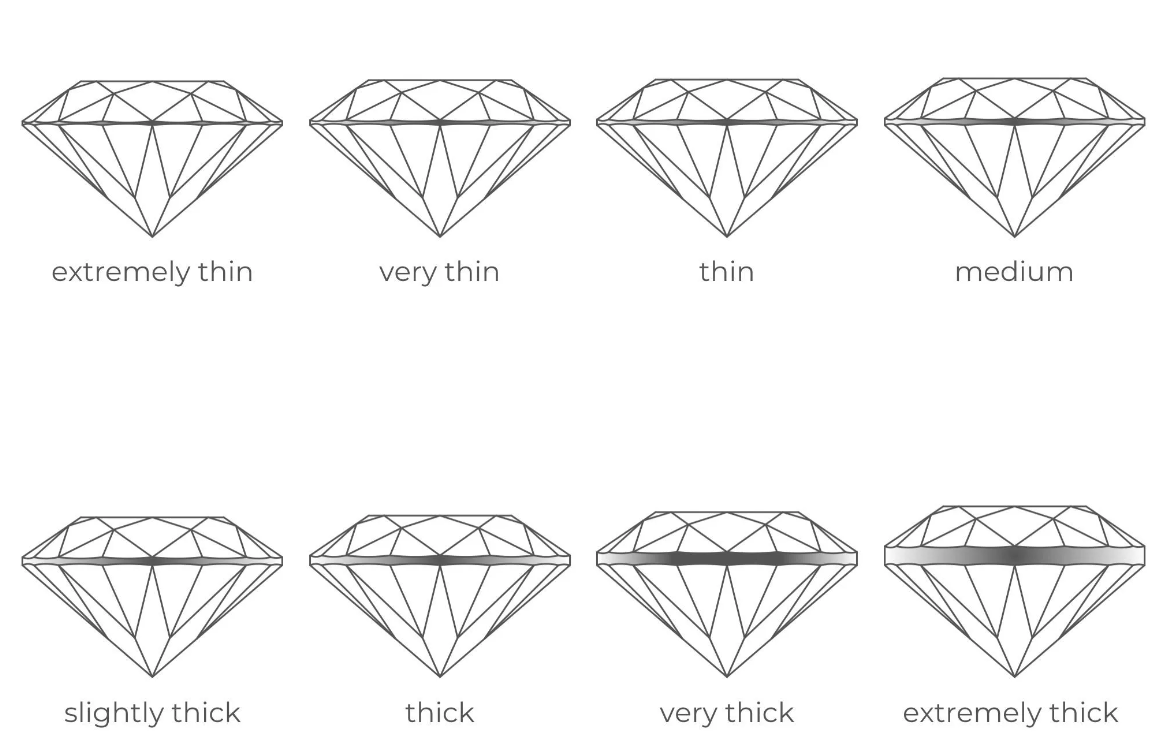
Girdle Thickness
The girdle of a diamond is the outermost edge where the top (crown) and bottom (pavilion) portions of the diamond meet. The girdle thickness refers to the vertical measurement of this outer edge. Girdle thickness can vary, and it is typically described using terms such as thin, medium, slightly thick, very thick or extremely thick on a grading report. Diamonds with extremely thin girdles may have suspect durability, as extremely thin girdles can be more susceptible damage extremely thick girdles may will affect the overall appearance of a diamond. Ideally, a moderate or medium girdle thickness is often preferred for balance and durability.
Girdle Percentage
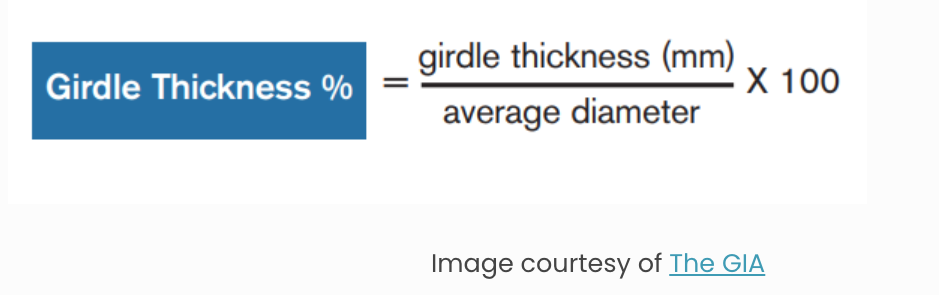
The girdle percentage on a diamond refers to the proportion of the diamond's average diameter that is occupied by the girdle, which is the outer edge where the crown (top) and pavilion (bottom) portions of the diamond meet. It is expressed as a percentage and is calculated by dividing the maximum girdle width by the average diameter of the diamond and multiplying by 100.
Hazy/Milky/Cloudy
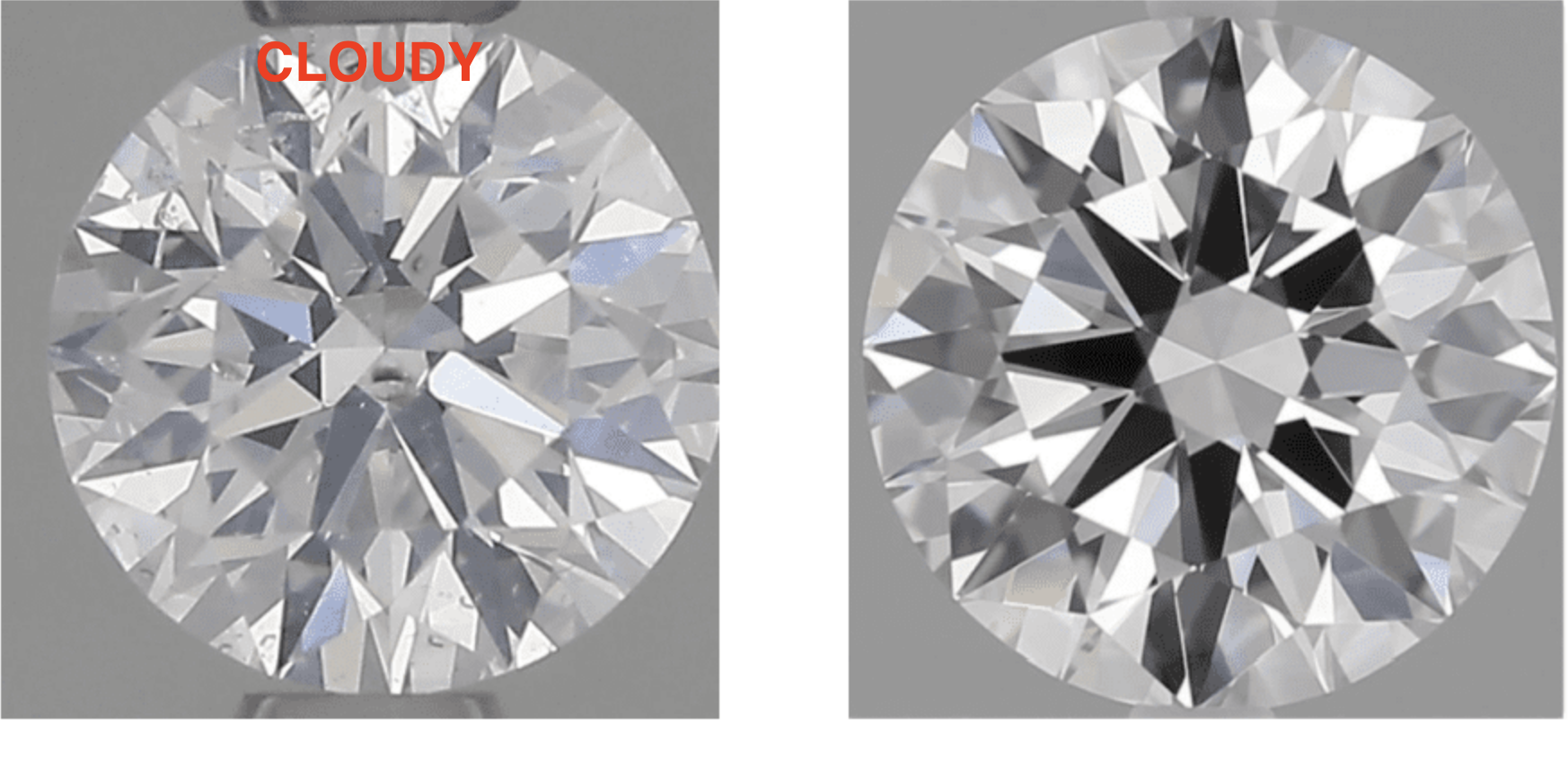
A “hazy" diamond refers to a diamond with a cloudy appearance, often caused by the presence of microscopic inclusions or internal features within the stone. These inclusions can scatter light as it passes through the diamond, leading to a loss of transparency and brilliance. The milky or cloudy effect can sometimes give the diamond a somewhat opaque or dull look. The hazy appearance may be more noticeable in certain lighting conditions, and it can impact the overall visual appeal of the diamond. In many cases, diamonds with a milky appearance are considered less valuable than those with better clarity and transparency.
Note that you may see a VVS or VS clarity graded diamond and assume it is "fine", make sure to review the comments section of the grading report and pay particular attention to "clouds" "surface graining" and "internal graining", the existence of such is common when viewing a diamond the may be hazy.
Hardness
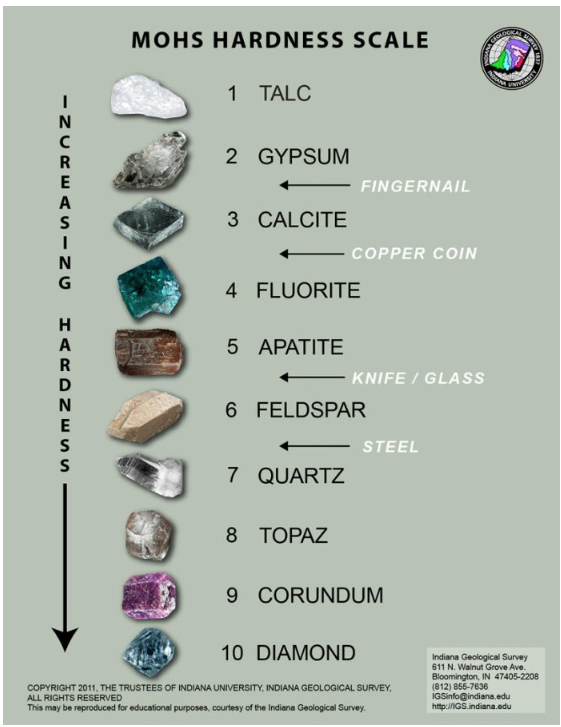
Resistance to scratching, measured on the mohs scale 1-10, with diamond being the hardest natural substance at 10.
HCA
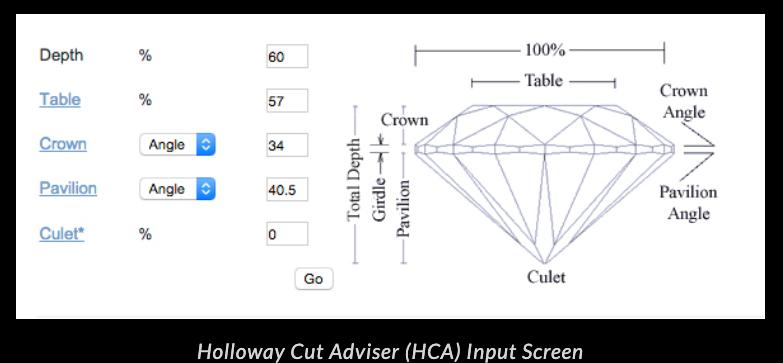
Holloway Cut Advisor, a simple online tool that provides some indications of potential performance based upon a few basic measurements. It is intended to be a basic screening tool to reject diamonds likely to have performance deficits.
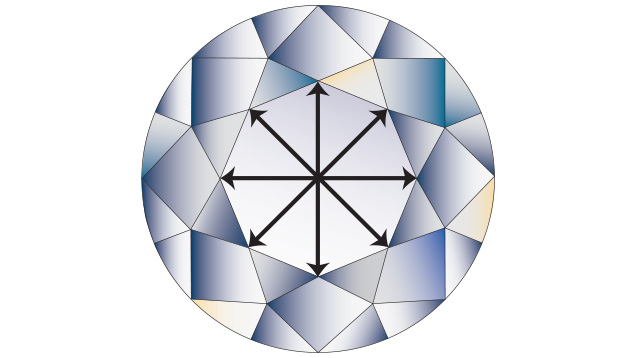
Hearts and arrows
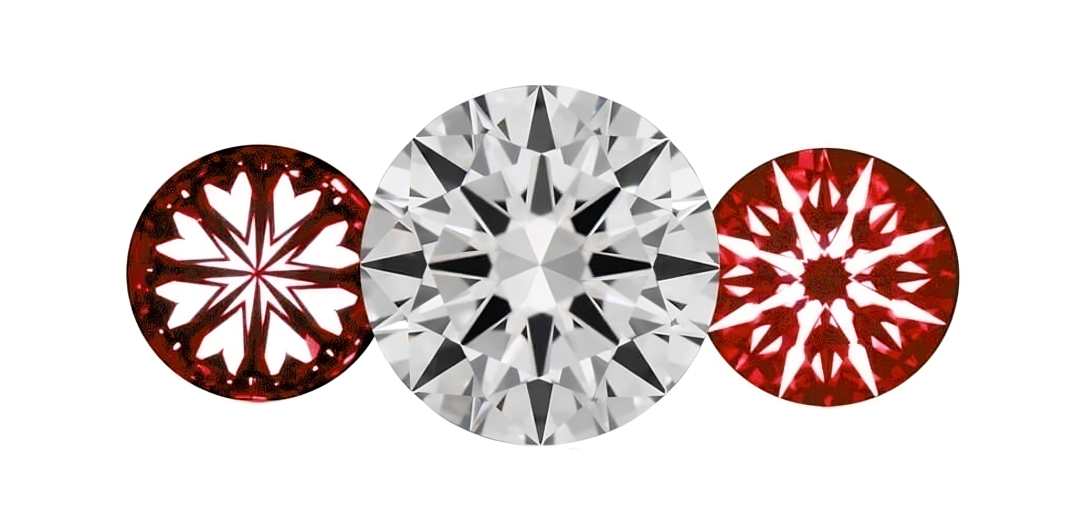
Refers to a specific pattern visible in well-cut round brilliant diamonds when viewed under specialized equipment. This pattern is a result of precise and symmetrical facet alignment, showcasing distinctive arrow-shaped and heart-shaped patterns. When a diamond with ideal proportions and excellent symmetry is viewed through a special viewer or scope, the observer can see eight arrow patterns from the top and eight heart patterns from the bottom. The arrows are formed by the reflection of light off the pavilion facets, and the hearts are created by light reflecting off the crown facets.
The presence of clear and well-defined hearts and arrows patterns is often associated with diamonds of high cut quality. This level of precision in cutting contributes to optimal light performance, sparkle, and visual appeal. Diamonds with hearts and arrows patterns are highly sought after, especially in the context of ideal or excellent cut grades.
Helium
Sophisticated scanners for accurate measuring and modeling of polished and rough diamonds from Octonus Software. See also Sarine devices.
HRD
Established in 1973, the Hoge Raad voor Diamant (HRD) is a respected diamond grading laboratory based in Belgium. Renowned for its expertise, HRD provides comprehensive assessments of diamonds, covering cut, color, clarity, and carat weight. Its globally recognized certifications assure consumers and the diamond industry of quality and authenticity.
HTHP
High Temperature High Pressure, treatment that can improve the color of diamonds.
Handcrafted
Handcrafted jewelry is jewelry that is made by hand, without the use of machines or technology. Handcrafted jewelry is made by a skilled artisan who works with their hands to create each piece of jewelry, using traditional tools and techniques. Handcrafted jewelry is often associated with higher quality and craftsmanship than that of mass-produced jewelry and it can be customized to suit the individual customer’s needs and preferences. Truly a dying breed, unfortunately.

Head
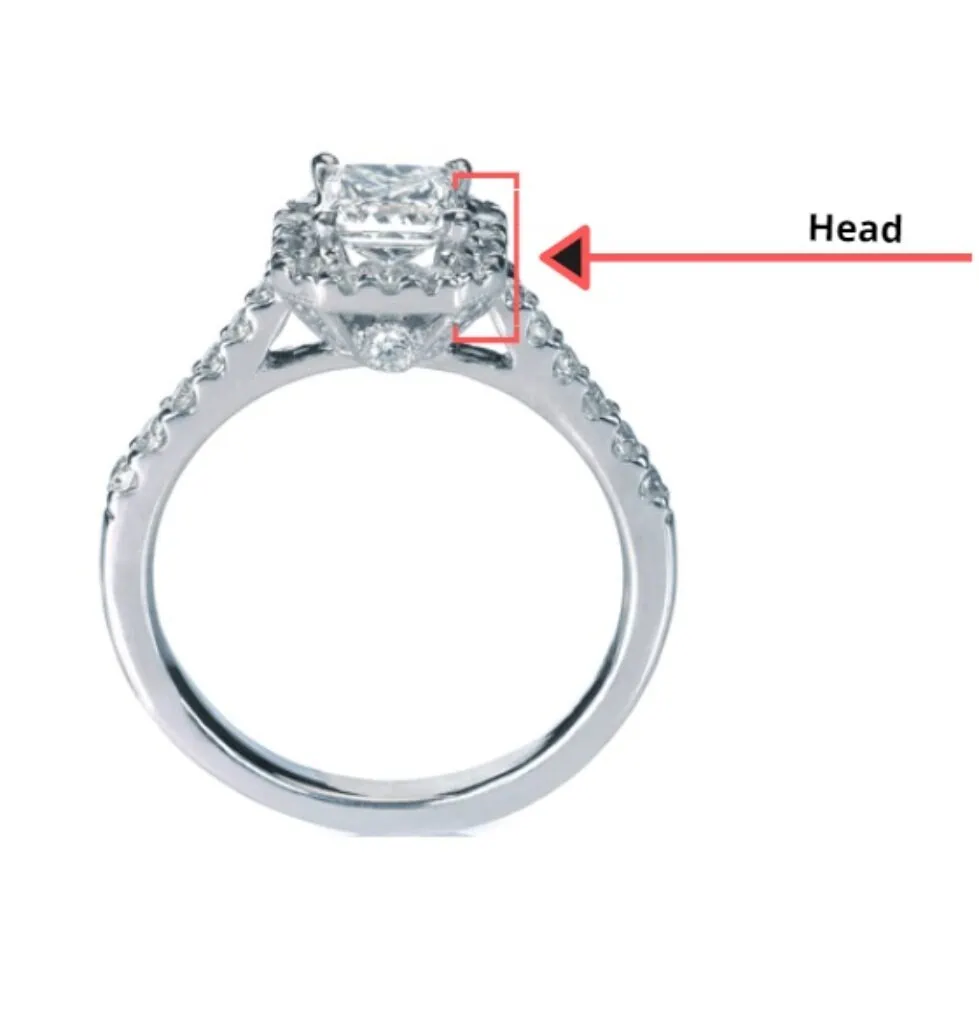
In reference to where a diamond is placed in a ring(often a 4 prong or 6 prong is used for a round diamond)…this is referred to often as the Head or Basket.
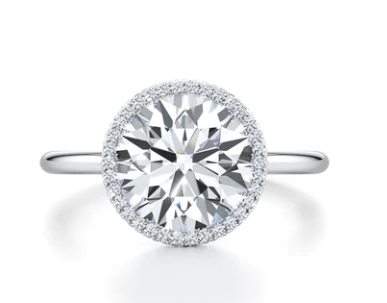
Halo Setting
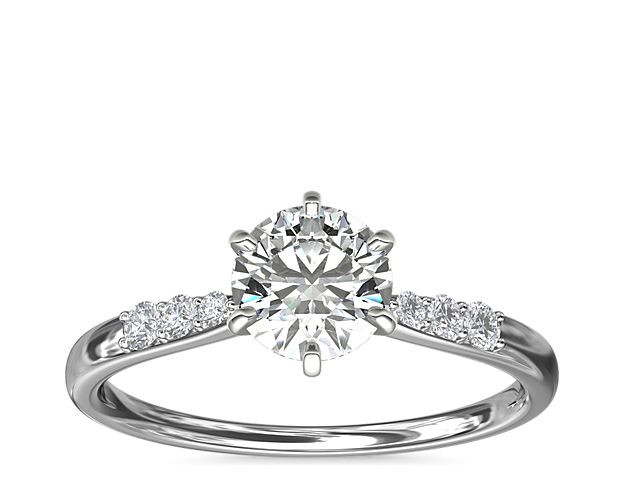
A diamond halo setting is a type of setting where a single diamond is surrounded by a frame of smaller diamonds. The frame of diamonds is usually set in a circle around the center stone, and is often made of the same metal as the center stone. The diamond halo setting is popular for its vintage, antique look, and is often used for engagement rings and other pieces of jewelry. The setting is usually used with round or cushion-cut diamonds, but can also be used with other shapes. If you click on these links, you will see beautiful choices from JamesAllen, Brilliant Earth and Blue Nile.
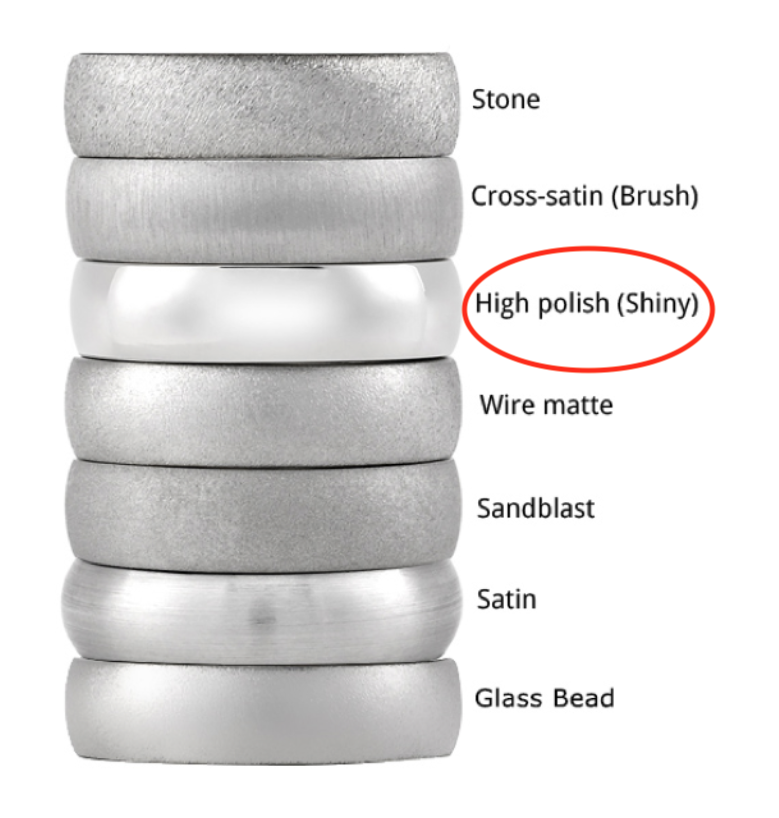
High Polish
A high polish finish in the context of finishing a ring refers to a smooth and reflective surface on the metal. It involves meticulously smoothing and buffing the metal until it achieves a shiny and lustrous appearance. This finish is often associated with a classic and elegant look, enhancing the overall aesthetic appeal of the ring. High polish is commonly used in various types of jewelry, providing a bright and sophisticated finish to the metal, whether it's gold, silver, platinum, or another precious metal.
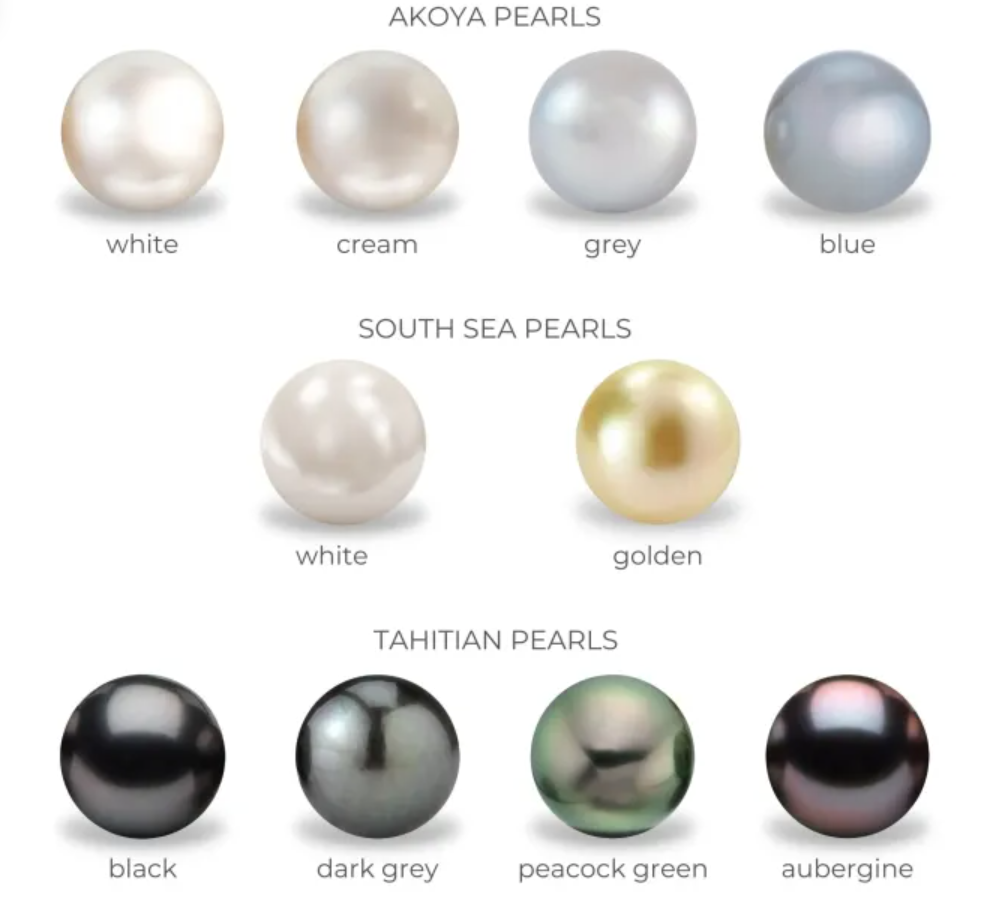
Hue
The hue of a pearl refers to its overall body color, or the dominant color seen when looking at the pearl. Pearls come in various hues, and these can include white, cream, rose, silver, gold, green, blue, and more. The specific hue of a pearl is one of the factors considered when evaluating its overall color quality.
Hope Diamond
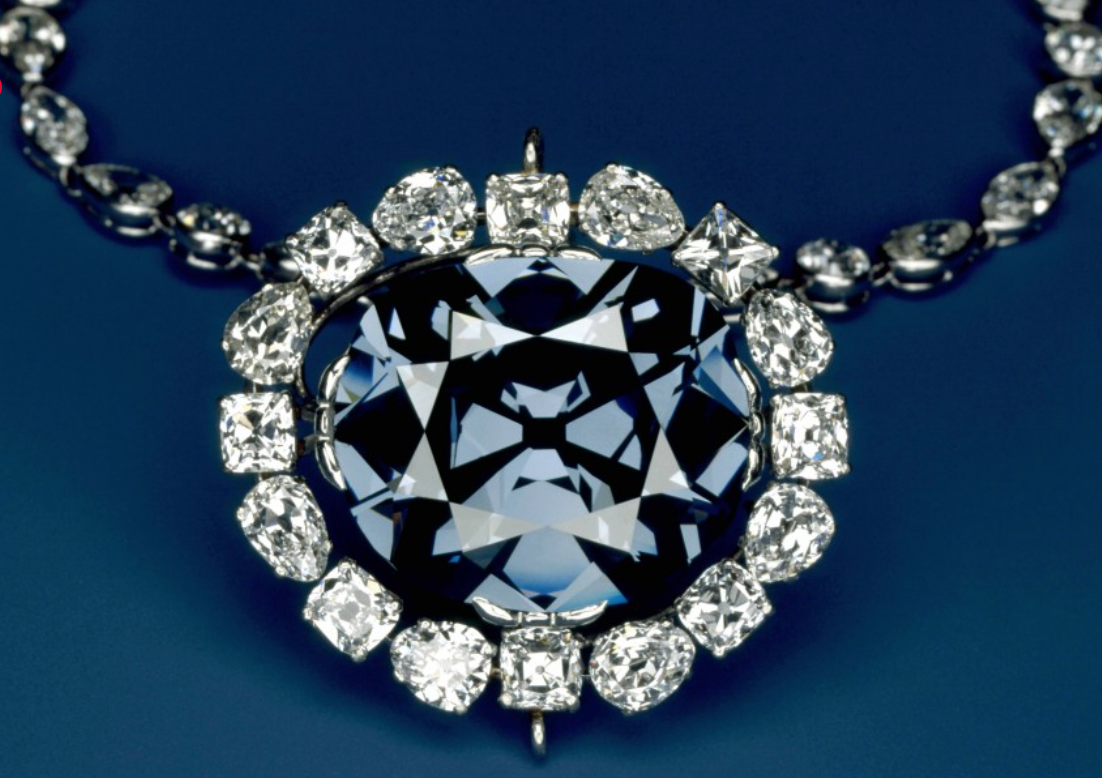
The Hope Diamond is one of the most famous and valuable diamonds in the world. It is a large, deep blue diamond weighing 45.52 carats. The diamond has a long and storied history, dating back several centuries. It is believed to have originated from the Golconda mines in India, known for producing some of the world's most renowned diamond. The Hope Diamond gained its name from Henry Thomas Hope, a London banker who reportedly acquired the diamond in the early 19th century.
Over the years, the diamond changed hands multiple times, and its ownership was associated with tales of curses and misfortunes. Eventually, the Hope Diamond found its way to the United States and was donated to the Smithsonian Institution in Washington, D.C., in 1958 by jeweler Harry Winston. It is now part of the National Gem and Mineral Collection and is on display at the Smithsonian's National Museum of Natural History. The Hope Diamond is celebrated for its rare blue color and historical significance in the world of gemstones.
Argyle Diamond Mine
The Argyle Diamond Mine was a notable diamond mine located in the remote East Kimberley region of Western Australia. It was particularly renowned for being the world's primary source of pink diamonds. Operated by Rio Tinto, the mine officially opened in 1983 and remained in production until its closure in 2020.

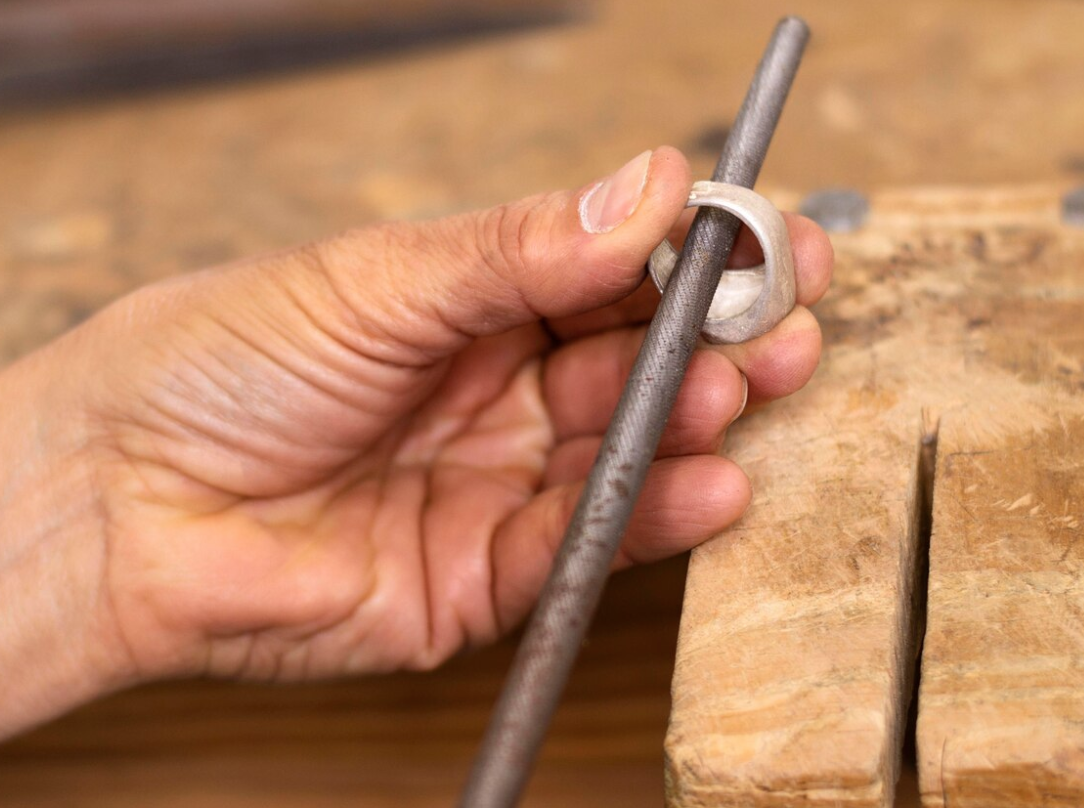
Hand Polished
When a piece of jewelry is described as "hand-polished," it means that the finishing process involves manual polishing done by a skilled artisan rather than relying solely on machinery. This hands-on approach allows for more meticulous and detailed polishing, ensuring a personalized touch and attention to specific areas of the jewelry piece. Hand polishing can result in a higher level of craftsmanship, and it is often associated with fine jewelry where the goal is to achieve a superior finish and precise detailing.
Inclusion
Is an irregularity that has formed within a diamond. All diamonds have inclusions ACCEPT FLAWLESS stones. For the sake of a consumer looking to purchase a diamond, one must expect inclusions to exist. The quantity, severity and location of such inclusions is of paramount importance.
Indented natural
This is a remnant of the original rough rock that remains unpolished in the finished diamond. It generally indents like a V(think of a circle but instead of closing the circle, you put a small “v” where the circle should connect!) That means when you run your finger or fingernail around that circle(the diamond), you may “catch” or “feel” the “indented natural”. People often suggest their diamond is broken or chipped because they didn’t realize they purchased a stone with an “indented natural”. Depending on the severity of the “indented natural” the integrity of the diamond may be compromised. Indication of an “Indented Natural” will appear in the Key-to-Symbols area of the GIA grading report.
Ideal
Specific term for the top cut grade at AGSL, and general term for diamonds with the best cut quality. One should be extremely careful when searching for an "ideal" cut diamond as many have different interpretations of what is considered "ideal". Note, the gia does not define a diamond as being or "ideal" or have a category for such. Make sure to educate yourself if you are in search of an ideal cut diamond.
Irradiation
Treatment technique to alter color in a diamond by bombarding it with radiation.
Ideal scope
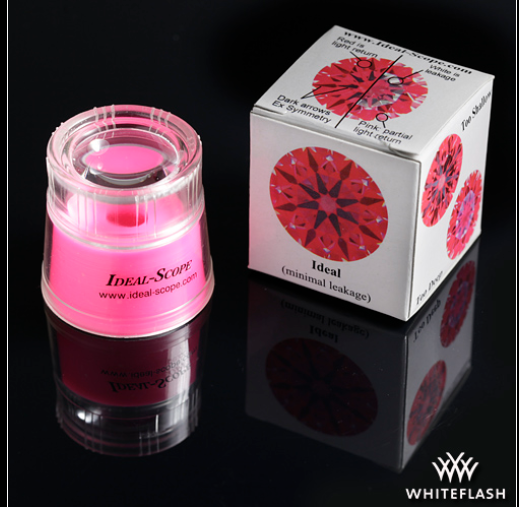
A simple reflector device used to assess light return and light leakage. Ideal-Scope can be used to view loose diamonds as well as diamonds set into jewelry.
Imperfect
When a diamond is described as "imperfect," it generally refers to the presence of internal or external characteristics, known as inclusions and blemishes, that affect its clarity. Diamonds are graded on their clarity, and the presence of these imperfections can impact the overall appearance and value of the stone.
Keys to symbols
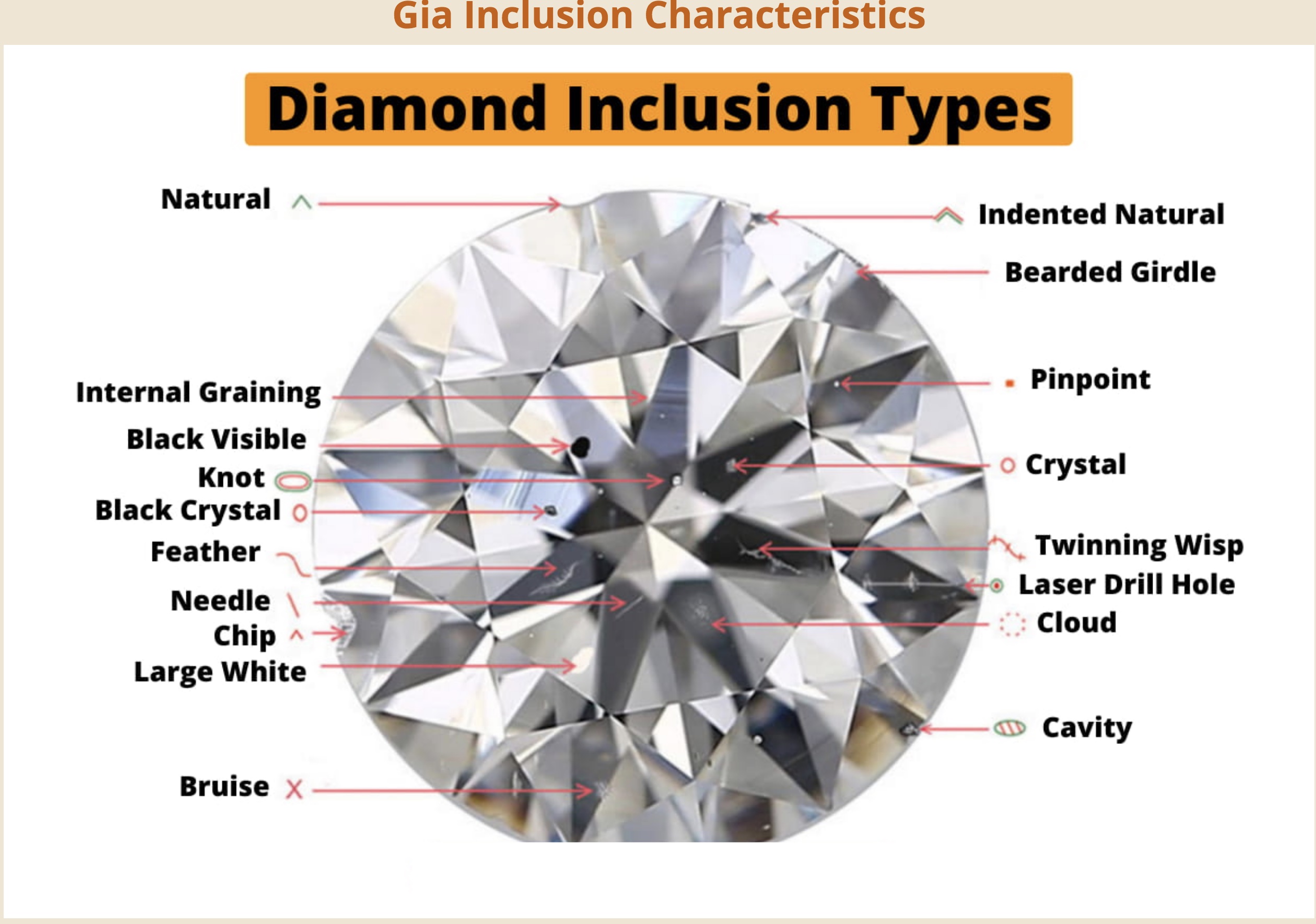
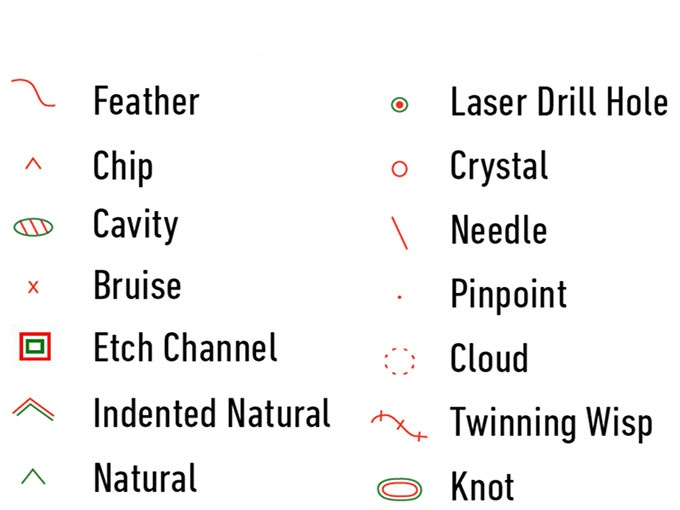
The "Keys to Symbols" section on a diamond report provides explanations for various symbols and notations used in the report. This section is designed to help the reader understand the specific characteristics, features, or conditions noted on the diamond grading report. It is critical to understand the meaning of these notations as some may directly affect the integrity of the diamond, the value and hence the desirability.
Kimberly process
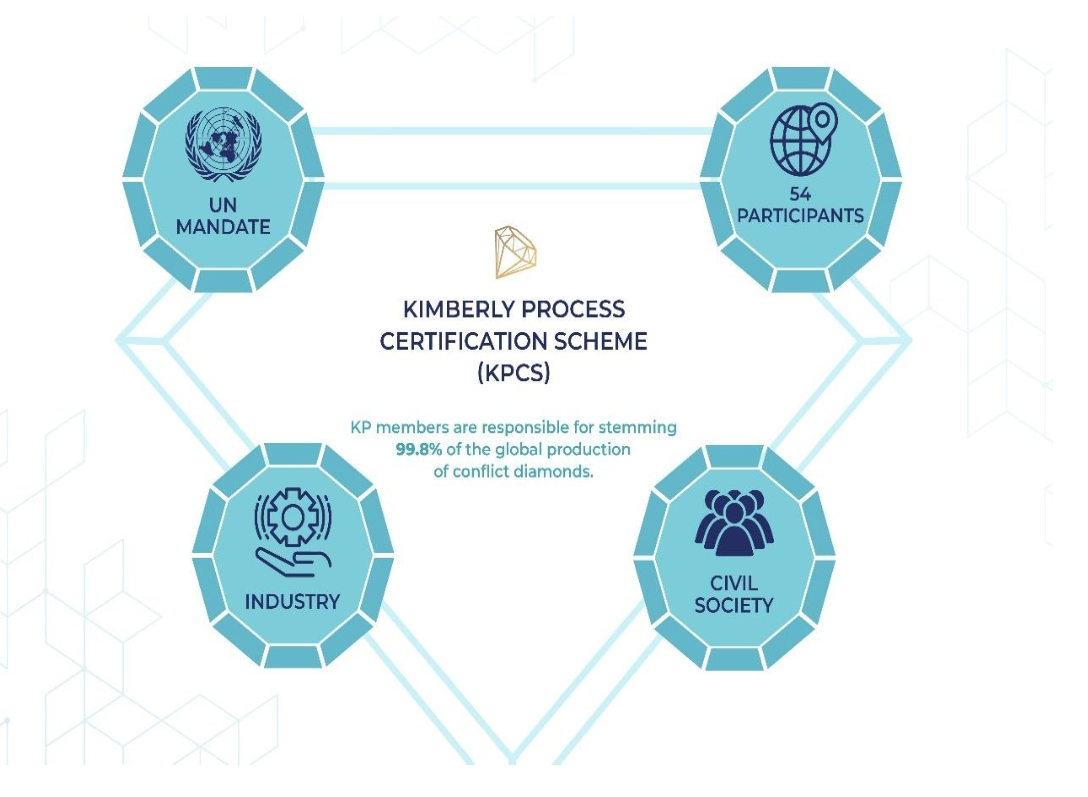
(KP) A chain of custody system involving the participation of governments and industry under the auspices of the United Nations designed to verify that rough diamonds entering the market are obtained from legitimate sources not involved in fueling conflict.
Knot
Is a crystal inclusion that extends to the surface of a diamond. Think of a piece of wood on the floor with a circular knot in it. IF you removed that “knot”, you would be left with a hole! That doesn’t sound very good 🙁. If the “knot” in a diamond is somehow dislodged, that diamond will be left with the same gaping hole. We stay clear of “knots” when reviewing FINE diamonds. Indication of a “Knot” will appear in the Key-to-Symbols area of the GIA grading report.
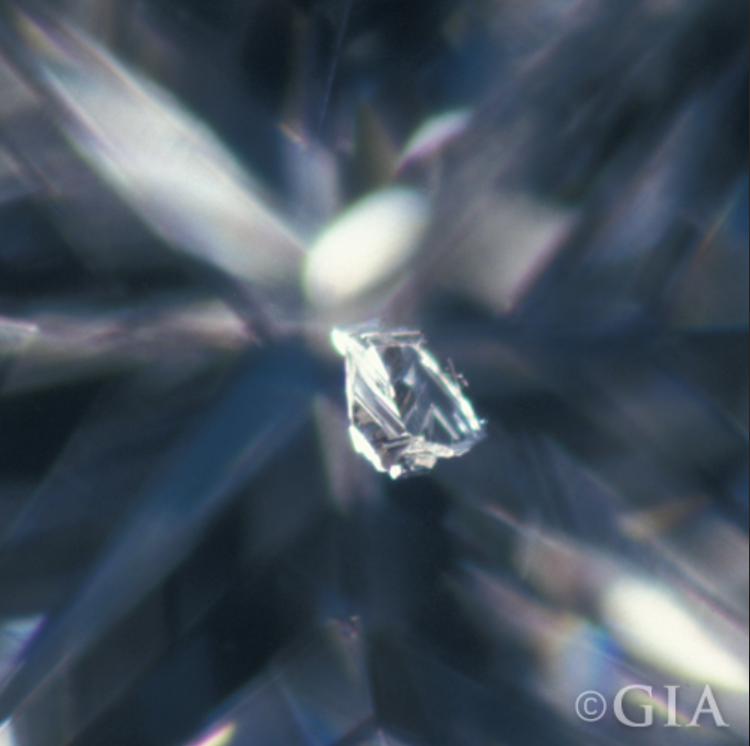
Lab Report
An identification and quality analysis report from a gemological lab, often referred to as a certificate.
Laser Inscription
Laser inscription on a diamond involves using a laser to inscribe a microscopic, identifying mark on the diamond's girdle (outer edge). This unique serial number, logo, or text serves as a means of identification and can be linked to the diamond's grading report. It provides a way to verify a diamond's authenticity and trace its history.

Laser Drilling
Refers to laser techniques designed to improve apparent clarity by making a tiny hole in a diamond to vaporize an inclusion or to provide access for an acid which can dissolve it.
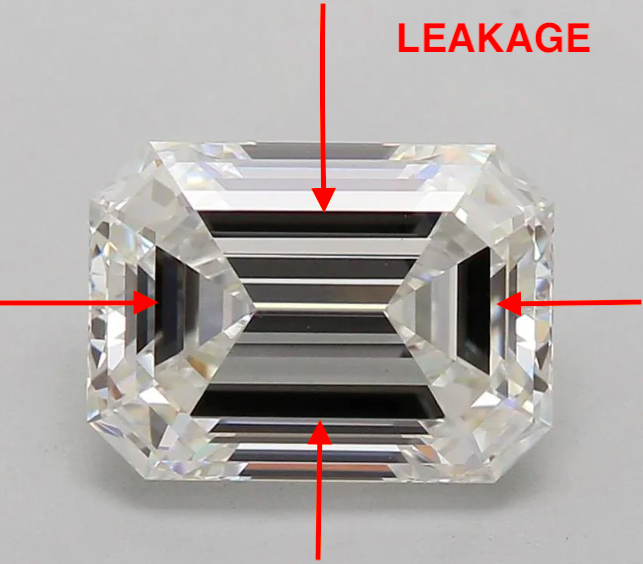
Leakage
Light that enters the crown of the diamond that is not being returned to the eye. Alternatively stated, it is light that is entering the pavilion and returned to the eye. That area of the diamond is acting as a window instead of a mirror.
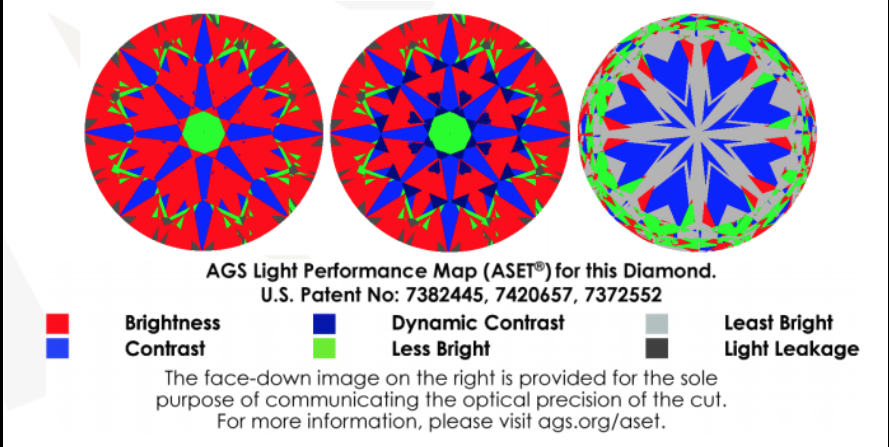
Light Map
A computer generated graphical display conveying information about a diamond’s light performance. Most commonly seen is the ASET map.
Light Performance
The general term for a collection of diamond attributes including brightness, fire, leakage and contrast.
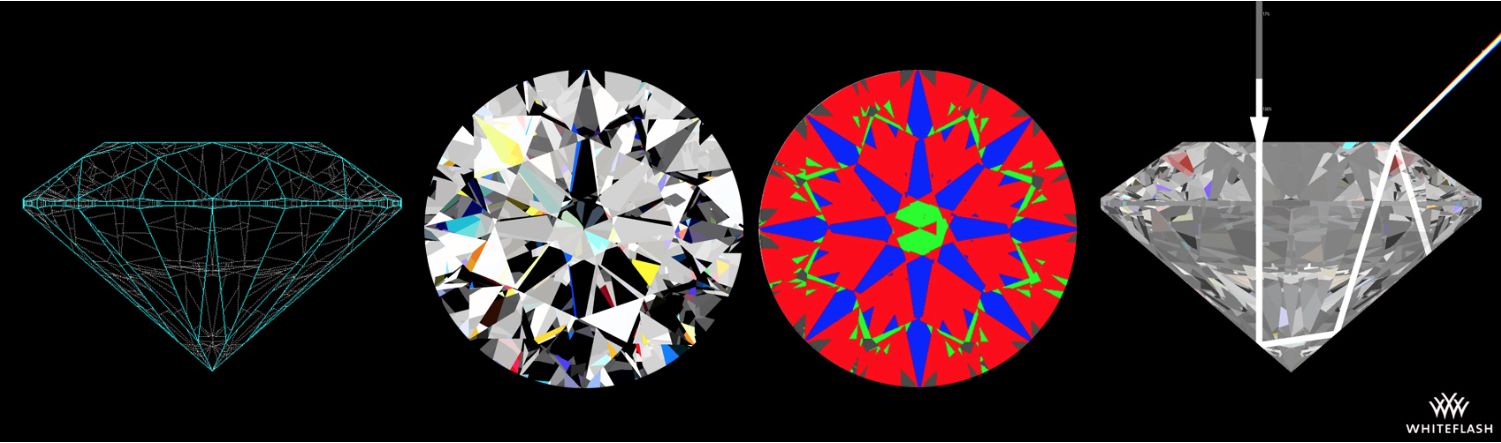
Light Return
"Light return" in diamonds refers to the amount of light that re-enters the observer's eye after entering the diamond. It is a crucial factor in a diamond's brilliance. A well-cut diamond is designed to maximize light return by allowing light to enter, reflect internally off facets, and exit through the crown, creating sparkle. Diamonds with optimal light return are considered more valuable, while poorly cut diamonds may exhibit light leakage, diminishing their brilliance. Evaluating light return is integral to assessing a diamond's overall visual appeal and quality.
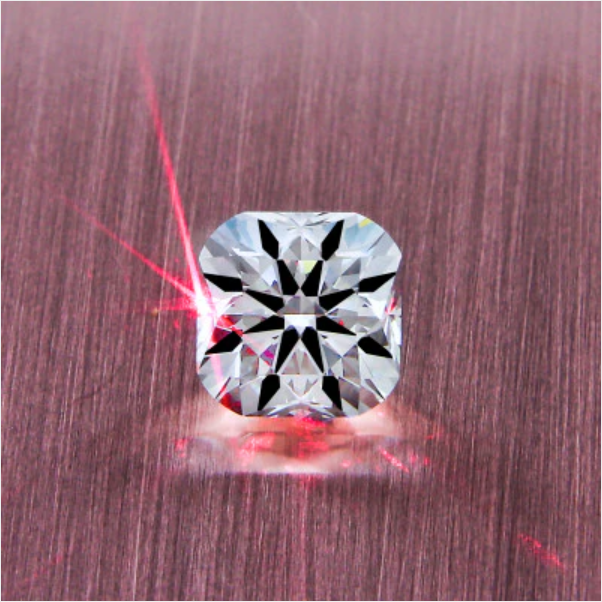
Loupe
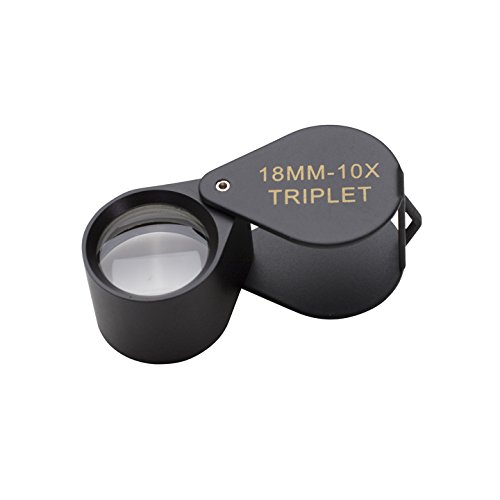
A loupe is a small magnification device used in the diamond industry for close inspection of diamonds and other gemstones. Jewelers and gemologists employ loupes to examine diamonds for inclusions, blemishes, and other imperfections that might affect the stone's clarity and value. The tool, typically featuring a powerful optical lens, allows professionals to inspect diamonds at a higher magnification than what is possible with the naked eye.
Gemologists use loupes to assess the quality of a diamond's cut, evaluate the precision of facets, and identify any features that might impact the stone's overall appearance. Loupes are essential for detailed grading and analysis, providing jewelers with a closer look to make informed decisions about a diamond's characteristics and market value.
Lost Wax Method
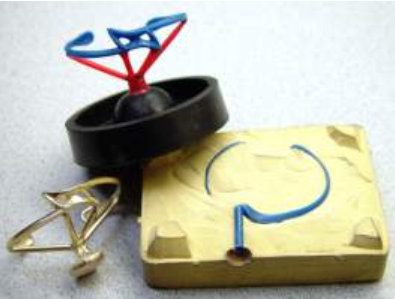
The lost wax method is a common method used to cast rings and other jewelry pieces. It involves creating a wax model of the desired design, which is then encased in a plaster-like material. The wax is melted away using heat, and then molten metal is poured into the cavity left behind. The metal hardens and takes the shape of the wax model. After the metal cools, the plaster is chipped away and the finished piece is revealed.
Lower Girdle
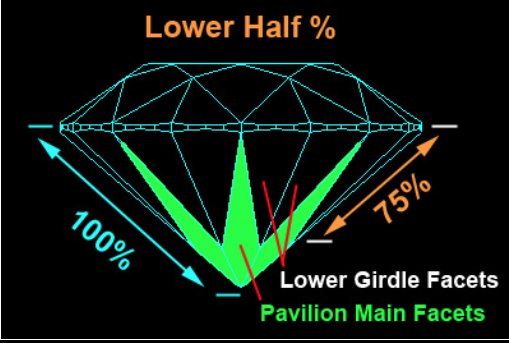
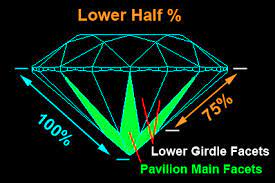
The Pavilion of a diamond consists of the Pavilion Main Facets, the Lower Girdle Facets and the Culet(at the bottom of the diamond, the point). The Lower Girdle Facets are the facets that DO NOT extend from the Girdle to the Culet(those are the Pavilion Mains). They are generally the wider, shorter facets on the Pavilion.
Laser drill (hole)
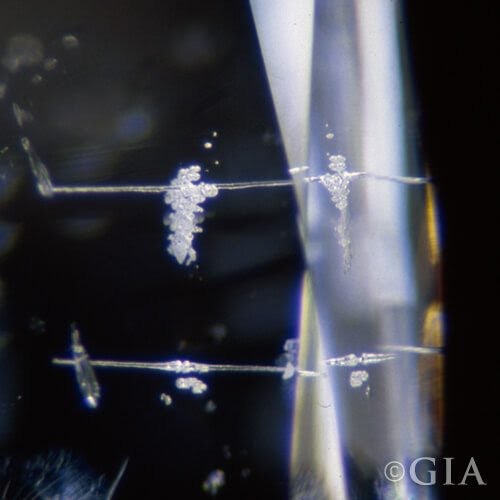
This is man made and usually intended to provide the diamond with a better clarity than it was originally polished with. Creating a “laser drill hole” in a diamond will allow the manufacture to deep boil the stone, allowing chemicals to enter the hole and remove the generally black imperfection by “washing it away”. The consumer believes they are seeing the natural stone in its original state (except for the polishing), yet the diamond has been augmented via use of a laser. As for valuation, a diamond with a “laser drill hole” is considerably discounted because of such. Indication of a “Laser drill” will appear in the Key-to-Symbols area of the GIA grading report.
Lot
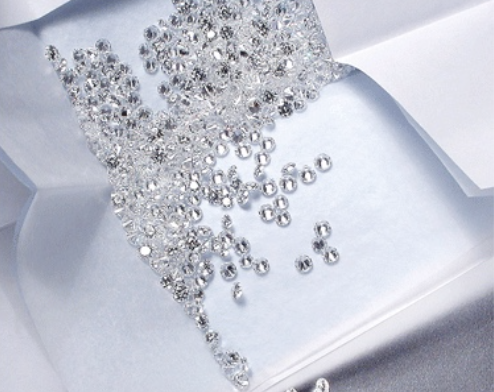
In the diamond business, the term "lot" refers to a group or parcel of diamonds offered for sale as a single unit. These diamonds within a lot may share certain characteristics, such as size, shape, quality, or origin. Diamond lots are often organized and sold in this way to simplify transactions, especially in wholesale markets. For example, a diamond dealer might assemble a lot of small, round, and high-quality diamonds to be sold together. The buyer would then purchase the entire lot, receiving all the diamonds contained within it.
Length to Width Ratio
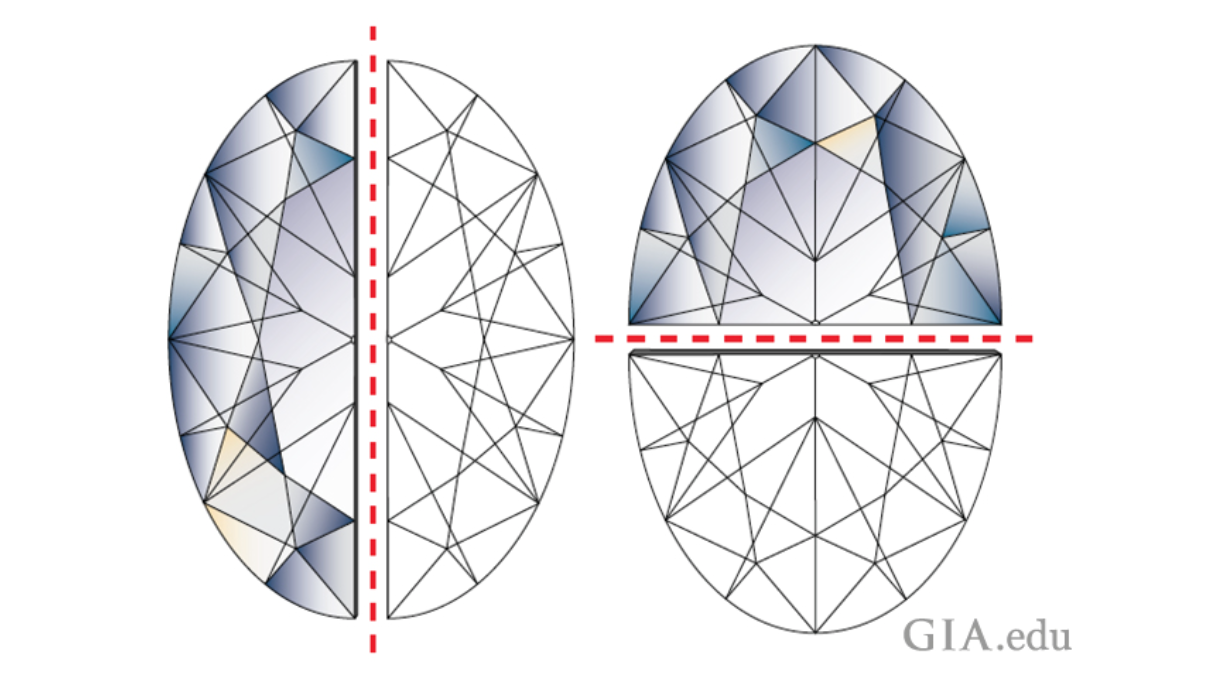
The length-to-width ratio of a diamond is the numerical comparison of a diamond's length to its width, providing insight into the shape and appearance of the stone. It is particularly relevant for fancy-shaped diamonds (non-round), such as ovals, emeralds, marquises, and others. For example, an oval diamond with a length of 8mm and a width of 6mm would have a length-to-width ratio of 1.33(8/6), this would translate to the diamond having a shorter and squatier look than an oval diamond with a 1.48 length to width ratio.
Lower Girdle Facets
Located on the lower portion of the girdle.
Measurements
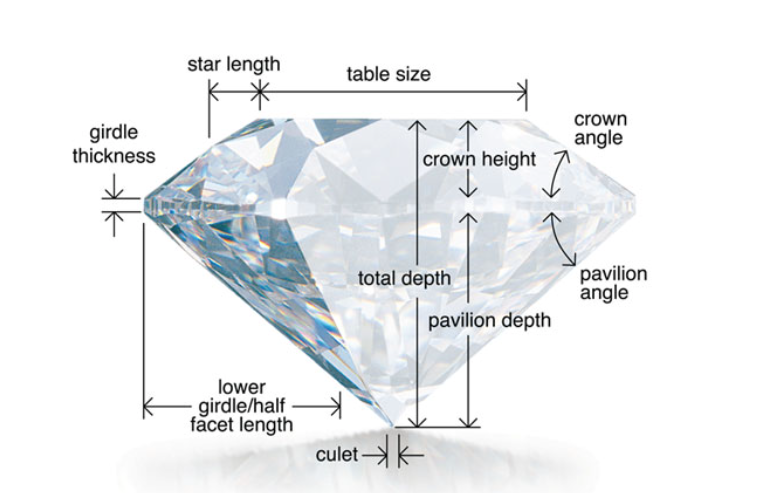
The measurements on a diamond refer to various dimensions and angles that characterize the stone's physical attributes. These measurements are essential in assessing the diamond's overall appearance, cut quality, and proportions. Here are some of the key measurements of a diamond
Diameter: The width of the diamond measured from one edge of the girdle (the widest part) to the opposite edge.
Table Size: The size of the flat, topmost facet (table) in relation to the diameter of the diamond. It is expressed as a percentage.
Depth: The height of the diamond from the table to the culet, expressed as a percentage of the diameter.
Crown Height: The height of the diamond's crown (upper part) measured from the girdle to the table.
Pavilion Depth: The depth of the diamond's pavilion (lower part) measured from the girdle to the culet.
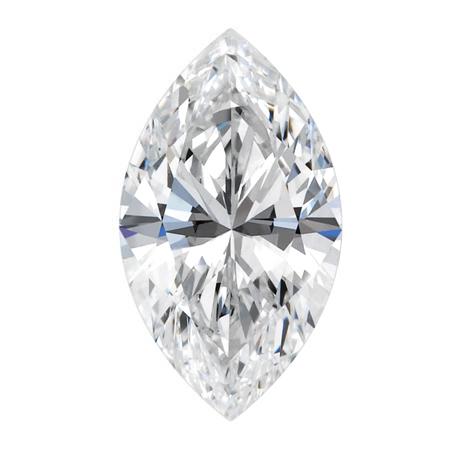
Marquise
Elongated brilliant style faceting with points on either end. Also sometimes referred to as navette.
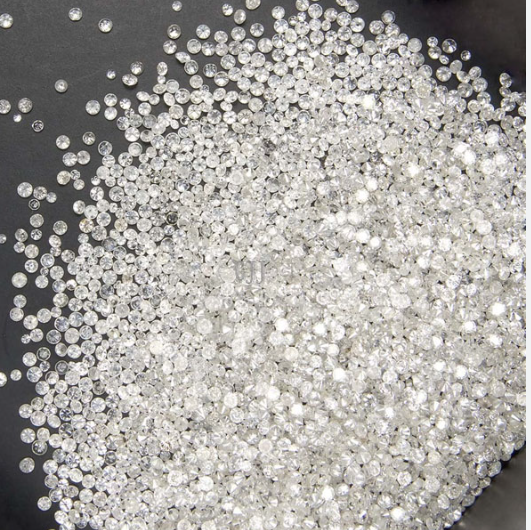
Melee
Small diamonds used as accent diamonds, up to 0.20ct but most frequently under 0.10ct.
Mining
Involves three basic types of activity; in-situ heavily mechanized excavation of diamond bearing volcanic pipes, processing of marine deposits on the sea floor, and rudimentary artisanal digging around alluvial deposits.

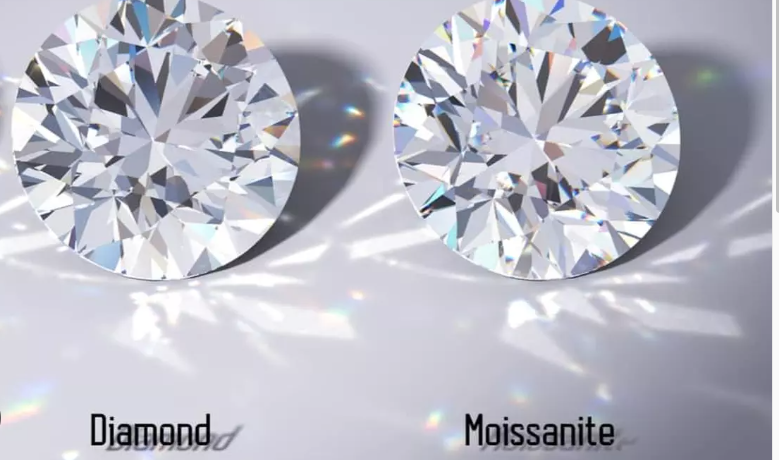
Moissanite
Synthetic moissanite is a modern diamond simulant with good hardness and dispersion. It can fool the simple thermal conductivity probes used to easily detect cz and most other simulants. However, it is doubly refractive, allowing it to be identified with the trained eye.
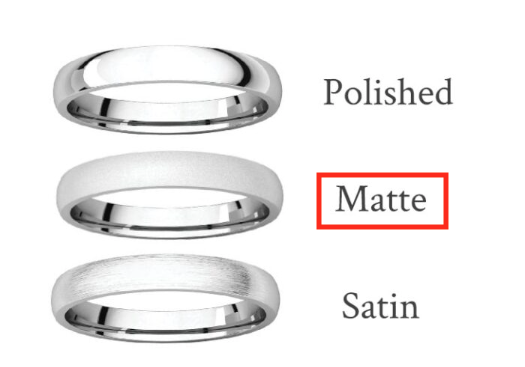
Matte Finish
A matte finish on a ring refers to a surface texture that lacks shine or gloss. It has a non-reflective, muted appearance, providing a subtle and understated look. This finish is achieved by using abrasives or other techniques to create a textured surface on the metal. Matte finishes are popular for their contemporary and elegant aesthetic, offering a contrast to the traditional polished or high-gloss surfaces commonly found in jewelry.
Melange
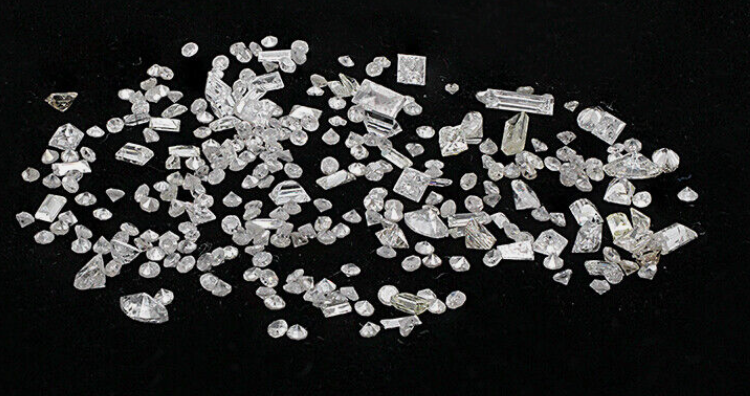
In the context of the diamond business, the term "melange" is often used to refer to a mixture or assortment of diamonds with various sizes, shapes, and qualities. It may imply a collection of diamonds that don't necessarily fit a specific standard or criteria but are grouped together.
Milgrain Setting
A milgrain setting is a type of setting where the metal of the jewelry is embellished with a repeating pattern of small beads. The beads are usually arranged in a circular pattern and are usually made of gold or another metal. The milgrain setting is often used with round or princess-cut diamonds and is popular for its vintage, antique look. The milgrain setting is also known as a “beaded” setting and is often used for engagement rings and other pieces of jewelry.
Micro Pave
Micro pave setting is a jewelry setting technique in which small stones are set close together, creating a row of diamonds that look like one large diamond, like this piece from Brilliant Earth. The stones are held in place with tiny prongs or beads of metal, making the piece look elegant and seamless. Micro paves setting is a popular choice for engagement Rings, Bracelets, and other jewelry pieces. It is a great way to add brilliance and sparkle to a design.
Natural
Similar to the “Indented Natural” the “Natural” is a part of the original rock, or rough stone, that remains unpolished. Very often, “naturals” and “indented naturals” are found on diamonds that are “straight sizes”, .50, .70, 1.00, 1.50, 2.00 etc. This is because IF the cutter were to remove the “natural”, it would mean polishing off more weight and thereby losing the desired weight category. Indication of a “Natural” will appear in the Key-to-Symbols area of the GIA grading report.
Needle
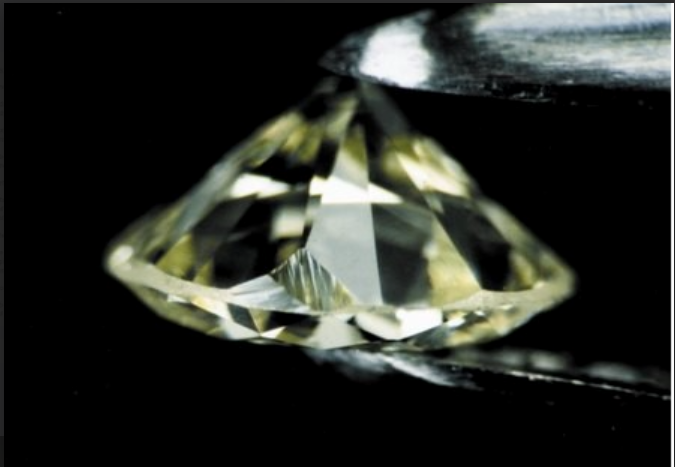
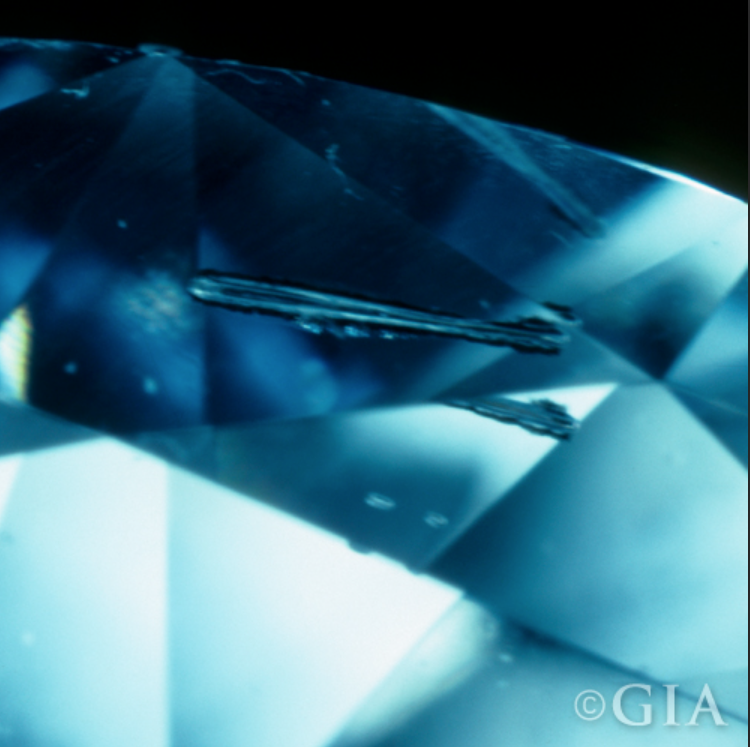
Is a type of inclusion that is just as it sounds. A “Needle” is a small “line like” crystal imperfection. For the sake of clarity, think of a “Crystal” imperfection as an “ink blot” and think of a “Needle” imperfection as just that, a “Needle”. When considering the two options in types of imperfections to have, locations and color being equal, on its face, we would choose a needle! Indication of an “Needle” will appear in the Key-to-Symbols area of the GIA grading report.
Nacre
Nacre, also known as mother-of-pearl, is the iridescent substance that forms the inner layer of the mollusk shell, particularly in oysters and mussels. It's composed of aragonite, a crystalline form of calcium carbonate, and conchiolin, an organic protein. Nacre is responsible for the lustrous and shimmering appearance of pearls.
When a foreign irritant, such as a grain of sand, enters the mollusk, the oyster or mussel secretes layers of nacre to coat the irritant and protect itself. Over time, these layers build up and create the pearl. The quality of nacre and its thickness contribute to the beauty and durability of the pearl. Pearls with thick, well-formed nacre tend to have a more desirable luster and are considered higher quality.
Natural Pearl
A natural pearl is a pearl that forms spontaneously without any human intervention. These pearls are created when an irritant, such as a grain of sand or a small organism, enters the soft tissue of a mollusk, like an oyster or mussel. In response to the irritant, the mollusk secretes layers of nacre around it, gradually forming a pearl.
Natural pearls are relatively rare and valued for their unique shapes, colors, and luster. However, due to overharvesting and the scarcity of natural pearls, the majority of pearls available in the market today are cultured pearls. Cultured pearls are produced through a process where a nucleus is intentionally inserted into the mollusk to stimulate pearl formation. Natural pearls, in contrast, are formed entirely by nature.
Nail Head
A term referring to a diamond that is proportioned extremely deep and appears dark in the table.
Obscuration (Head Shadow)
When observing a diamond at close range, the light from above that is blocked by the head. A small amount of obscuration can contribute positive contrast and enhance brilliance and scintillation.
OGI
OGI Systems is a manufacturer of sophisticated diamond scanning technologies. See also Sarine and Helium.
Old European
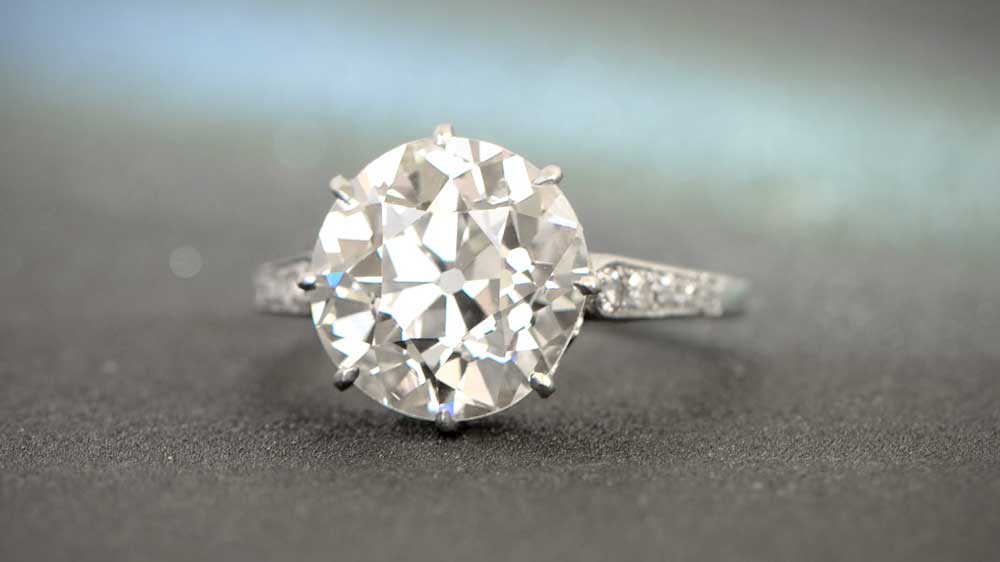
Early style round brilliant cut characterized by a small table and medium to large culet.
Old Mine Cut
Early diamond cut characterized by a squarish outline, small table and large culet.
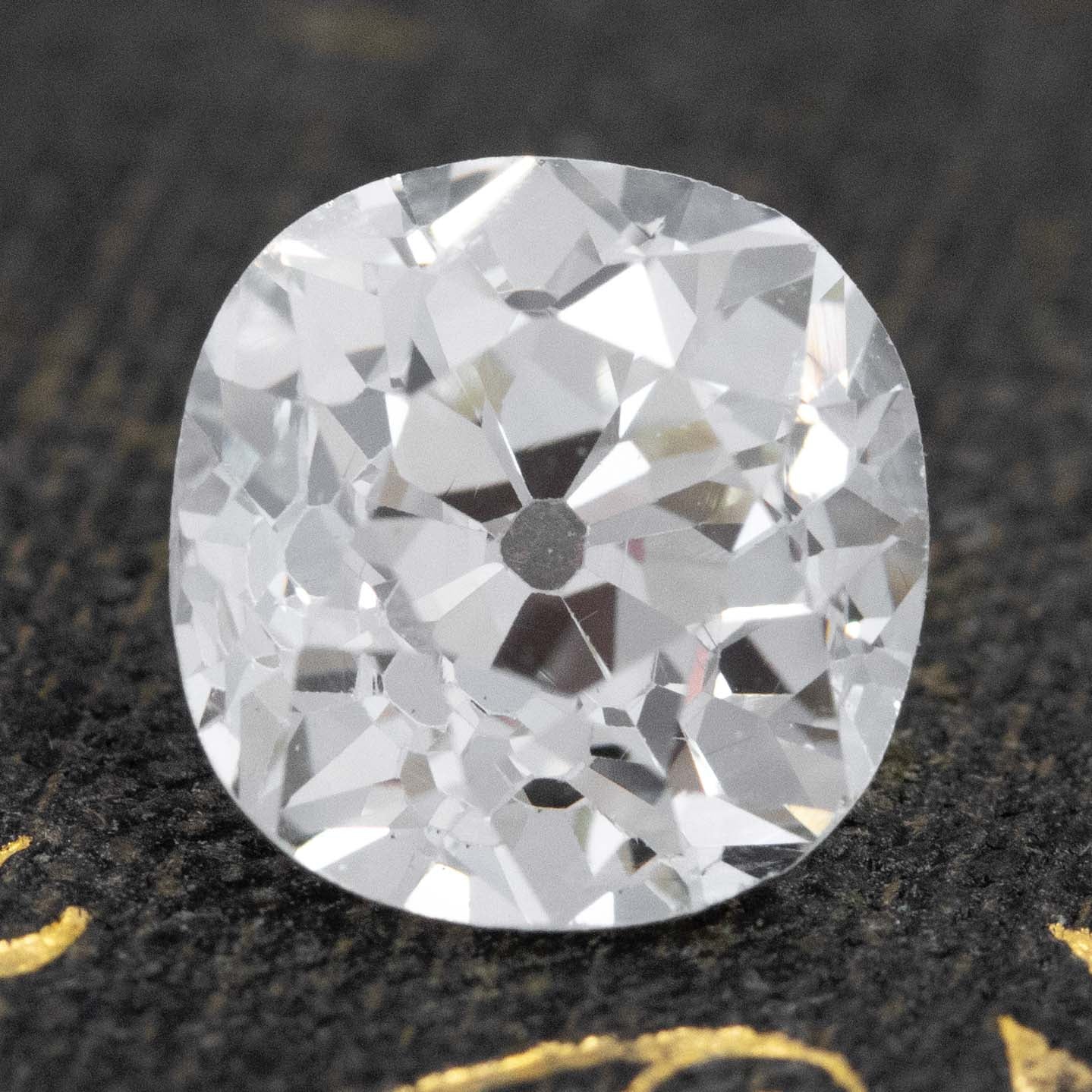
Optical Symmetry
The degree of precision in the alignment of corresponding facets in 3 dimensional space. Because it is sometimes confused with the “meet point” symmetry graded on a diamond report, a better term is optical precision.
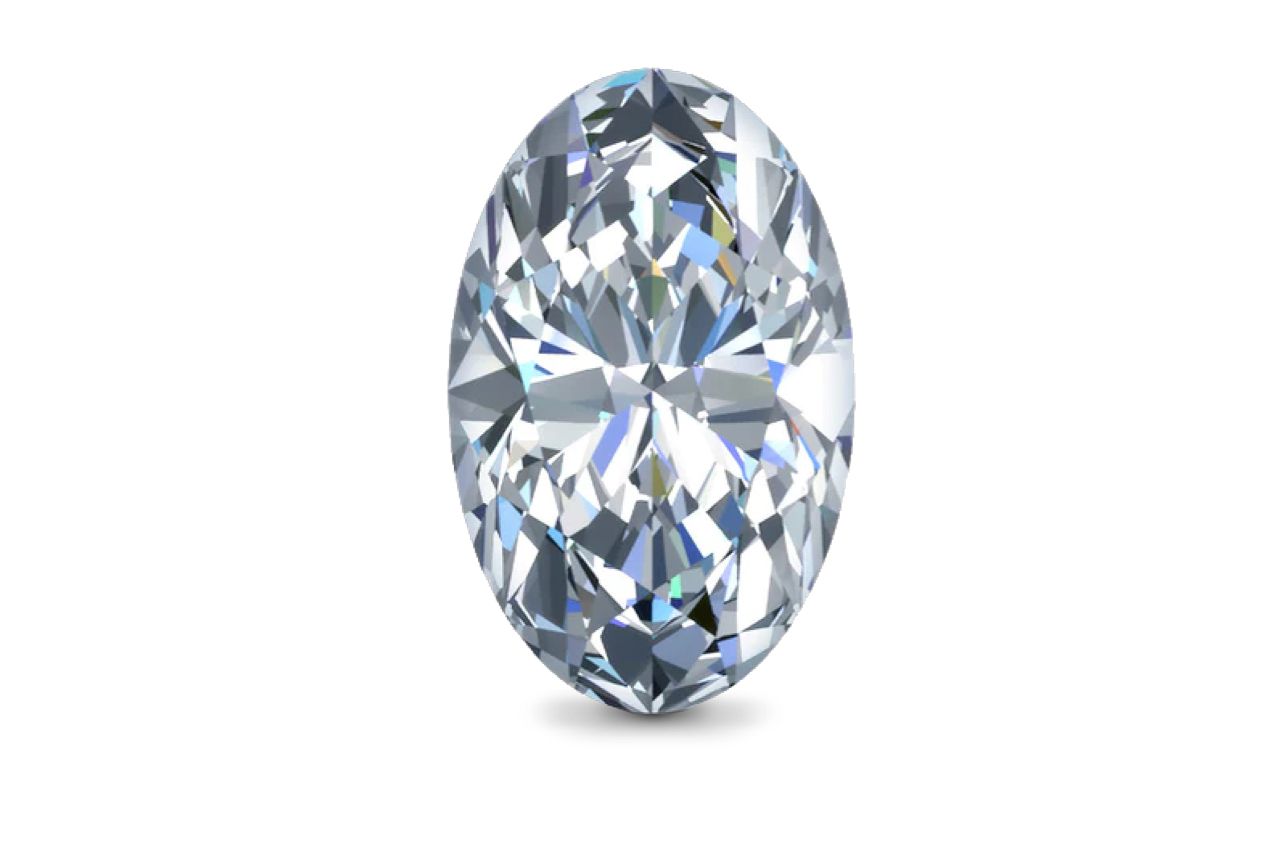
Oval
A brilliant style cut which is elongated with rounded ends. Learn more about Oval Cut Diamonds here.
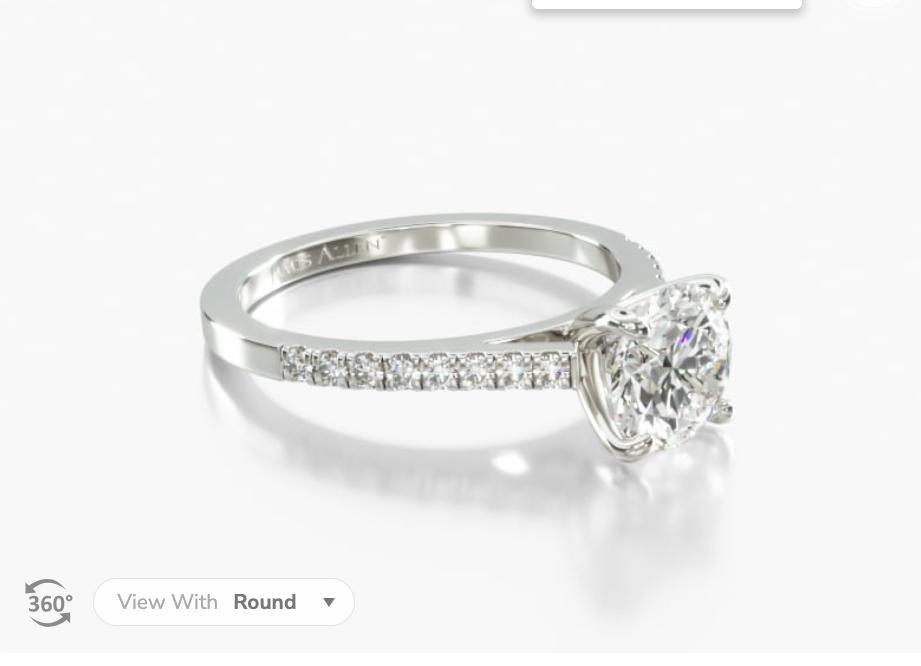
Pave'
Pave is a term used to describe a style of setting in jewelry where multiple small stones are set closely together to create a smooth, uniform surface. An example would be this James Allen piece. This style of setting is often used in engagement rings and other pieces of jewelry and is popular for its sparkle and brilliance. The stones used in pave settings are usually small diamonds and the setting is usually done with a metal such as Gold or Platinum.
Petite Pave
The petite pave setting is similar to the micro pave setting but the stones are set even closer together, like this piece from James Allen.
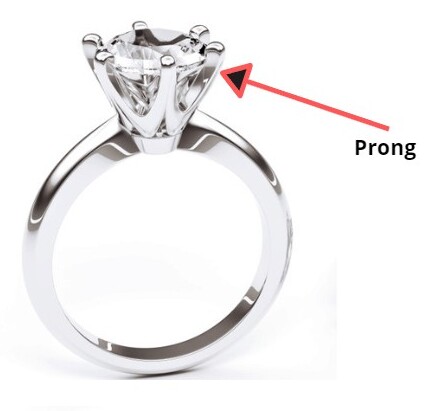
Prong
A prong is a small piece of metal that holds a diamond or a gemstone in place on a ring. Prongs can have different shapes, such as round, v-shaped, flat or claw. Prongs can also vary in number, from one to six or more. Prongs can affect the appearance, security and durability of a diamond ring.
Profile
The profile of a ring is the shape of the ring when viewed as a cross-section1. It is also known as the outside shape or the top of the shank. The profile of a ring can affect the style, comfort and durability of the ring.
Pearls
- nacre(for pearl)
- Hue(for pearl)
- Natural (pearl)
- Cultured (pearl)
THE GIA(GEMOLOGICAL INSTITUTE OF AMERICA)
Founded in 1931, the Gemological Institute of America (GIA) has been a global leader in gemological research, education, and grading. Established by Robert Shipley, it introduced the 4 Cs (Cut, Color, Clarity, and Carat) and standardized diamond grading. GIA has since become a trusted authority, setting industry standards. The GIA is the benchmark for diamond grading laboratories throughout the world.
Per Carat
In diamond purchasing, "per carat" refers to the cost of the diamond per unit of weight, where 1 carat is equivalent to precisely 100 points or 0.2 grams. The price per carat is a crucial factor in determining the overall cost of a diamond, and it can vary based on factors such as the diamond's cut, color, clarity, and other characteristics. Diamonds are often priced per carat to allow for easier comparison between different stones of varying sizes and qualities. For instance a 1.25 carat can be traded at $4000 PER CARAT(1.25x4000), which means the total dollar value of the diamond is $5,000. This is how diamonds are traded amongst wholesalers.
Pavilion Mains
Located on the Pavilion of a diamond, the Pavilion Mains or “Main Facets” generally extend from the Girdle to the Culet.
Pavilion
Located below the girdle of a diamond(the bottom).
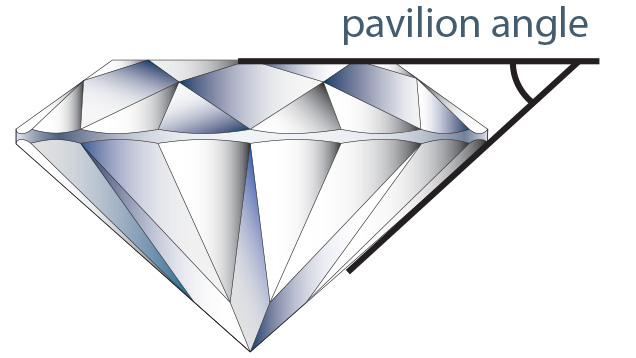
Pavilion Angle
The pavilion angle in diamonds refers to the angle between the girdle plane (the widest part of the diamond) and the pavilion main facets (the lower part of the diamond, below the girdle). Specifically, it is the angle formed by the line of the girdle and the line of the pavilion facets when viewed from the side of the diamond. The pavilion angle is a crucial measurement used to assess the diamond's cut quality. Along with other factors such as crown angle, table percentage, and culet size, the pavilion angle influences how light interacts with the diamond. Well-proportioned pavilion angles contribute to optimal light reflection, dispersion, and brilliance, resulting in a diamond with attractive visual characteristics. The ideal pavilion angle can vary depending on the overall cut design of the diamond.
Pinpoint
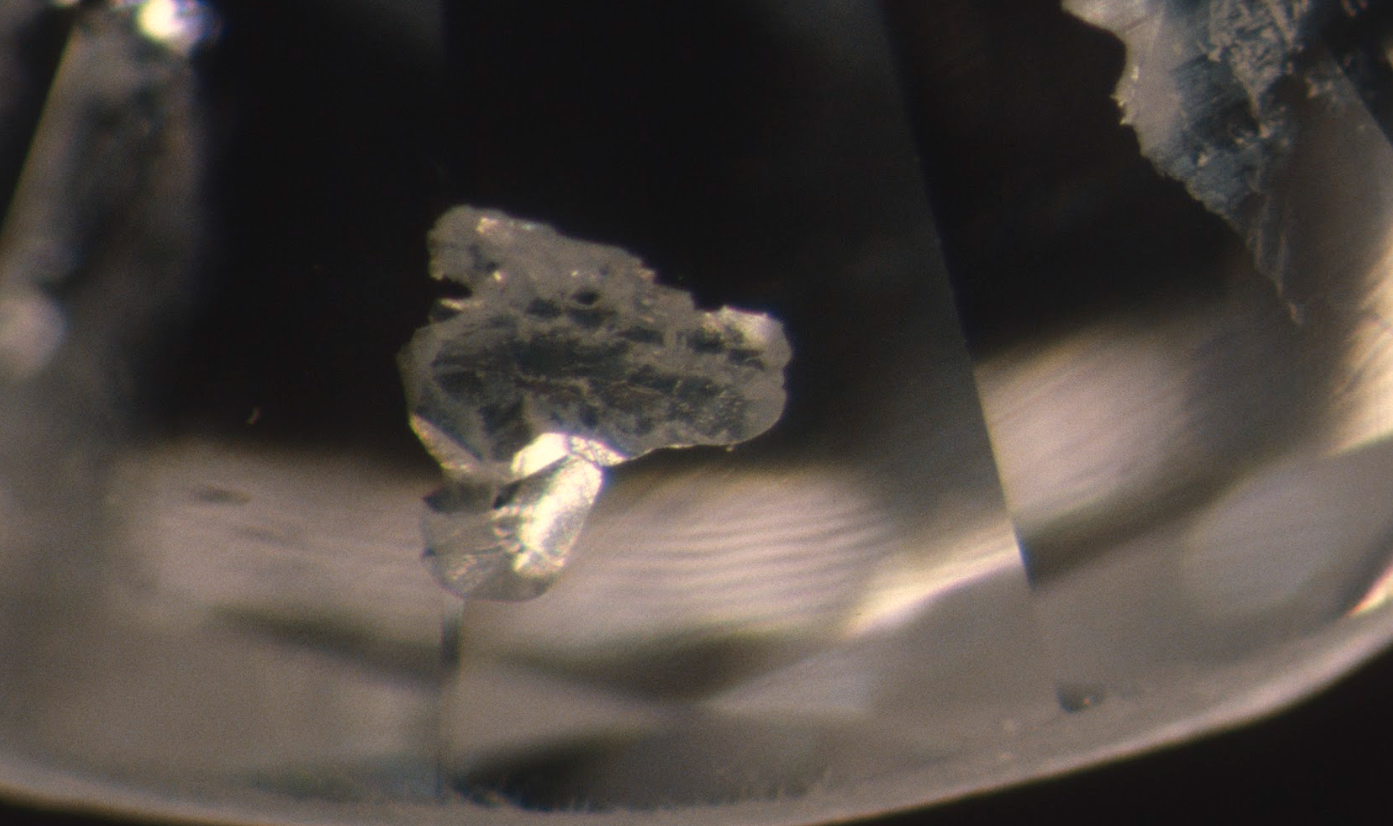
Is another type of imperfection that is just as it sounds. It is intended to be a very tiny crystal, a “pinpoint” if you will. When reviewing options of imperfections within similar graded diamonds, a diamond with a “pinpoint” as opposed to a diamond with a “crystal” will be more desirable (assuming location and color of the imperfection is the same). Indication of an “Pinpoint” will appear in the Key-to-Symbols area of the GIA grading report.
Pit
Is a type of shallow inclusion that appears on the surface of a gemstone. It is naturally occurring and not the result of polishing/cutting or damage from wear.
Polish lines
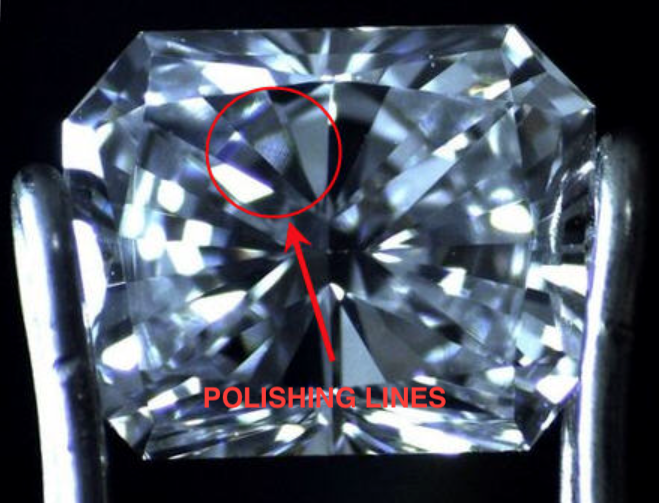
Are left from the polish wheel and can be undesirable if visible. FINE polishing is not difficult to achieve and therefore we avoid diamonds with Polish issues. They will appear as “faint lines” or “ridges” on a diamond.
Pavilion Facets (Lower Part)
The pavilion facets of a diamond refer to the lower portion of the gemstone, situated below the girdle. These facets play a crucial role in how light interacts within the diamond, contributing to its brilliance and sparkle.
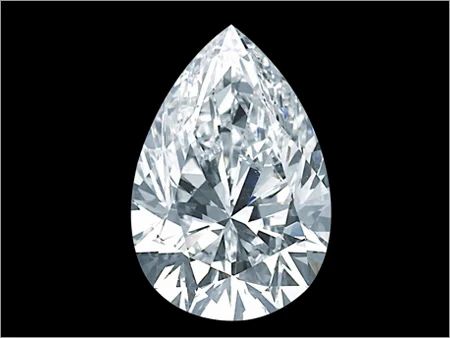
PEAR
Sometimes called a tear drop, it features a point on one end and rounded shape on the other with a brilliant cutting style.
Phosphorescence
A rare property in diamonds wherein a diamond exposed to strong ultraviolet wavelengths will continue to emit light for a period of time after the light source is removed. The Hope Diamond exhibits red phosphorescence.
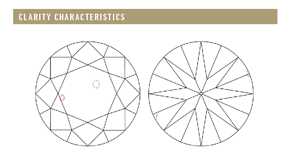
Plot
A diagram that appears on most laboratory reports detailing the location and type of clarity characteristics upon which the clarity grade is based. Not all characteristics are necessarily plotted, just those required to identify the diamond and support the clarity grade.
Polish
Diamond polish refers to the surface finish of a diamond, affecting its appearance and light reflection. Skilled artisans use various abrasives to remove imperfections and create a smooth, reflective surface. A well-polished diamond enhances its brilliance by allowing light to enter and exit the stone with minimal interference. This process plays a crucial role in maximizing the diamond's visual appeal.
Pricing
Diamonds are priced generally along the lines of rarity based upon size, color, clarity, and cut quality. The diamond market is highly globalized and there are pricing guidelines that are published regularly that serve as a basis for pricing in the trade.
Princess
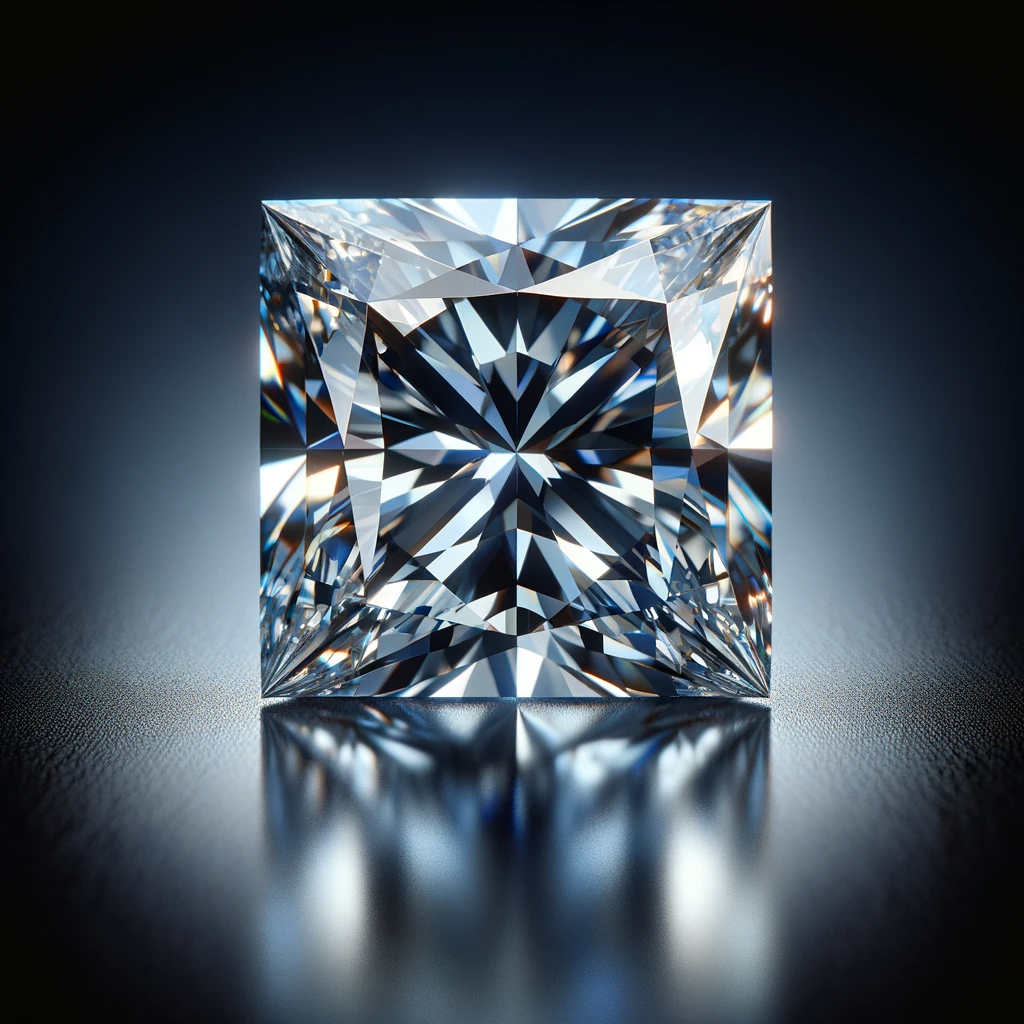
Square to slightly rectangular shape with a brilliant style pavilion. A princess cut diamond usually has between 50 and 58 facets, depending on how the diamond is cut. Learn more about Princess Cut Diamonds: Your Ultimate Diamond Buying Guide.
Proportions
The relationship between the crown, pavilion, table and girdle of a diamond.
Parcel
In the diamond business, the term "parcel" refers to a group or collection of diamonds that are packaged and sold together. Similar to the concept of a "lot," a parcel typically consists of multiple diamonds, and these stones may share certain characteristics such as size, shape, quality, or other specifications.
Pavilion Depth Percentage
The pavilion depth percentage refers to the proportion of the diamond's total depth that is occupied by the pavilion (the lower part of the diamond below the girdle). It is calculated by dividing the pavilion depth by the total depth of the diamond and multiplying by 100 to get a percentage.The pavilion depth percentage is an important factor in assessing a diamond's cut quality.
Along with other measurements like crown height and angle, it influences how light interacts within the diamond. Well-proportioned pavilion depth contributes to optimal light reflection and brilliance. A pavilion depth percentage that is too shallow or too deep may result in light leakage or poor light performance, affecting the diamond's overall visual appeal. A well-cut diamond will have a balanced pavilion depth percentage that maximizes light return, contributing to its beauty and value.
Radiant
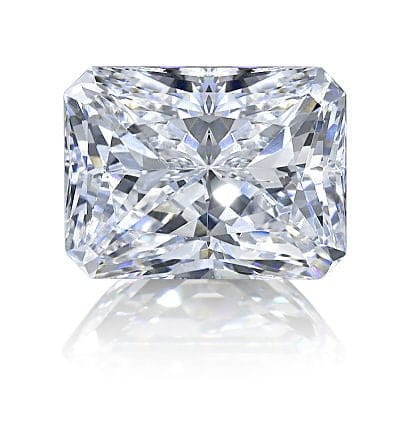
Square or rectangular cut with clipped corners forming an octagonal outline. Henry grossbard is credited with creating the radiant cut diamond in 1977. The radiant cut is a combination of the straight lines of an emerald cut and the "brilliant cut" of a round stone.
Rapaport
A monthly diamond industry publication which attempts to monitor and educate industry insiders on current rough and polished diamond pricing trends and activities; inclusive of future forecasting. The publication is headed by industry expert martin rapaport.
Ray Tracing
Computerized, mathematical analysis of the light ray paths entering and exiting a diamond depending on the proportioning and precision of the cut. Ray tracing allows the mapping of internal light reflection and refraction.
Rhinestone (Foil Back)
Early imitation diamond created by backing cut glass with a reflective paint. Also sometimes referred to by the old fashion term “paste”, it has long been popular in costume jewelry.
Rose Cut
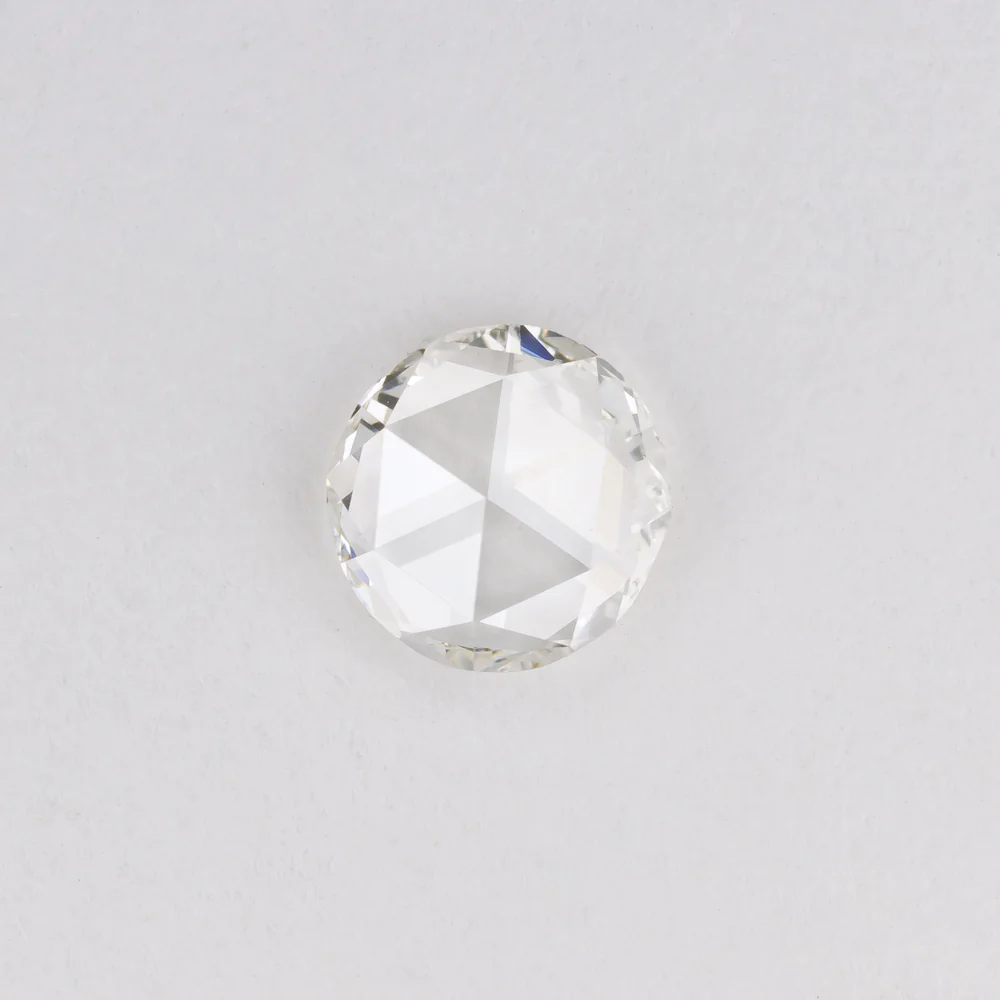
Early diamond cut that featured a flat base (no pavilion) and Kite Shape facets on the crown with no table facet. The appeal of the stone was in the reflections off of its facet surfaces rather than more complex light performance of later cuts. A rose cut will generally have up to 24 facets and is less reflective and refractive than that of a round brilliant cut diamond that will have 57 or 58 facets.
Round Brilliant
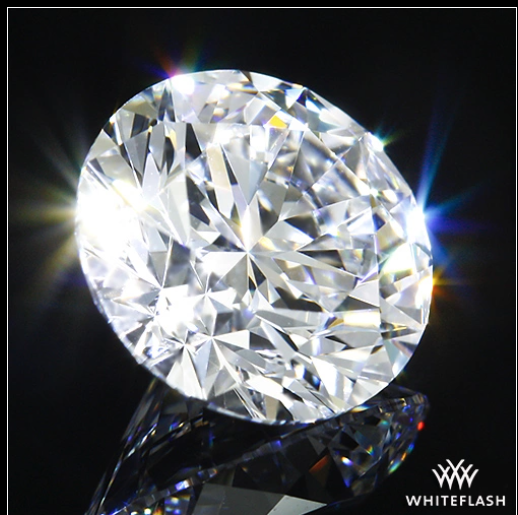
The classic round cut diamond shape with pavilion characterized by long Kite Shape facets. The round brilliant cut will generally have 57 or 58 facets with 33 facets above the girdle and either 25 or 26(culet) on the pavilion. When cut properly, the round brilliant cut will provide the greatest fire and scintillation of all modern cut diamonds.
Rhodium
Rhodium is commonly used in jewelry as a plating material. It is a precious metal, part of the platinum group, and is known for its high reflectance and resistance to corrosion. In jewelry, rhodium plating is often applied to white gold or silver to enhance their appearance. It provides a bright, reflective surface, prevents tarnishing, and gives a white gold piece a more pure white color. Rhodium is also used to plate the prongs of some platinum and white gold settings to improve durability and prevent wear.
Shared Prong Setting
A shared prong setting is a type of setting where two or more diamonds are set using the support structure of a single prong as opposed to multiple prongs. The diamonds are held in place by the same prong, which is curved and designed to fit around each diamond. This is a preferred option for diamond eternity bands as it allows one to see more diamonds (brilliance) as opposed to a more metal look with the additional prongs. A classic example of a shared prong diamond eternity band is this one from JamesAllen.
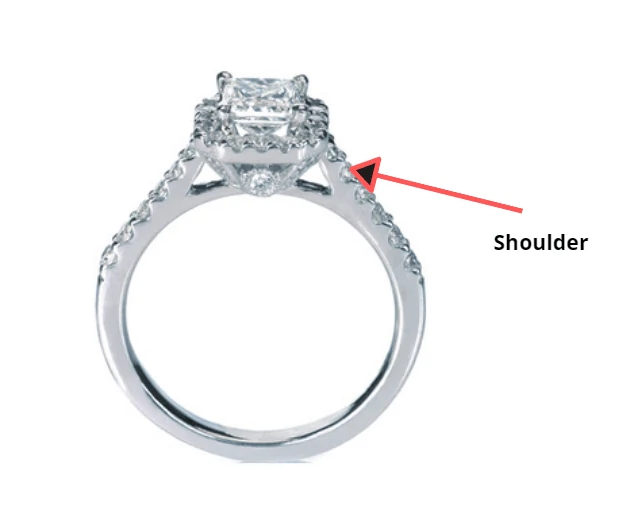
Shoulders
This is the section of the ring shank that leads up to and supports the head.
Star Facet
The small triangle Shape facets located between the table and the upper girdle facets. On a round brilliant cut diamond, there are 8 star facets.
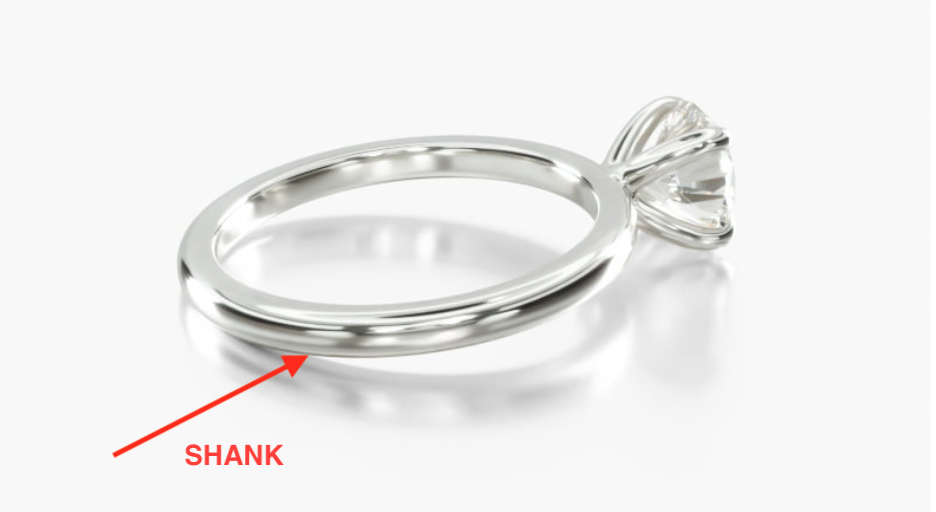
Shank
In jewelry, the term "shank" refers to the band or the part of a ring that encircles the finger. It's the circular portion connecting the setting or the head of the ring to the part that rests on the finger. The shank can vary in width, thickness, and design, and it plays a significant role in the overall structure and comfort of the ring. Different styles of shanks can include plain bands, split shanks, tapered shanks, and more, contributing to the aesthetics and functionality of the ring design.
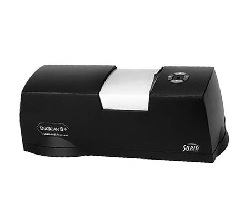
Sarine
A highly accurate non-contact measuring device that produces that provides dimensions and angles of every facet of the diamond and generates a 3d file that can be used in a variety of ways to analyze the diamond. This tool is used in both rough diamond analysis as well as polished diamond analysis. It can direct a cutter as to how a diamond should be cut or re-cut as well as repaired etc to achieve optimal results. Sometimes written Sarin- the former name of the company who manufactures this device (technically called DiaScan) and other diamond assessment technologies.
Scintillation
The dynamic property commonly known as sparkle that derives from the on/off blinking of facets as the diamond, the light source or the eye of the observer moves. Research from the ags suggests there are 2 factors to note in regards to diamond scintillation: flash scintillation and fire scintillation. Flash scintillation is a reference to the sparkle of white light. Fire scintillation is the sparkle of colored light(essentially "dispersed white light"). The size of each facet will also directly affect scintillation of each diamond(all must be proportioned properly for maximum scintillation to occur).
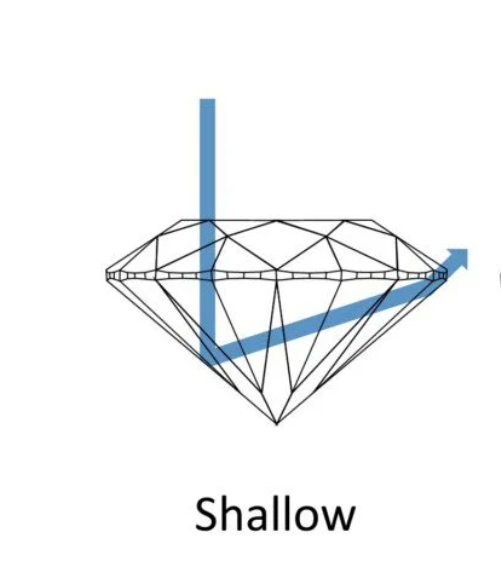
Shallow Cut
A diamond that is proportioned so that the depth is small relative to its outer dimensions. This can cause deficits in light performance such as Fish Eye effect and other problems.
Simulant
A material that has a similar appearance to a gemstone, but does not have the same mineral make-up or the physical and optical properties of the stone it imitates.
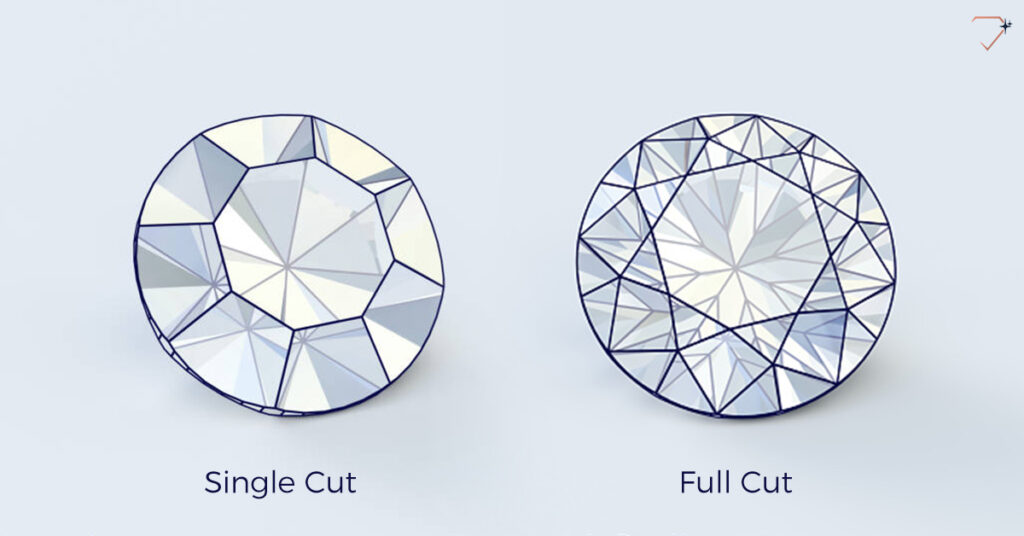
Single Cut
A round shape with a reduced number of facets – 9 on the crown including table, and 8 on the pavilion, with or without a facet on the culet. Common style for accent stones in older jewelry.
Spread
How wide dimension wise the diamond is. For a round diamond it is the diameter for other shapes it relates to length and width. The spead spread of a diamond often refers to the visual size the measurements will give.
Sightholder
A "sightholder" refers to a company or entity that has been granted the privilege of purchasing diamonds directly from a major diamond mining company at regular, pre-arranged sales events known as "sights." These sights are exclusive events where rough diamonds are offered for sale to a select group of clients, often diamond manufacturers or dealers.
Sight
In the diamond business, a "sight" refers to a specific sales event organized by major diamond mining companies, such as De Beers or Alrosa. During a sight, these companies offer rough diamonds for sale to a select group of clients, known as sight holders. Sights generally occur every 5 weeks, 10x a year. The term "sight" originates from the historical practice of physically inspecting and selecting diamonds, and while some transactions are now conducted electronically, the term persists.
Step Cut
A facet arrangement featuring horizontal facets that create a series of steps, as opposed to the vertical facets seen in brilliant style arrangements. Emerald cut, Asscher, and baguettes are examples of step cuts.
 whiteflash.com
 whiteflash.com
Super Ideal
General term for diamonds that have the highest grade for cut quality from the lab, and also achieve levels of precision beyond those necessary to achieve the top lab grade, such as those with Hearts and Arrows patterning. To learn more about the Super Ideal, click here at BrilliantEarth.com.
Symmetry
Diamond symmetry refers to the precision with which a diamond's facets and angles are cut and how well they align with each other. A well-balanced symmetry ensures that light interacts optimally with the diamond, contributing to its overall brilliance and sparkle. Symmetry issues, such as misaligned facets, can impact a diamond's visual appeal, but the impact might not be as noticeable to the naked eye in some cases. It's one of the factors assessed in diamond grading reports. Grading for symmetry may run from excellent - very good - good - fair - poor. The lower the grade, the less desirable the diamond will be.
Synthetic Diamond
Laboratory grown product that has the same physical and optical properties of natural diamond.
Two Tone Setting
A two tone setting is a type of setting where two different metals are used in the same piece of jewelry like these beautiful rings from JamesAllen or BrilliantEarth. The two metals are usually gold and another metal, such as silver or platinum. The two-tone setting is popular for its modern, contemporary look, and is often used for engagement rings and other pieces of jewelry. The setting can be used with any type of diamond or gemstone and can be used to create a unique, eye-catching look.
Tension Setting
A tension setting is a type of jewelry setting in which a gemstone is held in place by the tension of the metal band. This is a modern way of setting a diamond and is becoming increasingly popular. The diamond is placed in a groove cut into the metal and is held in place by the tension of the metal. This type of setting gives the diamond the appearance of floating on the band, creating a unique and eye-catching look. An example would be this beautiful piece by James Allen.
THE IGI(INTERNATIONAL GEMOLOGICAL INSTITUTE)
The International Gemological Institute (IGI) is a renowned gemological grading laboratory. Established in 1975, it provides expert evaluation and certification services for diamonds, colored gemstones, and jewelry. Recognized globally, IGI employs rigorous standards to assess gem quality, ensuring transparency and reliability for consumers and the jewelry industry.
Table Cut
Very early diamond cut which involved the grinding off of one point of an octahedral diamond crystal creating a large flat facet on top (table) while leaving the other natural crystal faces intact.
Tolkowsky
Early diamond pioneer who described mathematically the ideal proportions of round diamonds in 1919. Much of his work has been validated by modern grading systems.
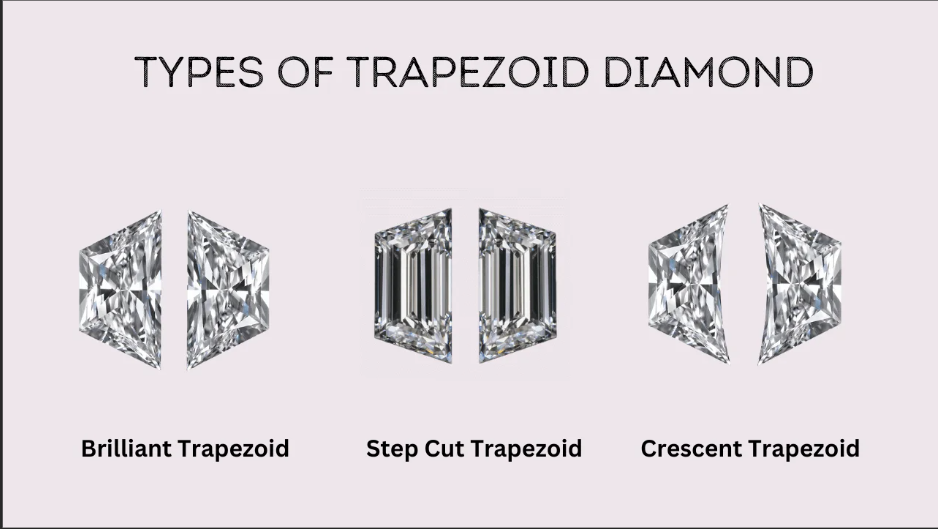
Trapezoid
A four sided step cut with two sides of uneven length. Usually used as side stones for a straight-sided center.
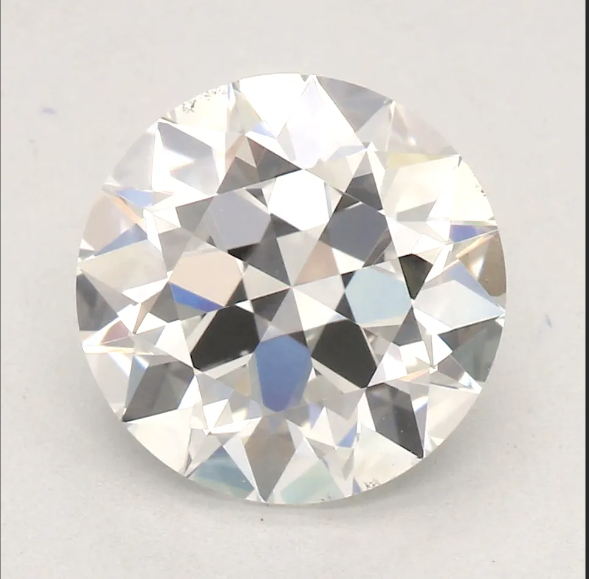
Transitional Cut
A cutting style between the old mine and old European cuts that was a precursor of the modern round brilliant featuring a larger table and lower crown.
Triangle
Three sided step cut.
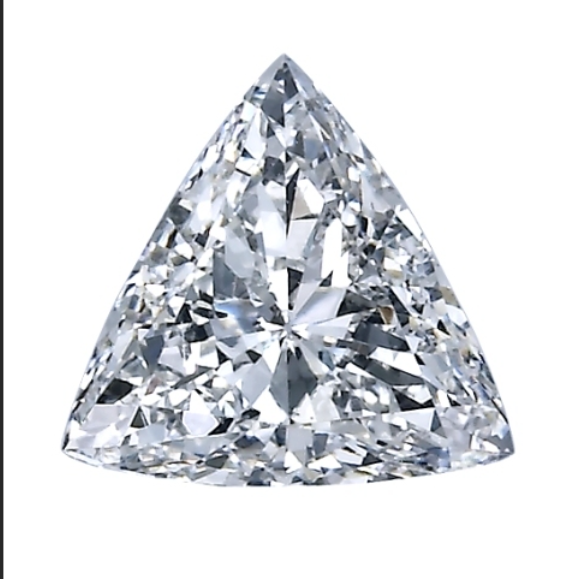
Trilliant
Triangle shape with brilliant style facet arrangement.
Triple Zero
Refers to the AGS Ideal cut grade. Initially it was a reference to a D Flawless Ideal cut graded on the AGS 0-10 scale. It later morphed into shorthand for an Ideal Cut with proportions 0, polish 0 and symmetry 0. Today, there is a fourth requirement for Ideal – light performance – but the certificate is still commonly referred to as Triple Zero.
Table Percentage
The table percentage in diamonds refers to the size of the flat, topmost facet (the table) in relation to the overall diameter of the diamond. It is expressed as a percentage and is a key factor in assessing the diamond's cut quality. The table percentage is calculated by dividing the width of the table by the average diameter of the diamond and multiplying by 100. An ideal table percentage can vary, but it is generally recommended to fall within a certain range for optimal light reflection and brilliance.
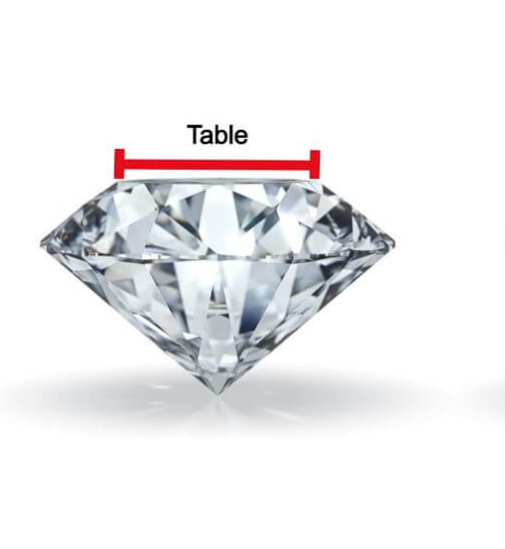
Table
The flat surface area and largest facet located on the top of the diamond.
Twinning wisp
Think of looking at the very top of the trees in the forest during wintertime! Note the leafless thin tree branches, imagine those thin, light, tree branches inside a diamond, there you have your description of a “twinning wisp”! Those thin, wispy, branches are what appear in a diamond. They are made up of crystals, clouds and/or pinpoints. Indication of a “Twinning Wisp” will appear in the Key-to-Symbols area of the GIA grading report.
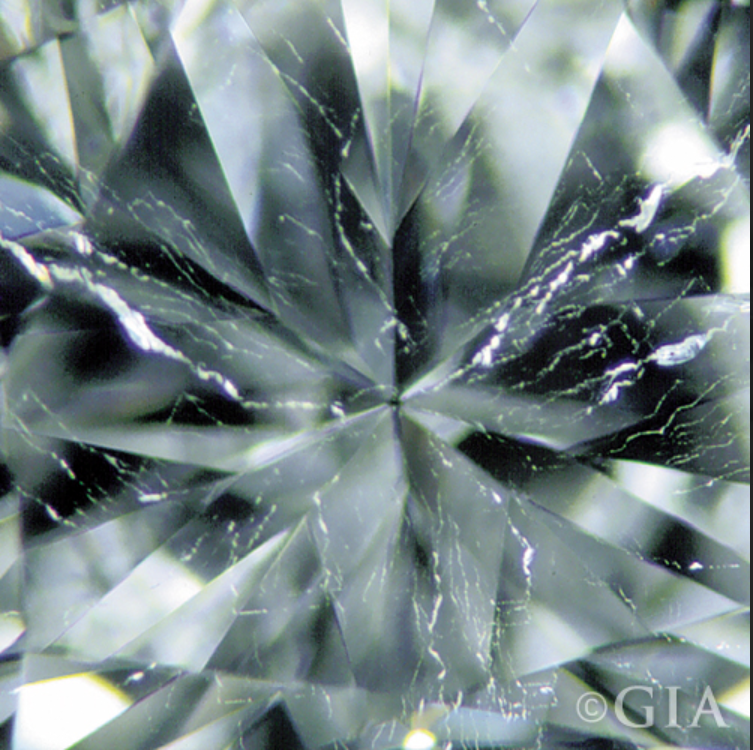
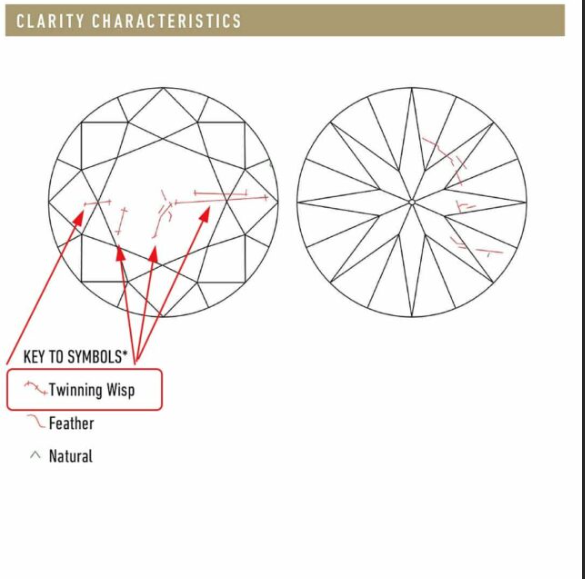
Table Facet
The flat, topmost facet of the diamond.
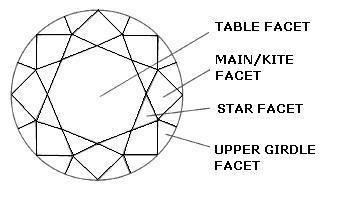
Upper Girdle Facets
Located on the upper portion of the girdle.
Virtual Inventory
A digital catalog showcasing a range of diamonds available for purchase on their platform. Instead of physically stocking these diamonds, the seller maintains a comprehensive digital database that provides details on each diamond's specifications, such as carat weight, cut, color, and clarity. This virtual approach allows the online diamond seller to efficiently manage their offerings without the need for a physical storage facility. It also facilitates real-time updates on diamond availability, enabling customers to make informed decisions based on the latest inventory information.
Water Test
The water test is a simple way to check an emerald’s authenticity by placing it in a glass of water and observing its color. A Green Emerald will radiate green light, while a fake emerald will not. Another way to use water is to place a drop of water on the stone and see if it retains its shape. A real emerald will keep the water drop intact, while a fake emerald will disperse it:
- Polish
- Symmetry
- Light Return
- Table %
- Depth %
- Length to Width ratio
- Fluorescence
- Crown Height
- Girlde %
- Girdle Thickness
- Pavillion depth %
- Culet
- Color
- Clarity
- Keys to symbols
- Measurements
- Shape
- Carat weight
- Comments
- Laser inscriptions
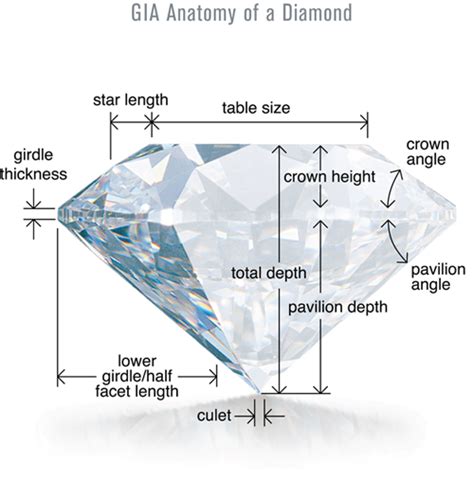
- All Facets
- Chevron
- Brown
- Green
- Hazy
- Milky
- Fisheye
- Leaks or leakage
- Zimi
- Golconda
- Site
- Siteholder
- Loupe
- Eyeclean
- Imperfect
- Certified
- Parcel
- Lot
- Melange
- Ekati
- Argyle
- Yakutia
- Famous blue (hope diamond) and pink diamonds(the pink starm, originally named the steinmetz pink)
- Virtual inventory
Yakutia
Yakutia, officially known as the Sakha Republic, is a vast and resource-rich region in northeastern Russia. It is known for its significant diamond production, among other natural resources. The Mirny Mine, one of the largest diamond mines globally, is located in Yakutia. The region has several other mines, including those extracting gold, coal, and various minerals.
Zimi Mine
The name "Zimmi" refers to a small town in the Pujehun district of Sierra Leone, located right in the middle of the "Moa" and "Mano" rivers' Delta. This mining area has known to produce some of the world's most amazing canary yellow diamonds. Scientifically speaking, most of these diamonds are of the pure type Ib form.
3 Stone Setting
A three stone diamond ring is a type of ring that features three diamonds set in the same piece of jewelry. The diamonds are usually set in a line, with the center diamond being the largest and the two side diamonds being smaller. Two great examples are the James Allen and WhiteFlash. However you can opt to have all the diamonds the same size as well. This type of ring is popular for its classic, timeless look, and is often used for engagement rings and other pieces of jewelry.
5 Stone Setting
A five stone diamond setting is a type of setting that features five diamonds set in the same piece of jewelry, like this beautiful piece by James Allen. The diamonds are usually set in a line, with the center diamond being the largest and the side stones either all progressively smaller or the same size. This type of setting is popular for its classic, timeless look, and is often used for engagement rings and other pieces of jewelry.