Live Chat
Search

We Don’t Sell Diamonds. We Help You Choose the Right One.

Free expert guidance by email or video chat.

No pressure, No sales pitch. Just honest help from diamond experts.

Antique & Vintage Natural Diamonds

antique vintage natural diamonds

By Josh Allen, Co-Founder — YourDiamondGuys.com Josh has over 25 years of experience in the global diamond trade, sourcing from Mumbai, Tel Aviv, and Antwerp, and has supplied diamonds to Tiffany, Cartier, Harry Winston, and more.

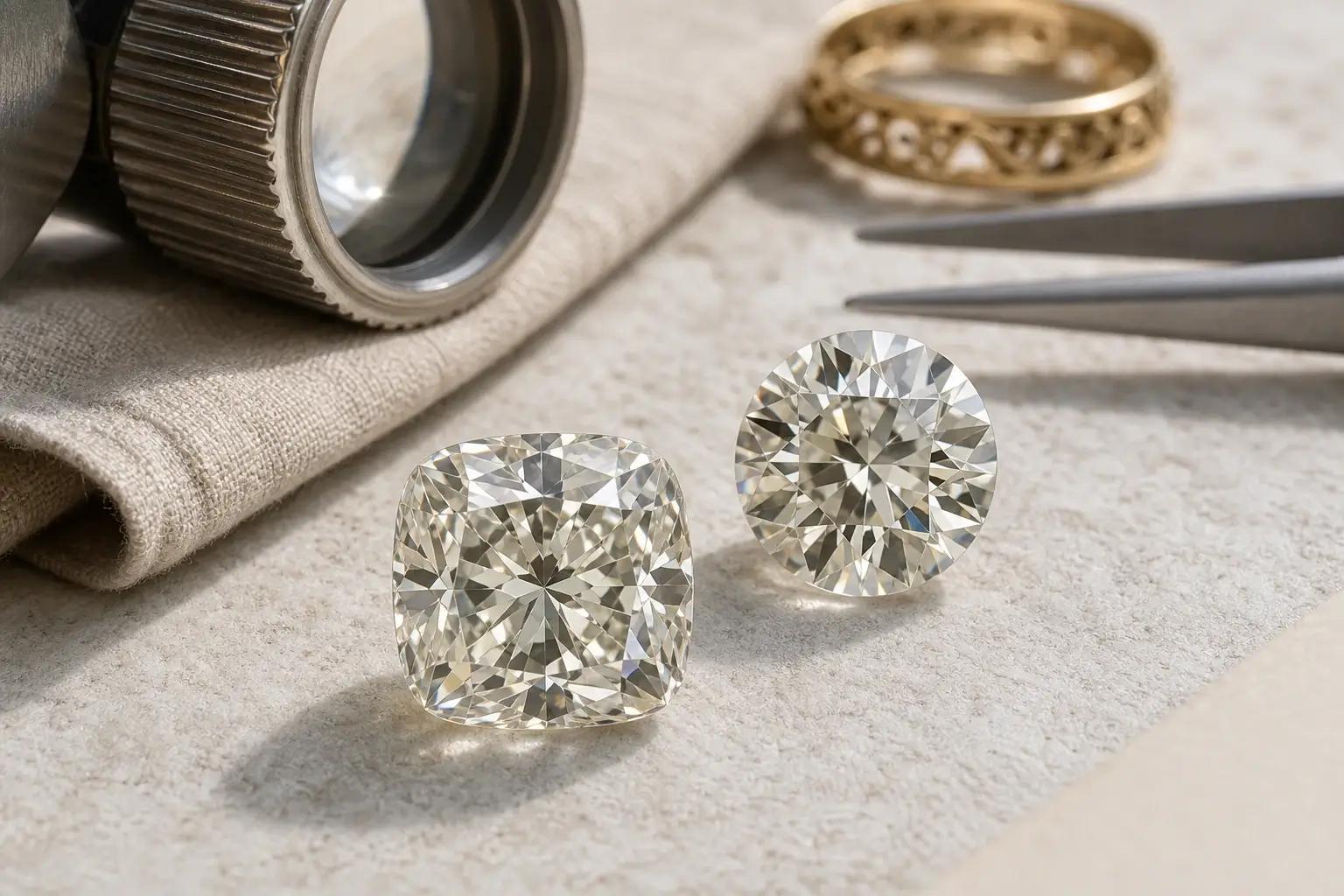
Antique natural diamonds do not feel mass-produced. Because they were not. GIA describes Old Mine cuts as hand-fashioned stones with a soft squarish outline, broad facets, and a style built for candlelight. That is exactly why they still stop people in their tracks.

Most people start with the wrong question.

They ask if an old cut is "better" than a modern cut.

Wrong frame.

The real question is whether you want precision or personality.

Old Mine Cut and Old European Cut diamonds were made in a different era. Different tools. Different lighting. Different priorities.

That difference is the appeal.


Quick answer: Old Mine Cut vs Old European Cut

The International Gem Society's OEC guide explains that Old European cuts are round antique diamonds, usually with a high crown, small table, and an open culet you can often spot at the center. Old Mine cuts are the older cousin. Softer outline. More cushion shape. More hand-cut irregularity.

At a glance: OMC vs OEC

FeatureOld Mine Cut (OMC)Old European Cut (OEC)
OutlineSoftly squared cushionRound
Center lookVisible culet is commonSmaller but still noticeable culet
Sparkle styleBroad, chunky flashesChunky flashes in a rounder pattern
Overall feelRustic, romantic, handmadeRounder, brighter, still antique

Why old cuts look different

Because old cuts were never chasing the same finish modern stones chase.

They were cut by hand.

By eye.

And you can feel that.

That is not a flaw by default.

That is the whole point.

Same antique cut does not mean the same look.

That rule matters here more than almost anywhere else.

Two OECs can share the same carat weight and feel completely different face up. One looks lively. One looks sleepy. One has a charming culet. One has a culet that pulls your eye too hard.

Paper will not save you there.

Your eyes will.


The three features that shape the look

the three features that shape the look visual selection

1) Small table. High crown.

This is where a lot of the magic lives. IGI notes that higher crowns tend to produce stronger fire, which is why antique diamonds often throw those broader flashes of color people love.

Not pinfire.

Chunkier light.

Slower rhythm.

More mood.

2) The culet you can actually see

A visible culet is normal in antique stones.

Sometimes charming.

Sometimes distracting.

You decide.

But do not treat it like a defect just because modern rounds usually hide it.

That would be judging an antique by modern rules.

Big mistake.

3) Depth and spread

Some antique diamonds carry more of their weight below the surface.

That means the millimeter spread can run smaller than you expect for the carat weight.

Same carat does not mean the same size.

It never did.


How to judge performance when there is no modern cut grade

Modern shortcuts do not help much here.

You need to look at the stone.

In real light.

Not perfect studio light.

Not jewelry store spotlights.

Real light tells the truth.

Use four simple words:

  1. Brightness = white light return
  2. Fire = flashes of color
  3. Contrast = light and dark pattern
  4. Scintillation = sparkle in motion

Then do a three-light test.

Near a window. Under a warm lamp. Under a small spotlight from the side.

If the stone stays alive in all three, you are on the right track.

If it only wakes up under hard spotlights, pay attention.

That usually means something in the make is soft.


What normal antique trade-offs actually look like

Sotheby's buyer's guide describes Old Mine cuts as hand-cut diamonds with a high crown, small table, deep pavilion, and large culet, which is why variation in symmetry and proportions comes with the territory.

So yes, some quirks are normal.

  1. A slightly off-round OEC
  2. Soft corners on an OMC
  3. A visible culet
  4. A touch of warmth
  5. Minor symmetry looseness

That can all be fine.

What is not fine is damage pretending to be character.


Quick red flags

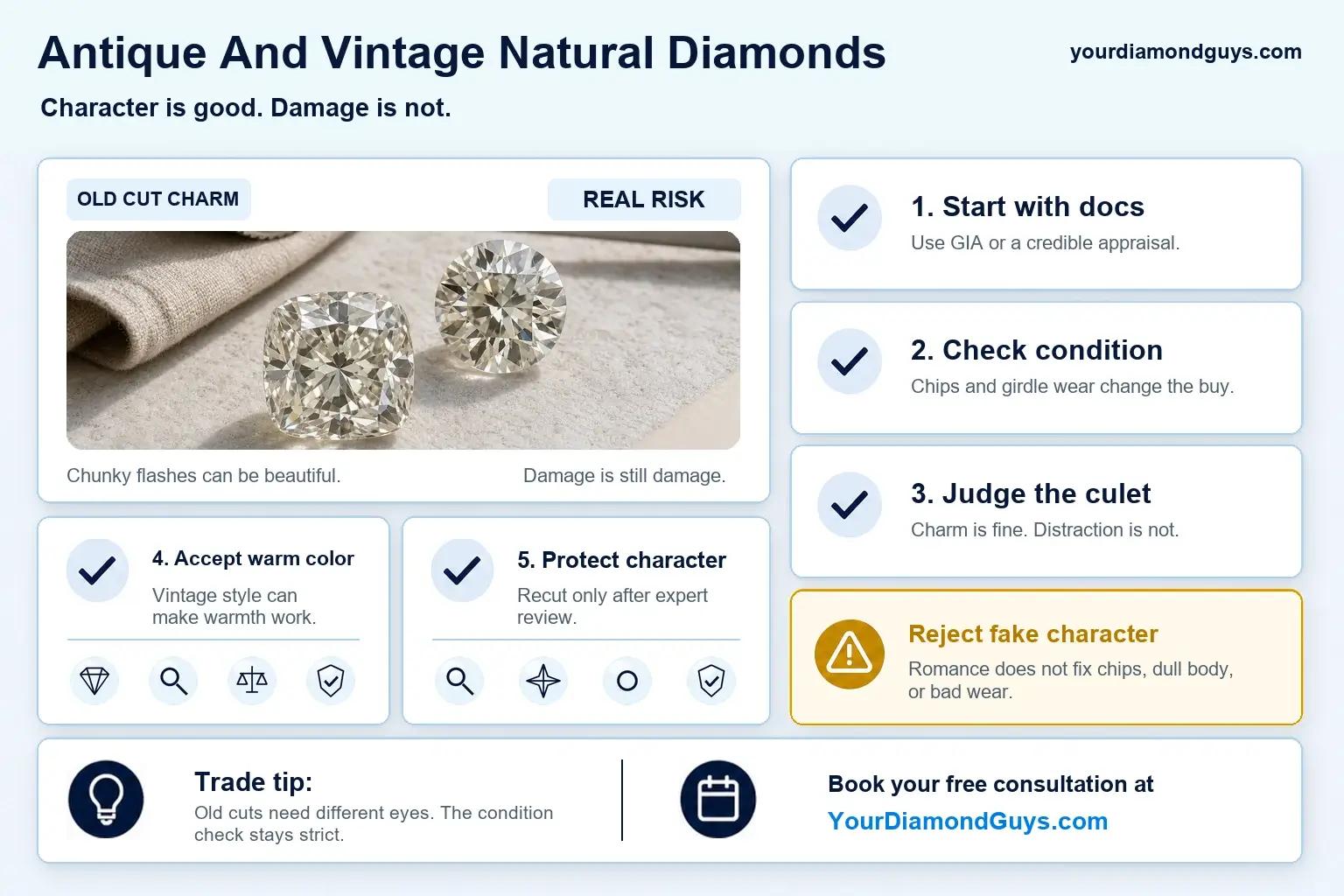
Character is fine.

Damage is not.

  1. Chips that break the outline, especially at OMC corners
  2. A cloudy look that never clears
  3. Dark dead zones that stay dark even when the stone moves

Those are the issues that disappoint you later.


What to request if you are shopping online

what to request if you are shopping online visual selection

Make the seller prove the stone.

  1. Ask for a slow hand video
  2. Ask for one daylight image
  3. Ask for one warm indoor image
  4. Ask for a close view of the girdle and corners
  5. Ask for the grading report comments

If they hide the details, that tells you something.


U.S. buying note that matters

If you are shopping in the U.S., the wording matters. The FTC's Jewelry Guides require clear disclosure when a stone is not mined, which is why "natural diamond" is not just marketing language. It is an important product distinction.


Collector's checklist for OEC and OMC

  1. Compare millimeters as hard as you compare carat weight
  2. Judge the light in motion, not one frozen glamour shot
  3. Read the report comments
  4. Check the outline
  5. Protect the corners
  6. Make sure the personality you love is actually personality, not damage

Free Diamond Consultation

If you are trying to decide between two antique stones, do not guess.

We do not sell diamonds.

We guide you.

That means we can tell you if the charm is real, if the light performance is there, and if the price makes sense before you spend a dollar.

Book your Free Diamond Consultation


Questions? Reach out directly for a free consultation, or drop them in the Diamond Buyers Academy community — Rob and I answer personally.

Frequently Asked Questions

Usually not less.

Just differently.

You will often see broader flashes and a slower pattern instead of the tighter sparkle modern rounds push.

If you love vintage light, that is the reason to buy one.

Not on its own.

In many antique diamonds, it is part of the charm.

The real question is simple. Do you like the look? And does the stone stay lively when it moves?

Yes.

But only if the media is honest. Clear video. Sharp photos. Good return policy. Full report details.

No shortcuts.

Spread.

Some stones face up smaller than their carat weight suggests because more weight sits in the depth.

Always compare millimeters before you decide.

Anything damaged, hazy, or lifeless in motion.

Character is part of the fun.

A dead stone is not.

*Some links on our site may earn us a small commission at NO EXTRA cost to you, helping us keep our content free*