Buying A Natural Diamond Online Safely
By Josh Allen, Co-Founder of YourDiamondGuys.com. Fifth generation diamantaire with 30+ years in the global diamond trade. Former supplier to Tiffany & Co., Cartier, and Harry Winston.
Buying a natural diamond online is not the problem.
Buying blind is the problem. A natural diamond listing has to give you enough proof to judge the stone before and after delivery.
For natural diamonds, start with GIA. Then demand the actual photos, 360 video, return policy, shipping protection, and a clear verification plan.
The best online buy still needs old school discipline. Match the paper. Watch the stone. Protect the return window.
The Listing Has To Show The Actual Diamond
Stock sparkle photos do nothing for me. I want actual magnified images, a real 360 video, measurements, report number, and enough lighting context to judge the stone.
Use the 360 video inspection guide before you trust a stone that only looks good from one angle.
The Policy Has To Protect The Buyer
The return window, shipping insurance, resizing policy, setting responsibility, and appraisal timing matter. Good paperwork after delivery matters too.
Then use verification steps before the return clock runs out.
The Buyer Filter
This is my online safety filter.
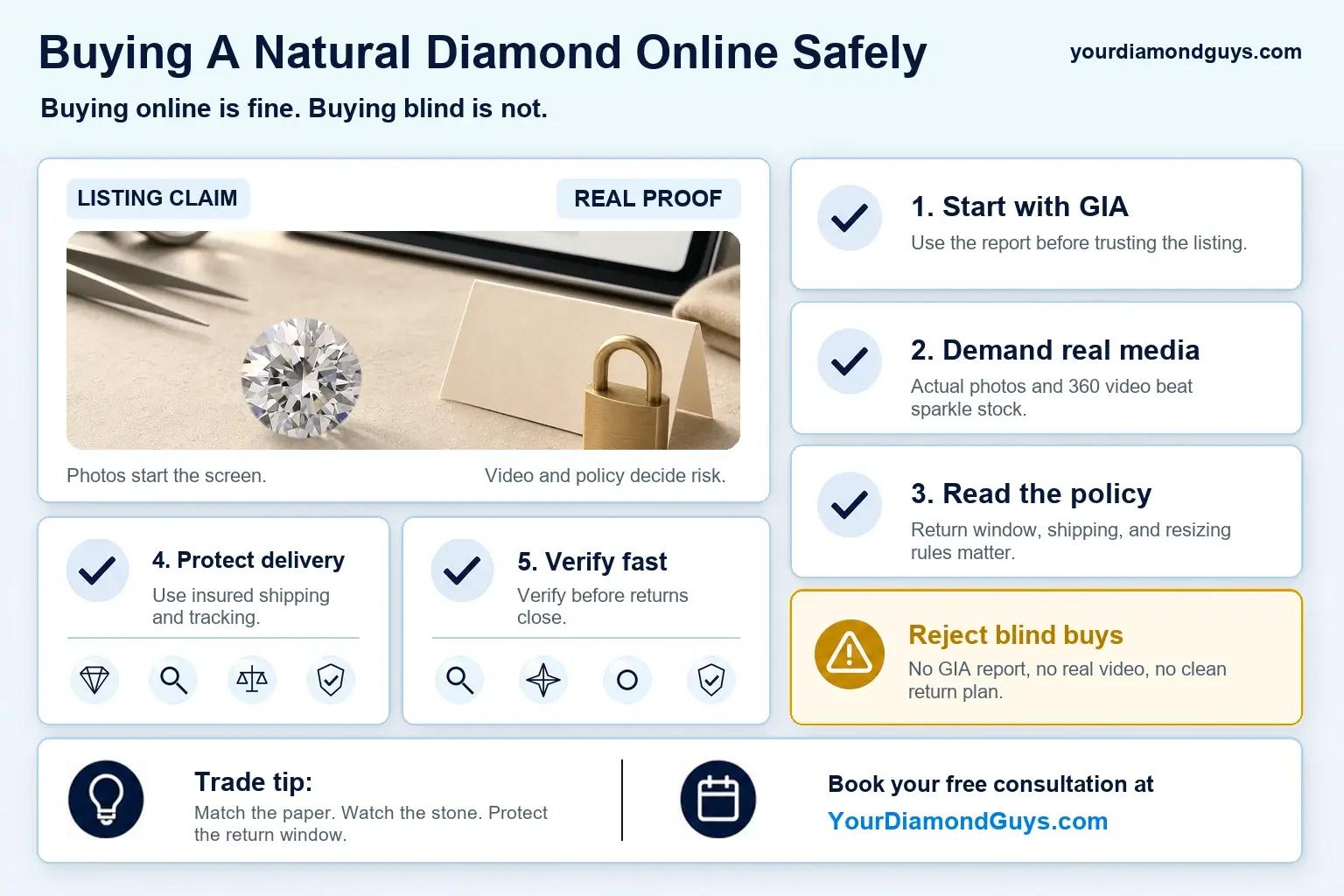
| Online Check | Green Flag | Red Flag |
|---|---|---|
| Report | GIA number shown | Only seller grade |
| Media | Actual 360 video | Generic sparkle image |
| Policy | Clear return window | Restocking surprise |
| Shipping | Insured and tracked | Vague delivery terms |
| After delivery | Time for appraisal | Return window too tight |
My Buyer Recommendation
Buy online only when the seller gives you enough proof to reject the diamond. A good seller does not need you to guess.
Reach out to Rob or me at YourDiamondGuys.com, or book your free consultation. We will look at the actual stone with you.
How This Fits Into A Real Buying Decision
A buyer comparing two online stones should choose the one with better proof, not just the lower price. Better video and cleaner policy often matter more than a tiny spec upgrade.
Mistakes I Would Avoid
- Do not buy from one photo.
- Do not ignore return policy details.
- Do not wait to verify after delivery.
- Do not assume studio lighting shows real life appearance.
A Practical Example
A natural diamond looks amazing in a bright white video, but the seller gives no side view and a short return window. I would ask for more media or move on.
What To Ask Before You Buy
- Can I see the actual stone in video?
- Is the GIA report number available?
- What happens if the appraiser finds a mismatch?
- Is shipping insured both ways?
Where I Would Compare Online Listings
Use these sites as comparison tools, not automatic recommendations. I would compare online listings on Blue Nile and Ritani, then check the report, video, return window, seller terms, and price before moving forward.
Is Buying a diamond online worth it?
Questions? Reach out directly for a free consultation, or drop them in the Diamond Buyers Academy community — Rob and Josh answer personally.
Questions Buyers Ask Us
*Some links on our site may earn us a small commission at NO EXTRA cost to you, helping us keep our content free*