Natural Diamond Buying Checklist
By Josh Allen, Co-Founder of YourDiamondGuys.com. Fifth generation diamantaire with 30+ years in the global diamond trade. Former supplier to Tiffany & Co., Cartier, and Harry Winston.
The safest natural diamond purchase follows an order.
Budget first. Shape second. Cut before color and clarity. GIA before trust. Video before payment.
That order saves buyers from the classic mistake: falling in love with a price before the stone earns it.
On a dealer desk, nobody approves a natural diamond because one line on the report looks good. The stone has to survive the whole screen.
Start With The Non Negotiables
For natural diamonds, start with GIA. Then decide the diamond shape, because shape changes spread, color visibility, clarity visibility, durability, and setting fit.
After shape, move straight into the cut quality checklist. For round brilliants, I want tight proportions before I care about a slightly higher color grade.
Then Check What The Report Cannot Show
The report cannot show life. It cannot show a bow tie, weak transparency, bad patterning, or how the stone behaves when it moves.
That is why the GIA report guide and verification guide sit inside the same buying path. Paper and stone identity have to match.
The Buyer Filter
Use this order before you put money down.
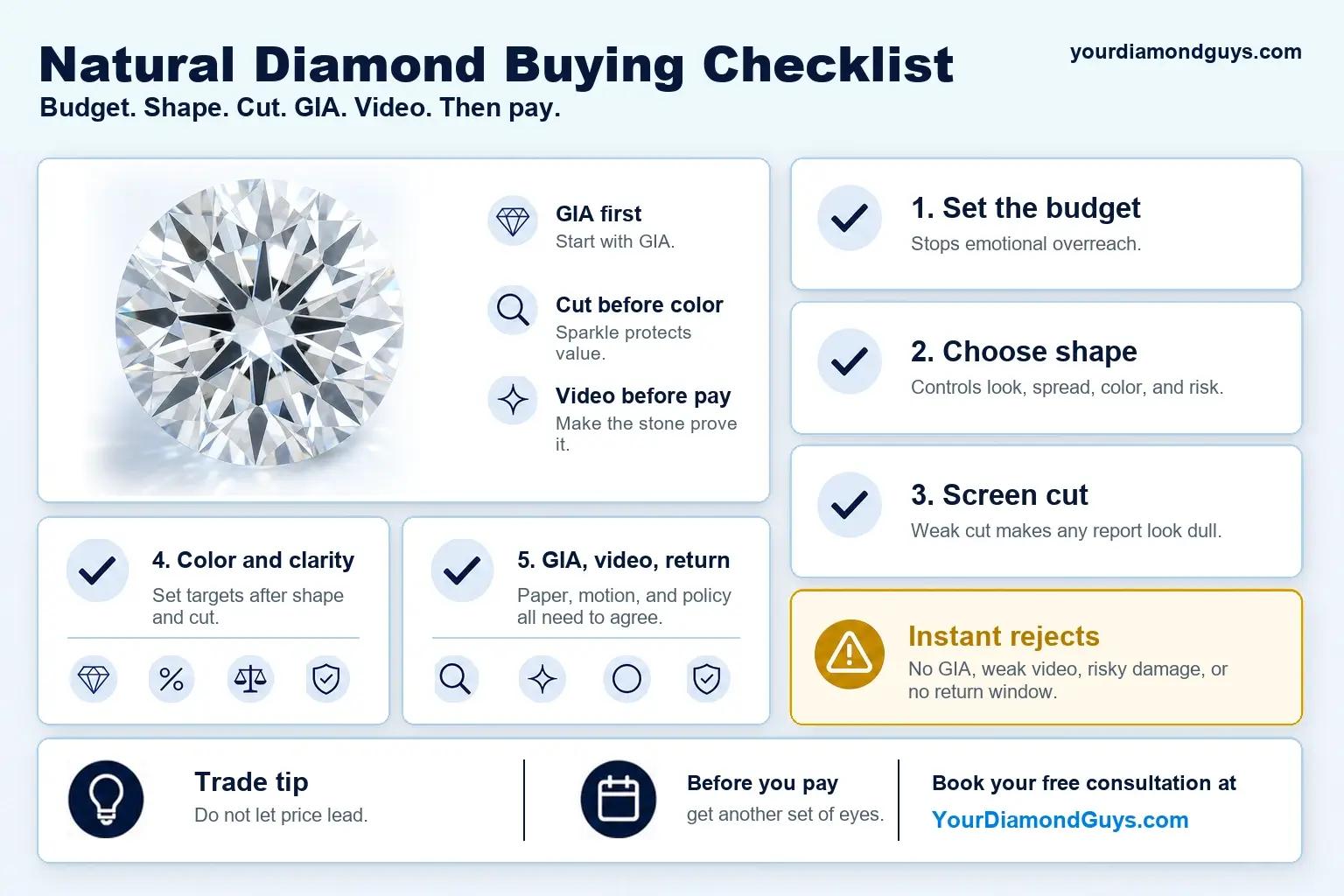
| Step | Buyer Check | Why It Matters |
|---|---|---|
| 1 | Set the budget | Stops emotional overreaching |
| 2 | Choose shape | Controls look, spread, and risk |
| 3 | Screen cut | Protects sparkle and value |
| 4 | Set color and clarity targets | Prevents overspending on paper |
| 5 | Read the GIA report | Confirms the facts |
| 6 | Inspect video and return policy | Protects the actual purchase |
My Buyer Recommendation
Do not skip steps because a listing looks tempting. A good natural diamond should make sense on paper, in video, and inside the return window.
Reach out to Rob or me at YourDiamondGuys.com, or book your free consultation. We will look at the actual stone with you.
How This Fits Into A Real Buying Decision
A buyer can use this checklist while shopping online. If the diamond fails one major step, stop and compare another stone before trying to talk yourself into it.
Mistakes I Would Avoid
- Do not set color before choosing shape.
- Do not buy a natural diamond without GIA as the main report.
- Do not trust jewelry store lighting as proof.
- Do not forget return policy, shipping insurance, and appraisal timing.
A Practical Example
A buyer starts with a budget and wants an oval. Good. Now the checklist changes. The oval needs bow tie review, clean shoulders, the right ratio, and a video check before color or clarity upgrades get serious.
What To Ask Before You Buy
- Is the report GIA?
- Does the shape fit the setting and lifestyle?
- Does the cut pass the right checks for that shape?
- Can I inspect the stone before the return window closes?
Where I Would Compare Checklist Stones
Use these sites as comparison tools, not automatic recommendations. I would compare similar stones on Blue Nile and Ritani, then run the same checklist against report, video, return terms, and price before saying yes.
Lab Grown vs Natural Diamond — They Look Identical. Here's Why One Costs Thousands More.
Questions? Reach out directly for a free consultation, or drop them in the Diamond Buyers Academy community — Rob and Josh answer personally.
Questions Buyers Ask Us
*Some links on our site may earn us a small commission at NO EXTRA cost to you, helping us keep our content free*