Natural Diamonds For Engagement Rings
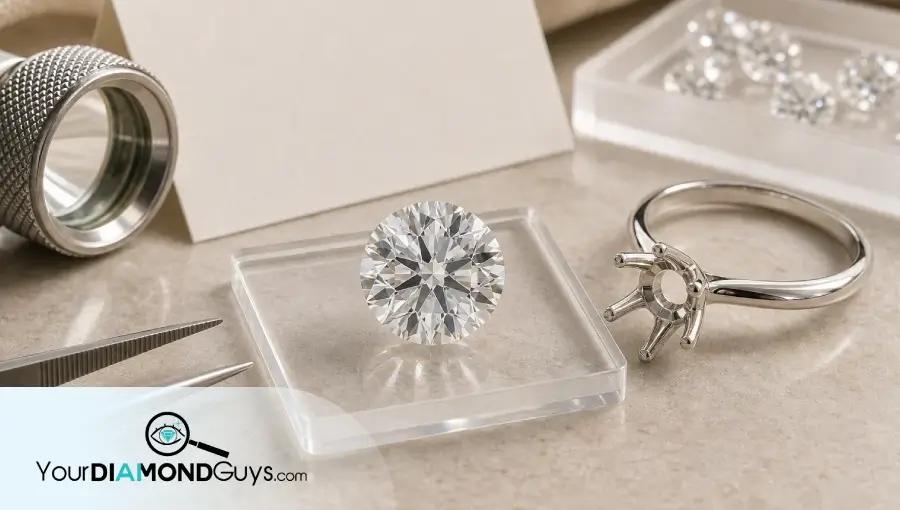
By Josh Allen, Co-Founder of YourDiamondGuys.com. Fifth generation diamantaire with 30+ years in the global diamond trade. Former supplier to Tiffany & Co., Cartier, and Harry Winston.
A natural diamond for an engagement ring has to survive daily life.
That means beauty matters. Durability matters. Documentation matters. The setting matters more than buyers expect.
For natural diamonds, start with GIA. Then protect cut, choose a shape that fits the lifestyle, and use color and clarity targets that make sense in the actual ring.
The trade looks at the finished use, not just the loose stone. A daily wear diamond needs a daily wear decision.
Start With The Shape And Setting Together
The diamond shape and setting should work as a pair. A pointed pear, marquise, princess, heart, or trillion needs more protection than a round brilliant.
Use shape and setting compatibility before committing to a delicate design that exposes the risky parts of the stone.
Keep Cut At The Top
An engagement ring gets seen in daylight, office light, restaurant light, and every bad lighting environment in between. Strong cut gives the diamond a better chance everywhere.
Use the cut quality checklist, then choose color through the actual metal, like white gold or platinum.
The Buyer Filter
These defaults keep the decision clean.
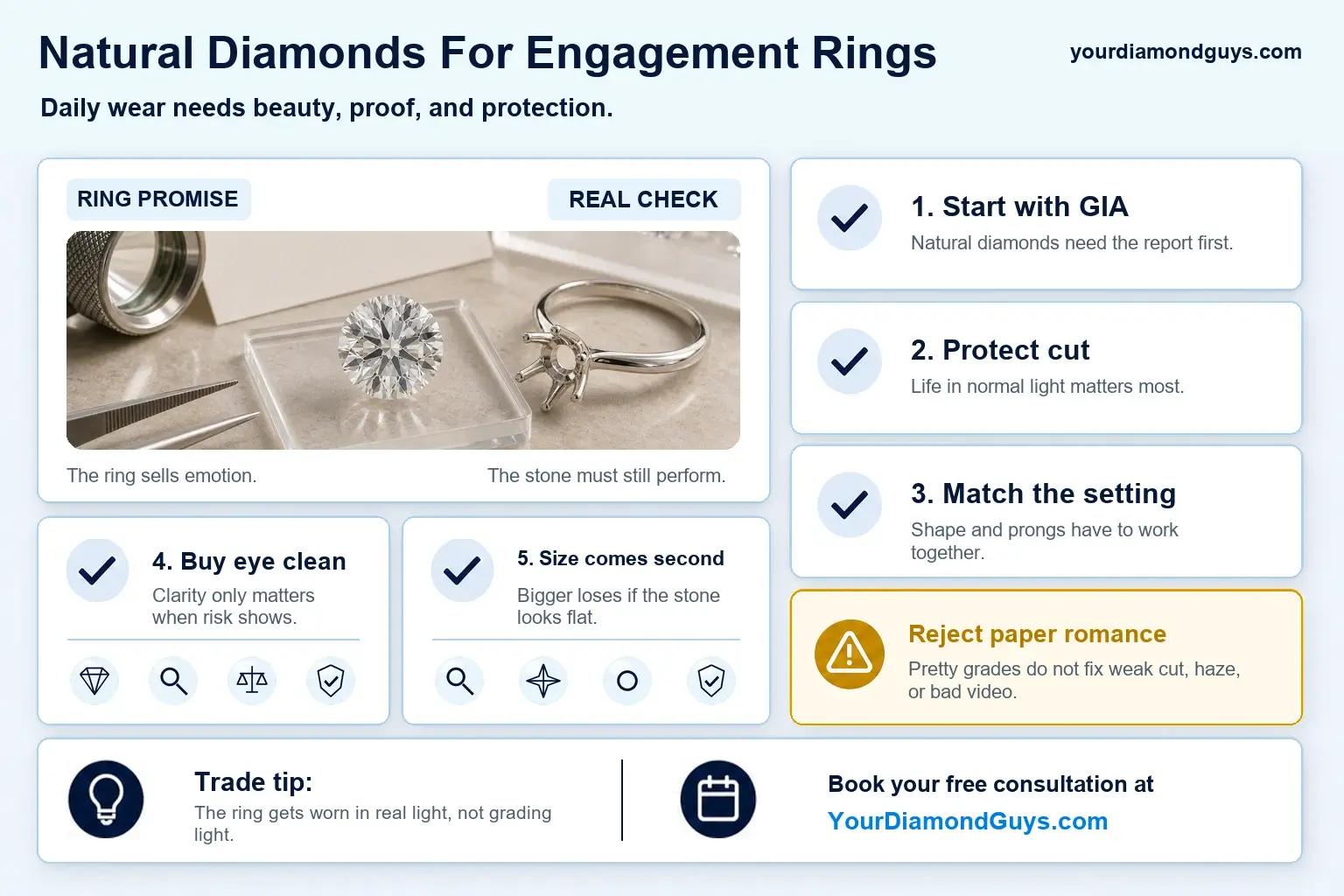
| Engagement Ring Factor | Buyer Target | Why It Matters |
|---|---|---|
| Report | GIA for natural | Trustworthy baseline |
| Cut | Strong first filter | Daily sparkle |
| Shape | Lifestyle and hand fit | Comfort and style |
| Color | Matched to metal | Controls visible warmth |
| Clarity | Eye clean and safe | Avoids distraction and risk |
| Setting | Protects weak points | Daily wear durability |
My Buyer Recommendation
For most natural engagement rings, I would rather buy a slightly smaller, better cut, safer stone than stretch into a bigger diamond with problems.
Reach out to Rob or me at YourDiamondGuys.com, or book your free consultation. We will look at the actual stone with you.
How This Fits Into A Real Buying Decision
A buyer choosing a pear for an active lifestyle should think about tip protection before falling in love with a thin prong rendering.
Mistakes I Would Avoid
- Do not choose the diamond without the setting context.
- Do not buy size at the expense of cut.
- Do not ignore shape durability.
- Do not skip insurance and documentation.
A Practical Example
A buyer wants an I color oval in white gold. I would check the side view, bow tie, and setting style before deciding whether that I color works or needs a bump.
What To Ask Before You Buy
- Will this shape handle daily wear?
- Does the setting protect points or corners?
- Does the color work with the metal?
- Is the diamond documented for insurance and future service?
Related Guides
Where I Would Compare Rings And Protection
Use these sites as comparison tools, not automatic recommendations. I would compare ring and setting options on Brilliant Earth, then review BriteCo for coverage rules, exclusions, and appraisal requirements before you decide.
Natural vs Lab Grown Diamonds: The Real Difference in 2026
Questions? Reach out directly for a free consultation, or drop them in the Diamond Buyers Academy community — Rob and Josh answer personally.
Questions Buyers Ask Us
*Some links on our site may earn us a small commission at NO EXTRA cost to you, helping us keep our content free*