Natural Diamonds As Heirlooms
By Josh Allen, Co-Founder of YourDiamondGuys.com. Fifth generation diamantaire with 30+ years in the global diamond trade. Former supplier to Tiffany & Co., Cartier, and Harry Winston.
Heirloom quality natural diamonds are not a romance label.
It is a practical buying standard. The diamond should be durable, well documented, beautiful enough to keep, and flexible enough to reset later.
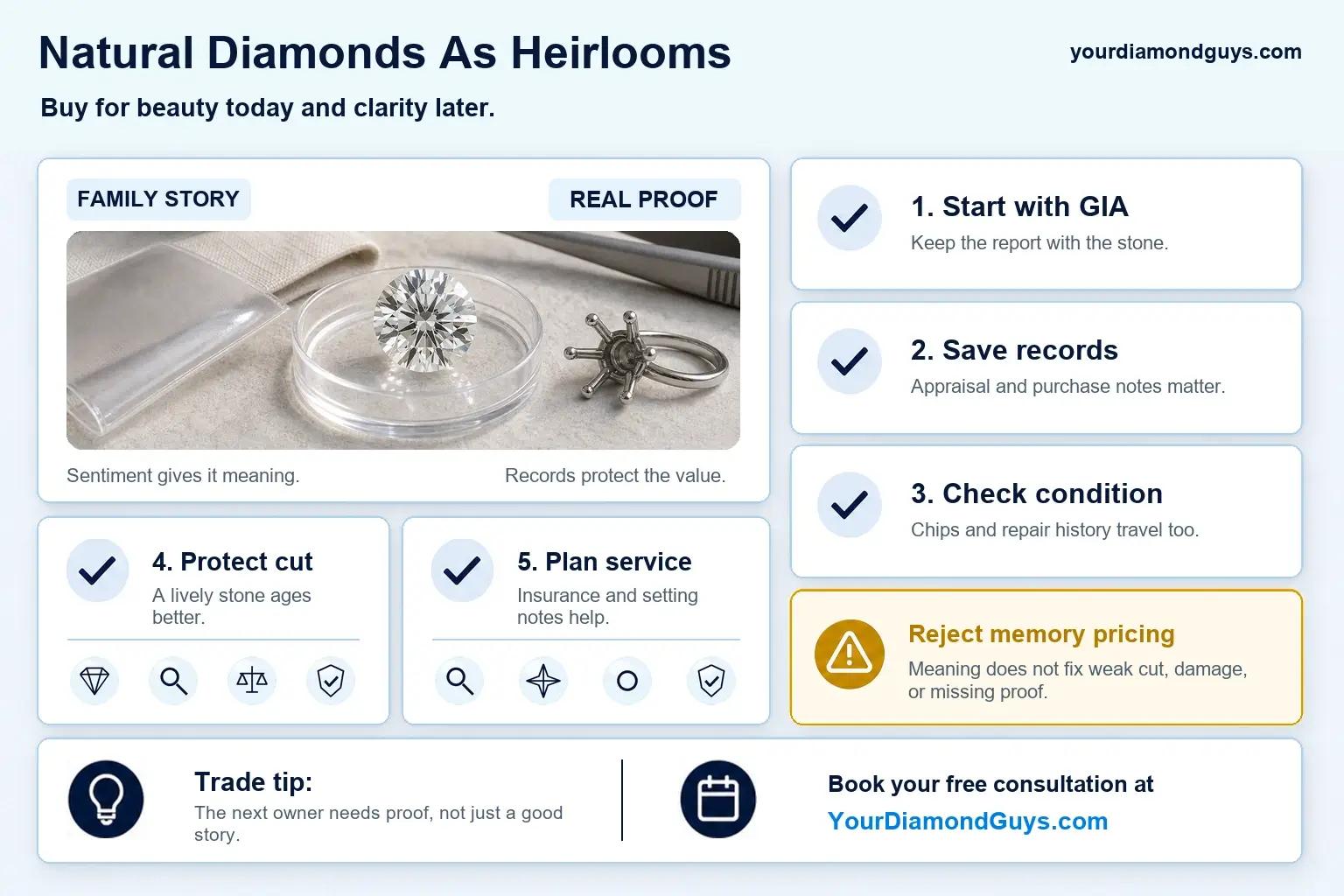
For natural diamonds, start with GIA. Then protect cut, shape durability, clarity risk, setting quality, and paperwork.
A diamond gets passed down more easily when the next person can understand what it is.
Choose A Stone That Ages Well
Classic shapes, strong cut, safe clarity, and clean documentation age better than trend driven compromises. Round brilliant is the easiest heirloom path, but other shapes can work when protected well.
Use shape durability before choosing exposed points or corners for a long term ring.
Keep The Paper Trail
Save the GIA report, appraisal, purchase record, insurance details, repair history, and setting notes. That paperwork helps the next owner understand the diamond.
Use near colorless G to J as a value conversation, but do not compromise cut for a larger heirloom stone.
The Buyer Filter
This is the heirloom quality screen.
| Heirloom Factor | Strong Choice | Risky Choice |
|---|---|---|
| Documentation | GIA plus appraisal | Unverified story |
| Cut | Strong light return | Flat but bigger stone |
| Shape | Durable or protected | Exposed points without protection |
| Clarity | Safe and clean enough | Durability issue |
| Setting | Serviceable and protective | Fragile trend design |
My Buyer Recommendation
Buy the stone someone will be proud to keep and easy to document. That means quality, durability, and paperwork, not just sentiment.
Reach out to Rob or me at YourDiamondGuys.com, or book your free consultation. We will look at the actual stone with you.
How This Fits Into A Real Buying Decision
A buyer choosing an heirloom focused natural diamond should think about future reset. A protected, well cut stone gives the next generation more options.
Mistakes I Would Avoid
- Do not call a diamond heirloom quality only because it is natural.
- Do not skip GIA documentation.
- Do not choose fragile setting details without thinking about wear.
- Do not present the diamond as a guaranteed investment.
A Practical Example
A well cut G color round with clean documentation can make a better heirloom than a larger poorly cut stone with a thin edge and vague paperwork.
What To Ask Before You Buy
- Will this diamond still make sense in a different setting?
- Is the documentation easy to keep and transfer?
- Does the shape carry extra durability risk?
- Would I be proud of the actual stone without the sales story?
Where I Would Compare Long Term Protection
Use these insurance links as comparison tools, not automatic recommendations. I would review BriteCo and Lavalier for coverage, exclusions, appraisal rules, and claim process before calling a diamond ready for long term ownership.
Diamond Buying 101 Free Course
Questions? Reach out directly for a free consultation, or drop them in the Diamond Buyers Academy community — Rob and Josh answer personally.
Questions Buyers Ask Us
*Some links on our site may earn us a small commission at NO EXTRA cost to you, helping us keep our content free*