How To Verify A Natural Diamond
By Rob Cornfield, Co-Founder of YourDiamondGuys.com. 30+ years in the global diamond trade. Specialist in diamond cut and light performance.
Natural diamond verification is not about being paranoid.
It is about making sure the diamond in your hand is the diamond you paid for.
For natural diamonds, start with GIA. Then match the report number, measurements, inscription, seller listing, and the actual stone before the return window closes.
The trade checks identity before emotion. Buyers should borrow that habit.
Match The Paper To The Stone
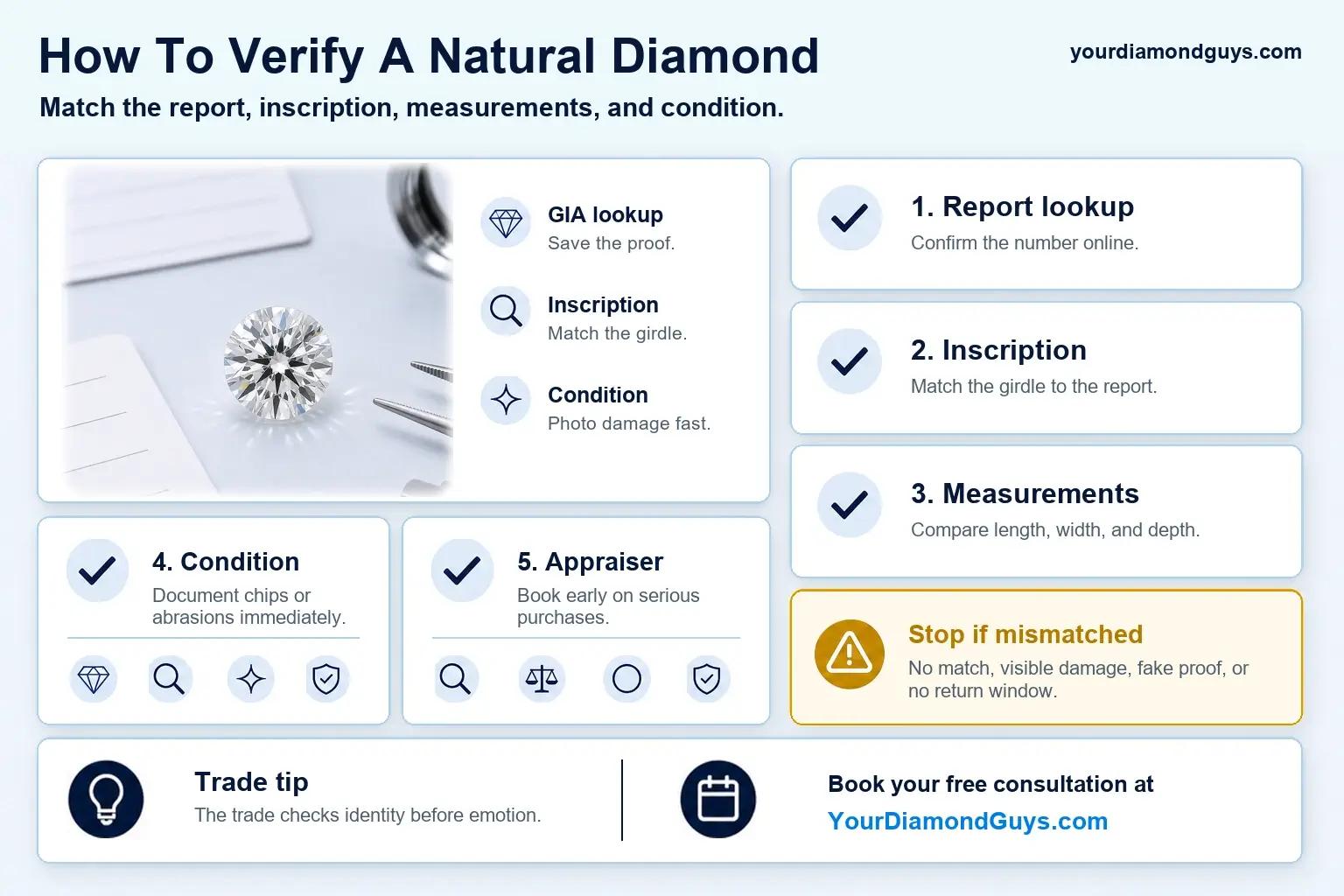
Start with the GIA report guide. Confirm the report number, shape, carat, measurements, color, clarity, fluorescence, and comments.
Then compare the laser inscription when available. The inscription should match the report number and the seller listing. If it does not, stop.
For shape measurement questions, use the length to width ratio guide. For cut confirmation, use the cut quality checklist.
Use A Jeweler Or Appraiser When The Purchase Is Serious
A good independent check can confirm identity, condition, measurements, and obvious setting risks. That matters most when the stone is expensive, pre owned, or bought online.
A basic diamond tester does not prove natural origin. Use documentation and professional verification instead.
The Buyer Filter
Run this check before the return window gets small.
| Verification Step | What To Match | Buyer Action |
|---|---|---|
| Report lookup | GIA report number | Save a screenshot |
| Inscription check | Report number on girdle | Use magnification or a jeweler |
| Measurement check | Length, width, depth | Compare to listing |
| Condition check | Chips, abrasions, loose setting | Document immediately |
| Appraisal check | Identity and insurance value | Book early |
My Buyer Recommendation
Verify while you can still return the diamond. After the return window closes, every problem gets harder to solve.
Reach out to Rob or me at YourDiamondGuys.com, or book your free consultation. We will look at the actual stone with you.
How This Fits Into A Real Buying Decision
A buyer receives a natural diamond bought online. The first move is not showing it off. The first move is matching report, inscription, measurements, and condition.
Mistakes I Would Avoid
- Do not wait two weeks to inspect the diamond.
- Do not accept a mismatched report number.
- Do not treat a diamond tester as natural origin proof.
- Do not skip photos when the package arrives.
A Practical Example
A buyer orders a GIA round and the measurements on the seller page do not match the report. That is not a small detail. I would pause the purchase and ask for written clarification before keeping the stone.
What To Ask Before You Buy
- Does the report number match GIA lookup?
- Does the inscription match the report?
- Do the measurements match the listing?
- Can a jeweler or appraiser confirm the stone before the return deadline?
Where I Would Compare Verification Clues
Use these sites as comparison tools, not automatic recommendations. I would compare similar listings on Ritani and Blue Nile, then check report numbers, inscriptions, measurements, video, and return terms before trusting the match.
Natural vs Lab Grown Diamonds: The Real Difference in 2026
Questions? Reach out directly for a free consultation, or drop them in the Diamond Buyers Academy community — Rob and Josh answer personally.
Questions Buyers Ask Us
*Some links on our site may earn us a small commission at NO EXTRA cost to you, helping us keep our content free*