Diamond Color Myths: Icy White vs Real Life
By Josh Allen, Co-Founder — YourDiamondGuys.com Josh has over 30 years of experience in the global diamond trade, sourcing from Mumbai, Tel Aviv, and Antwerp, and has supplied diamonds to Tiffany, Cartier, Harry Winston, and more.
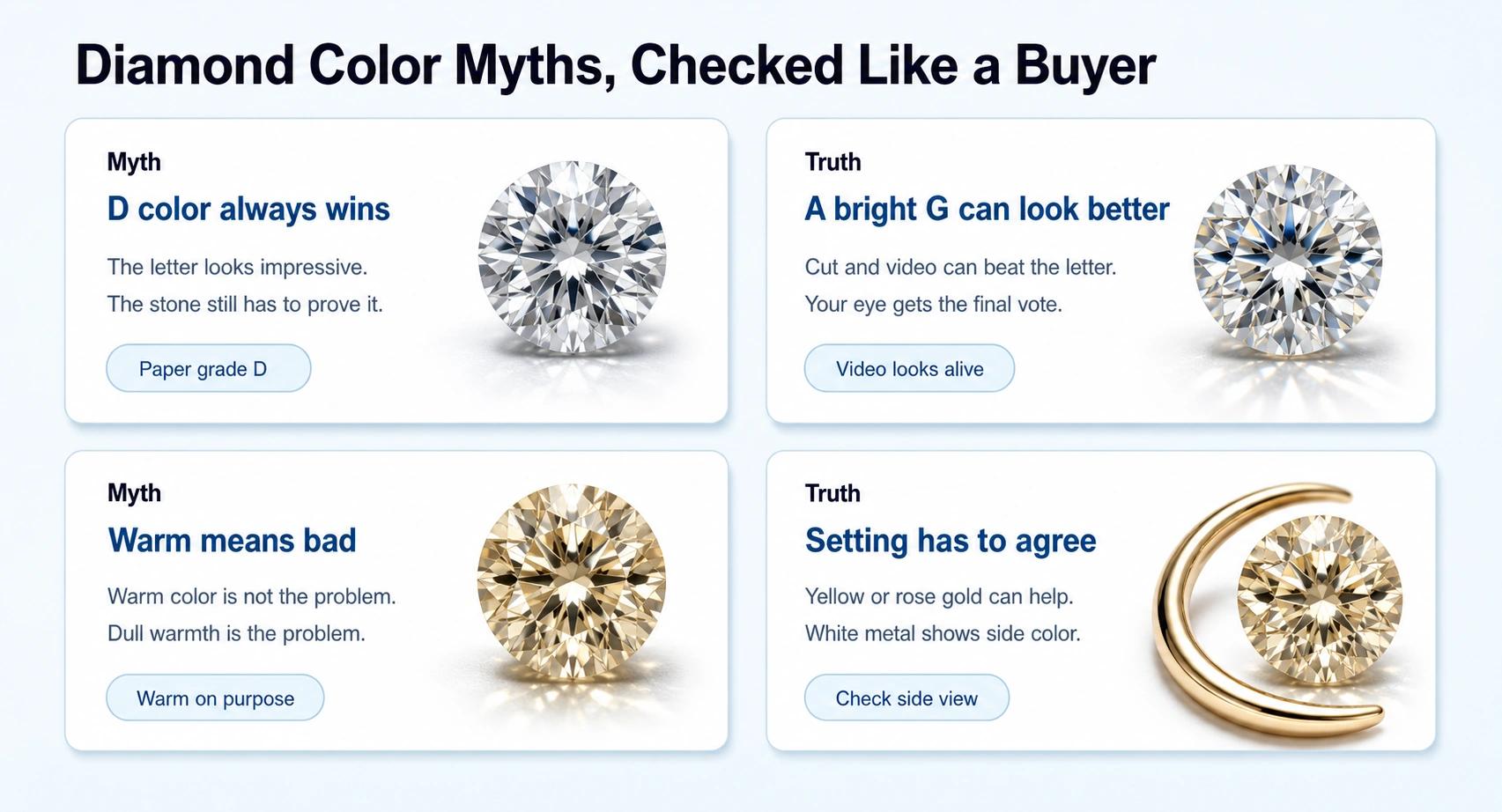
D is not automatically the smartest buy. Warm is not automatically bad. The diamond has to prove itself in video and in the setting.
Most buyers learn diamond color from a chart and then overpay for a difference they can never see. The chart matters. The actual diamond matters more.
GIA's D to Z scale is real. The myths start when people turn that scale into a status contest.
The trade loves buyers who think higher always means better. It makes the sale easier. It does not always make the diamond better.
How I Would Shop It
The safer decision starts with diamond color guide and then gets tested against color vs cut, the actual setting, and the real video.
What Changes The Call
The color grade is only one part of the buying context. Shape, cut, setting metal, carat size, and side view exposure decide how strict the buyer needs to be.
The certificate gives the grade. The video shows whether that grade works in the actual stone.
| Factor | Why It Matters | Buyer Move |
|---|---|---|
| D to F | Colorless range | Worth it for color sensitive buyers or step cuts |
| G to H | Near colorless sweet spot | Best default for many buyers |
| I to J | Value range | Works best with strong cut and smart setting |
| K to M and lower | Visible warmth | Buy only when the look is intentional |
Where I Start
Then check the actual video. If the stone looks right in the setting, the lower grade can be the smarter buy.
How To Check It In Video
- Compare before you believe the myth.
- Check side view.
- Watch brightness, not just whiteness.
How This Plays Out
The best color decision is specific to the diamond, the setting, and the video. The grade starts the conversation; it does not finish it.
Mistakes I Would Avoid
- Do not pay for a color grade you cannot see in the finished ring.
- Do not judge color from one studio photo.
- Do not ignore cut quality when judging face up whiteness.
A Practical Example
A buyer choosing between two similar stones should compare the lower color against the higher color in the same setting style. If the eye cannot see the upgrade, the budget can belong somewhere else.
What To Ask Before You Buy
- Can I actually see the difference?
- Is the setting changing the color?
- Is the lower grade brighter?
- Am I buying what I see or what I heard?
If you want Rob or me to look at the stone with you, book your free consultation at YourDiamondGuys.com.
Where To Compare Live Listings
After you drop the myths, compare real stones. I would look at similar options on Brilliant Earth and Blue Nile before paying for a story.
How is Diamond Color Assessed
Watch the video below to see the difference between colorless, near-colorless, and warmer diamond grades before choosing the right one for your style and budget.
Questions? Reach out directly for a free consultation, or drop them in the Diamond Buyers Academy community — Rob and I answer personally.
Frequently Asked Questions
It is the highest grade. That is not the same as the best buy.
No. Bad warm diamonds are bad. Good warm diamonds can be beautiful.
No. Cut drives sparkle.
Use it. Do not worship it.
That the certificate knows what you will see on your hand.
*Some links on our site may earn us a small commission at NO EXTRA cost to you, helping us keep our content free*