Diamond Fluorescence In Yellow And Rose Gold Settings
By Josh Allen, Co-Founder of YourDiamondGuys.com. Fifth generation diamantaire with 30+ years in the global diamond trade. Former supplier to Tiffany & Co., Cartier, and Harry Winston.
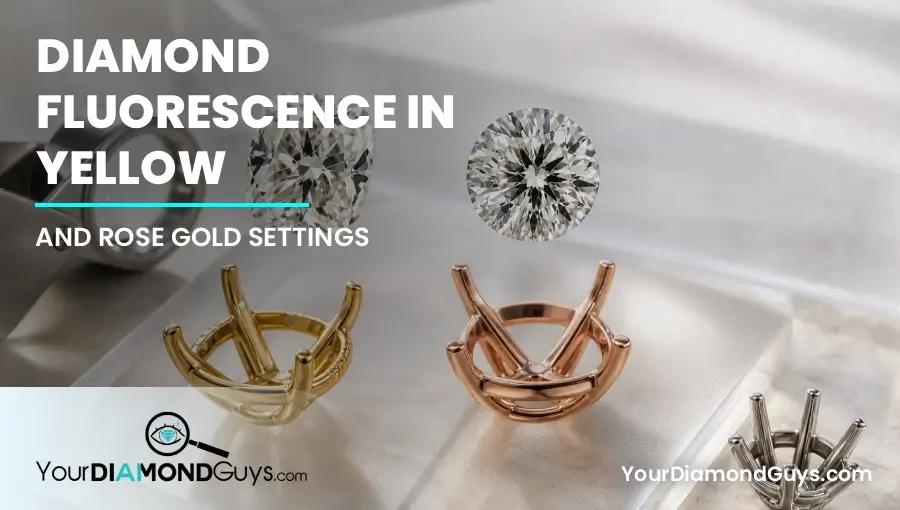
The center stone reflects its surroundings. A yellow or rose gold basket adds warm color from below and the side. Blue fluorescence can cool the face outdoors, but the metal comes back indoors.
We have set beautiful J and K color stones in yellow gold for years. The trick is not hiding color. It is making the whole ring look deliberate, then checking that the diamond stays crisp.
Warm metal can make a lower color diamond feel intentional. GIA explains that blue fluorescence can cool some I through M diamonds in UV rich light, but blue fluorescence only adds its cooling effect when the environment supplies enough ultraviolet light.
What Should You Know First About Diamond Fluorescence With Yellow And Rose Gold?
Warm settings reduce the need to pay for high color or chase a fluorescence benefit. Medium blue can still help a yellowish I through M diamond face up cooler in daylight. The effect matters more in large stones, step cuts, white prongs, and open galleries that expose the side.
Choose the metal and setting architecture before you decide whether fluorescence creates value. A stone that looks good indoors in the final metal does not need an outdoor rescue.
Keep the base Diamond Fluorescence 101 transparency check even when warm metal dominates face-up color.
Warm Metal Changes The Color Reference
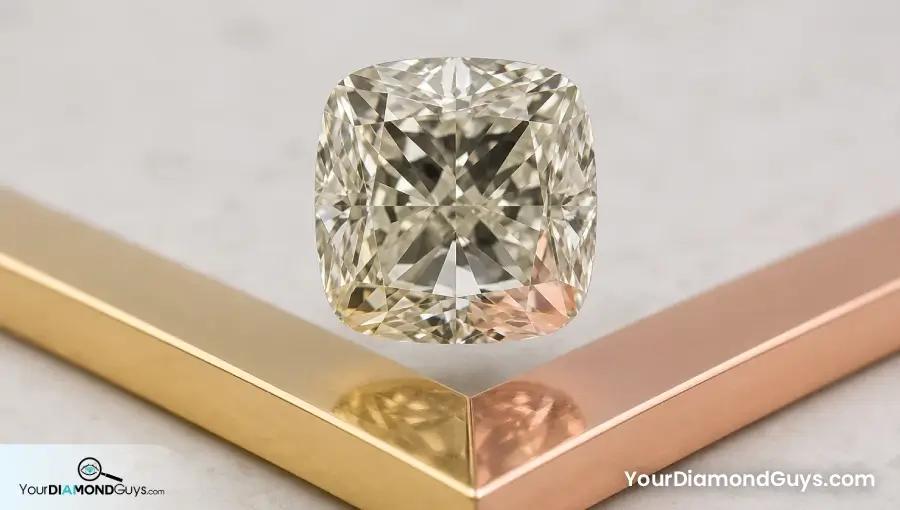
A diamond does not sit in a color vacuum. Yellow gold reflects yellow light into the pavilion and girdle. Rose gold adds a softer pink and copper warmth.
That surrounding color can make a warm body grade feel coordinated rather than off color. Moving from J to G can become a poor use of budget when the basket keeps adding warmth.
The guide to fluorescence helping color shows when Medium blue adds a daylight bonus without pretending it changes the indoor grade.
White Prongs Can Keep The Face Cleaner
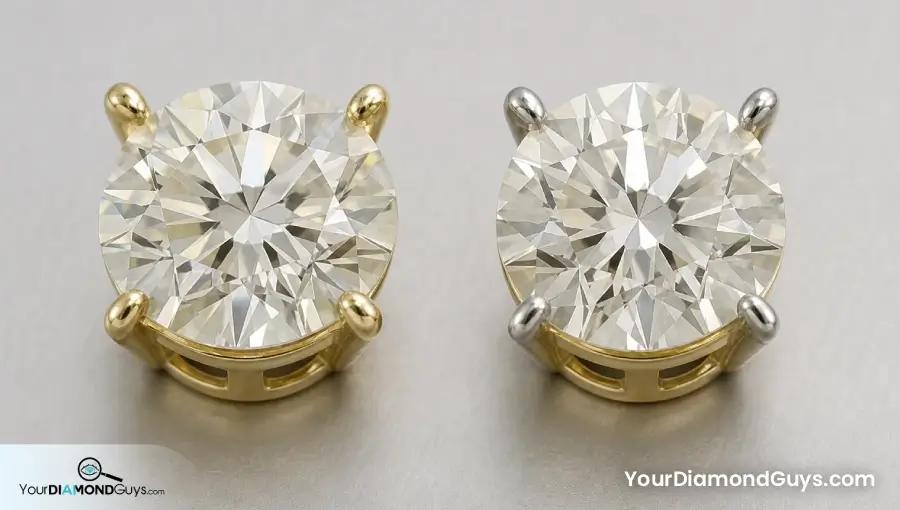
A two tone setting often uses yellow or rose gold for the band and white gold or platinum for the prongs. That design reduces warm reflection right at the diamond's edge.
White prongs can help an I or J color center look cleaner face up while the warm shank keeps the ring cohesive. Fluorescence then becomes a secondary daylight detail.
Inspect the loose stone and a setting mockup when possible. The same diamond can look different in a closed yellow basket and an airy white four prong head.
Large Stones And Open Galleries Still Show Everything
Size exposes body color, side view, and transparency. A 2.50 carat stone gives your eye more material than a 0.70 carat stone, so the setting cannot hide every difference.
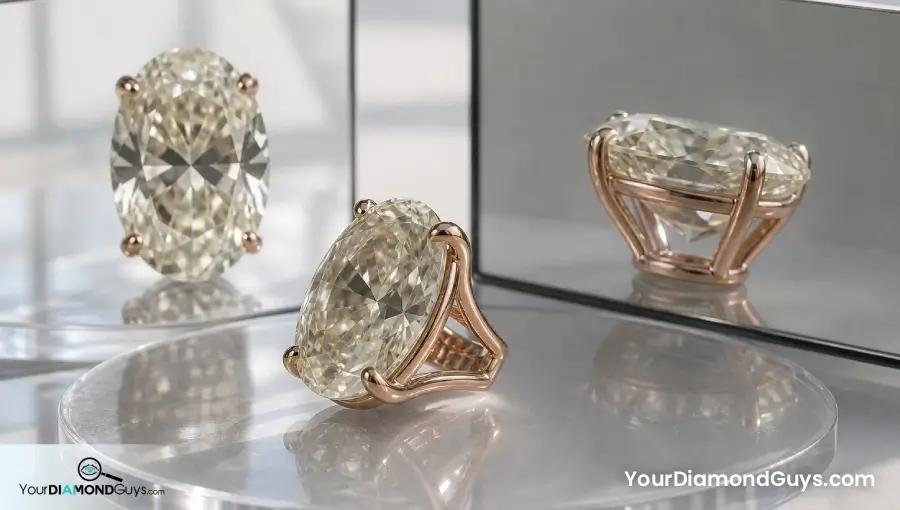
An open gallery lets light and surrounding colors reach the pavilion. It also makes the side view easy to see. Check warmth and fluorescence response from face up, 45 degrees, and 90 degrees.
Use the sunlight versus indoor guide so you know whether the blue response and warm metal create an appearance you like across environments.
| Setting choice | Effect on color | Fluorescence relevance |
|---|---|---|
| Yellow gold basket | Adds yellow reflection | Often less useful as a whitening strategy |
| Rose gold basket | Adds pink copper warmth | Blue response can create a mixed outdoor impression |
| White prongs on warm band | Keeps face up border cooler | Medium blue can add a subtle daylight bonus |
| Open gallery | Exposes side color and surroundings | Check face, tilt, and side in daylight |
| Closed warm basket | Dominates lower reflections | Metal can outweigh small fluorescence differences |
Step Cuts Need The Strictest Setting Review
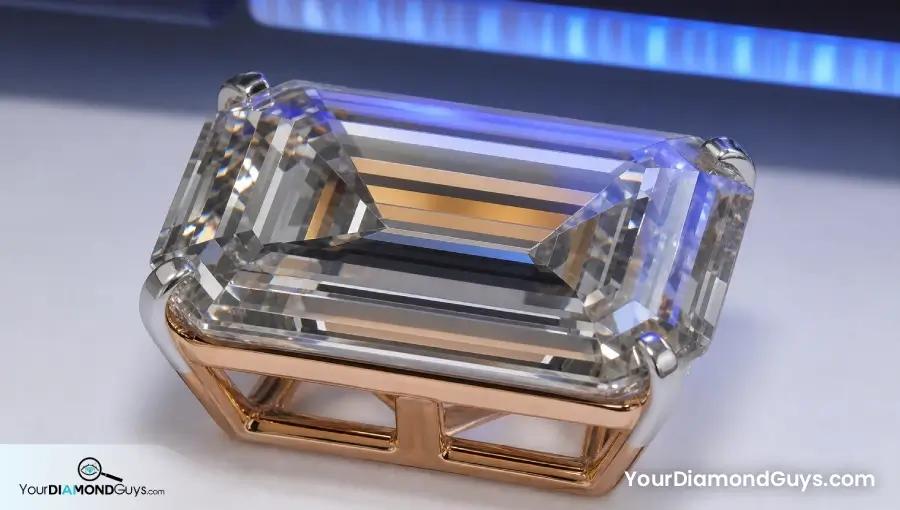
Emerald and Asscher cuts show body color through long open facets. They also reveal warm metal through the pavilion and side. The relationship stays visible even when the face up grade looks acceptable.
The step cut fluorescence guide gives exact viewing positions. Check the stone loose and in the actual or a similar setting before final approval.
Brilliant fancy shapes distribute color differently. The fancy shape fluorescence guide covers bow ties, ends, crushed areas, and large tables.
Build The Ring In The Right Order
Pick the shape and metal. Decide whether the head will be warm, white, open, or closed. Then shortlist body color and fluorescence.
For a natural diamond, start with GIA. Compare the stone under an indoor LED, shaded daylight, and direct sunlight near the actual metal. Check transparency before color benefit.
Use the fluorescence color guide when the reaction is yellow, white, or another uncommon hue. Then finish with the decision tree.
- Do not overpay for color the setting neutralizes.
- Do not let warm metal hide baseline haze.
- Use white prongs when you want a cleaner face up edge.
- Check large stones from the side.
- Approve the whole ring, not an isolated report line.
How Does Diamond Fluorescence With Yellow And Rose Gold Affect A Real Buying Decision?
I let the setting decide how much color precision matters. Yellow gold often gives buyers room to save in I through K, then put the budget into cut, size, or a safer clarity profile.
Fluorescence can support that plan outdoors. It should not be the plan. The stone needs to look good when the restaurant LED turns the blue reaction off.
What Does A Real Diamond Fluorescence With Yellow And Rose Gold Example Look Like?
A buyer chooses a 1.60 carat J color round with Medium blue fluorescence for a yellow gold band and white prongs. Indoors, the stone looks pleasantly warm and crisp. In daylight, it faces up a touch cooler.
A G color alternative costs more but looks nearly identical in the final ring. The J color stone is the smarter use of budget because setting and cut do more visible work than the report upgrade.
Which Diamond Fluorescence With Yellow And Rose Gold Mistakes Should You Avoid?
- Paying for a colorless grade before choosing the metal.
- Assuming yellow gold hides haze or poor cut.
- Judging a large stone only face up.
- Expecting blue fluorescence to stay active under warm LEDs.
- Ignoring the difference between warm baskets and white prongs.
What Should You Ask About Diamond Fluorescence With Yellow And Rose Gold Before Buying?
- Will the prongs and basket be warm or white metal?
- Is the gallery open enough to expose side color?
- Does the stone look good indoors when fluorescence is quiet?
- Does daylight create a cooler look without haze?
- Can I view the loose stone beside the chosen metal?
Affiliate disclosure: Some retailer links are affiliate links. If you buy through one, Your Diamond Guys may earn a commission at no extra cost to you.
Where Can You Compare Evidence For Diamond Fluorescence With Yellow And Rose Gold?
Use Brilliant Earth and Ritani as comparison tools, not automatic recommendations. Compare similar diamonds and setting styles across yellow gold, rose gold, white gold, and platinum, then judge body color, face up contrast, gallery exposure, stone size, price, and return terms. The actual diamond has to earn the yes.
What Is The Buyer Recommendation On Diamond Fluorescence With Yellow And Rose Gold?
Let warm metal buy you color flexibility. Let cut and transparency protect beauty.
Use blue fluorescence as a possible daylight bonus, not a reason to force the wrong stone into the right setting.
Return to the diamond fluorescence guide to place diamond fluorescence with yellow and rose gold inside the complete report, appearance, testing, and buyer decision system.
If you want another set of eyes on the stone, book your free consultation with Your Diamond Guys.
The "Fancy Yellow" Trap: Don't Buy Pale Edges!
Questions? Reach out directly for a free consultation, or drop them in the Diamond Buyers Academy community — Rob and Josh answer personally.
Questions Buyers Ask Us
*Some links on our site may earn us a small commission at NO EXTRA cost to you, helping us keep our content free*