Diamond Fluorescence Colors Explained
By Josh Allen, Co-Founder of YourDiamondGuys.com. Fifth generation diamantaire with 30+ years in the global diamond trade. Former supplier to Tiffany & Co., Cartier, and Harry Winston.
The color of the glow matters only while ultraviolet energy reaches the diamond. It does not automatically become the diamond's body color in ordinary indoor light.
Dealers talk about blue because that is what we see again and again. A yellow or white reaction gets extra attention simply because the comparison set is smaller and the visual effect can be less predictable for a buyer.
Blue dominates the market for a scientific reason, not a marketing reason. GIA says more than 95 percent of fluorescent diamonds show blue, while yellow, white, and other colors occur much less often.
What Should You Know First About Diamond Fluorescence Colors?
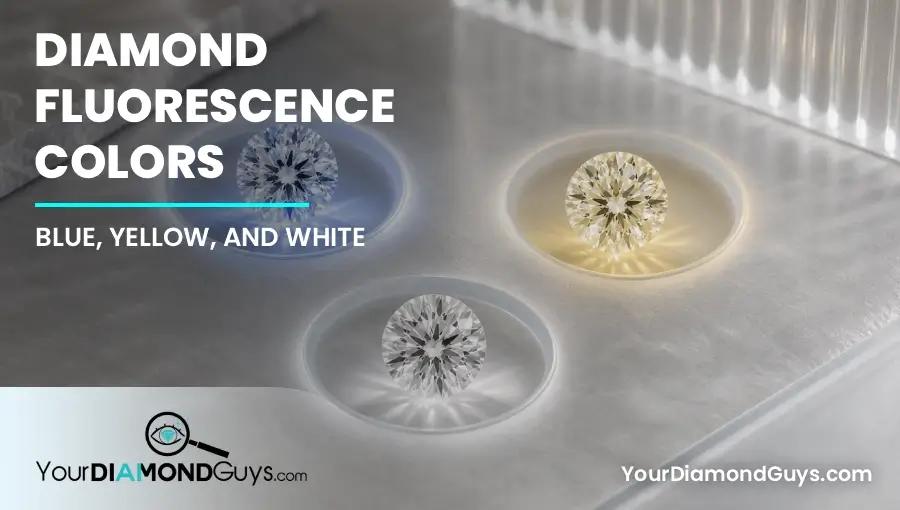
Blue is the common fluorescence color in natural diamonds. It can make a yellowish body color look cooler in UV rich light. Yellow can reinforce warmth, which is usually the opposite of what a D through Z buyer wants. White can look pale or chalky under UV, but the final call still depends on normal light transparency.
Color and intensity work together. Faint blue and Very Strong blue are not the same buying question. Medium yellow and Medium blue can push perceived color in different directions.
Use Diamond Fluorescence 101 for the intensity and transparency rules that sit behind every reaction color.
Why Blue Is So Common
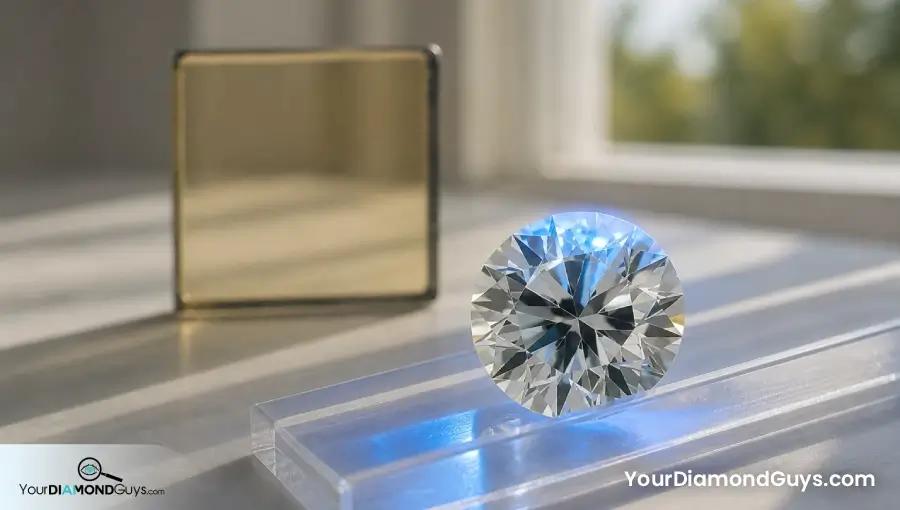
Blue fluorescence in many natural diamonds comes from the N3 optical center, a nitrogen related feature in the crystal lattice. Ultraviolet energy excites that center and the diamond emits visible blue light.
Blue sits opposite yellow in basic color perception. Under UV rich daylight, enough blue emission can make a faint yellow body color look less warm. That is why some I through M stones benefit visually.
The guide to fluorescence helping color explains the limits. A blue reaction cannot repair a brown undertone, weak cut, cloudy transparency, or a shape that concentrates color.
Yellow Fluorescence Usually Adds The Wrong Direction
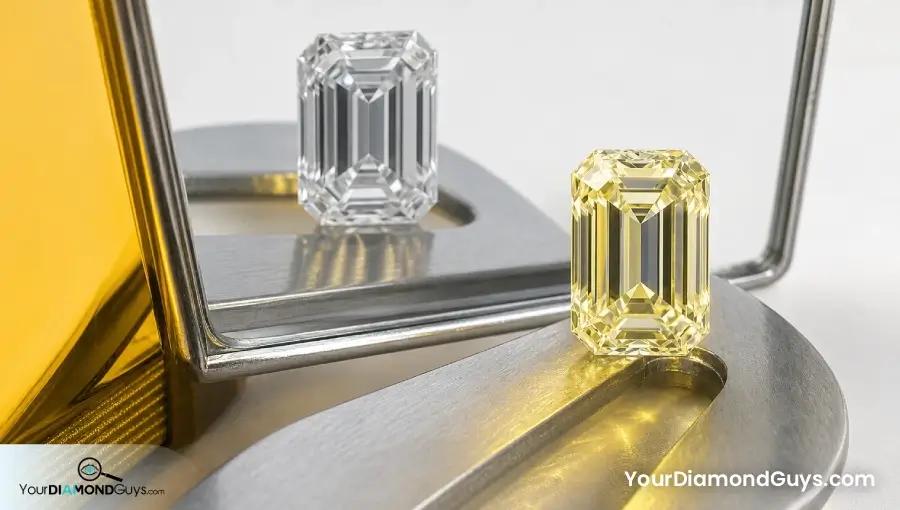
Yellow fluorescence can add a yellow glow when UV is present. In a diamond already graded on the D through Z scale, that usually makes the face up color look warmer rather than cooler.
Do not confuse fluorescence color with body color. A diamond can have a high color grade and yellow fluorescence, or a warmer grade and blue fluorescence. The report describes these features separately.
I want a direct daylight comparison before buying Medium or stronger yellow fluorescence. No comparison means no reason to assume the effect is harmless.
White Fluorescence Needs A Real Video
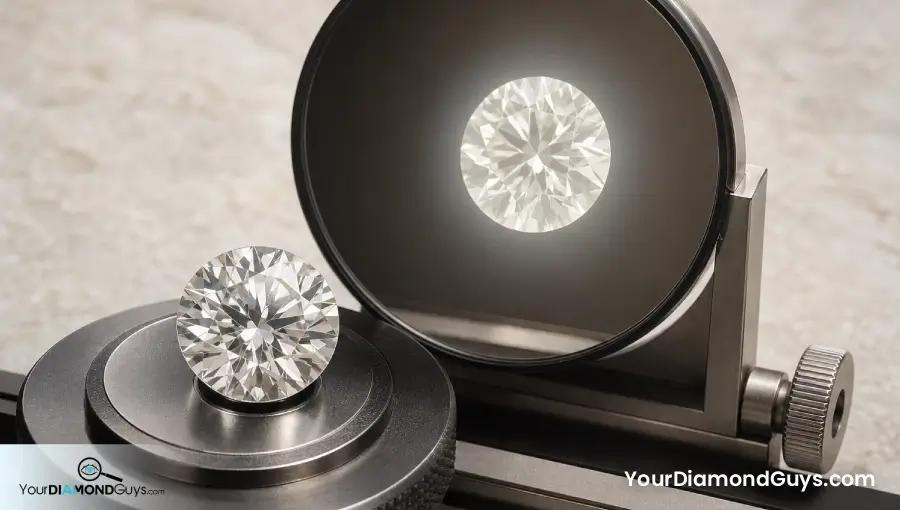
White fluorescence can look icy, pale, or chalky under a UV lamp. Those words describe the reaction view. They do not prove the diamond looks milky in ordinary light.
The question is whether facet edges stay sharp when the UV source is absent. Use the milkiness and haze definitions before you let a white reaction and poor transparency collapse into one label.
Ask for the same camera, exposure, background, and distance in the UV and non UV clips. A bright UV source can make the camera lower exposure and change everything else in the frame.
Other Colors Are Possible
Diamonds can fluoresce orange, green, red, or combinations of colors. These reactions relate to different defects, trace elements, growth histories, or treatments. A color reaction by itself cannot identify origin.
Lab grown diamonds can show reactions and lingering phosphorescence that differ from typical natural diamond behavior. Use the natural versus lab glow guide when the question moves from appearance to origin clues.
Do not use rarity as a value claim. An unusual glow is interesting, but an engagement ring still has to look right in daylight, office light, evening light, and the chosen setting.
| Reaction color | Common buyer implication | Proof to request |
|---|---|---|
| Blue | Can cool yellow appearance under UV rich light | Daylight and indoor comparison |
| Yellow | Can add warmth under UV | Matched comparison against a similar stone |
| White | Can look pale or chalky during reaction | Neutral non UV transparency video |
| Orange, green, or red | Unusual reaction that does not prove origin | Report verification and controlled video |
How To Read Color Beside Intensity
Start with the fluorescence grading scale. GIA names the reaction color when the intensity reaches Medium, Strong, or Very Strong.
Then check the diamond's body color, shape, and metal. Blue fluorescence in a J color round set in yellow gold is a different decision from yellow fluorescence in an F color emerald set in platinum.
The warm metal guide shows when yellow or rose gold dominates the color impression and when a large or open step cut still exposes the reaction.
How Does Diamond Fluorescence Colors Affect A Real Buying Decision?
I first ask whether the reaction color helps or fights the body color. Then I ask whether the intensity is high enough to matter in real daylight. Last, I check whether the diamond stays transparent with no UV.
That order prevents two common mistakes. Buyers stop treating every blue glow as a bonus, and they stop treating every white reaction as proof of milkiness.
What Does A Real Diamond Fluorescence Colors Example Look Like?
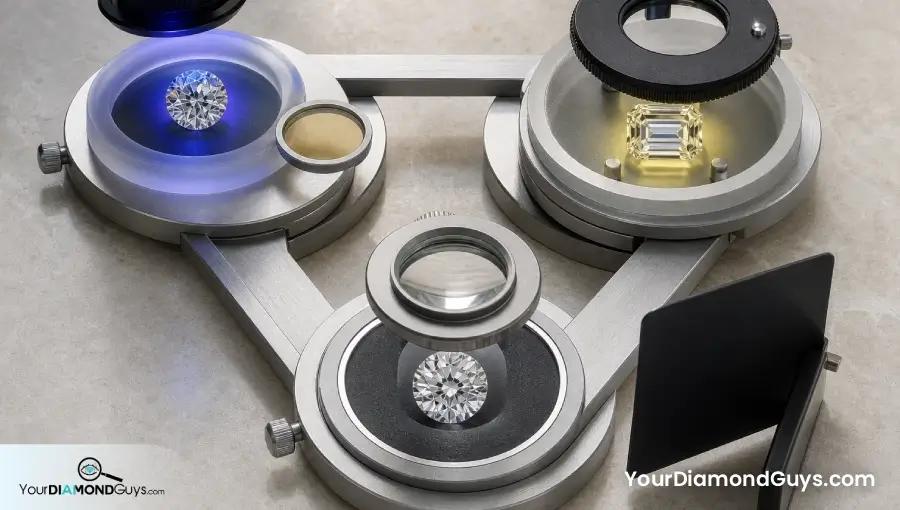
Stone A is a GIA graded K color round with Medium blue fluorescence. It looks crisp indoors and slightly cooler outdoors. Stone B is a K color round with Medium yellow fluorescence and looks warmer in the same outdoor setup.
Stone A has the more useful color relationship. I would still compare cut and price. Stone B needs a strong discount and a buyer who genuinely likes the warmer look.
Which Diamond Fluorescence Colors Mistakes Should You Avoid?
- Assuming blue fluorescence always improves color.
- Treating fluorescence hue as the diamond's permanent body color.
- Calling white fluorescence milkiness without a non UV test.
- Using an unusual color reaction as proof of natural or lab grown origin.
- Comparing UV clips shot with different exposure and background.
What Should You Ask About Diamond Fluorescence Colors Before Buying?
- What fluorescence color appears on the report?
- What is the intensity of that reaction?
- Does the color change face up appearance in daylight?
- Does the diamond stay crisp when the UV source is absent?
- Can I see a matched comparison with a similar nonfluorescent diamond?
Affiliate disclosure: Some retailer links are affiliate links. If you buy through one, Your Diamond Guys may earn a commission at no extra cost to you.
Where Can You Compare Evidence For Diamond Fluorescence Colors?
Use Brilliant Earth and Ritani as comparison tools, not automatic recommendations. Compare diamonds with clearly reported blue, yellow, white, or unusual fluorescence colors, then judge normal light color, transparency, daylight video, and return protection. The actual diamond has to earn the yes.
What Is The Buyer Recommendation On Diamond Fluorescence Colors?
Blue is the easiest fluorescence color to work with because the market has more evidence and it can support warmer body color. Yellow usually works against a colorless look.
White and unusual colors are not automatic dealbreakers. They are proof questions. Keep the diamond only when the normal light appearance earns it.
Use the diamond fluorescence guide to connect diamond fluorescence colors with intensity, color, transparency, lighting, and the complete buy or skip path.
If you want another set of eyes on the stone, book your free consultation with Your Diamond Guys.
Advanced Diamond Cut: Fluorescence & Light Performance
Questions? Reach out directly for a free consultation, or drop them in the Diamond Buyers Academy community — Rob and Josh answer personally.
Questions Buyers Ask Us
*Some links on our site may earn us a small commission at NO EXTRA cost to you, helping us keep our content free*