Diamond Fluorescence Grading Scale
By Josh Allen, Co-Founder of YourDiamondGuys.com. Fifth generation diamantaire with 30+ years in the global diamond trade. Former supplier to Tiffany & Co., Cartier, and Harry Winston.
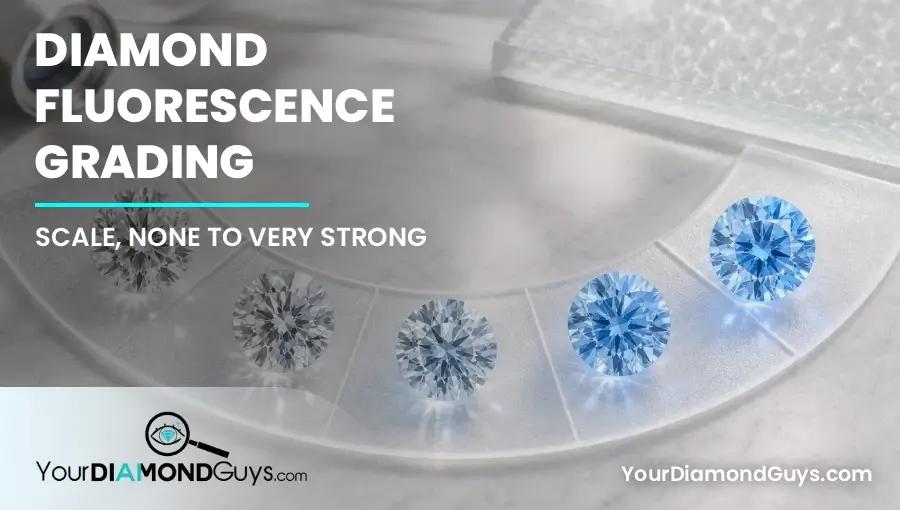
The fluorescence scale is an intensity scale. It is not a beauty score.
None does not mean superior. Very Strong does not mean ugly. Each step tells you how much reaction the lab observed under controlled long wave ultraviolet light.
In the trade, the grade changes the inspection plan. That is the useful way to read it. The stronger the reaction, the more daylight and transparency proof I want before anyone spends money.
For natural diamonds, start with GIA. GIA describes fluorescence as None, Faint, Medium, Strong, or Very Strong, and the report notes the reaction color when intensity reaches Medium or stronger.
What Should You Know First About The Diamond Fluorescence Grading Scale?
None and Faint are usually easy buying grades. Medium deserves a color and daylight check. Strong and Very Strong need matched videos in ordinary indoor light, shaded daylight, and direct sunlight, plus a clear confirmation that the stone stays crisp.
The scale cannot tell you whether a diamond is beautiful. It cannot identify the cause of haze. It tells you the strength of one UV response, then the diamond has to pass a visual test.
Start with Diamond Fluorescence 101 if you need the plain language definition and base appearance rule before comparing intensity grades.
What The Five GIA Descriptions Mean
GIA compares the diamond's long wave UV reaction with calibrated references. The description captures the observed intensity, not the percentage of light emitted and not a permanent color.
The None range can include a reaction too weak to cross into Faint. Faint is reportable but rarely obvious outside a testing setup. Medium starts the part of the scale where color is named and environmental UV can make the response more relevant.
Strong and Very Strong can look dramatic under a UV lamp. That dramatic test view still does not prove the diamond looks blue in an office, cloudy in a kitchen, or different in a setting.
| GIA description | What to expect | Buyer action |
|---|---|---|
| None | No visible reaction above the None boundary | No special fluorescence test needed |
| Faint | Subtle reaction under long wave UV | Treat as low concern |
| Medium | Clear reaction in testing and some UV rich light | Check face up color and transparency |
| Strong | Obvious reaction under UV | Require outdoor and neutral indoor proof |
| Very Strong | Most intense report category | Approve only after a full appearance review |
None And Faint Keep The Search Simple
None and Faint remove most fluorescence related uncertainty. That matters when two natural diamonds already match closely on cut, color, clarity, spread, and price.
Do not pay a large premium just to move from Faint to None. In normal use, most buyers will never see a difference. Spend that budget on cut, a safer inclusion, or better face up size.
The Fluorescence 101 guide explains why a weak UV reaction has no structural downside. It is an identifying detail, not damage.
Medium Can Be The Value Zone
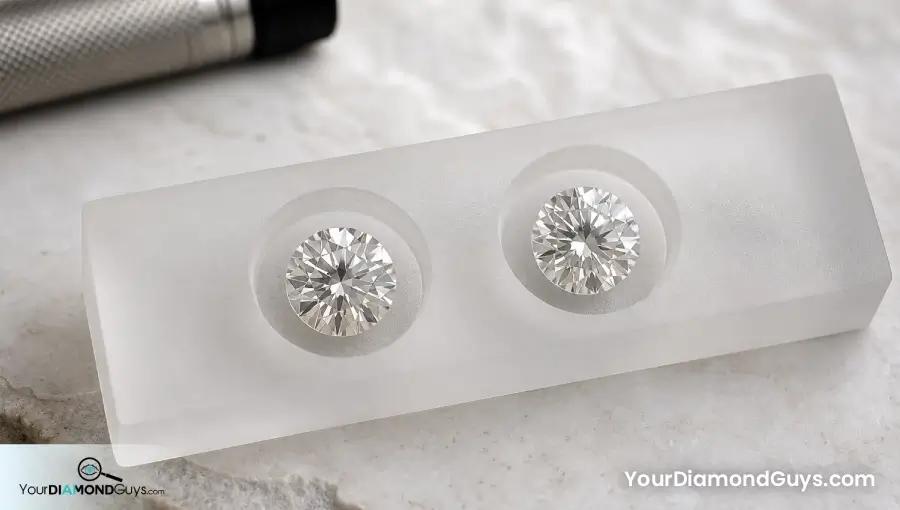
Medium is where I slow down, not where I stop. Blue fluorescence can soften the yellow impression in some I through M colors when enough UV is present.
That help is environmental. It does not rewrite the color grade and it does not guarantee a whiter look indoors. The color benefit guide shows when the body color, shape, and setting make Medium blue useful.
Ask for a comparison with a similar nonfluorescent stone. Match the video scale and lighting. Otherwise the retailer can make any color difference look larger than it is.
Strong And Very Strong Need Proof
Strong and Very Strong do not deserve a reflex rejection. They deserve evidence that removes the reasons buyers worry.
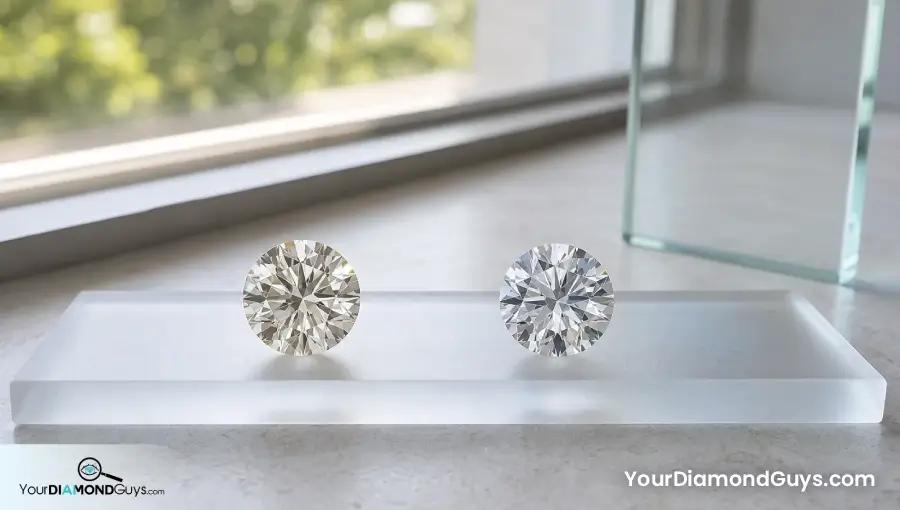
Check the stone in UV poor indoor light first. That reveals transparency without the blue reaction distracting you. Then use shaded daylight and direct sunlight to see whether the stone turns oddly blue or loses crispness. The sunlight and indoor lighting guide gives the order.
If the diamond looks milky in every environment, fluorescence may not be the cause. Use the appearance risk guide and inspect clarity comments, clouds, graining, and dirt.
Intensity And Color Must Stay Separate
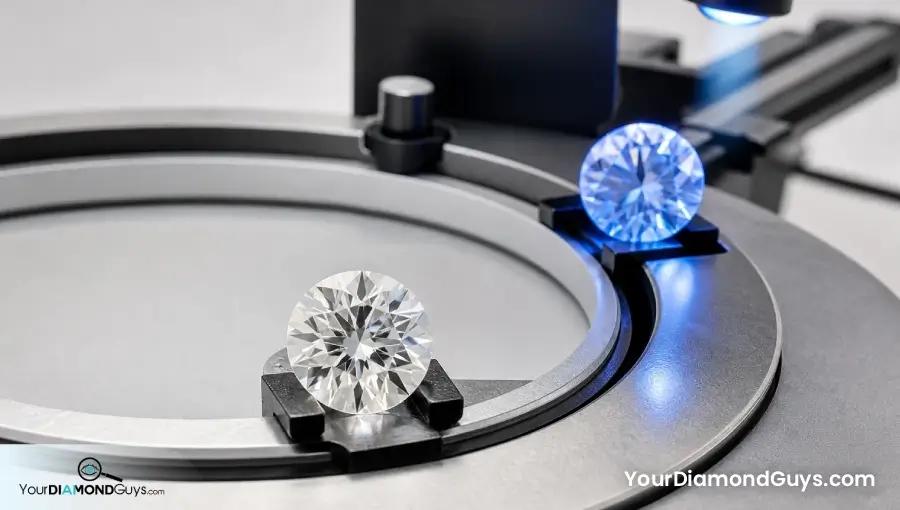
Intensity answers how much. Color answers what hue. A Medium yellow reaction and Medium blue reaction can have different consequences in a near colorless stone.
GIA reports the color at Medium, Strong, and Very Strong. Blue is common. Yellow, white, orange, and green are less common and deserve a closer look because buyers have fewer reliable comparisons.
The fluorescence color guide covers those reactions without pretending color alone predicts beauty.
How Does The Diamond Fluorescence Grading Scale Affect A Real Buying Decision?
I use the scale as a proof budget. None and Faint need the normal diamond checks. Medium adds a daylight comparison. Strong and Very Strong add matched lighting, retailer confirmation, and a return policy with enough time to inspect the stone.
That process keeps a potentially good value stone alive without asking you to gamble. The fluorescence decision tree turns the same logic into a quick yes, inspect, or skip path.
What Does A Real The Diamond Fluorescence Grading Scale Example Look Like?
A buyer compares two GIA graded I color, VS2 rounds. Stone A has Faint fluorescence and costs more. Stone B has Medium blue fluorescence, looks equally crisp indoors, faces up slightly cooler in shaded daylight, and comes with a clean return policy.
Stone B can be the smarter value. Change its grade to Very Strong and remove the daylight video, and the decision changes. The label did not become bad. The proof became too weak.
Which The Diamond Fluorescence Grading Scale Mistakes Should You Avoid?
- Reading the scale as five levels of quality.
- Paying extra for None when Faint looks identical.
- Assuming Medium blue improves every warm diamond.
- Approving Strong or Very Strong from UV footage alone.
- Using a home flashlight to assign a lab grade.
What Should You Ask About The Diamond Fluorescence Grading Scale Before Buying?
- Which intensity and color appear on the grading report?
- Can I see matched video in indoor light and daylight?
- Does the stone stay transparent with the UV reaction absent?
- Has anyone inspected it for a milky or oily look?
- What return period lets me repeat the test at home?
Affiliate disclosure: Some retailer links are affiliate links. If you buy through one, Your Diamond Guys may earn a commission at no extra cost to you.
Where Can You Compare Evidence For The Diamond Fluorescence Grading Scale?
Use Blue Nile and Brilliant Earth as comparison tools, not automatic recommendations. Compare diamonds across None, Faint, Medium, Strong, and Very Strong report grades, then judge each stone's transparency, daylight behavior, price, and return terms. The actual diamond has to earn the yes.
What Is The Buyer Recommendation On The Diamond Fluorescence Grading Scale?
Use None and Faint when you want the cleanest path. Use Medium when the visual result and price both improve the choice.
Keep Strong and Very Strong only after the stone passes ordinary light, daylight, and transparency checks. The scale sets the homework. It does not deliver the verdict.
Use the diamond fluorescence guide to connect the diamond fluorescence grading scale with intensity, color, transparency, lighting, and the complete buy or skip path.
If you want another set of eyes on the stone, book your free consultation with Your Diamond Guys.
The Glow Factor: Understanding Diamond Fluorescence
Questions? Reach out directly for a free consultation, or drop them in the Diamond Buyers Academy community — Rob and Josh answer personally.
Questions Buyers Ask Us
*Some links on our site may earn us a small commission at NO EXTRA cost to you, helping us keep our content free*