Fluorescence in Sunlight vs Indoor Light
By Josh Allen, Co-Founder of YourDiamondGuys.com. Fifth generation diamantaire with 30+ years in the global diamond trade. Former supplier to Tiffany & Co., Cartier, and Harry Winston.
The same diamond can look normal in a store and noticeably blue outside. The lighting changed. The diamond did not.
Fluorescence needs ultraviolet energy. Sunlight supplies it. Many indoor LEDs barely do. Store spotlights can make a diamond flash hard while hiding the exact reaction you are trying to judge.
We used to walk stones toward a window because the tray light only told half the story. That habit still works. You just need a cleaner sequence than holding the ring under the brightest lamp you can find.
Daylight is the environment buyers miss most often. GIA explains that long wave UV is an essential component of daylight, while many modern indoor lights give a fluorescent diamond far less UV energy.
What Should You Know First About Diamond Fluorescence In Sunlight And Indoor Light?
Test stronger fluorescence in at least four environments: ordinary indoor light, shaded daylight, direct sunlight, and a controlled UV source. Ordinary indoor light checks baseline transparency. Daylight checks real UV response. The UV source confirms the reaction but does not judge everyday beauty.
Keep camera exposure, background, distance, and diamond cleanliness consistent. Otherwise the test measures the photographer as much as the stone.
Read Diamond Fluorescence 101 first if you need to separate a temporary UV reaction from permanent body color.
Why Sunlight Activates Fluorescence
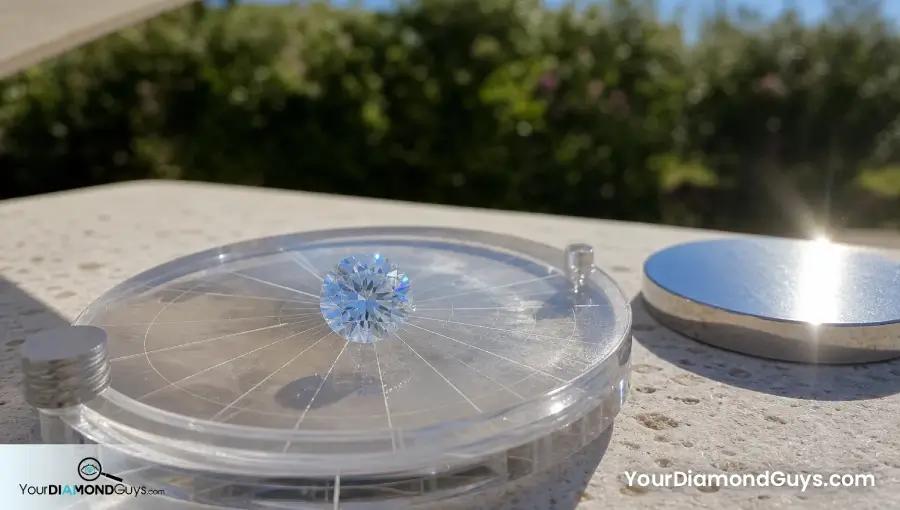
Sunlight contains ultraviolet wavelengths that can excite fluorescence. The amount reaching the diamond changes with cloud cover, shade, glass, time of day, and location, so the response will not look identical every time.
Direct noon sun can produce a strong blue glow and hard surface glare at once. Shaded daylight usually gives a more useful face up view because it contains UV without overwhelming the camera with specular flashes.
Use both. Direct sun reveals the maximum outdoor reaction. Open shade tells you whether the diamond still looks natural in the softer daylight where people actually notice a ring.
Why Indoor Light Often Hides The Reaction
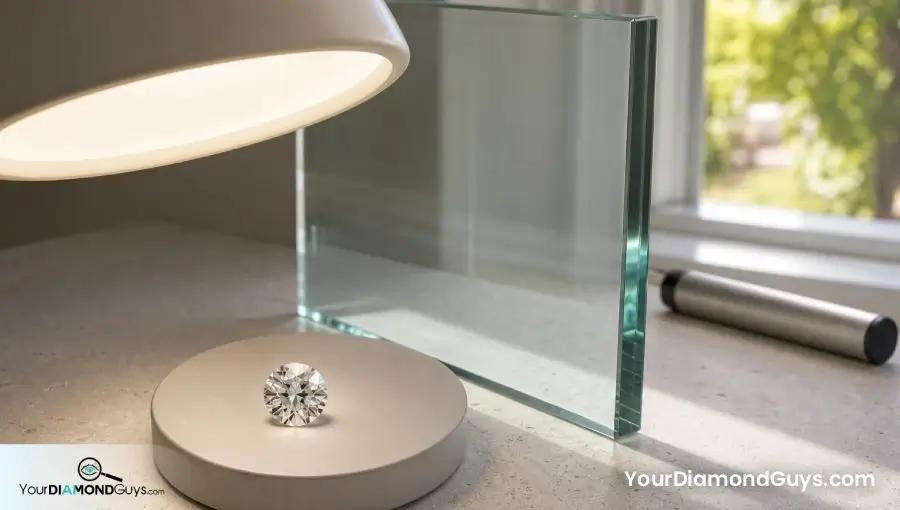
Many household and office LEDs emit little ultraviolet energy. Fluorescence stays quiet, so the diamond shows its baseline body color and transparency.
Older fluorescent tubes, some specialty lamps, and sunlight near a window can add more UV than a warm indoor LED. Glass can filter part of the UV, which means a window test behind glass is not the same as stepping outdoors.
The Fluorescence 101 guide explains why the glow stops when UV disappears. A lingering afterglow points to phosphorescence, not continuing fluorescence.
| Environment | Typical UV level | What the view tells you |
|---|---|---|
| Warm household LED | Low | Baseline body color and transparency |
| Office light | Usually low to mixed | Everyday contrast and crispness |
| Shaded daylight | Meaningful | Natural face up fluorescence response |
| Direct sunlight | High with strong glare | Maximum outdoor reaction and overblue risk |
| Blacklight or UV flashlight | Purpose built | Reaction presence and rough distribution |
Jewelry Store Spotlights Can Distract You
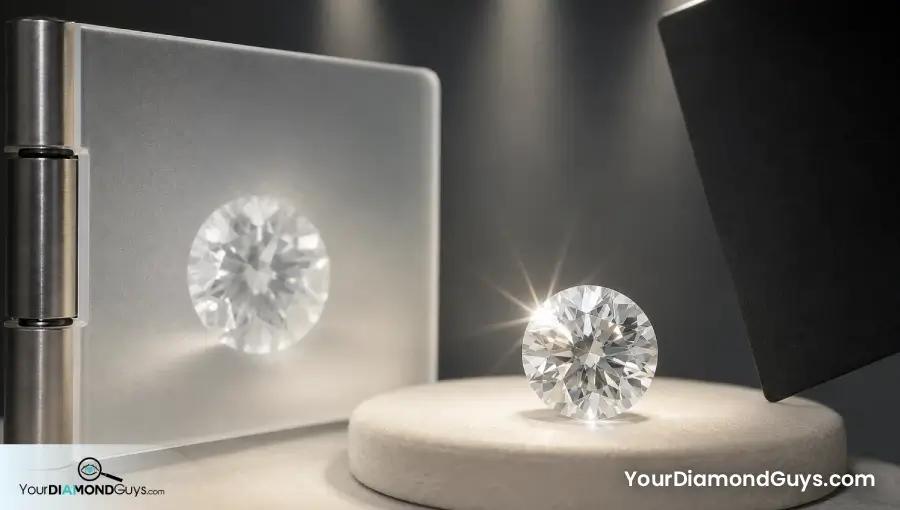
A spotlight creates sharp flashes from polished facets. Even a weakly cut or slightly hazy diamond can throw enough pin fire to feel impressive for a few seconds.
Ask to move away from the display case. View the stone under diffuse ceiling light, near a window, and outside when store policy allows. The diamond lighting guide covers the same trap for leakage and weak contrast.
Clean the diamond before comparing environments. Finger oil scatters light and can mimic a soft, greasy surface. A dirty stone tells you nothing useful about fluorescence related haze.
Use This Four Step Stress Test
Start in ordinary indoor light. Look for crisp facet junctions, clear dark and bright patterning, and normal movement. If the diamond looks cloudy here, UV is not required for the problem to appear.
Move to shaded daylight, then direct sunlight. Watch for an unnatural blue cast, a sudden loss of transparency, or a sleepy look. The overblue guide explains the rare case where the blue response dominates the stone outdoors.
Finish with a 365 nanometer long wave UV flashlight in a dark space. The at home test guide covers safe handling and why this step cannot assign a GIA intensity.
- Use the same clean diamond in every view.
- Hold it at the same distance from your eyes or camera.
- Use a neutral gray or white background.
- Record both face up and side views.
- Let your eyes adapt before judging the dark UV view.
What A Retailer Video Must Show
Ask for one continuous clip that moves from ordinary indoor light toward daylight when possible. Cuts between scenes can hide a camera exposure change or a different stone.
Request a short face up pause in each environment. Then ask for a slow tilt and side profile. The retailer question checklist gives you exact language without turning the email into an interrogation.
A blacklight clip alone is almost useless for buying. It proves the diamond reacts. It does not show whether you will like the diamond at breakfast, at work, or outside.
How Does Diamond Fluorescence In Sunlight And Indoor Light Affect A Real Buying Decision?
I approve the indoor appearance first because that is where most buyers spend most of the day. Then I make sure daylight does not create a new problem.
A Medium blue stone that gets slightly cooler in shade and stays crisp can be a win. A Strong stone shown only under showroom spotlights remains an unknown, no matter how attractive the report or discount looks.
What Does A Real Diamond Fluorescence In Sunlight And Indoor Light Example Look Like?
A GIA graded I color round with Strong blue fluorescence looks sharp under an office LED. In shaded daylight it faces up a little cooler. In direct sun it shows blue, but the facet pattern stays crisp and the buyer likes the effect.
That stone can pass. If the direct sun view turns soft and the retailer refuses a neutral indoor clip, it fails. The difference is not the Strong label. It is the visual result.
Which Diamond Fluorescence In Sunlight And Indoor Light Mistakes Should You Avoid?
- Judging fluorescence only under a blacklight.
- Treating display case sparkle as transparency proof.
- Testing a dirty diamond and blaming the result on fluorescence.
- Comparing videos with different exposure, zoom, or background.
- Using sunlight through glass as the only outdoor test.
What Should You Ask About Diamond Fluorescence In Sunlight And Indoor Light Before Buying?
- Can I see the stone in ordinary indoor light?
- Can you record it in shaded and direct daylight?
- Does the camera use the same exposure in both clips?
- Does the diamond stay crisp when UV is low?
- Will the return policy let me repeat these tests myself?
Affiliate disclosure: Some retailer links are affiliate links. If you buy through one, Your Diamond Guys may earn a commission at no extra cost to you.
Where Can You Compare Evidence For Diamond Fluorescence In Sunlight And Indoor Light?
Use Ritani and Blue Nile as comparison tools, not automatic recommendations. Compare the same diamond in indoor video, open shade, direct sunlight, and a controlled ultraviolet view, then judge whether the facets stay crisp and the color remains balanced across real lighting. The actual diamond has to earn the yes.
What Is The Buyer Recommendation On Diamond Fluorescence In Sunlight And Indoor Light?
Judge transparency in UV poor indoor light. Judge fluorescence in daylight. Use a UV lamp only to understand the reaction.
The diamond should look good in all three. When a seller cannot show that, keep shopping.
Use the diamond fluorescence guide to connect diamond fluorescence in sunlight and indoor light with intensity, color, transparency, lighting, and the complete buy or skip path.
If you want another set of eyes on the stone, book your free consultation with Your Diamond Guys.
Advanced Diamond Cut: Fluorescence & Light Performance
Questions? Reach out directly for a free consultation, or drop them in the Diamond Buyers Academy community — Rob and Josh answer personally.
Questions Buyers Ask Us
*Some links on our site may earn us a small commission at NO EXTRA cost to you, helping us keep our content free*