Diamond Fluorescence Myths Busted
By Josh Allen, Co-Founder of YourDiamondGuys.com. Fifth generation diamantaire with 30+ years in the global diamond trade. Former supplier to Tiffany & Co., Cartier, and Harry Winston.
The internet likes clean rules because clean rules feel safe. Diamonds do not cooperate. The intensity, reaction color, body color, shape, transparency, lighting, and price all change the decision.
We never rejected a parcel because one word appeared on every report. We looked at the stones. That sounds obvious, but it is exactly what most fluorescence myths ask buyers to stop doing.
Most fluorescence myths take one rare or conditional outcome and make it universal. GIA's fluorescence research rejects the idea that the reaction is automatically harmful, including why fluorescence is an identifying characteristic rather than a 4C quality grade.
What Should You Know First About Diamond Fluorescence Myths?
The big myths are that fluorescence means fake, weak, cloudy, blue all the time, lower quality, lower value, and automatic color improvement. Every statement is false as a universal rule.
The reliable rule is simple: start with GIA for a natural diamond, read intensity and color, inspect transparency indoors, inspect reaction in daylight, compare price, and keep return protection.
The plain language definition and base appearance rule live in Diamond Fluorescence 101, so every myth here points back to the actual stone.
Myth One: Fluorescence Means The Diamond Is Fake
Natural diamonds fluoresce commonly. Lab grown diamonds can fluoresce too. Some stones in both categories show no visible response.
Origin requires laboratory testing, report verification, and inscription matching. The natural versus lab glow guide explains why wavelength response and afterglow are clues with exceptions.
Buyer rule: never identify origin from a blacklight, and never reject a verified natural diamond because it glows blue.
Myth Two: Fluorescence Weakens The Diamond
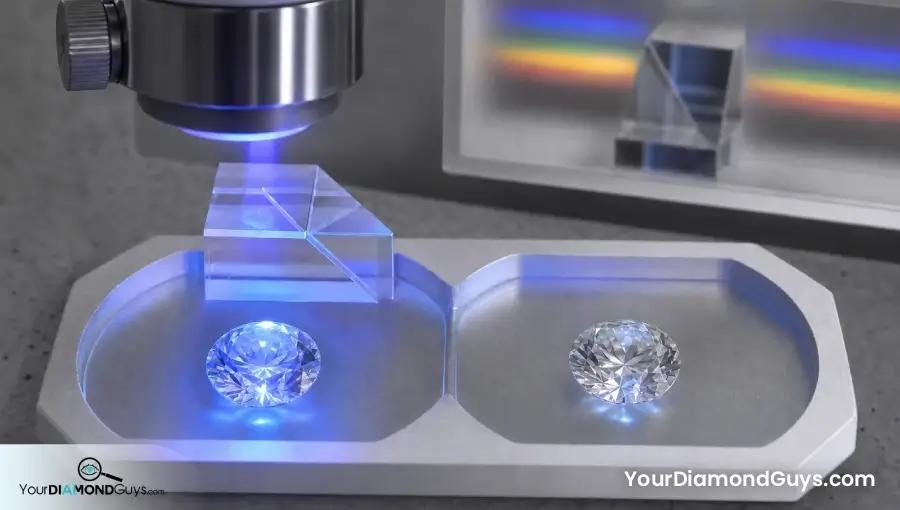
Fluorescence comes from atomic scale features that absorb UV energy and emit visible light. That behavior does not make the crystal softer or more likely to chip.
Durability depends on inclusions, points, corners, girdle condition, setting, and impact. A bruise, chip, cavity, knot, etched channel, or indented natural matters more.
Buyer rule: treat fluorescence as an appearance and market characteristic, not a structural weakness.
Myth Three: Strong Fluorescence Always Looks Milky
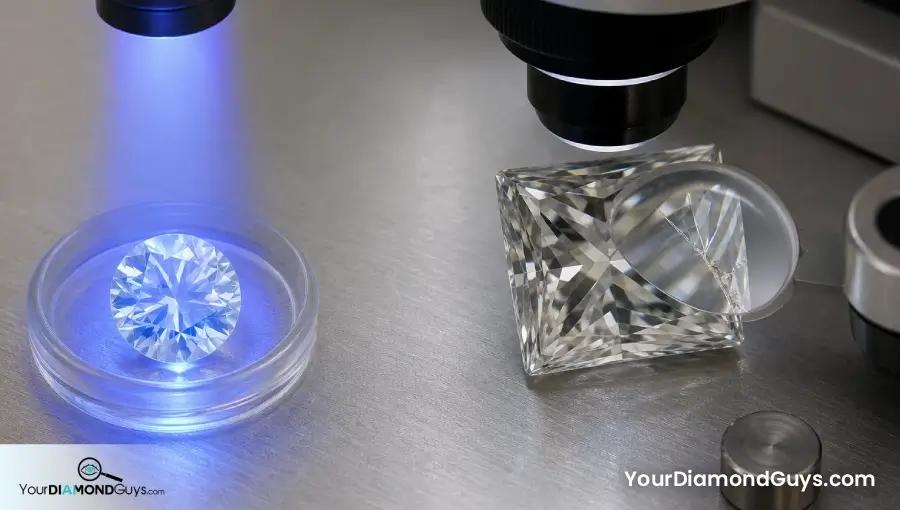
Rare stones with extremely strong fluorescence can look hazy or oily. Most do not. GIA has placed the cited overblue effect below 0.2 percent of fluorescent submissions.
The when fluorescence hurts guide shows how to compare low UV indoor light with daylight. Haze that never changes can come from clouds, graining, strain, dirt, or cut.
Buyer rule: inspect Strong and Very Strong rather than rejecting or approving the label.
| Myth | What is true | Buyer rule |
|---|---|---|
| Fluorescence means fake | Natural and lab grown diamonds can react | Use a verified report for origin |
| Fluorescence weakens diamond | The reaction does not reduce durability | Inspect actual structural risks |
| Strong always looks milky | Hazy overblue is rare | Use matched indoor and daylight proof |
| Blue is visible all the time | The reaction needs UV energy | Check the lights where you live |
| Fluorescence always lowers value | Market effects vary by color and intensity | Price the specific stone |
| Blue always improves color | Help depends on body color and UV | Compare the actual face up result |
Myth Four: Fluorescence Is Visible Everywhere
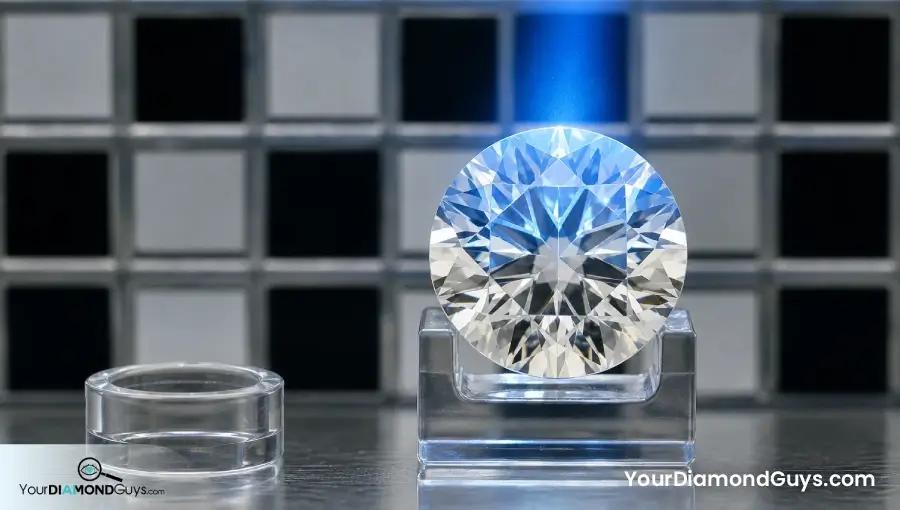
Many indoor LEDs emit very little UV. The reaction can disappear while the same stone glows in sunlight or under a blacklight.
The sunlight versus indoor guide shows why a store view and outdoor view can disagree without anyone changing the diamond.
Buyer rule: test ordinary indoor light, open shade, direct sun, and UV as different environments with different jobs.
Myth Five: Blue Fluorescence Always Makes A Diamond Whiter
Blue can counter a yellowish face under UV rich light, especially in I through M colors. It does not remove a brown, gray, or green undertone. It does not stay active in every room.
The guide to fluorescence helping color explains why the baseline indoor look still has to work.
Buyer rule: treat cooler daylight color as a possible bonus, never as a permanent grade upgrade.
Myth Six: Fluorescence Always Lowers Value
Market discounts often increase with stronger fluorescence in high color natural diamonds. Warmer colors can see less penalty or occasional value benefit when blue improves the face up result.
Price does not equal beauty. A discounted crisp stone can be smart. A discounted hazy stone remains a poor buy. The fluorescence grading scale sets the proof level.
Buyer rule: compare like for like and use the decision tree before treating any discount as savings.
How Does Diamond Fluorescence Myths Affect A Real Buying Decision?
Myths remove thought. Good buying rules organize thought. I want the report, the reaction, the actual appearance, and the price in that order.
A GIA graded J with Medium blue can be a terrific buy. A GIA graded D with None can still be dead from weak cut. Fluorescence never gets to overrule the whole stone.
What Does A Real Diamond Fluorescence Myths Example Look Like?
A buyer rejects every fluorescent diamond and pays more for a Faint alternative that looks identical. That rule bought a report word, not visible quality.
Another buyer chases Strong blue in a K color stone expecting permanent whiteness. Indoors the diamond looks too warm for their taste. Both mistakes came from treating a conditional effect as a guarantee.
Which Diamond Fluorescence Myths Mistakes Should You Avoid?
- Replacing one bad myth with an "always good" myth.
- Using fluorescence to identify origin.
- Confusing appearance risk with structural weakness.
- Treating market discount as proof of poor beauty.
- Assuming one lighting environment represents daily wear.
What Should You Ask About Diamond Fluorescence Myths Before Buying?
- Which part of this claim can I verify on the report?
- Which part needs indoor or daylight video?
- Does the rule change with body color and shape?
- Is the seller describing rarity, appearance, or price?
- Would I reach the same decision if the fluorescence label were hidden?
Affiliate disclosure: Some retailer links are affiliate links. If you buy through one, Your Diamond Guys may earn a commission at no extra cost to you.
Where Can You Compare Evidence For Diamond Fluorescence Myths?
Use Blue Nile and Brilliant Earth as comparison tools, not automatic recommendations. Compare matched stones that test claims about value, origin, durability, color, and haze, then judge the verified report, actual video, daylight behavior, price, and return protection instead of retailer labels. The actual diamond has to earn the yes.
What Is The Buyer Recommendation On Diamond Fluorescence Myths?
Ignore blanket claims. Use Fluorescence 101, the report, matched lighting, and the actual stone.
The best fluorescence rule is not dramatic. Buy the diamond that stays crisp, looks right where you wear it, and carries a price the evidence supports.
Return to the diamond fluorescence guide to place diamond fluorescence myths inside the complete report, appearance, testing, and buyer decision system.
If you want another set of eyes on the stone, book your free consultation with Your Diamond Guys.
Diamond Fluorescence Explained: Good, Bad, and When It Actually Saves You Money
Questions? Reach out directly for a free consultation, or drop them in the Diamond Buyers Academy community — Rob and Josh answer personally.
Questions Buyers Ask Us
*Some links on our site may earn us a small commission at NO EXTRA cost to you, helping us keep our content free*