GIA Versus IGI Diamond Fluorescence Reporting
By Rob Cornfield, Co-Founder of YourDiamondGuys.com. 30+ years in the global diamond trade. Specialist in diamond cut, sourcing, and light performance.
GIA and IGI can use different scales, report formats, and service specific fields. Strong is not enough information when the lab, report type, reaction color, and actual stone remain unclear.
Across supplier lists, the same retailer filter can hide different lab words. For a natural diamond, I start with GIA. For lab grown inventory, IGI appears often and can provide useful documentation. In both cases, I verify the file and inspect the diamond.
The two labs do not always use the same labels. IGI publicly describes its consumer fluorescence terms as None, Very Slight, Slight, and Strong, while GIA documents None, Faint, Medium, Strong, and Very Strong on its diamond grading reports.
What Should You Know First About GIA And IGI Fluorescence Reporting?
GIA uses None, Faint, Medium, Strong, and Very Strong for long wave UV fluorescence and notes color at Medium or stronger. IGI has described consumer terms including None, Very Slight, Slight, and Strong, but report design and wording can vary by service, location, and date.
Compare the actual reports, not retailer filters. Confirm origin, report type, intensity term, reaction color when given, comments, measurements, and the same lighting evidence.
Use Diamond Fluorescence 101 for the buyer rule that remains the same after you interpret either report.
GIA Reporting Gives A Five Level Scale
GIA treats fluorescence as an identifying characteristic rather than one of the 4Cs. The field records strength and color under long wave ultraviolet light.
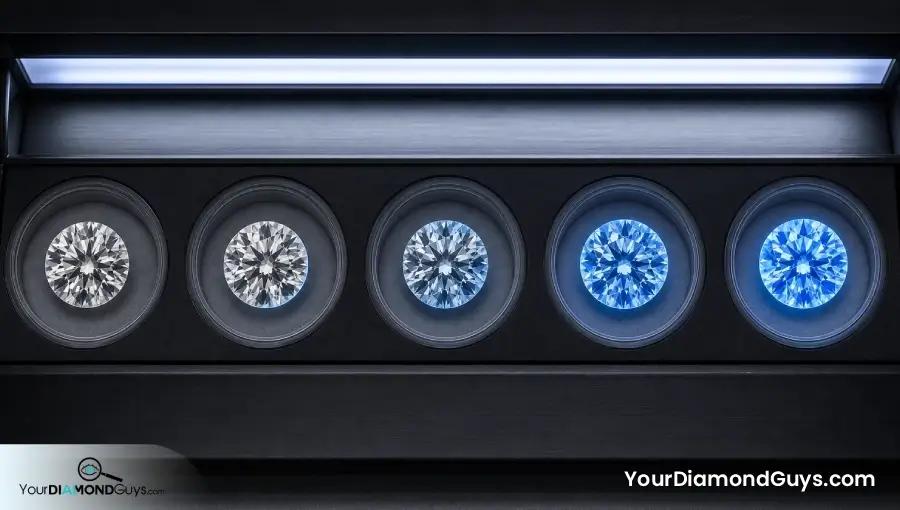
None covers reactions below the Faint boundary. Faint identifies a weak response. Medium, Strong, and Very Strong identify increasing intensity, with the fluorescence color added at those levels.
The GIA fluorescence grading scale guide explains how each description changes the buyer inspection plan.
IGI Labels Need The Exact Report Beside Them
IGI has publicly described a shorter consumer scale of None, Very Slight, Slight, and Strong. Individual report products can present fluorescence differently, so read the original document rather than relying on a marketplace dropdown.
A retailer can normalize several labs into its own filter. That helps search, but it can hide the lab's original wording and whether color appears. Open the report PDF and verify the entry.
The report clue guide shows why comments, clarity features, and fluorescence need to be read together.
| Comparison point | GIA | IGI buyer check |
|---|---|---|
| Published intensity wording | None, Faint, Medium, Strong, Very Strong | Can use None, Very Slight, Slight, Strong |
| Reaction color | Reported at Medium or stronger | Check the specific report field and notes |
| Natural diamond strategy | YDG starting lab | Do not treat as an equal substitute for YDG natural selection |
| Lab grown presence | GIA report products exist | Common across online lab grown inventory |
| Fair comparison | Use original report plus video | Use original report plus video |
Why Retailer Filters Can Mislead
A marketplace may display Very Slight as Faint, group several labels into Medium, or omit reaction color. That mapping can be reasonable for search and still be too vague for approval.
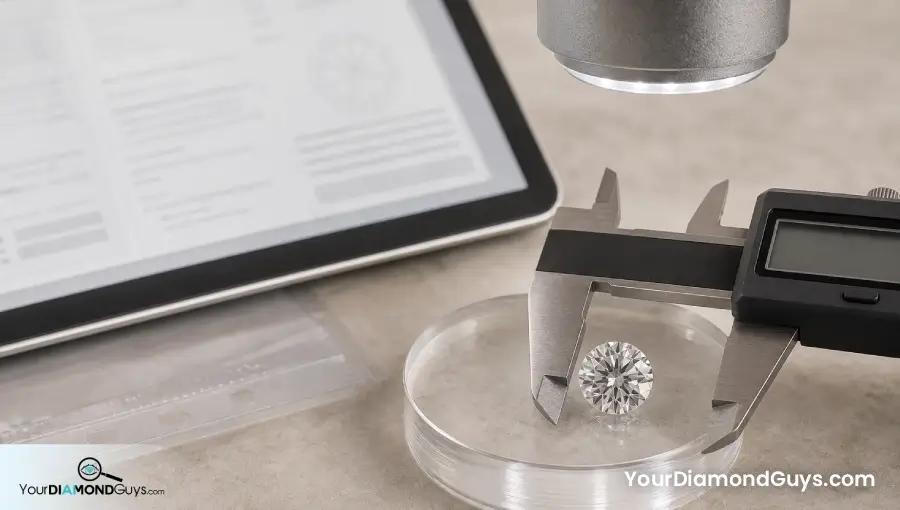
Download the report. Verify the report number on the lab's site. Match shape, measurements, carat, color, clarity, cut data, fluorescence, comments, and inscription.
Use the retailer questions for fluorescence when a listing says only Fluorescence: Yes or uses a label that does not appear on the report.
Natural And Lab Grown Reports Carry Different Context
For natural diamonds, start with GIA. That keeps the color and clarity comparison consistent while you evaluate fluorescence.
IGI is common for lab grown diamonds. Lab grown glow behavior can include fluorescence patterns and phosphorescence that do not follow the usual natural diamond expectation. The origin line and growth comments matter.
The natural versus lab glow guide explains why a reaction strength cannot substitute for laboratory origin identification.
How To Compare Two Reports Fairly
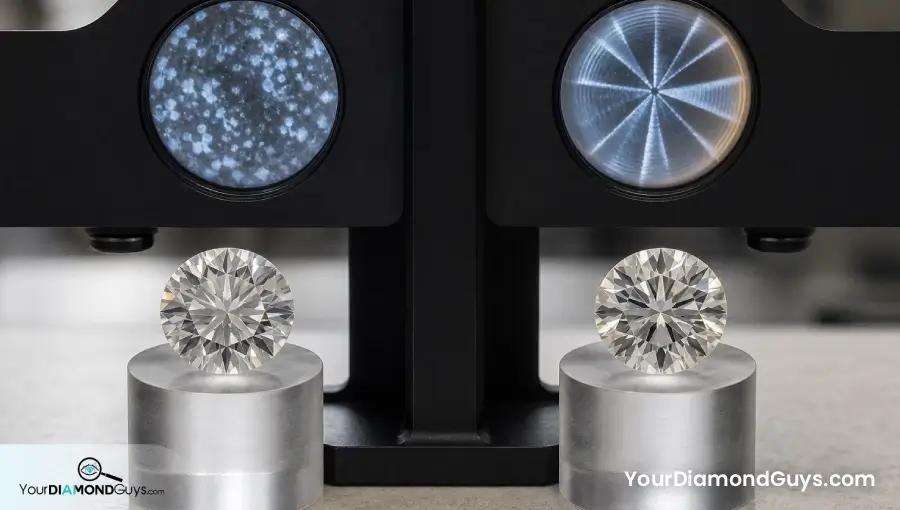
First match origin and report product. Then match shape, size, body color, clarity, cut, and fluorescence wording. Last, compare indoor and daylight video.
Do not force an exact conversion when the scales differ. Use broad risk lanes instead: weak response, visible response, and strong response requiring proof.
The at home UV guide can confirm that two stones react differently, but it cannot recreate either lab's grading conditions or resolve a scale conversion.
- Use the original lab document.
- Verify the report number online.
- Preserve the lab's exact wording.
- Do not compare natural and lab grown origin as one pool.
- Use appearance evidence to settle beauty.
How Does GIA And IGI Fluorescence Reporting Affect A Real Buying Decision?
I do not turn IGI Slight into GIA Faint and pretend the comparison is exact. I place both in a low response lane, then inspect the actual stones.
For a natural diamond choice, the lab decision comes first. Start with GIA. For a lab grown choice, verify origin and treatment disclosure, then judge transparency and glow behavior on its own evidence.
What Does A Real GIA And IGI Fluorescence Reporting Example Look Like?
Listing A shows a GIA natural diamond with Medium blue fluorescence. Listing B shows an IGI lab grown diamond with Slight fluorescence. They are not comparable fluorescence choices because origin, lab scale, and market context differ.
A fairer comparison uses two natural GIA stones or two lab grown stones with verified reports, similar specs, and matched video. The label translation becomes secondary to the visible result.
Which GIA And IGI Fluorescence Reporting Mistakes Should You Avoid?
- Assuming every laboratory uses the GIA scale.
- Comparing retailer normalized labels instead of original reports.
- Treating IGI as an equal starting alternative for a natural diamond.
- Ignoring report type, origin, date, and service.
- Using a home UV reaction to overrule the lab document.
What Should You Ask About GIA And IGI Fluorescence Reporting Before Buying?
- Which laboratory and report service produced this document?
- What exact fluorescence wording appears on the original report?
- Is the reaction color recorded?
- Does the retailer filter change or group the lab's wording?
- Can I see matched indoor, daylight, and UV footage?
Affiliate disclosure: Some retailer links are affiliate links. If you buy through one, Your Diamond Guys may earn a commission at no extra cost to you.
Where Can You Compare Evidence For GIA And IGI Fluorescence Reporting?
Use Brilliant Earth and Ritani as comparison tools, not automatic recommendations. Compare GIA and IGI report fields beside matched normal light and ultraviolet video, then judge the laboratory wording, reaction intensity, reaction color, transparency, and return terms. The actual diamond has to earn the yes.
What Is The Buyer Recommendation On GIA And IGI Fluorescence Reporting?
For natural diamonds, start with GIA. For lab grown diamonds, read the origin and report service before comparing fluorescence.
Normalize the inspection burden, not the labels. Weak reactions need normal checks. Strong reactions need better lighting proof.
Return to the diamond fluorescence guide to place GIA and IGI fluorescence reporting inside the complete report, appearance, testing, and buyer decision system.
If you want another set of eyes on the stone, book your free consultation with Your Diamond Guys.
GIA vs. Other Labs: Why Grading Consistency Changes Your Diamond's Value
Questions? Reach out directly for a free consultation, or drop them in the Diamond Buyers Academy community — Rob and Josh answer personally.
Questions Buyers Ask Us
*Some links on our site may earn us a small commission at NO EXTRA cost to you, helping us keep our content free*