How To Test Diamond Fluorescence At Home
By Josh Allen, Co-Founder of YourDiamondGuys.com. Fifth generation diamantaire with 30+ years in the global diamond trade. Former supplier to Tiffany & Co., Cartier, and Harry Winston.
That limit makes the test useful. You can stop asking it to solve the whole purchase and use it for one clean job: record the reaction, color, distribution, and whether any glow remains after the lamp turns off.
On a parcel table, a UV lamp is a sorting tool, not an origin laboratory. I like simple tests when they stay in their lane. The trouble starts when a blue glow becomes a home certificate.
A home test is a screening exercise. GIA's UV testing guide explains how fluorescence and afterglow observations can flag stones for laboratory review, while emphasizing that controlled laboratory methods and safety precautions go far beyond a consumer flashlight.
What Should You Know First About Testing Diamond Fluorescence At Home?
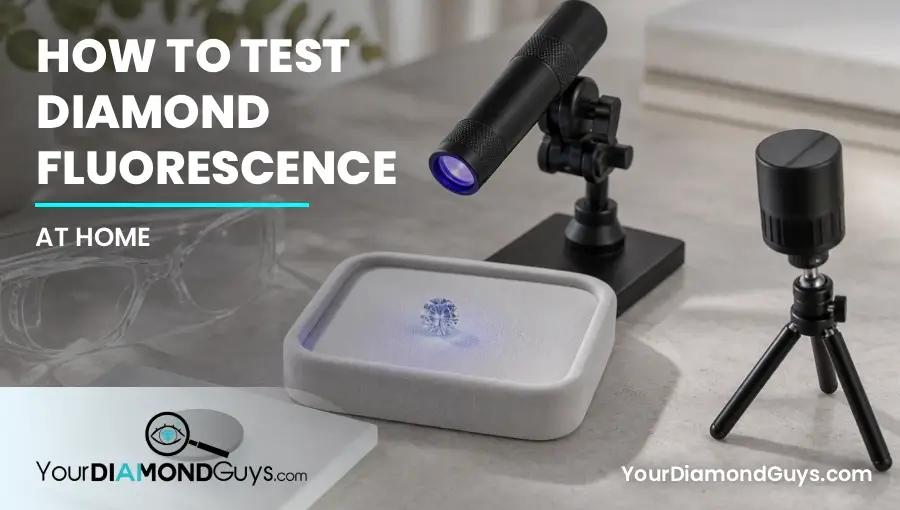
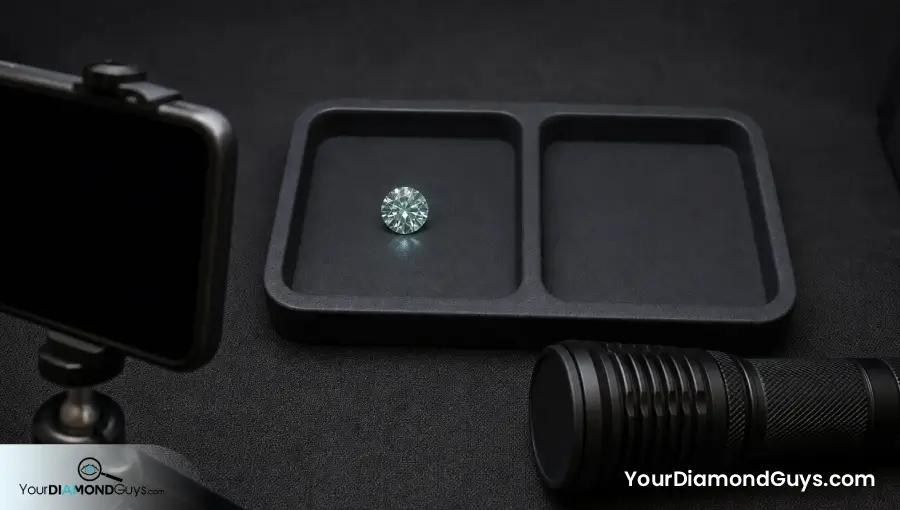
Use a reputable 365 nanometer long wave UV flashlight, UV protective eyewear rated for the source, a dark room, a clean diamond, a neutral tray, and a phone camera with exposure locked. Never stare into the beam or point it at skin and eyes.
Record normal light first, then UV response, then switch the lamp off and record any afterglow. Compare the result with the grading report. Stop if the lamp lacks safety information or the stone and report disagree.
Review Diamond Fluorescence 101 before using a UV flashlight so the reaction never becomes an origin or beauty verdict.
What You Need
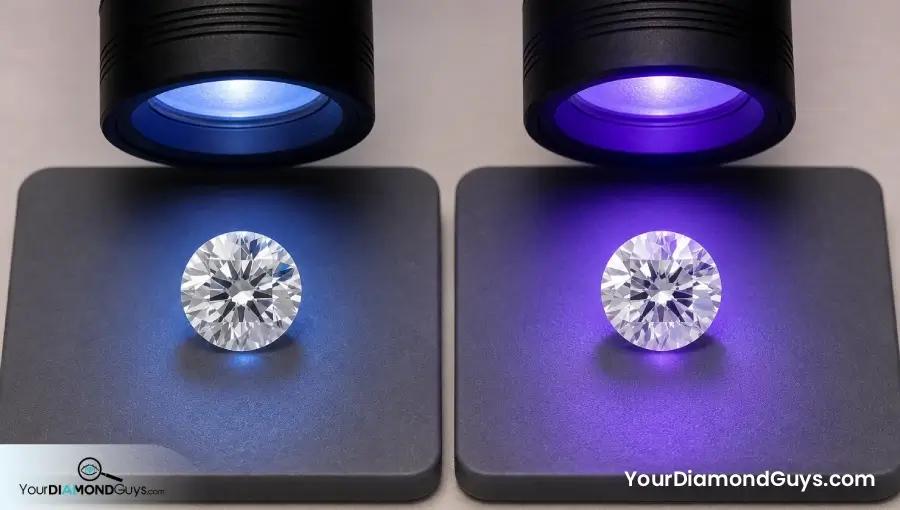
Choose a 365 nanometer long wave UV flashlight from a seller that provides wavelength and safety information. Cheap 395 nanometer lamps emit more visible violet light, which can contaminate the color you think the diamond produces.
Use protective eyewear specified for the UV source. Work on a stable neutral tray in a room you can darken. Keep children and pets away. Do not test longer than needed.
Clean the diamond first. Oil, dust, fluorescent detergents, adhesives, and fibers can react or scatter light. Remove unrelated glowing objects from the frame.
Record A Normal Light Baseline
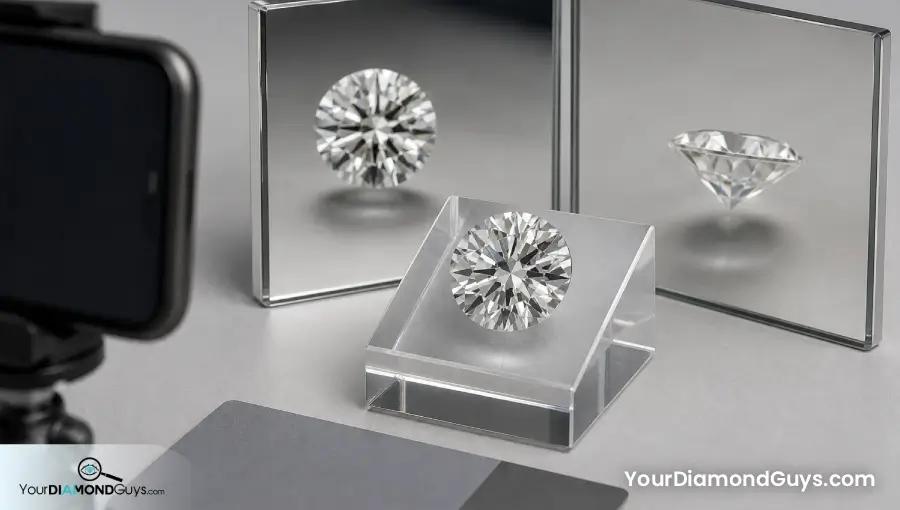
Film the diamond under an ordinary diffused LED before turning on UV. Pause face up, tilt slowly, and capture the side. This records body color and transparency with little fluorescence active.
Lock phone focus, white balance, and exposure if the camera allows it. A bright blue reaction can make automatic exposure darken the entire frame and exaggerate contrast changes.
Use the sunlight versus indoor lighting guide for the separate real world appearance test. The dark UV box is not a wear environment.
Run The UV Test
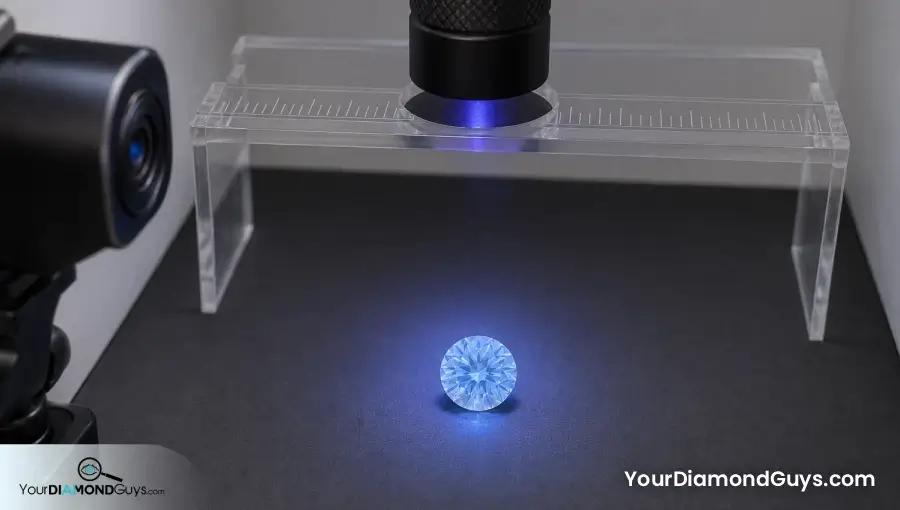
Place the flashlight at a consistent distance. Shine the beam on the diamond for a few seconds without looking into the source. Record reaction presence, approximate hue, strength relative to the room, and whether the response covers the whole stone.
Do not assign None, Faint, Medium, Strong, or Very Strong. GIA uses calibrated references and controlled conditions. Your camera and lamp do not reproduce that system.
Use the fluorescence color guide to describe blue, yellow, white, orange, or another hue without turning color into an origin claim.
| Observation | What it can tell you | What it cannot tell you |
|---|---|---|
| No visible response | No obvious reaction under this setup | Origin or official None grade |
| Blue glow | Blue fluorescence under this source | Natural origin or improved beauty |
| Uneven glow | Reaction distribution appears nonuniform | Cause without laboratory testing |
| Glow stops immediately | Behavior is consistent with fluorescence | Diamond type |
| Glow continues | Possible phosphorescence | HPHT origin by itself |
Check For Afterglow
Turn the UV source off while the camera continues recording in darkness. Watch whether visible light stops immediately or lingers for seconds.
A lingering response is phosphorescence. It occurs commonly in some HPHT grown diamonds and rarely in some natural diamonds. The natural versus lab glow guide explains why that observation is a clue rather than a verdict.
Do not use short wave or deep UV equipment at home unless you have professional training and an enclosed safety system. Those wavelengths create higher eye and skin risk.
Compare The Result With The Report
For a natural diamond, start with GIA. Confirm the report number, fluorescence intensity and color, measurements, and inscription. A weak home reaction can still match a report because lamp power and camera sensitivity vary.
Use the GIA versus IGI reporting guide when the report uses different terms. Never overwrite the laboratory description with your own label.
Finish with the Fluorescence 101 guide and decision tree. Beauty comes from indoor and daylight appearance, not from the most dramatic glow in a dark room.
- Verify lamp wavelength and safety information.
- Wear the correct protective eyewear.
- Clean the diamond and neutralize the background.
- Lock camera settings.
- Record normal light, UV, and afterglow in that order.
- Stop at observation and use the report for identification.
How Does Testing Diamond Fluorescence At Home Affect A Real Buying Decision?
Use the home test after you already have the report and appearance evidence. It can confirm that a stronger reaction exists and show whether the outdoor footage deserves more questions.
If your result conflicts with the report, do not declare the report wrong. Check the inscription and ask the grading laboratory or an independent gemologist to verify the stone.
What Does A Real Testing Diamond Fluorescence At Home Example Look Like?
A GIA report says Medium blue. A 365 nanometer flashlight produces a clear blue response that stops when the lamp turns off. The diamond stays crisp indoors and in daylight. The home test adds no new concern.
Another stone shows a lingering blue green afterglow while the listing says natural and provides no report. That is a stop sign for professional verification, not proof that the seller mislabeled an HPHT stone.
Which Testing Diamond Fluorescence At Home Mistakes Should You Avoid?
- Looking into the UV beam.
- Using an unlabeled lamp without safety information.
- Assigning an official intensity from phone video.
- Calling blue glow proof of natural origin.
- Judging beauty only in a dark UV setup.
What Should You Ask About Testing Diamond Fluorescence At Home Before Buying?
- Is this lamp truly 365 nanometers and safety documented?
- Does the report list fluorescence intensity and color?
- Does the reaction stop when the lamp turns off?
- Does the diamond stay transparent in normal light and daylight?
- Does the girdle inscription match the verified report?
Affiliate disclosure: Some retailer links are affiliate links. If you buy through one, Your Diamond Guys may earn a commission at no extra cost to you.
Where Can You Compare Evidence For Testing Diamond Fluorescence At Home?
Use Ritani and Blue Nile as comparison tools, not automatic recommendations. Compare retailer ultraviolet clips, normal light videos, report fields, and return policies before home testing, then judge whether the home reaction matches the listing without turning the test into a beauty or origin verdict. The actual diamond has to earn the yes.
What Is The Buyer Recommendation On Testing Diamond Fluorescence At Home?
Keep the home UV test short, safe, and descriptive. Record what happens without pretending you ran a grading laboratory.
Use indoor and daylight appearance to decide beauty. Use a verified report and professional testing to decide identity.
Return to the diamond fluorescence guide to place testing diamond fluorescence at home inside the complete report, appearance, testing, and buyer decision system.
If you want another set of eyes on the stone, book your free consultation with Your Diamond Guys.
Is Your Diamond Real or Fake? Here's a Quick Test!
Questions? Reach out directly for a free consultation, or drop them in the Diamond Buyers Academy community — Rob and Josh answer personally.
Questions Buyers Ask Us
*Some links on our site may earn us a small commission at NO EXTRA cost to you, helping us keep our content free*