Milky Versus Hazy Versus Cloudy Diamonds
By Josh Allen, Co-Founder of YourDiamondGuys.com. Fifth generation diamantaire with 30+ years in the global diamond trade. Former supplier to Tiffany & Co., Cartier, and Harry Winston.
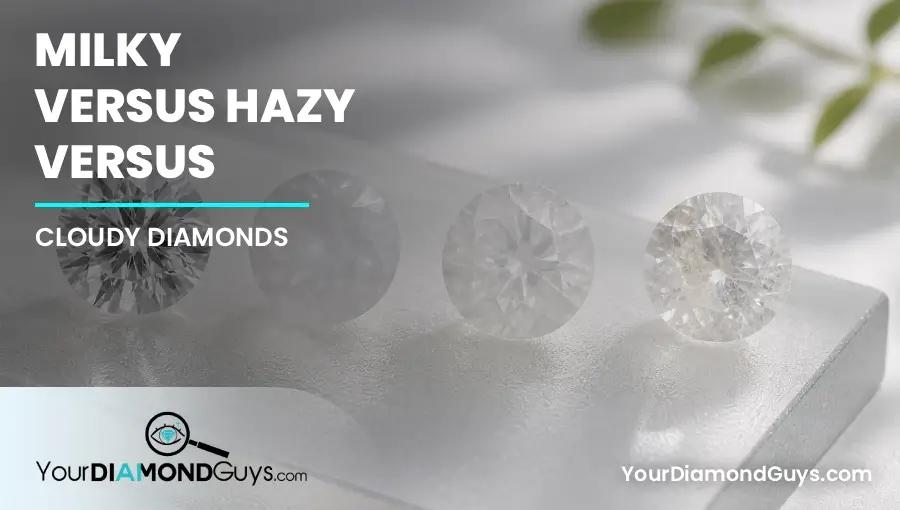
Buyers use them as if they mean the same thing. They do not. The overlap is real, but each word points to a different visual clue and a different next question.
I have heard dealers describe the same stone three ways across one table. The useful move is not arguing over vocabulary. It is pinning down where the transparency changes, in which light, and whether cleaning fixes it.
The words overlap in normal conversation, but the cause still matters. GIA explains that rare strongly fluorescent diamonds can look hazy or oily, while many cloudy or milky diamonds get their look from something other than fluorescence.
What Should You Know First About Milky, Hazy, And Cloudy Diamonds?
Milky usually means a broad white veil through the diamond. Hazy means reduced crispness or a fogged look. Cloudy often points to cloud inclusions or many tiny features that diffuse light. Oily means a greasy face up veil. Sleepy means low life, which can come from transparency, cut, or both.
None of these words identifies the cause by itself. Compare low UV and high UV light, inspect the report, clean the stone, and watch the facet pattern move.
Go back to Diamond Fluorescence 101 when you need to test whether the look is actually connected to UV exposure.
What A Milky Diamond Looks Like
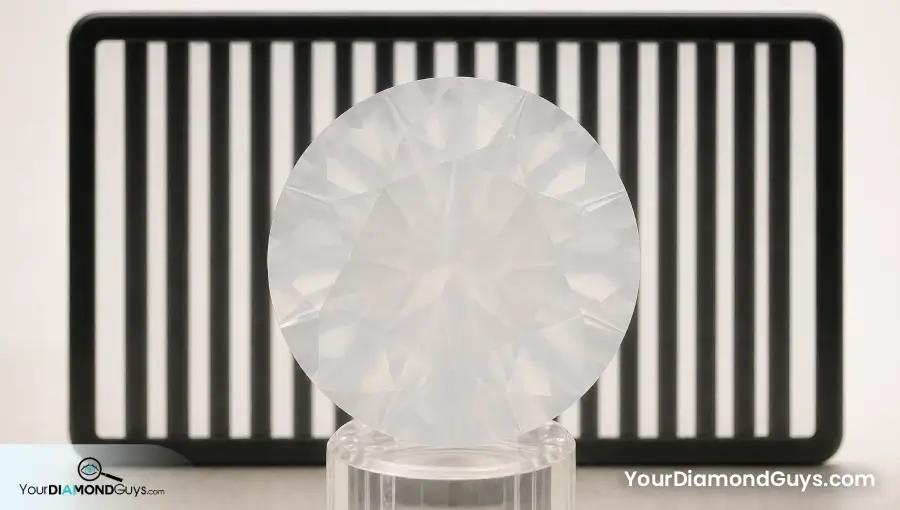
Milkiness is broad and whitish. The diamond can look as if a drop of milk entered clear water, reducing the depth and separation between facets.
The effect can cover the whole stone or sit in zones. Dense clouds, large groups of pinpoints, whitish graining, strain, and rare fluorescence related transparency loss can contribute.
A milky diamond does not become clean because the clarity plot looks quiet. The report clue guide explains why comments and grade setting features matter.
What Haze Looks Like
Haze is a veil. Facet edges remain visible, but the view lacks the hard crispness of a transparent stone. Contrast can look washed out and bright areas can blend together.
Haze can be internal or external. Dirt, oil, polishing residue, camera bloom, and a dirty gem jar can create a false haze. Clean and recheck before you reject.
The causes of haze beyond fluorescence separates cloud load, graining, strain, poor transparency, and viewing problems.
Cloudy Usually Points Toward Inclusion Load
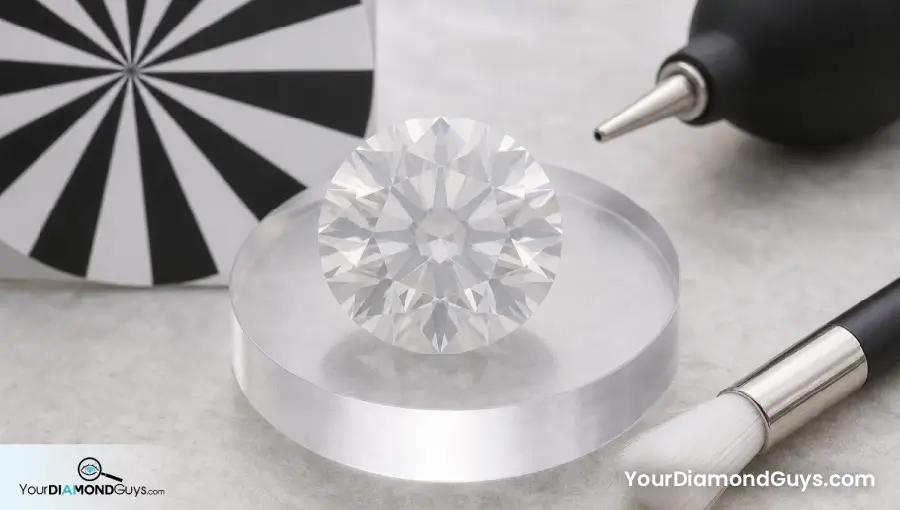
A cloud is a clarity characteristic made from a grouping of pinpoints too small to plot individually. One small cloud can be harmless. Widespread clouds that set the clarity grade can soften the entire stone.
A comment such as clarity grade based on clouds not shown needs a video review. It does not automatically condemn the diamond, but it tells you the plot is not showing the whole clarity story.
Use the dedicated cloud inclusions and hazy diamonds guide when the clarity report, not UV behavior, carries the main risk.
| Buyer word | Typical visual clue | Common next check |
|---|---|---|
| Milky | Broad whitish veil through the stone | Cloud load, graining, fluorescence response |
| Hazy | Soft facet edges and reduced crispness | Cleanliness, lighting, strain, UV comparison |
| Cloudy | Foggy zones or overall diffusion | Cloud comments and grade setting inclusions |
| Oily | Greasy face up veil after cleaning | Surface condition and fluorescence stress test |
| Sleepy | Low life and weak contrast movement | Transparency plus cut performance |
Oily And Sleepy Describe The Face Up Experience
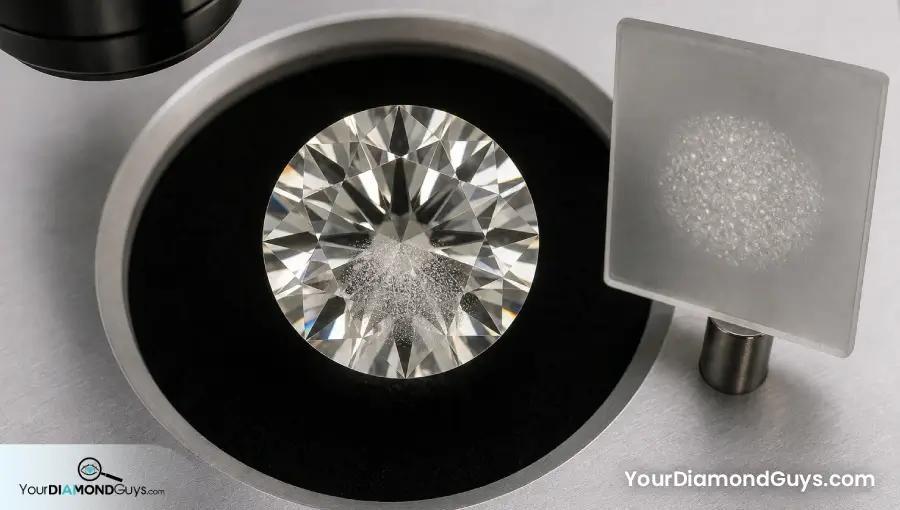
Oily suggests a slick film over the diamond. Clean the surface carefully first. If the veil remains and becomes worse in UV rich daylight, stronger fluorescence deserves attention.
Sleepy is broader. A diamond can look sleepy because haze diffuses light, because cut leaks light, because obstruction controls the center, or because the video lighting is flat.
The fluorescence appearance risk guide handles UV dependent softness. The cut cluster handles leakage and obstruction. Do not force one diagnosis onto every dull stone.
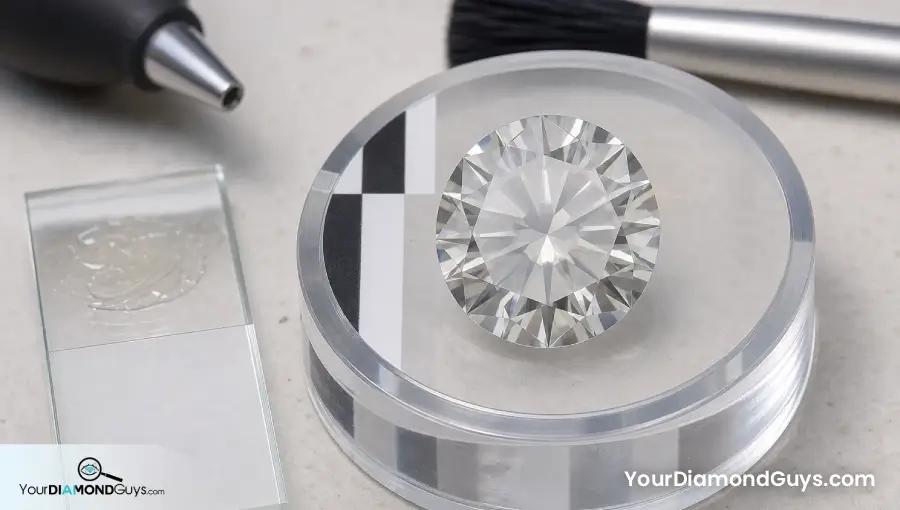
A Five Minute Diagnostic Order
Clean the diamond. View it under ordinary diffused indoor light. Rotate it slowly and compare the sharpness of facet boundaries with a known crisp diamond.
Check the report for clouds, graining, comments, and the fluorescence field. Then move into daylight. A problem that tracks UV tells a different story from a haze that never changes.
Use the 360 video checklist online. Use the Fluorescence 101 guide when the report field needs context.
- Clean before judging.
- Establish the low UV baseline.
- Inspect facet edge sharpness.
- Read the report comments and inclusion pattern.
- Add daylight last to test fluorescence behavior.
How Does Milky, Hazy, And Cloudy Diamonds Affect A Real Buying Decision?
I care less about which adjective the seller prefers and more about whether the stone has reduced transparency. A diamond that looks veiled in honest light loses beauty, contrast, and value.
A small local cloud that disappears face up can be fine. A broad milky cast is not a character feature. It is a reason to find a better diamond.
What Does A Real Milky, Hazy, And Cloudy Diamonds Example Look Like?
Stone A looks slightly soft in the listing, but a clean neutral video shows crisp facets. The original clip used a dirty holder and bright front light. The problem was the setup.
Stone B has a quiet plot, a cloud comment, and a foggy center that remains indoors and outside. That is a transparency problem. The buyer should move on even if fluorescence is None.
Which Milky, Hazy, And Cloudy Diamonds Mistakes Should You Avoid?
- Using all transparency words as synonyms for fluorescence.
- Rejecting a dirty stone before cleaning and retesting.
- Trusting a quiet clarity plot without reading comments.
- Calling weak cut a cloud problem.
- Accepting a visibly milky diamond because the clarity grade sounds high.
What Should You Ask About Milky, Hazy, And Cloudy Diamonds Before Buying?
- Is the softness local or spread across the whole diamond?
- Does cleaning remove the oily or hazy look?
- Does the problem change between indoor light and daylight?
- Do clouds, graining, or comments explain the appearance?
- Can I compare the stone beside a known transparent diamond?
Affiliate disclosure: Some retailer links are affiliate links. If you buy through one, Your Diamond Guys may earn a commission at no extra cost to you.
Where Can You Compare Evidence For Milky, Hazy, And Cloudy Diamonds?
Use Blue Nile and Brilliant Earth as comparison tools, not automatic recommendations. Compare matched videos showing crisp, hazy, milky, cloudy, and oily looking stones, then judge facet definition, contrast, report clues, cleaning condition, and return terms. The actual diamond has to earn the yes.
What Is The Buyer Recommendation On Milky, Hazy, And Cloudy Diamonds?
Use the words to describe what you see, then diagnose the cause. Do not buy a label and do not reject a label.
Broad milkiness, persistent haze, or a greasy veil after cleaning is enough reason to move on. Transparent diamonds are not hard to explain.
Use the diamond fluorescence guide to connect milky, hazy, and cloudy diamonds with intensity, color, transparency, lighting, and the complete buy or skip path.
If you want another set of eyes on the stone, book your free consultation with Your Diamond Guys.
Milky VS2 vs. Super Brilliant: Why This 1.80ct Diamond Has Zero Sparkle
Questions? Reach out directly for a free consultation, or drop them in the Diamond Buyers Academy community — Rob and Josh answer personally.
Questions Buyers Ask Us
*Some links on our site may earn us a small commission at NO EXTRA cost to you, helping us keep our content free*