The Overblue Diamond Effect Explained
By Rob Cornfield, Co-Founder of YourDiamondGuys.com. 30+ years in the global diamond trade. Specialist in diamond cut, sourcing, and light performance.
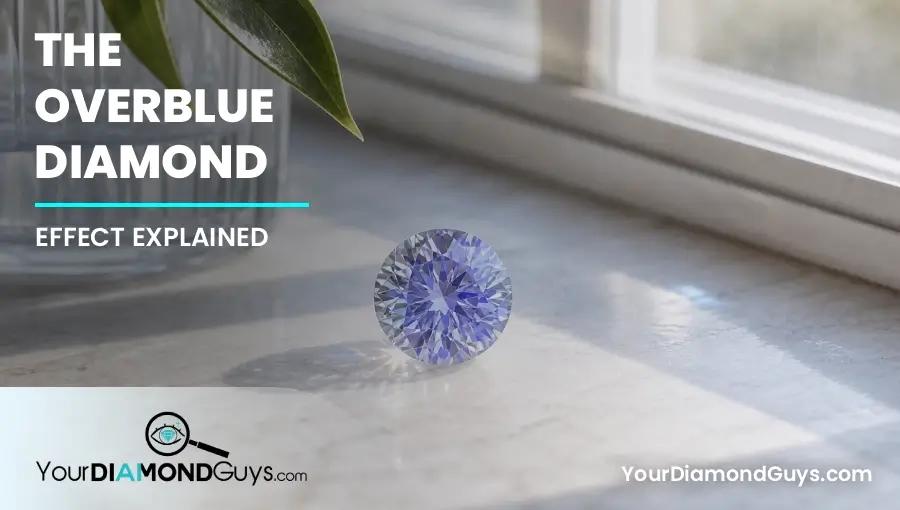
It usually refers to a diamond whose strong blue fluorescence becomes visually dominant under UV rich light, sometimes with a hazy or oily appearance. The term gets thrown around too loosely online.
In dealer rooms, overblue described the rare stone that looked wrong outside the UV box, not every obvious blue reaction. A real concern changes the face up appearance in lighting you will encounter.
Overblue has a large reputation and a small population. GIA describes the hazy or oily overblue effect as extremely rare, with fewer than 0.2 percent of fluorescent submissions showing the cited hazy or oily effect.
What Should You Know First About The Diamond Overblue Effect?
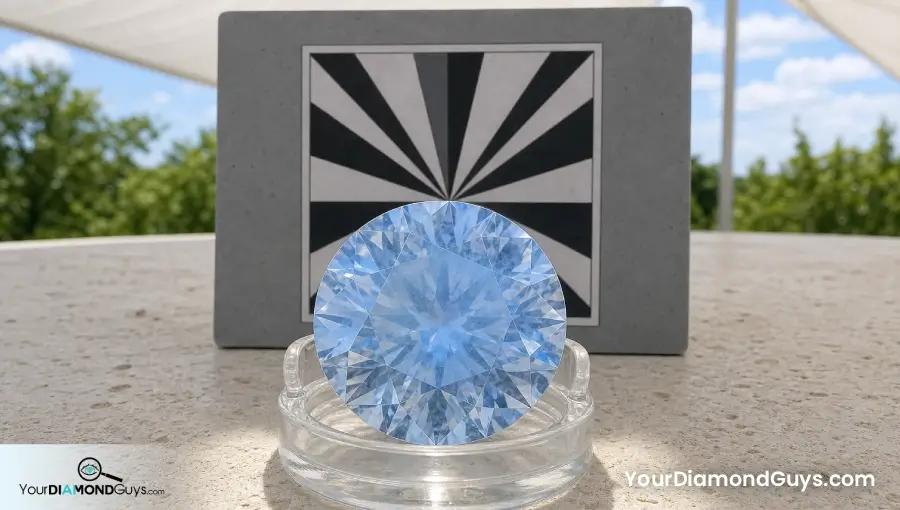
An overblue diamond looks excessively blue, soft, oily, or unnaturally luminous when exposed to daylight or another UV rich source. Strong or Very Strong blue fluorescence is usually involved, but the intensity description alone cannot diagnose it.
Test the stone clean, face up, and at normal viewing distance in ordinary indoor light, shaded daylight, and direct sunlight. Reject it when the blue response or loss of transparency bothers you in a normal outdoor view.
Use Diamond Fluorescence 101 to place an overblue reaction inside the full transparency and intensity decision.
What Overblue Actually Looks Like
The cleanest version is a blue cast that overwhelms the diamond's normal color outdoors. The more serious version adds a soft veil, oily surface impression, or reduced facet definition.
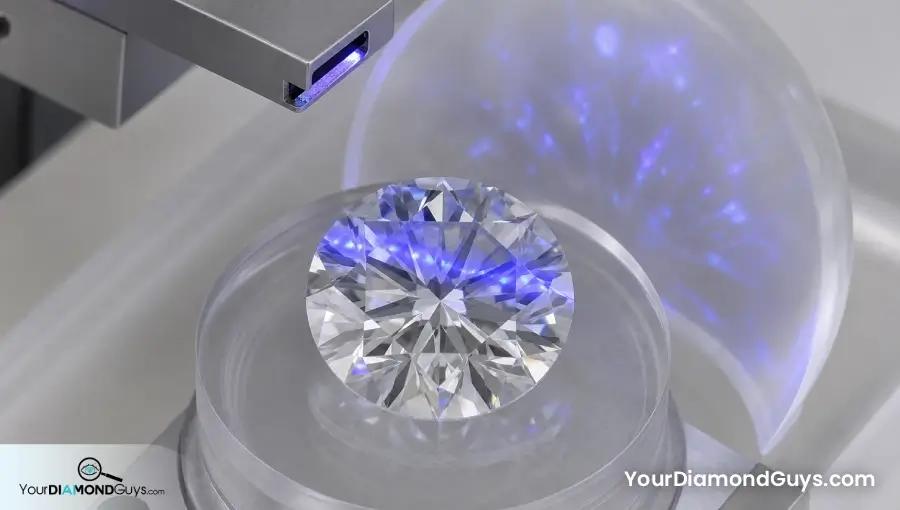
A bright blue reaction under a 365 nanometer lamp is not enough. That setup exists to activate fluorescence. The overblue question is whether ordinary daylight pushes the diamond beyond a look you want to wear.
Use the fluorescence color guide to separate reaction color from body color. The diamond can carry blue fluorescence without having blue body color.
Why The Effect Appears
Ultraviolet energy activates blue emitting centers in the diamond. Stronger emission adds more blue light to the face up view. Daylight supplies enough UV for that response to become visible in some stones.
The relationship between emission, transparency, cut, and observation angle is not captured by one report line. Distribution can be uneven, and reflections can carry a localized reaction across the face up pattern.
That is why two Strong blue diamonds can look different. The appearance risk guide focuses on the actual visual failures rather than the label.
Overblue Versus A Normal Blue Reaction
A normal reaction appears under a UV source and stops when that source is removed. In daylight, the stone can look slightly cooler while remaining crisp.
Overblue dominates the view or changes transparency enough that the diamond no longer looks like the same stone. The boundary is partly preference, but softness and oiliness are quality concerns rather than taste.
The fluorescence grading scale identifies where the risk conversation becomes relevant. Medium deserves a check. Strong and Very Strong deserve a proper stress test.
| Observation | Normal fluorescence | Overblue concern |
|---|---|---|
| UV lamp | Blue glow appears | Blue glow can look very intense |
| Ordinary indoor light | Stone looks normal | Baseline can still look normal |
| Shaded daylight | Slight cooler impression | Blue dominates or facets look soft |
| Direct sunlight | Reaction becomes obvious | Odd blue cast or oily veil controls the face |
| After UV stops | Glow stops | A lingering glow is phosphorescence, not overblue |
The Test I Trust
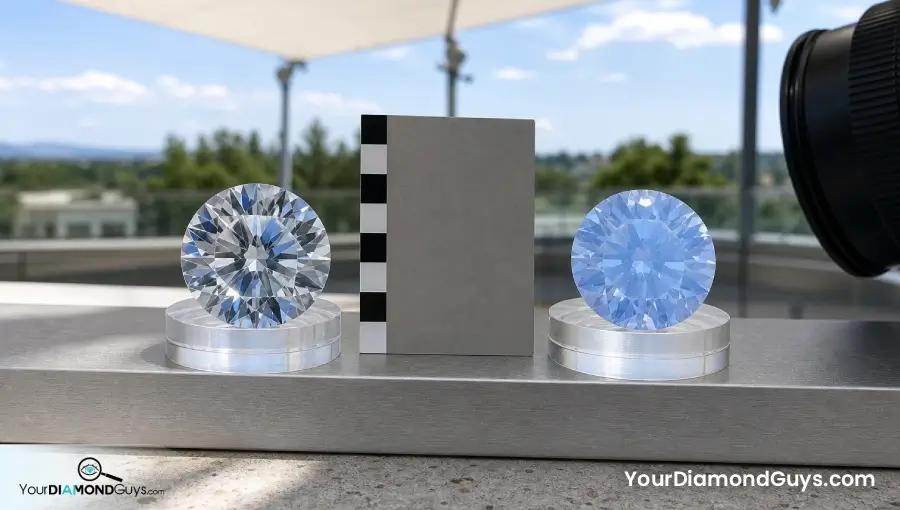
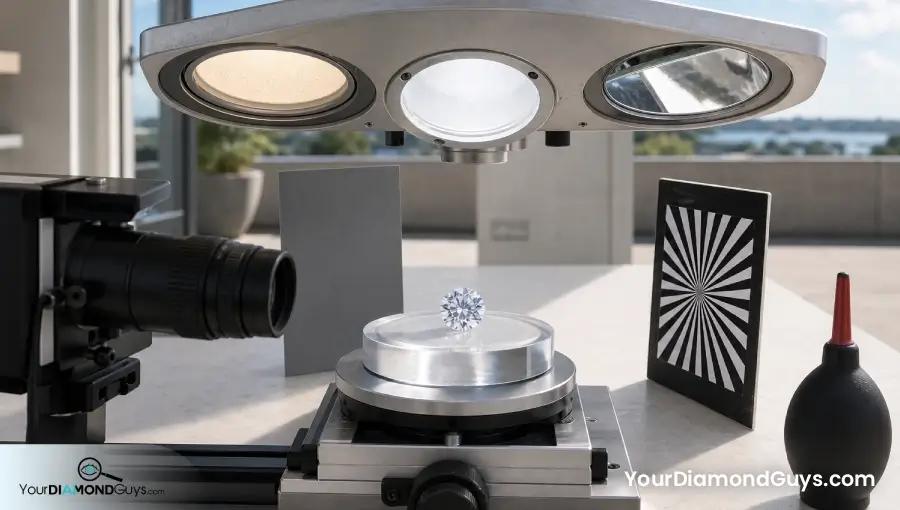
Clean the diamond. Start under an indoor LED with a neutral background. Film a slow tilt and note whether facet edges switch sharply.
Move to open shade, then direct sun. Keep camera distance and exposure fixed. Compare still frames at the same angle. The sunlight versus indoor workflow gives the complete sequence.
Finish with the at home UV test only to confirm reaction behavior. Never let the most dramatic test become the only test.
When I Skip Without More Debate
I skip when the stone loses crispness outside, looks greasy after cleaning, or turns blue enough to bother the buyer at normal distance. I also skip when the seller supplies only UV footage and refuses daylight.
Price cannot compensate for an appearance you dislike. The market discount exists because the next buyer can raise the same concern.
Use the retailer question script to request the evidence before shipping. That is cheaper than trying to diagnose a poor listing after the return clock starts.
How Does The Diamond Overblue Effect Affect A Real Buying Decision?
I treat overblue as an observed outcome. Strong blue is a reason to look. Softness, oiliness, or an intrusive outdoor cast is a reason to reject.
A buyer who loves a vivid blue daylight response can choose it when transparency remains strong. A buyer who wants a consistent colorless look should keep the decision simple and move to another stone.
What Does A Real The Diamond Overblue Effect Example Look Like?
Stone A has Very Strong blue fluorescence. Under an indoor LED it looks clean. In open shade it looks slightly cooler, and in direct sun the blue becomes visible without softening the facets.
Stone B has the same report description. In open shade the center turns milky and the blue cast controls the entire face. Stone A is a preference call. Stone B is a skip.
Which The Diamond Overblue Effect Mistakes Should You Avoid?
- Calling every visible blue reaction overblue.
- Diagnosing the effect from a blacklight photo.
- Ignoring diamond cleanliness during the test.
- Confusing phosphorescence with continued fluorescence.
- Buying the rarity or discount instead of the appearance.
What Should You Ask About The Diamond Overblue Effect Before Buying?
- Does the blue cast appear in open shade at normal distance?
- Do facet edges stay crisp as UV increases?
- Was the diamond cleaned before filming?
- Does any glow remain after the UV source stops?
- Can I return the stone if outdoor appearance feels wrong?
Affiliate disclosure: Some retailer links are affiliate links. If you buy through one, Your Diamond Guys may earn a commission at no extra cost to you.
Where Can You Compare Evidence For The Diamond Overblue Effect?
Use Ritani and Blue Nile as comparison tools, not automatic recommendations. Compare diamonds with Strong or Very Strong blue fluorescence and honest outdoor video, then judge whether blue adds a subtle cool tone or takes over the face of the stone. The actual diamond has to earn the yes.
What Is The Buyer Recommendation On The Diamond Overblue Effect?
Do not fear the word overblue. Define the look, test the stone, and reject the visual problem when it appears.
Strong blue without softness can be fine. Strong blue that takes over the diamond or cuts transparency is not worth explaining away.
Return to the diamond fluorescence guide to place the diamond overblue effect inside the complete report, appearance, testing, and buyer decision system.
If you want another set of eyes on the stone, book your free consultation with Your Diamond Guys.
Infinite Blue: A Diamond Masterpiece
Questions? Reach out directly for a free consultation, or drop them in the Diamond Buyers Academy community — Rob and Josh answer personally.
Questions Buyers Ask Us
*Some links on our site may earn us a small commission at NO EXTRA cost to you, helping us keep our content free*