Diamond Report Clues That Signal Transparency Risk
By Rob Cornfield, Co-Founder of YourDiamondGuys.com. 30+ years in the global diamond trade. Specialist in diamond cut, sourcing, and light performance.
Reports grade clarity at controlled magnification. They do not promise that the face up diamond looks crisp in every light. Your job is to find the clues that change the video request.
I have seen clients relax because the diagram had three tiny marks. Then one line in the comments explained why the stone looked foggy. The plot is useful. It is not the whole file.
For a natural diamond, start with GIA and read the whole document. GIA's report guide explains the fluorescence field, clarity plot, and comments, including why the plot approximates clarity features and comments carry information not otherwise represented.
What Should You Know First About Diamond Report Clues For Transparency Risk?
Cloud-heavy clarity grades, dense plots, internal graining, or Strong fluorescence without daylight evidence all trigger a closer transparency review.
None of these clues proves visible haze. They tell you where the report stops and direct observation must begin.
Read Diamond Fluorescence 101 before turning a report clue into a verdict about the actual stone.
Read The Clarity Grade With The Setting Feature
The clarity grade summarizes size, number, position, nature, and relief of internal and surface characteristics. Two SI1 diamonds can reach the same grade through completely different inclusion patterns.
A single crystal under the table creates a visibility question. Widespread tiny clouds create a transparency question. A feather at the girdle creates a durability question. The grade alone cannot keep those decisions separate.
Use the clarity plot guide to identify which symbols appear and whether their position matches the listing video.

Cloud And Pinpoint Comments Deserve A Video
Clouds not shown means additional cloud material exists beyond what the plot displays. Pinpoints not shown makes a similar statement about tiny inclusions. The comment can be routine, but it becomes more important when the stone looks soft.
Clarity grade based on clouds not shown tells you those unplotted clouds carried major grade weight. That is not an automatic rejection. It is an automatic transparency test.
The cloud inclusions guide explains when localized clouds stay harmless and when widespread inclusion load makes the diamond sleepy.
Graining And Dense Mixed Patterns Raise Different Questions
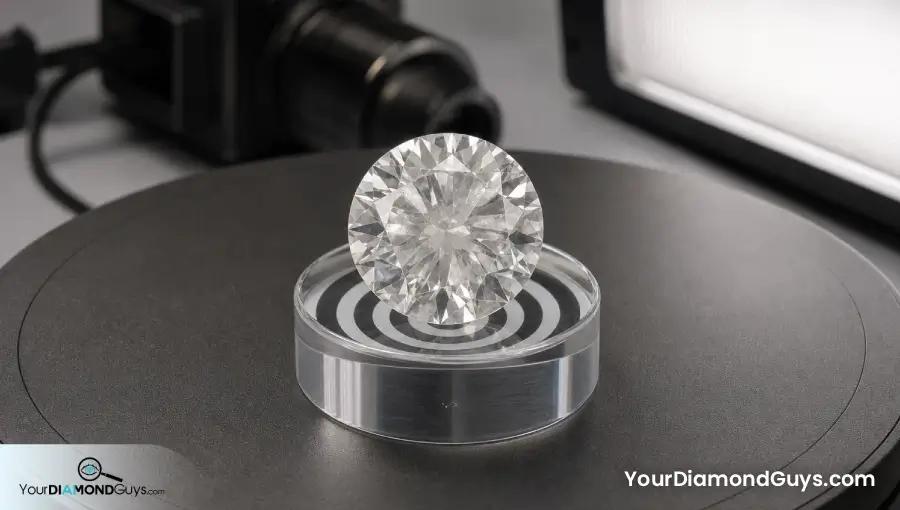
Internal graining can be colorless, reflective, colored, or whitish. Most graining does not create visible haze. Whitish or extensive graining deserves direct inspection when the stone lacks crispness.
Dense mixed plots with clouds, needles, twinning wisps, and pinpoints can produce a busy or smoky appearance even when no single feature looks severe. Add location and distribution before deciding.
Use the internal graining and strain guide for structural features and the haze root cause guide when several causes remain possible.
| Report clue | Risk it raises | Proof to request |
|---|---|---|
| Clouds not shown | Unplotted cloud load | Clean neutral video and direct transparency confirmation |
| Clarity based on clouds not shown | Clouds materially set the grade | Side by side comparison with a transparent stone |
| Pinpoints not shown | Widespread tiny features can be omitted | Full rotation at locked exposure |
| Internal graining | Possible zoned or whitish softness | Gemologist inspection and high resolution video |
| Dense mixed plot | Busy pattern or diffuse transparency | Face up and side views at normal scale |
| Strong or Very Strong fluorescence | UV dependent appearance question | Indoor and daylight matched clips |
Fluorescence And Comments Must Be Read Separately
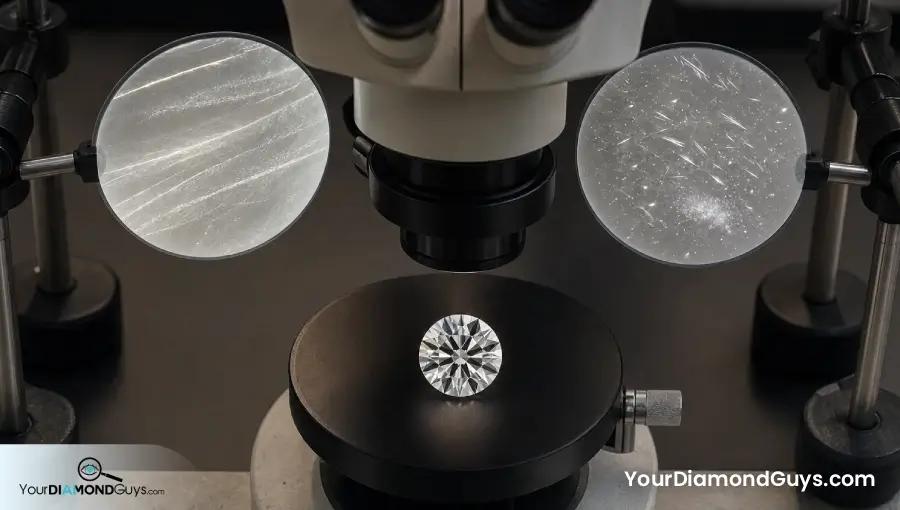
A Strong fluorescence description does not explain haze that appears under a low UV LED. A cloud comment does not explain a blue cast that appears only in sunlight.
Establish the baseline indoors, then add daylight. The milky diamond video checklist shows how to inspect facet boundaries without getting distracted by hard flashes.
When the lab fields differ, the GIA versus IGI fluorescence reporting guide helps normalize terminology before you compare two listings.

Listing Omissions Are Clues Too
A seller who publishes a thumbnail report, one fast spin, and no comments has not given you enough evidence. Missing detail is not proof of a bad diamond, but it moves risk onto the buyer.
Verify the report number on the grading laboratory's site. Match shape, measurements, carat, color, clarity, fluorescence, inscription, and comments. Then ask the seller to confirm that the actual stone matches the file.
Do not let a clean title such as VS2 or Excellent replace the milkiness and haze definitions. Reports classify features. Eyes judge whether the whole diamond remains transparent.
How Does Diamond Report Clues For Transparency Risk Affect A Real Buying Decision?
The report decides how I interrogate the video. A cloud heavy SI1 needs a transparency comparison. A Very Strong blue stone needs a daylight comparison. A dense girdle feature needs a durability check.
One clue rarely settles the purchase. Several aligned clues can. When the report, comments, and soft video point in the same direction, I do not wait for a more flattering clip.
What Does A Real Diamond Report Clues For Transparency Risk Example Look Like?
Stone A is a GIA graded VS2 with a small plotted cloud and Faint fluorescence. The clean neutral video stays crisp. Stone B is an SI1 with a quiet plot, a comment that clarity is based on clouds not shown, and a face that remains foggy after cleaning.
Stone A has a normal clarity feature. Stone B has aligned report and video risk. The grade gap matters less than the transparency evidence.
Which Diamond Report Clues For Transparency Risk Mistakes Should You Avoid?
- Reading the plot without reading comments.
- Treating every cloud comment as visible haze.
- Assuming a high clarity grade guarantees transparency.
- Using fluorescence to explain a low UV haze.
- Trusting listing text without verifying the report number.
What Should You Ask About Diamond Report Clues For Transparency Risk Before Buying?
- Which clarity feature sets the grade?
- Are clouds, pinpoints, or graining omitted from the plot?
- Does the video show the same areas as the clarity diagram?
- Can you confirm the stone is transparent and not milky?
- Can I see matched indoor and daylight clips when fluorescence is stronger?
Affiliate disclosure: Some retailer links are affiliate links. If you buy through one, Your Diamond Guys may earn a commission at no extra cost to you.
Where Can You Compare Evidence For Diamond Report Clues For Transparency Risk?
Use Blue Nile and Brilliant Earth as comparison tools, not automatic recommendations. Compare GIA reports with clouds, graining, comments, and clarity plots alongside the matching video, then judge whether the report clues agree with the actual stone's transparency and price. The actual diamond has to earn the yes.
What Is The Buyer Recommendation On Diamond Report Clues For Transparency Risk?
Treat report clues as instructions for evidence. They are not convictions and they are not reassurance.
When a risky comment and a soft video agree, skip. When the video stays crisp, a scary sounding line can become a harmless identification detail.
Use the diamond fluorescence guide to connect diamond report clues for transparency risk with intensity, color, transparency, lighting, and the complete buy or skip path.
If you want another set of eyes on the stone, book your free consultation with Your Diamond Guys.
Think a GIA Report Tells the Whole Story? Think Again.
Questions? Reach out directly for a free consultation, or drop them in the Diamond Buyers Academy community — Rob and Josh answer personally.
Questions Buyers Ask Us
*Some links on our site may earn us a small commission at NO EXTRA cost to you, helping us keep our content free*