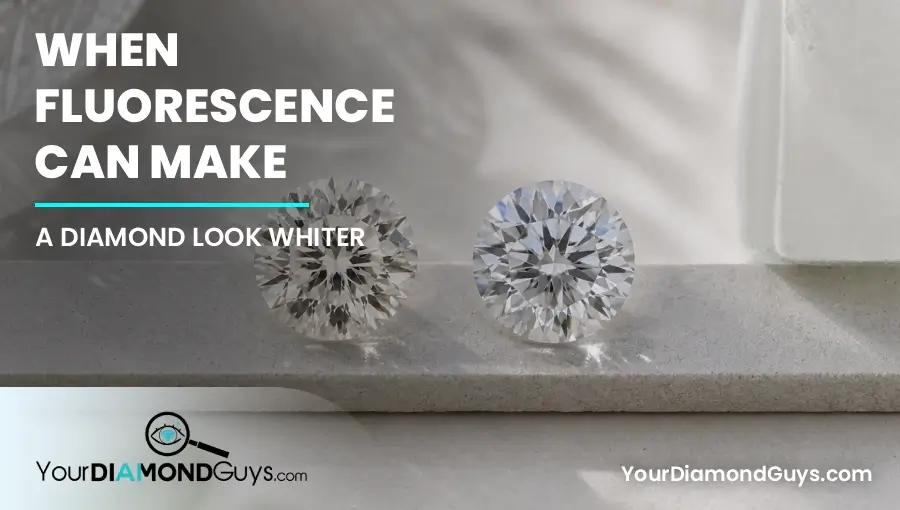
When Fluorescence Can Make A Diamond Look Whiter
By Josh Allen, Co-Founder of YourDiamondGuys.com. Fifth generation diamantaire with 30+ years in the global diamond trade. Former supplier to Tiffany & Co., Cartier, and Harry Winston.
The effect needs ultraviolet light. Daylight can provide it. Most warm indoor LEDs do not. That is why a fluorescent diamond can look whiter outside and return to its normal body color at dinner.
We have used this tradeoff for years when a client wanted size without pushing the color budget. The smart stone was never the one with the strongest glow. It was the one that stayed crisp and looked balanced in the setting.
The whitening effect has real limits. GIA notes that blue fluorescence can improve the appearance of I through M colors, but the benefit appears only when enough ultraviolet light activates the blue emission.
What Should You Know First About Fluorescence That Makes A Diamond Look Whiter?
Medium blue fluorescence often offers the cleanest value opportunity in I through M color natural diamonds. Strong can help too, but the inspection burden rises. The benefit is most believable when a matched daylight comparison shows a cooler face up look without haze.
Fluorescence does not erase brown, gray, or green undertones. It does not improve cut. It does not guarantee a warm diamond will look colorless indoors.
The value play only works inside the wider Diamond Fluorescence 101 rule: the actual diamond still has to stay crisp.
Why Blue Can Counter Yellow
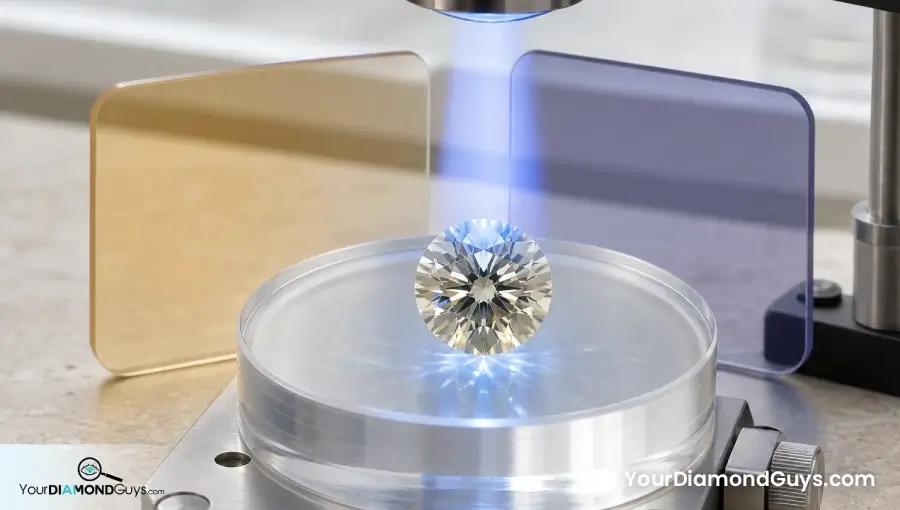
Blue and yellow sit opposite each other in visual color balance. When a yellowish diamond emits enough blue light, the combined face up impression can look less warm.
That is an appearance effect, not a new GIA color grade. GIA grades body color under controlled conditions and reports fluorescence separately. Keep both facts intact.
The fluorescence color guide explains why yellow fluorescence usually pushes in the wrong direction for this strategy.
The I Through M Range Has The Most Room
I, J, K, L, and M diamonds carry enough yellow body color for a blue reaction to create a visible counterbalance under UV rich light. The exact result changes with cut, size, shape, background, and observer.
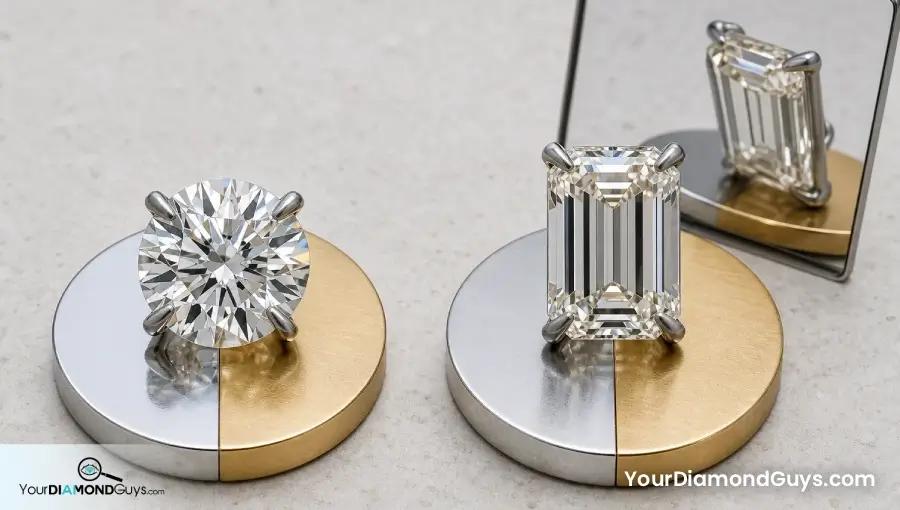
A bright round brilliant can blend body color through strong light return. A large emerald cut exposes broad transparent steps and side view color. The same Medium blue description will not create the same face up result.
Start with GIA for a natural diamond. Then use the fluorescence grading scale to set the inspection level, not to predict the final color by itself.
| Body color range | Possible blue fluorescence effect | Buyer read |
|---|---|---|
| D through F | Little yellow to counter | Usually no whitening value to chase |
| G through H | Small room for a cooler impression | Buy the stone, not the theory |
| I through J | Often the cleanest value test | Compare indoors and in daylight |
| K through M | More yellow can be countered under UV | Check undertone, shape, and metal closely |
Why The Benefit Disappears Indoors
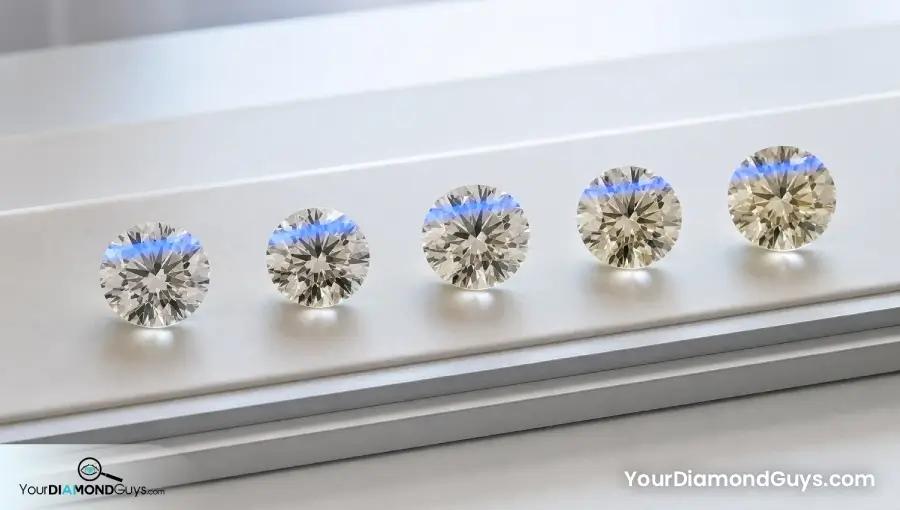
Fluorescence needs UV. A warm restaurant LED can supply almost none, so the diamond shows its baseline body color. Direct daylight supplies much more and can make the blue reaction visible.
The sunlight versus indoor guide gives you a matched test. Never accept one flattering outdoor photo as proof that the diamond looks whiter in every environment.
A good buy looks acceptable even when the fluorescence is inactive. Treat the outdoor cooling effect as a bonus, not a rescue plan.
Shape And Setting Change The Result
Round brilliants and well cut brilliant fancy shapes can mask some warmth through light return. Step cuts show body color and transparency more directly, especially from the side.
Yellow and rose gold can make a warmer center stone look intentional. White prongs can keep the face up border cleaner. The warm metal fluorescence guide shows when the setting makes chasing blue fluorescence unnecessary.
Large stones reveal more material. A 2.50 carat emerald needs a stricter color and transparency review than a 0.70 carat round, even when the report descriptions match.
How To Compare Value Without Fooling Yourself
Compare two or three GIA graded stones with similar shape, carat, measurements, cut quality, clarity, and undertone. Keep camera scale and background the same.
Check ordinary indoor light first. Then check shaded daylight. Note whether the fluorescent stone looks cooler, whether the difference matters to you, and whether transparency stays crisp.
Use the fancy shape fluorescence guide when bow ties, large tables, or crushed areas can make the color comparison look uneven.
- Reject a weak cut even when fluorescence helps color.
- Reject haze even when the price looks attractive.
- Do not count on blue fluorescence to cancel a brown undertone.
- Check the stone loose and in the intended metal when possible.
- Keep the return period long enough for a real home comparison.
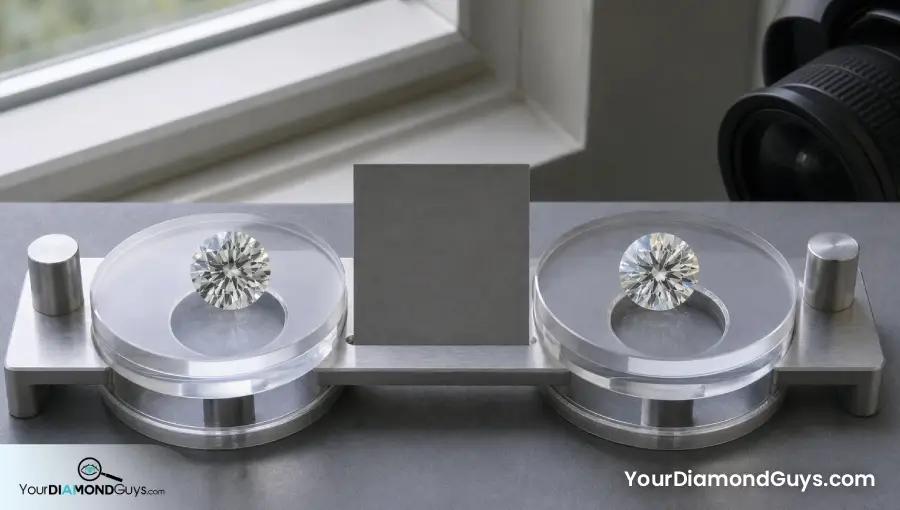
How Does Fluorescence That Makes A Diamond Look Whiter Affect A Real Buying Decision?
I let fluorescence help a diamond that already works. The stone needs the right cut, outline, transparency, undertone, and setting plan before the color benefit earns any value.
The pricing cluster covers fluorescence discounts in more detail. This page owns the visual question: does the blue reaction make this specific stone look better where you will wear it?
What Does A Real Fluorescence That Makes A Diamond Look Whiter Example Look Like?
A buyer wants a 1.50 carat round in yellow gold. A GIA graded J color, VS2 diamond with Medium blue fluorescence looks warm but pleasant indoors, then faces up cooler in shaded daylight. Its cut and transparency are strong.
A second J color stone has no fluorescence and costs more, but the buyer cannot see a meaningful difference in the final yellow gold setting. The Medium blue stone is the better value because the base appearance already works.
Which Fluorescence That Makes A Diamond Look Whiter Mistakes Should You Avoid?
- Treating fluorescence as a permanent color upgrade.
- Buying a poor cut because the stone looks whiter outdoors.
- Assuming blue cancels brown or gray undertones.
- Ignoring the setting metal and side view.
- Comparing stones under different cameras or backgrounds.
What Should You Ask About Fluorescence That Makes A Diamond Look Whiter Before Buying?
- Is the body color yellow, brown, gray, or mixed?
- Does the stone look acceptable when fluorescence is inactive?
- How much cooler does it look in shaded daylight?
- Does the reaction preserve crisp transparency?
- Will the chosen shape and metal make the difference visible?
Affiliate disclosure: Some retailer links are affiliate links. If you buy through one, Your Diamond Guys may earn a commission at no extra cost to you.
Where Can You Compare Evidence For Fluorescence That Makes A Diamond Look Whiter?
Use Blue Nile and Brilliant Earth as comparison tools, not automatic recommendations. Compare I through M color diamonds matched for shape, size, clarity, cut, and fluorescence, then judge daylight color, indoor transparency, price, and return terms before calling the lower price a value. The actual diamond has to earn the yes.
What Is The Buyer Recommendation On Fluorescence That Makes A Diamond Look Whiter?
Medium blue in an I through M natural diamond can be a smart value lever. Stronger grades can work, but the evidence needs to become stronger too.
Buy a stone that looks good indoors first. Let daylight fluorescence improve an already good decision.
Use the diamond fluorescence guide to connect fluorescence that makes a diamond look whiter with intensity, color, transparency, lighting, and the complete buy or skip path.
If you want another set of eyes on the stone, book your free consultation with Your Diamond Guys.
The Glow Factor: Understanding Diamond Fluorescence
Questions? Reach out directly for a free consultation, or drop them in the Diamond Buyers Academy community — Rob and Josh answer personally.
Questions Buyers Ask Us
*Some links on our site may earn us a small commission at NO EXTRA cost to you, helping us keep our content free*