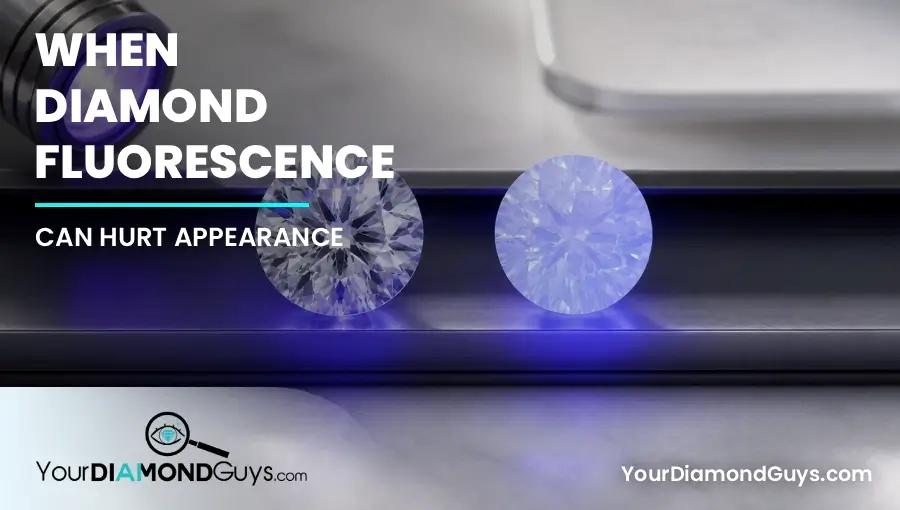
When Diamond Fluorescence Can Hurt Appearance
By Rob Cornfield, Co-Founder of YourDiamondGuys.com. 30+ years in the global diamond trade. Specialist in diamond cut, sourcing, and light performance.
I reject the stone when facet edges turn soft, the center looks oily, blue dominates in normal outdoor wear, or transparency drops as UV rises. Those are appearance failures. A lower price does not repair them.
On a parcel table, a sleepy stone separates itself fast. It does not snap. It does not hold clean contrast. The mistake online is trying to explain that weakness away because the certificate looks tidy.
The risk is real, but buyers hear it exaggerated. GIA found the hazy or oily overblue effect in fewer than 0.2 percent of fluorescent submissions, which means Strong fluorescence deserves inspection rather than an automatic conviction.
What Should You Know First About Fluorescence That Hurts Diamond Appearance?
The main fluorescence concerns are haze or oiliness in UV rich light, an unusually strong blue cast outdoors, and weak evidence that hides the reaction. These outcomes are rare. Strong and Very Strong intensity raise the need for proof, but they do not guarantee a problem.
Separate baseline haze from UV dependent haze. If the diamond looks soft under a UV poor LED, inspect clouds, graining, strain, dirt, cut, and camera setup before blaming fluorescence.
The risk page makes more sense after Diamond Fluorescence 101, which explains why intensity alone never proves haze.
The Four Appearance Failures I Care About
First is reduced transparency. The stone looks as if a thin veil sits over the facets. Bright and dark areas blend together instead of switching cleanly.
Second is an oily or greasy face up look that remains after proper cleaning. Third is a blue response strong enough to dominate daylight appearance. Fourth is inconsistent retailer evidence that prevents a fair comparison.
Use the milkiness, haze, and cloudiness definitions to name what you see. Precise language gets a better answer from a seller than asking whether the diamond is bad.
| Warning sign | What it looks like | What to do |
|---|---|---|
| Soft transparency | Facet edges lose crisp separation | Compare in low UV and high UV light |
| Oily look | Greasy veil after cleaning | Request neutral video and reject if persistent |
| Dominant blue | Stone looks unnaturally blue outdoors | Decide whether the effect suits normal wear |
| Flat movement | Contrast does not switch cleanly | Separate haze from weak cut |
| Missing proof | Only spotlight or UV clips are supplied | Do not buy the unknown |
Intensity Raises Risk Without Proving Damage
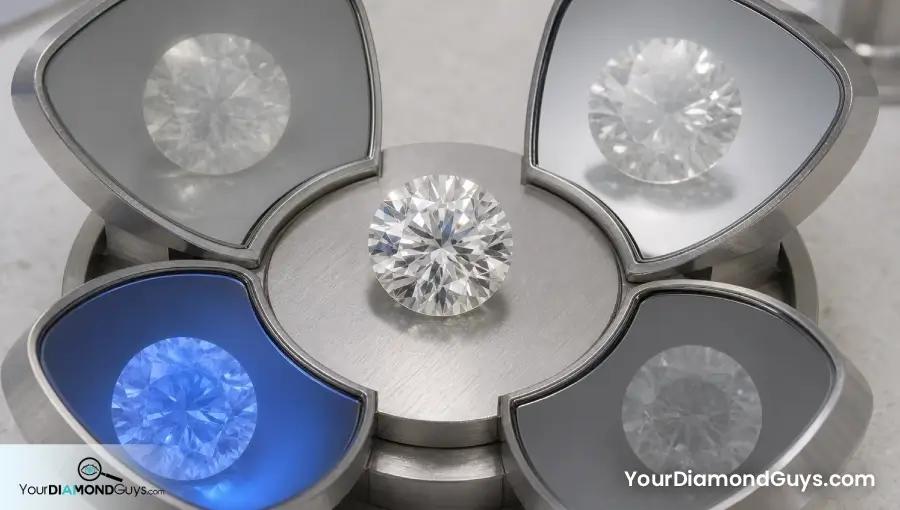
None and Faint rarely create a fluorescence appearance problem. Medium can become visible under enough UV. Strong and Very Strong produce the largest reactions and therefore deserve the closest review.
Do not turn that pattern into a fake law. GIA research says the overwhelming majority of fluorescent diamonds show no widely noticeable appearance effect. A beautiful Strong blue diamond can beat a dull None stone.
The fluorescence grading scale should change your test plan. It should not replace the test.
Check Whether Haze Follows The UV
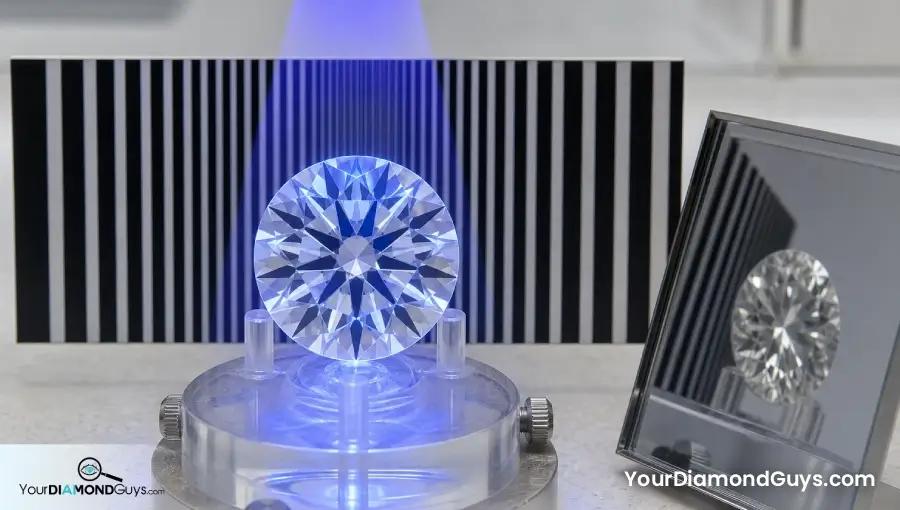
Begin under an ordinary indoor LED with low UV output. Clean the stone and look for sharp facet junctions, strong contrast, and clear depth. Record that baseline.
Move to shaded daylight and then direct sunlight. If transparency drops only as the blue response rises, fluorescence can be intensifying a pre existing light scattering problem. If the haze remains constant, use the causes beyond fluorescence guide.
Camera exposure matters. A bright UV reaction can force automatic exposure down and make the rest of the diamond look dense or flat. Ask for manual exposure or a reference object in frame.
High Color Does Not Create A Special Physical Risk
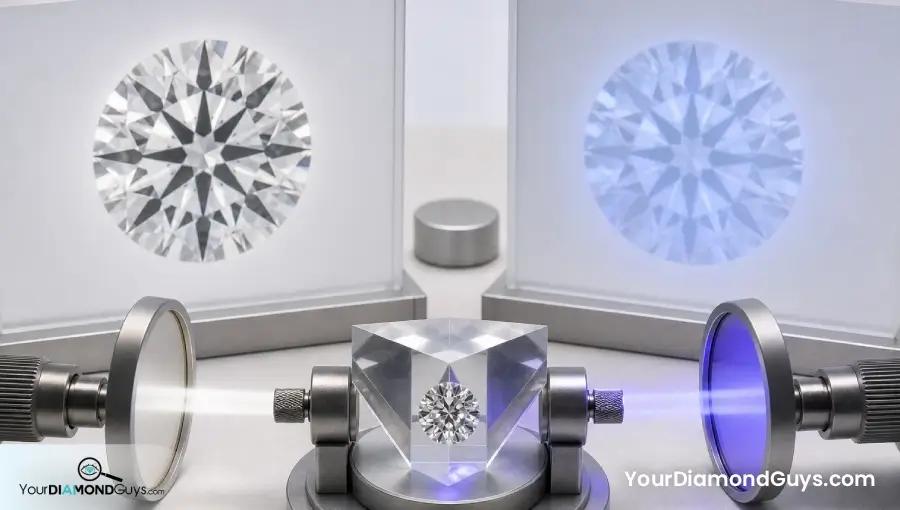
D through F diamonds do not become structurally vulnerable because they fluoresce. The concern is market preference and whether blue adds anything useful to a body color that is already colorless.
Some buyers pay less for high color diamonds with stronger fluorescence. That price pattern can create value, but only when the diamond looks completely normal. Appearance comes before the discount.
The overblue effect guide covers the rare outdoor look that gives the trade term its reputation.
Proof That Clears The Stone
I want a GIA report for a natural diamond, a clean neutral indoor video, shaded daylight footage, direct sunlight footage, and a written confirmation that the stone has no milky or oily appearance.
For an online stone, use the 360 video haze checklist to inspect facet edges and contrast. Then check the report clues for transparency risk so the report and video tell the same story.
The return policy must allow a real inspection after delivery. A seller's reassurance is useful. Your own clean, controlled comparison is better.
How Does Fluorescence That Hurts Diamond Appearance Affect A Real Buying Decision?
I do not reject a GIA graded diamond because the fluorescence field says Strong. I reject it because the visual evidence fails or because the seller will not provide enough evidence to make the call.
That distinction protects value. It keeps good fluorescent diamonds in the search while removing the few stones that look sleepy, oily, or oddly blue.
What Does A Real Fluorescence That Hurts Diamond Appearance Example Look Like?
Two GIA graded H color, VS2 rounds both have Strong blue fluorescence. Stone A stays crisp under an LED, in shade, and in direct sunlight. Stone B looks clear indoors but loses facet definition in sunlight and develops an oily face up veil.
Stone A can stay. Stone B goes. The report descriptions match, but the appearance does not.
Which Fluorescence That Hurts Diamond Appearance Mistakes Should You Avoid?
- Assuming every Strong stone is hazy.
- Letting a rare risk turn into a universal buying rule.
- Testing a dirty diamond and calling the surface oil fluorescence.
- Confusing weak cut contrast with low transparency.
- Accepting a large discount without matched lighting proof.
What Should You Ask About Fluorescence That Hurts Diamond Appearance Before Buying?
- Does the haze appear in low UV indoor light?
- Does transparency change as the diamond moves into daylight?
- Has the stone been cleaned before filming?
- Do clarity comments or graining offer another explanation?
- Will you confirm in writing that the diamond is not milky or oily?
Affiliate disclosure: Some retailer links are affiliate links. If you buy through one, Your Diamond Guys may earn a commission at no extra cost to you.
Where Can You Compare Evidence For Fluorescence That Hurts Diamond Appearance?
Use Brilliant Earth and Ritani as comparison tools, not automatic recommendations. Compare Strong and Very Strong stones with matched normal light and daylight video, then judge facet sharpness, oily or hazy areas, reaction color, price, and return protection. The actual diamond has to earn the yes.
What Is The Buyer Recommendation On Fluorescence That Hurts Diamond Appearance?
Skip the diamond when it turns soft, oily, abnormally blue, or difficult to read in honest lighting. Skip it when the seller hides the evidence too.
Keep stronger fluorescence when the stone stays crisp everywhere and the price reflects the market concern. Beauty has to survive the test.
Use the diamond fluorescence guide to connect fluorescence that hurts diamond appearance with intensity, color, transparency, lighting, and the complete buy or skip path.
If you want another set of eyes on the stone, book your free consultation with Your Diamond Guys.
Fluorescence Isn't Always Bad
Questions? Reach out directly for a free consultation, or drop them in the Diamond Buyers Academy community — Rob and Josh answer personally.
Questions Buyers Ask Us
*Some links on our site may earn us a small commission at NO EXTRA cost to you, helping us keep our content free*