

Treatments & Their Impact on Price
By Josh Allen, Co-Founder — YourDiamondGuys.com Josh has over 25 years of experience in the global diamond trade, sourcing from Mumbai, Tel Aviv, and Antwerp, and has supplied diamonds to Tiffany, Cartier, Harry Winston, and more.
Treated diamonds are diamonds that have gone through something beyond standard cutting and polishing to change color, clarity, or appearance. That matters because treatment can affect diamond pricing, required disclosure, cleaning safety, repair risk, insurance paperwork, and resale confidence. The stone is still real. The market just values it differently.
| Treatment | What it changes | Stability | Care risk | Value impact |
|---|---|---|---|---|
| HPHT | Color | Usually stable | Low in normal wear | Often lower than an untreated lookalike |
| Irradiation + annealing | Color | Usually stable | Heat during repair matters | Often lower than an untreated fancy-color lookalike |
| Coating | Surface color | Not permanent | High | Usually discounted harder |
| Laser drilling | Apparent clarity | Permanent | Moderate | Usually lower than an untreated comparable |
| Fracture filling | Apparent clarity | Not stable | High | Usually discounted more heavily |
The simple definition - and why you should care
Most people think a treated diamond is just a cheaper shortcut.
Not always.
What matters is what was done. And what that treatment changes after the sale.
A diamond is treated when something beyond cutting and polishing changes its appearance or durability, and GIA notes that common examples include HPHT processing, irradiation, coating, laser drilling, and fracture filling, with very different stability and care risks.
That changes three things fast.
How you compare the stone. How you clean it. How confidently you can sell or insure it later.
Treated does not mean lab-grown
Same category does not mean the same story.
Natural vs. lab-grown tells you where the diamond came from. Treatment tells you what happened after.
The CIBJO Diamond Blue Book separates treated diamonds from laboratory-grown diamonds and also requires treatment disclosure and any special care requirements that come with it.
That is the part most people miss.
A lab-grown diamond can still have post-growth work. A natural diamond can be totally untreated. Those are separate questions.
What each treatment really means
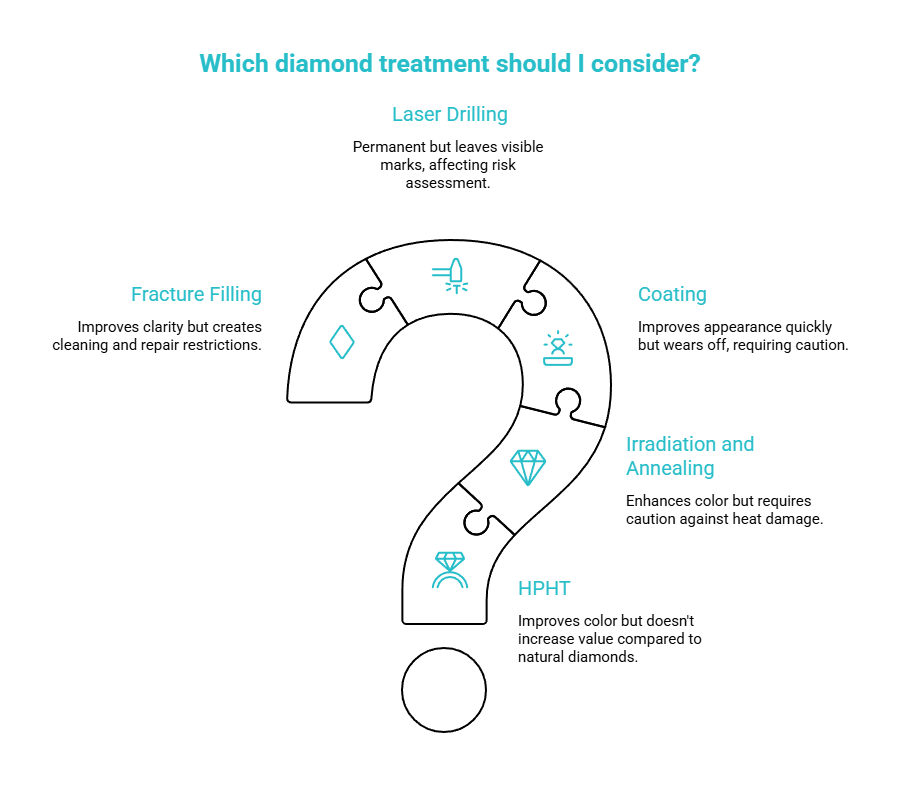
HPHT
HPHT can improve color in certain diamonds.
That sounds good.
But same color does not mean same value.
If one stone got there naturally and the other got there through treatment, the market does not price them the same.
Irradiation and annealing
This is another color story.
Regular wear is usually not the problem. Bench heat can be.
That means you do not stay quiet before repair. You tell the jeweler first.
Coating
This is where buyers get hurt.
A coating can make a diamond look better fast. It can also wear off.
That is why coated stones deserve more caution. Not less.
Laser drilling
Laser drilling is permanent.
But permanent does not mean invisible.
You are still looking at a diamond that needed help to clean up a dark inclusion. And that matters when someone prices risk.
Fracture filling
This one needs the most care.
Fracture filling can improve apparent clarity. It can also create cleaning and repair restrictions you cannot ignore.
If you own one, say it before any deep cleaning. Every time.
Why treatment changes price
This is the simple version.
Same look does not mean same value.
The FTC Jewelry Guides say failing to disclose treatment can be unfair or deceptive when the treatment is not permanent, creates special care requirements, or has a significant effect on value.
That last part matters.
Significant effect on value.
That is why diamond pricing gets messy the second treatment enters the conversation.
A treated diamond can still look great. It can still be the right buy. But if the treatment adds risk, care limits, or comparison problems, buyers protect themselves with a lower number.
Insurance and appraisal paperwork
If the treatment is real, it should be on the paper.
The Jewelers Mutual appraisal guide explains that an appraisal should include a detailed description, photographs, and an estimate of current retail replacement value.
That means your file should not be vague.
Keep the grading report. Keep the seller disclosure. Keep the appraisal. Keep the service history.
Clean paperwork makes claims easier. It also makes future conversations cleaner.
Resale is where the surprise usually hits
Owners get confused here.
They think the diamond looks strong. So the offer should too.
Not how it works.
The American Society of Appraisers notes that laboratory reports can include findings that significantly affect value, including the presence or absence of gem treatments.
That is your answer.
Treatment changes confidence. Confidence changes comparability. Comparability changes offers.
What to do before you insure, repair, trade in, or sell
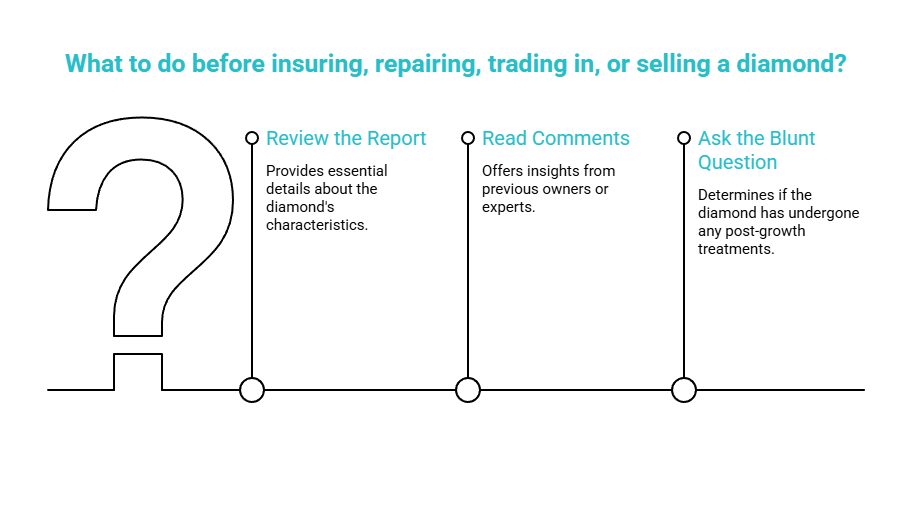
Start with the report.
Then read the comments.
Then ask one blunt question:
Was anything done to this diamond after it was grown or mined?
If you do not know, do not guess. Say you are unsure. That alone can save you from the wrong cleaning method or the wrong price comparison.
Free Diamond Consultation
Still not sure what you own?
That is exactly where we come in.
We will review the paperwork, pressure-test the treatment story, and help you figure out what is actually worth your money.
Book your Free Diamond Consultation
Questions? Reach out directly for a free consultation, or drop them in the Diamond Buyers Academy community — Rob and I answer personally.
Frequently Asked Questions
*Some links on our site may earn us a small commission at NO EXTRA cost to you, helping us keep our content free*