Diamond Fluorescence Discounts: When to Use Them
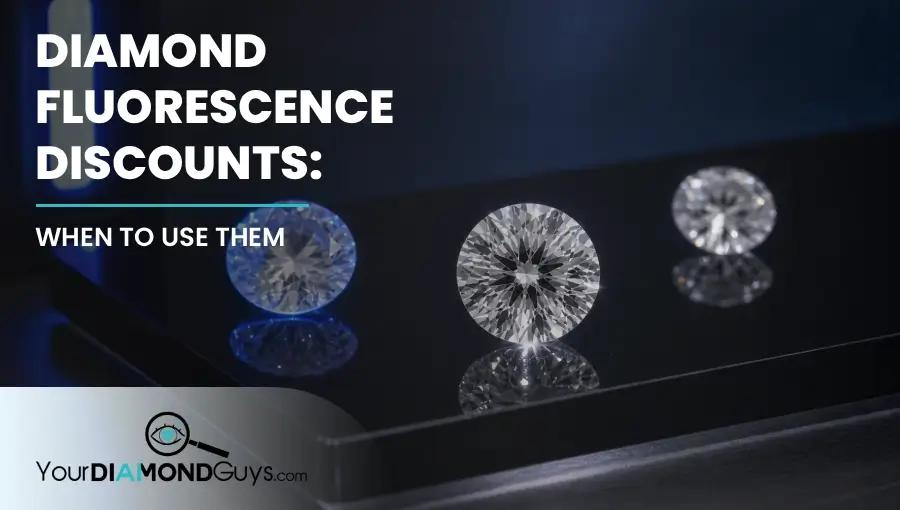
Fluorescence has to be judged in the actual diamond, not as a scary word on the report.
By Rob Cornfield, Co-Founder of YourDiamondGuys.com. Diamond sourcing authority with deep trade experience in cut quality, light performance, proportions, inclusions, fluorescence, and proof based diamond review.
A fluorescence discount is useful only when the stone still looks clean in normal light.
That is the whole game.
If fluorescence gives you a lower price and the diamond stays transparent, bright, and lively, the discount deserves a look. If the stone looks hazy, oily, or sleepy, the lower price is not a gift. It is the market doing its job.
What Fluorescence Actually Means
Fluorescence is a diamond reacting to ultraviolet light.
Most of the time, blue fluorescence is what buyers hear about. The report can say none, faint, medium, strong, or very strong. That grade describes the reaction under UV, not automatically what the diamond looks like in normal light.
For natural diamonds, start with GIA. Then inspect the stone.
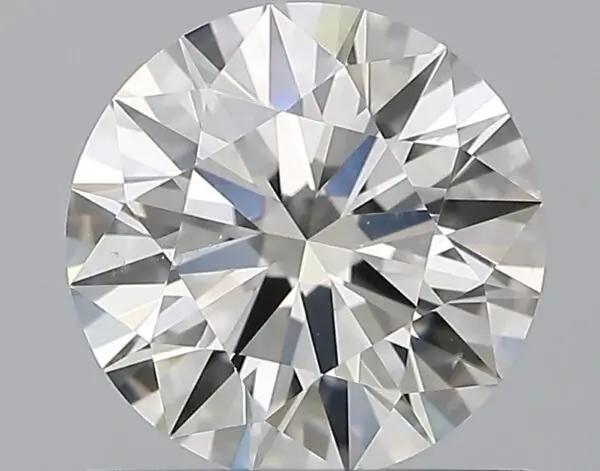
G VS2 round reference, Excellent cut, no fluorescence. This is the cleaner baseline for most comparisons.
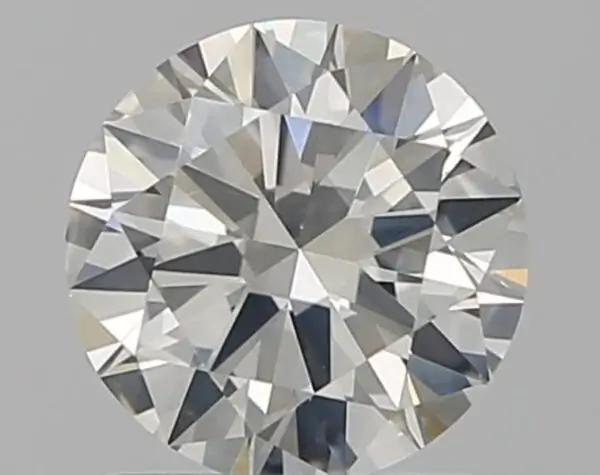
I SI2 round reference, Excellent cut, faint fluorescence. Faint usually keeps the decision simple.
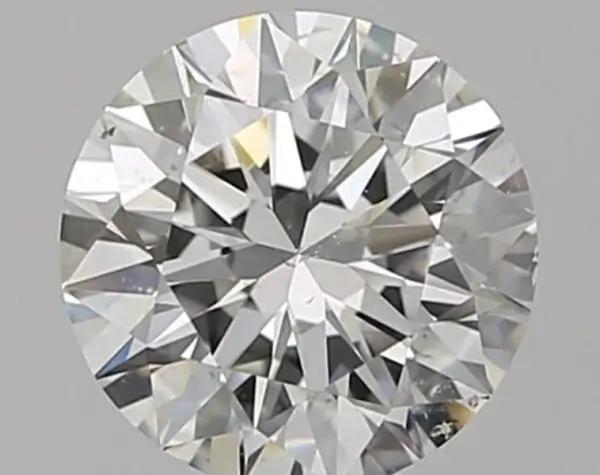
H SI1 round reference, Excellent cut, medium fluorescence. Medium needs a transparency check.
None To Faint Is The Clean Lane
None to faint keeps most buying decisions easier.
That does not mean medium or strong is automatically wrong. It means none to faint gives you fewer questions to answer. The price comparison stays cleaner. The resale conversation stays cleaner. The inspection risk stays lower.
When a buyer wants a simple, low drama decision, none to faint is usually where I start.
Medium Can Be Useful
Medium fluorescence can create a real discount.
Sometimes the diamond still looks perfectly crisp. Sometimes the market overreacts a little and the buyer gets paid for accepting a report note that does not hurt the look. That is the good version.
The bad version is a diamond that looks a little cloudy, a little sleepy, or a little off in daylight. That discount is not value. That discount is a warning label.
Trade tip: On the trading floor, the question is not, does it fluoresce? The question is, does it go milky? If the answer is yes, the price has to fall hard.
Strong Needs Proof
Strong fluorescence is where I slow down.
It can still be fine in the right diamond. But I want proof. Normal light video. Daylight view. No haze. No oily look. No dull skin over the facets. No seller trying to rush past the topic.
If strong fluorescence is the reason the diamond looks like a bargain, the stone has to prove the bargain is real.
Where The Discount Comes From
| Fluorescence Grade | Typical Buyer Reaction | Rob Move |
|---|---|---|
| None | Cleanest comparison and easiest resale story. | Use it as the baseline. |
| Faint | Usually little concern for most buyers. | Accept it if the rest of the diamond checks out. |
| Medium | Can trigger a price discount and buyer hesitation. | Inspect transparency before trusting the savings. |
| Strong | Often discounted more, especially in higher colors. | Demand normal light proof and clean return terms. |
| Very strong | Higher risk of market resistance. | Be strict. The price has to compensate you. |
Higher Color Makes The Discount Touchier
Fluorescence can hurt pricing more in higher color diamonds.
Buyers paying for D, E, or F usually want a clean, icy story. Strong fluorescence adds a question mark to that story. That question mark changes demand, and demand changes price.
In warmer color diamonds, faint or medium blue fluorescence can be less scary when the stone stays crisp. It can even make the face up color feel a little cleaner in some lighting. Still, buy the diamond in front of you, not the theory.
Use the diamond color pricing guide with this page. Color and fluorescence work together.
Cut Still Comes First
Fluorescence does not fix weak cut.
A bright, well cut diamond can handle some tradeoffs better because the light return is doing real work. A dull diamond with fluorescence just gives you two questions instead of one.
For round natural diamonds, my safer lane starts with table 56 to 58 percent, depth 60 to 62.4 percent, crown angle 34 to 35 degrees, pavilion angle 40.6 to 41 degrees, Excellent polish and symmetry, and none to faint fluorescence when the buyer wants the cleanest path.
Read the cut premium guide before using fluorescence as a shortcut to value.
How To Check For Haze
Haze is the rejection signal.
You are looking for a diamond that looks crisp, transparent, and lively. You do not want a cloudy skin over the facets. You do not want milkiness. You do not want the diamond looking like someone put a thin film over the surface.
- Ask for normal light video, not only bright showroom lighting.
- Look at daylight or window light when possible.
- Compare the diamond against a similar none fluorescence stone.
- Check whether the facet edges still look crisp.
- Watch for oily, milky, or sleepy areas.
- Confirm the return policy before buying medium or stronger fluorescence.
- Ask why the price is lower than similar stones.
When I Use The Discount
I use it when the diamond passes the eye test.
Trusted GIA report. Good cut. Clean transparency. No haze in normal light. Clear video. Price lower than comparable none fluorescence stones. Return terms that protect the buyer.
That is when fluorescence can become a smart pricing tool instead of a risk you are pretending not to see.
When I Leave It Alone
| Signal | Why It Matters | Buyer Move |
|---|---|---|
| Haze or milkiness | The diamond loses transparency and life. | Pass unless the purpose is very specific and the price is brutal. |
| Strong fluorescence in high color | The market resists the combination more. | Demand a bigger discount and clean proof. |
| Weak video | You cannot judge transparency. | Ask for better proof or move on. |
| Seller dismisses the topic | The risk is being hidden instead of explained. | Slow down and compare alternatives. |
| Discount without clear comps | You cannot tell if the price pays you enough. | Compare similar GIA stones with none to faint fluorescence. |
Clarity And Fluorescence Can Stack Risk
One tradeoff can be fine. Two tradeoffs need discipline.
If a diamond has medium or strong fluorescence plus a borderline clarity grade, visible inclusions, graining, or transparency comments, I get stricter. The discount has to cover all of the risk, not just one word on the report.
Use the clarity pricing guide and the overgraded diamonds guide before calling a stacked tradeoff a deal.
My Buyer Rule
Use fluorescence discounts only when the diamond stays crisp. If the discount buys haze, you did not save money. You bought the reason it was discounted.
None to faint keeps life simple.
Medium can work.
Strong has to prove itself.
Fluorescence Is Not Always Bad
Where I Would Compare Fluorescence Proof
Use these sites as comparison tools, not automatic recommendations. I would compare similar fluorescence grades on Blue Nile and Ritani, then look for daylight proof, transparency, report details, and a fair price before calling it a deal.
Questions? Reach out directly for a free consultation, or drop them in the Diamond Buyers Academy community — Rob and Josh answer personally.
Questions Buyers Ask Us
More Diamond Pricing Guides
Keep the next step close. These guides connect the pricing math, seller model, quality risk, total cost, and resale expectation behind this buying decision.
Want Rob To Check The Discount?
Send us the report, video, fluorescence grade, and price. Rob or Josh can help you see whether the discount pays you for a harmless tradeoff or points to a real problem.
*Some links on our site may earn us a small commission at NO EXTRA cost to you, helping us keep our content free*