

Hidden Costs When Buying an Engagement Ring

By Josh Allen, Co-Founder — YourDiamondGuys.com Josh has over 25 years of experience in the global diamond trade, sourcing from Mumbai, Tel Aviv, and Antwerp, and has supplied diamonds to Tiffany, Cartier, Harry Winston, and more.
Most people think the number in the cart is the number you pay. It usually is not. And diamond pricing is only one part of the damage.
A ring that looks like $5,000 on screen can climb fast once tax, shipping, bench work, resizing, and paperwork show up. That is not a small detail. That is where buyers get hurt.
Start here: what does the listed price actually include?
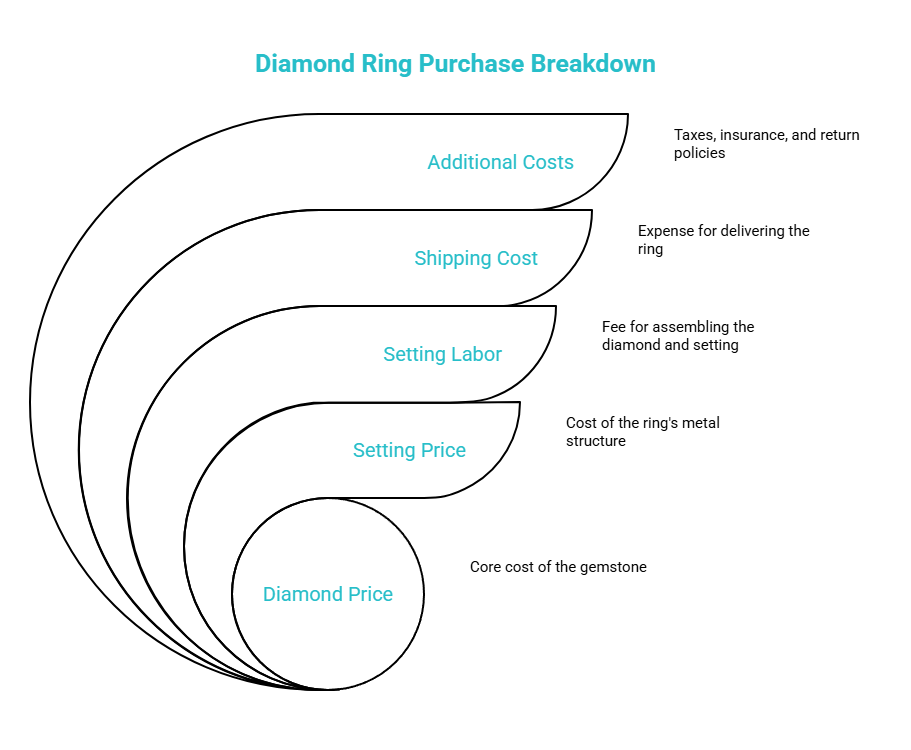
Same price does not mean same deal.
A finished ring is one thing. A loose diamond plus a separate setting is another. An online stone with local bench work is something else entirely.
Before you compare two options, slow it down. Get clear on what is actually in the price.
You want to see:
- Diamond price
- Setting price
- Any setting labor
- Shipping cost
- Shipment coverage terms
- Tax at checkout
- Return shipping policy
If that breakdown is missing, trust that feeling. Something is soft.
Tax is usually the first surprise
Sales tax is one of the biggest reasons a ring jumps at checkout. After Wayfair, many states and localities expanded remote sales tax collection rules for online sellers.
That means the same ring can land at a different total depending on where you live. Not because the ring changed. Because the tax did.
Your move is simple. Check the taxable subtotal. Check your local rate. Then confirm whether shipping is taxed where you live.
Do not assume a low cart total means a low final total. Not always.
Shipping is not just shipping
High-value jewelry shipping is really about control. Coverage. Signatures. Liability.
FedEx states that declared value is the carrier's maximum liability and is not the same thing as shipping insurance.
That one detail matters. A lot.
Ask three questions before you pay:
- Is this covered door to door?
- Is signature required?
- Who pays return shipping if the ring goes back?
If the seller says "fully covered," get that in writing. Do not settle for vague language.
Buying across borders? Budget for customs too
If your ring ships into the U.S. from another country, duties and import fees can change the number again. The Harmonized Tariff Schedule is the system used to set tariff rates and product categories for goods imported into the United States.
So ask the seller this before you buy:
- Are duties prepaid?
- Or collected on delivery?
- Who is the importer of record?
If they cannot answer clearly, build a buffer into your budget. Because surprise fees never show up at a convenient time.
Setting labor is where loose-diamond deals get messy
This is the fee buyers miss all the time.
If your diamond and setting do not come from the same place, somebody still has to do the bench work. And bench work is not free.
A published repair pricing guide shows starting prices for services like stone setting, prong work, tightening, and appraisal. That does not mean your exact ring will cost the same. It does mean this category of cost is real.
And it changes based on:
- Setting style
- Stone shape
- Metal type
- Whether the jeweler accepts outside stones
Same diamond does not mean same setting path. Same setting path does not mean same final bill.
Before you buy the stone, ask your jeweler for the full labor quote in writing. Not later. Now.
The post-purchase costs people forget
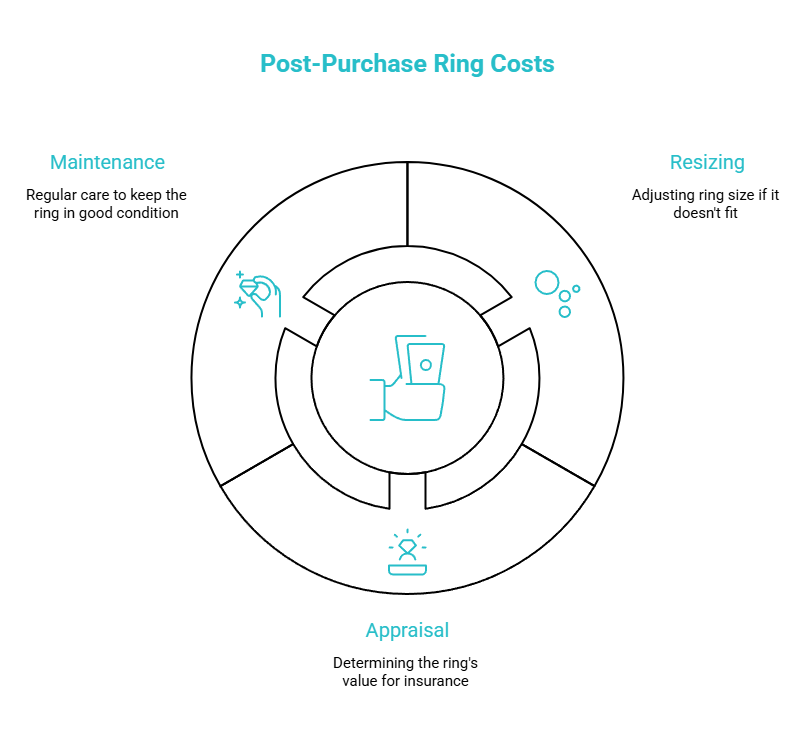
This is where the budget keeps leaking.
Resizing
If the finger size is off, resizing may be next. Some sellers include it. Some do not. Get that answer before you propose, not after.
Appraisal
If you plan to insure the ring, an appraisal often becomes part of the process. GIA says qualified appraisers should have both gemological and appraisal training.
Maintenance
Prongs wear. Small stones loosen. Metal takes hits.
So build a small care budget from day one. Not because something is wrong. Because rings get worn. Every day.
All-In Ring Cost Checklist (US)
Copy this. Fill it in. Know your number before you buy.
| Cost line item | What to write down | Quick note |
|---|---|---|
| 1) Ring price | $_______ | Diamond + setting, or itemized |
| 2) Sales tax estimate | $_______ | Use your local rate and taxable subtotal |
| 3) Shipping cost | $_______ | Include upgrades or signature handling |
| 4) Shipping coverage cost | $_______ | Liability and third-party coverage are not the same |
| 5) Import duties/fees | $_______ | Relevant if the ring crosses borders |
| 6) Setting labor | $_______ | Get a written quote |
| 7) Resizing | $_______ | Ask if one resize is included |
| 8) Appraisal | $_______ | Confirm what your insurer wants |
| 9) First-year care buffer | $_______ | Cleaning, checks, tightening |
All-in total: $_______
Two fast reality checks
Example 1: Finished ring shipped domestically
Your main swing factors are tax, shipping method, and coverage. Simple on paper. Not always simple at checkout.
Example 2: Loose diamond plus local setting
This is where budgets drift. Now you are stacking tax, separate shipping, setting labor, possible resizing, and appraisal. That "better deal" can stop looking better very quickly.
Free Diamond Consultation
If you are comparing a few rings and the totals are not lining up, do not force it. That usually means the path is wrong. Not you.
Bring your top options. Bring your quotes. Bring your checklist. We will tell you where the money is going — and where you are about to overpay.
Book your Free Diamond Consultation
Questions? Reach out directly for a free consultation, or drop them in the Diamond Buyers Academy community — Rob and I answer personally.
Frequently Asked Questions
*Some links on our site may earn us a small commission at NO EXTRA cost to you, helping us keep our content free*