

Retail Markup Explained (Online vs Local)

By Josh Allen, Co-Founder — YourDiamondGuys.com Josh has over 25 years of experience in the global diamond trade, sourcing from Mumbai, Tel Aviv, and Antwerp, and has supplied diamonds to Tiffany, Cartier, Harry Winston, and more.
Most people misread diamond pricing for one reason. They think the same-looking diamond should carry the same price everywhere. It doesn't. BCG explains that retail diamond pricing is shaped by the polished wholesale cost, added non-diamond content, retailer operating costs, and retailer margin.
That is why two sellers can show you what looks like the same stone.
And still land far apart.
Same listing does not mean the same value.
Same price does not mean the same deal.
Quick answer: why one seller charges more
Sometimes the higher price is padding.
Sometimes it is not.
A seller with higher overhead, slower inventory turns, better support, or more post-sale service may price higher because the business model is heavier. BCG also notes that retailers have become more efficient with inventory over the last decade as online sales gained share, which helps explain why online prices often look tighter.
That does not make online automatically better.
It makes the cost stack different.
Markup vs margin
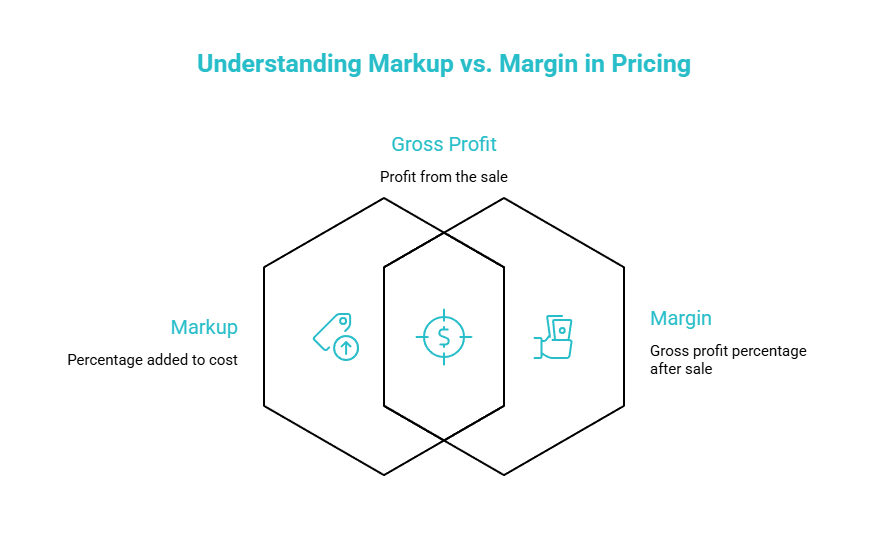
People mix these up all the time.
Big mistake.
Markup is what gets added on top of cost.
Margin is what is left as gross profit after the sale.
Clean example.
If a diamond costs $10,000 and sells for $15,000:
- Markup = 50%
- Margin = 33.3%
Same transaction.
Different lens.
What a normal retail range can look like
This is where buyers usually guess.
You do not have to.
A National Jeweler analysis of independent jewelers' data reported loose diamond gross margins of 32.7% in the Northeast and 38.8% in the Midwest.
Translate that into markup and you are roughly looking at about 49% to 63%.
Not every diamond will sit there.
But it is a real benchmark.
Not fantasy math.
Why online pricing often looks sharper
Online sellers usually have less physical overhead.
Less display inventory.
More centralized operations.
That can tighten pricing.
But do not confuse online with low margin. In its 2024 annual report filed with the SEC, Brilliant Earth reported a 60.3% fiscal-year gross margin at the company level.
That is not a loose-diamond-only number.
Still matters.
It proves the point.
Online does not automatically mean skinny profits.
It means a different model.
What your money may be covering online
Sometimes the value is in the machine around the stone.
Not just the stone.
- Detailed listings.
- Magnified video.
- Shipping insurance.
- Payment protection.
- Returns handling.
- Support systems.
Those things matter.
Especially when something goes sideways.
What your money may be covering locally
Local stores can bring something online cannot.
- Real-time comparison.
- Immediate questions.
- Hands-on screening.
- Ongoing service.
- Cleaning. Inspections. Maintenance.
That support is not fake.
It costs money.
The question is whether it is worth it to you.
How to compare online vs local without fooling yourself
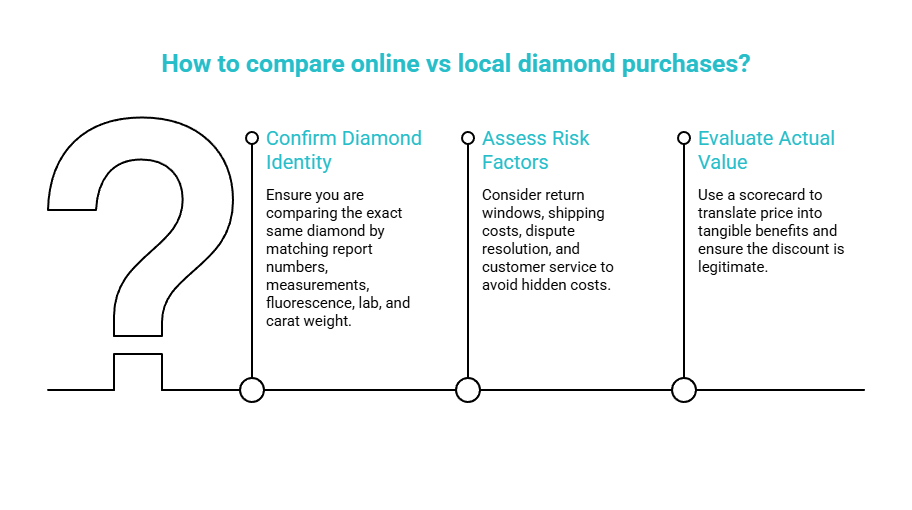
Start here.
1) Confirm it is actually the same diamond
Do not compare two reports that only look close.
Compare the same report number.
The same measurements.
The same fluorescence.
The same lab.
The same carat.
GIA states that each grading report has a unique report number and includes measurements, carat weight, and fluorescence details, which is exactly why you need those fields to match before you compare price.
If those details do not line up, you are not comparing price.
You are comparing different products.
2) Compare the risk, not just the number
Sticker price is easy.
Risk is where people get trapped.
Look at the return window.
Who pays return shipping.
How disputes get handled.
Whether anyone actually picks up the phone.
This matters even more when a seller leans hard on giant crossed-out discounts, because the FTC's pricing rule says a former-price comparison should be based on a bona fide former price offered for a reasonably substantial period.
So when you see a huge markdown, do not just admire the percentage.
Check whether the setup is real.
3) Translate price into actual value
Use a simple scorecard.
| Category | Online | Local |
|---|---|---|
| Same report number confirmed | ||
| Same measurements confirmed | ||
| Return policy is clear | ||
| Seller accountability feels strong | ||
| Support after the sale is real | ||
| Your confidence level is high |
That is the cleaner way to compare.
Not just lower versus higher.
Support versus risk.
Clarity versus noise.
Free Diamond Consultation
If the numbers still do not add up, trust that feeling.
It usually means the deal is weaker than it looks on paper.
That is exactly what we screen for.
Book your Free Diamond Consultation and we will tell you whether the online listing, the local quote, or neither one is actually worth your money.
Questions? Reach out directly for a free consultation, or drop them in the Diamond Buyers Academy community — Rob and I answer personally.
Frequently Asked Questions
*Some links on our site may earn us a small commission at NO EXTRA cost to you, helping us keep our content free*