Are Lab Grown Diamonds Real?
By Josh Allen, Co-Founder of YourDiamondGuys.com. Fifth generation diamantaire with 30+ years in the global diamond trade. Former supplier to Tiffany & Co., Cartier, and Harry Winston.
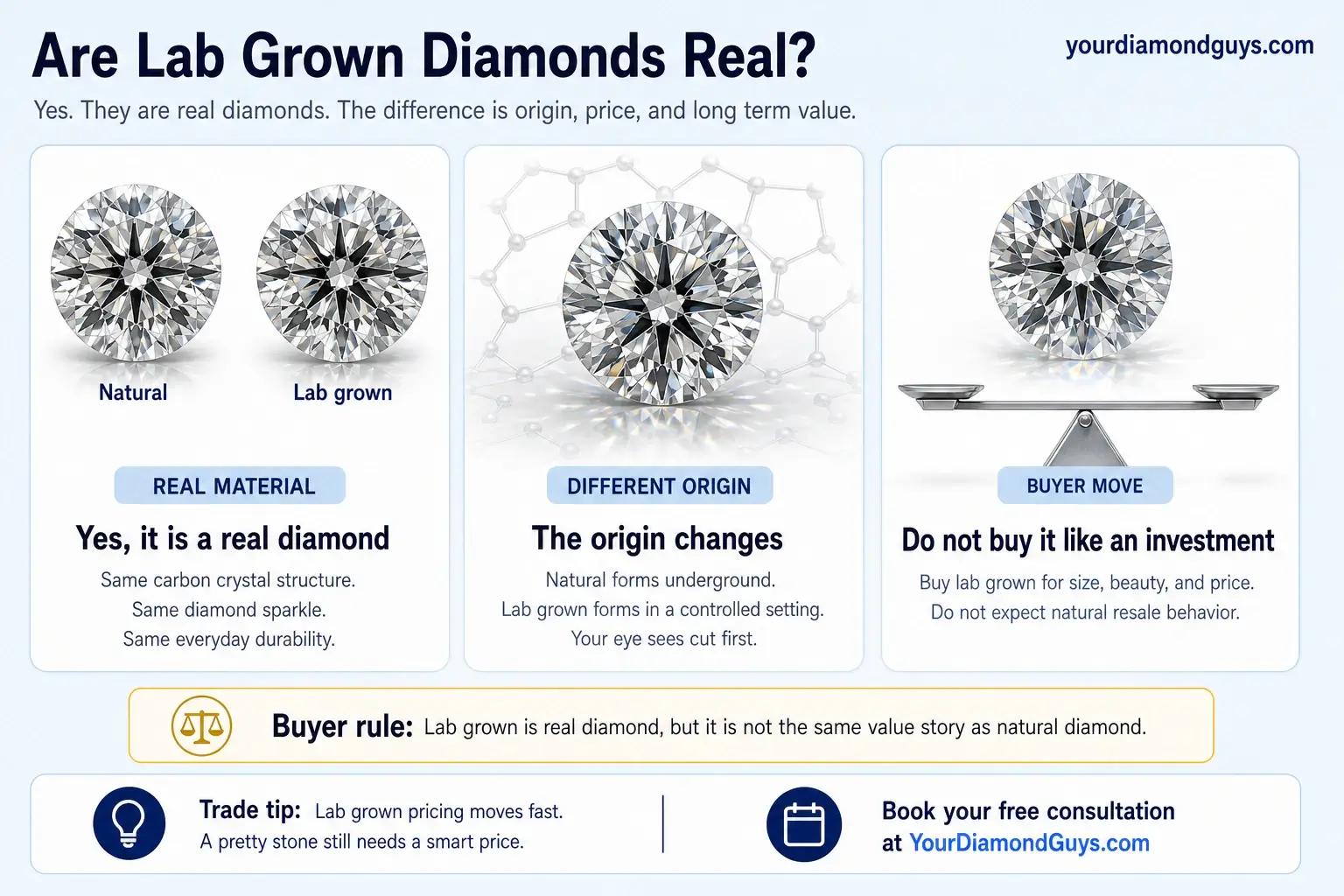
Yes, lab grown diamonds are real diamonds when the report and listing clearly identify them as laboratory grown diamonds.
That is the clean answer.
They are not natural diamonds. They are not fake diamonds. They are not moissanite or cubic zirconia. They are diamonds grown in a controlled lab environment, which I explain in the guide to how lab grown diamonds are made.
The buyer problem is not the word real.
The buyer problem is sloppy language.
Real Diamond Does Not Mean Natural Diamond
A lab grown diamond has diamond material. A natural diamond has diamond material too. The difference is origin.
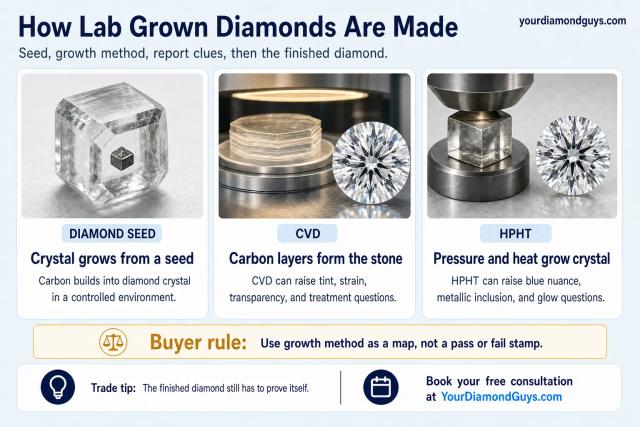
Natural diamonds form in the earth. Lab grown diamonds grow from a diamond seed in a growth chamber. That origin difference matters for price, resale expectations, and personal preference.
It does not mean a lab diamond is a simulant.
If you want the full buyer path after this, use the main lab grown diamond buying guide.
What A Lab Report Should Say
The report should make the origin obvious. Look for language such as laboratory grown diamond, laboratory created diamond, or lab grown diamond.
Then check the report number, measurements, carat weight, color, clarity, cut details, comments, and inscription information.
If the listing avoids clear lab grown wording, slow down.
Inside the trade, vague wording is where a lot of messy deals start. A good stone does not need fog around what it is.
Lab Diamond vs Moissanite vs CZ
These are different products.
| Stone | What It Is | Buyer Meaning |
|---|---|---|
| Lab grown diamond | Real diamond grown in a lab | Fine if disclosed clearly |
| Natural diamond | Real diamond formed in the earth | Different value and rarity story |
| Moissanite | A different gemstone | Can look bright, but it is not diamond |
| Cubic zirconia | A diamond lookalike | Low cost simulant, not diamond |
Moissanite and CZ can be pretty. They can make sense for the right buyer. They just should not be sold as diamonds.
That is the line.
The Listing Words That Need A Closer Look
Watch for phrases that hide the real identity of the stone.
- Diamond alternative
- Diamond look
- Simulated diamond
- Created stone
- Lab gem
- Lab created without a grading report
- Diamond like sparkle
Some of those phrases can be honest when the seller is clear. They become a problem when the page tries to sound like diamond without proving diamond.
Do Diamond Testers Prove It?
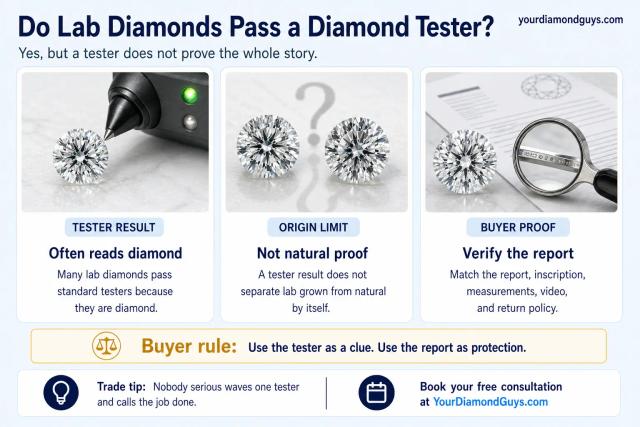
A real lab diamond should pass many standard diamond testers because the tester reads diamond like properties.
But that does not prove natural origin.
It only helps separate diamond from many simulants. If you need the full answer, read do lab diamonds pass a diamond tester.
Origin verification still comes from the report, inscription, and advanced screening when needed.
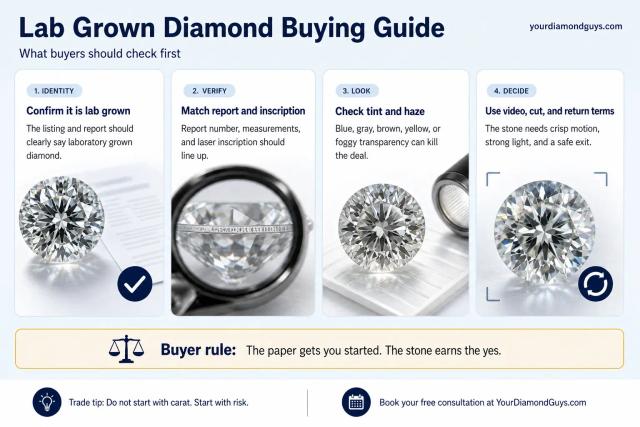
How To Verify Before You Buy
Use this order.
- Confirm the listing says lab grown diamond.
- Confirm the report says laboratory grown diamond.
- Match the report number to the lab website.
- Check the laser inscription when the stone arrives.
- Have a jeweler or appraiser confirm the match if the purchase is expensive.
The laser inscription verification guide gives you the full process.
My Buyer Recommendation
Do not get stuck arguing whether lab grown diamonds are real.
They are real diamonds when disclosed correctly.
The smarter question is whether this specific lab diamond is clean looking, well cut, properly graded, and priced fairly for what it is.
That is where buyers need help.
A Practical Example
A buyer sends me a listing that says created diamond in the title, but the page has no report number and no clear lab grown disclosure. I do not care how nice the price looks.
I want the report first.
Then I want the video.
Then we decide whether the stone deserves attention.
What To Ask Before Buying
- Does the listing clearly say lab grown diamond?
- Does the report say laboratory grown diamond?
- Is it being compared honestly to natural diamonds?
- Is the seller mixing diamond and simulant language?
- Can I verify the report number before payment?
Book your free consultation if you want help checking the report language.
Where I Would Compare Real Lab Diamond Listings
Use these sites as comparison tools, not automatic recommendations. For live listing comparison, I would check similar lab diamonds on Ritani and Blue Nile, then judge the report, video, tint, and return terms before the price gets the final vote.
Lab-Grown vs Natural Diamonds: Why Two Identical-Looking Stones Have Very Different Prices
Questions? Reach out directly for a free consultation, or drop them in the Diamond Buyers Academy community — Rob and I answer personally.
Questions Buyers Ask Us
Related Lab Grown Diamond Guides
Keep the full buying path close. These are the next checks that usually affect this decision.
*Some links on our site may earn us a small commission at NO EXTRA cost to you, helping us keep our content free*