Avoiding Hazy or Milky Lab Diamonds
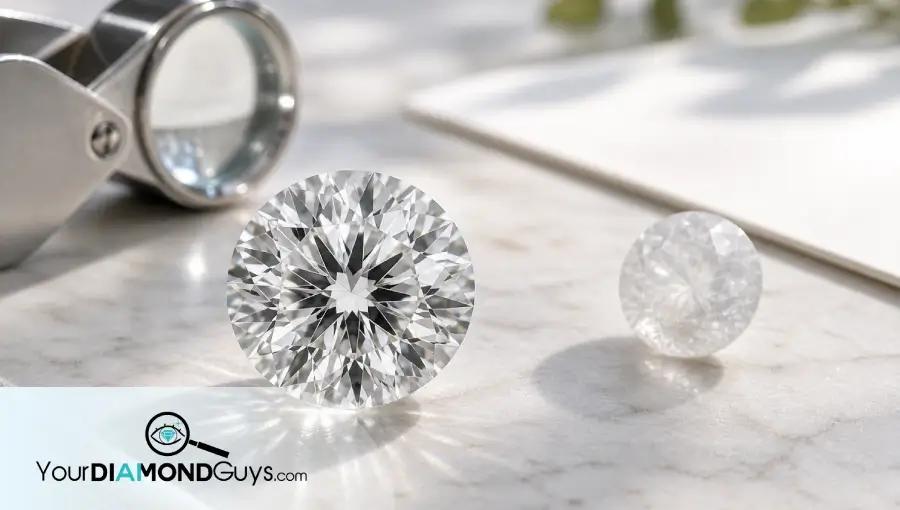
A crisp lab diamond should stay sharp under fair inspection lighting.
By Josh Allen, Co-Founder of YourDiamondGuys.com. Fifth generation diamantaire with 30+ years in the global diamond trade. Former supplier to Tiffany & Co., Cartier, and Harry Winston.
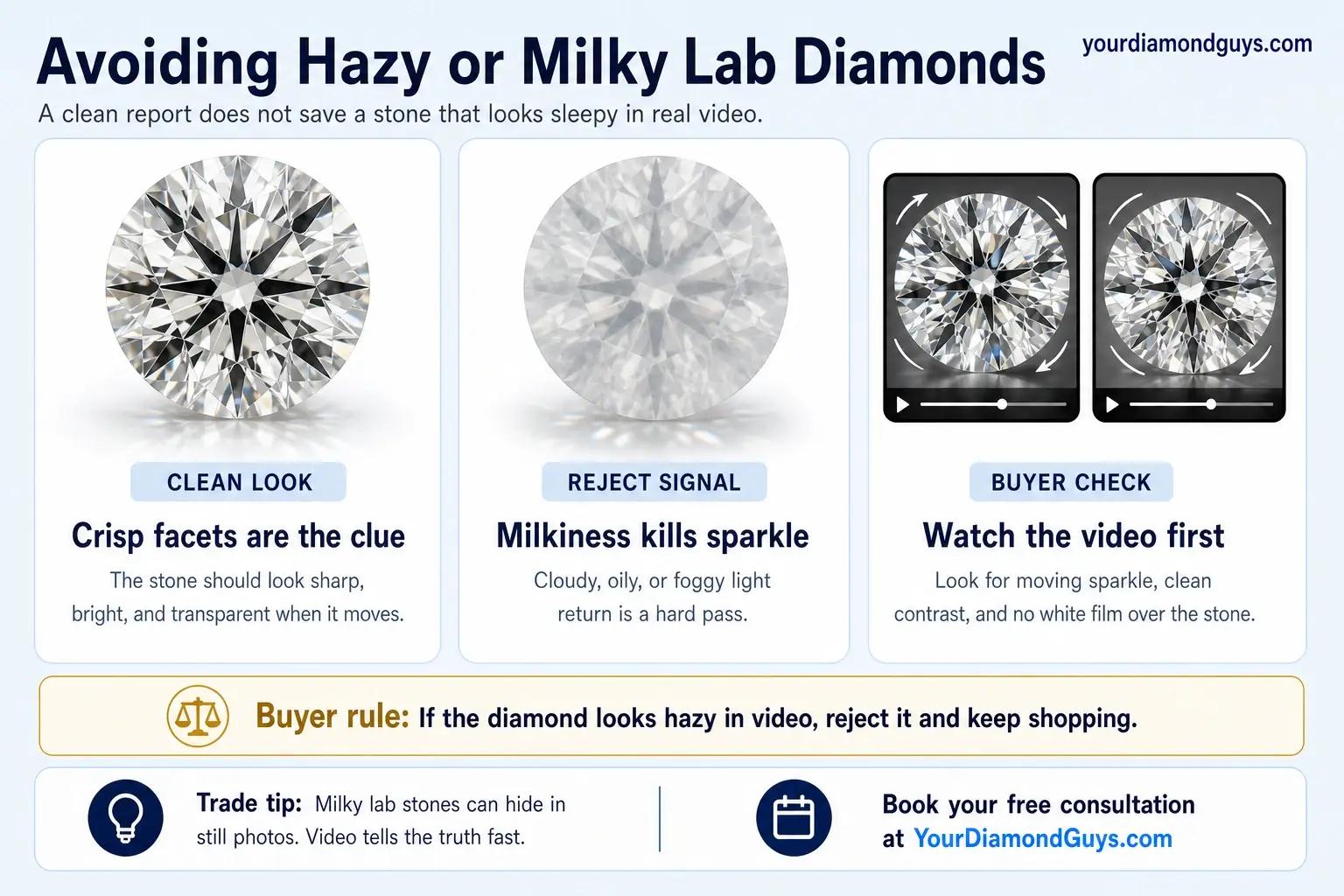
Avoid hazy or milky lab diamonds when the stone looks foggy in clean video because the report grade will not make that look better.
That is blunt.
It should be.
A diamond can have decent paperwork and still look tired. If transparency is weak, I do not want a buyer talking themselves into it.
Haze vs Dirt
Dirt sits on the surface.
Haze lives in the look of the stone.
A dirty diamond can clean up. A truly hazy diamond keeps that foggy, milky, low contrast appearance even after cleaning and under fair lighting.
If you already own the stone and wonder whether it is just dirty, read do lab diamonds get cloudy.
What True Haze Looks Like
Look for soft facet edges.
Look for a cloudy body.
Look for a diamond that never snaps into focus as it turns.
The stone can look like someone put a thin film inside it. That is different from normal reflection, normal contrast, or a single visible inclusion.
Why Lab Diamonds Can Look Hazy
Haze can connect to clouds, strain, growth remnants, or transparency issues. Sometimes the report makes the stone sound cleaner than it looks because the issue affects overall appearance more than one easy to point at inclusion.
That is why video matters.
The growth remnants guide explains the clarity side of the problem.
Buyer Rejection Table
| Visual Signal | Buyer Move |
|---|---|
| Crisp facets and clean return | Keep reviewing |
| Surface film only | Ask for cleaned video |
| Slight softness in bad lighting | Ask for better lighting |
| Milky body in clean video | Reject |
| Foggy look plus clouds or strain notes | Reject or get expert review |
| Seller avoids better video | Move on |
Do not make a hazy diamond your project.
There are too many lab grown options.
How To Check Before Buying
Ask for clean video in neutral lighting.
Ask for white background video. Compare the stone against another lab diamond with similar specs. If one looks crisp and one looks foggy, the foggy one has a problem.
The video inspection guide gives you the full sequence.
Haze Can Hide Behind Good Specs
This is where buyers get trapped.
They see high clarity, high color, and a nice carat weight. Then they explain away the foggy look because the price seems attractive.
I would rather buy a slightly smaller diamond that looks crisp than a larger diamond that looks sleepy.
Cut and transparency work together. A bright diamond needs both.
Trade Insider Moment
In the trade, a foggy stone gets a quiet reaction.
People do not debate it for twenty minutes.
They move it aside because the next buyer will see the same thing. That is the habit I want shoppers to borrow.
My Buyer Recommendation
If a lab diamond looks hazy in clean video, skip it.
Do not rely on the grade.
Do not rely on the discount.
Do not rely on wishful thinking. Haze is one of those problems that bothers you more after the ring is finished.
What To Ask Before Buying
- Can I see a cleaned video?
- Can I see the diamond on a white background?
- Do the facet edges look crisp?
- Does the report mention clouds, strain, or growth remnants?
- Can I compare it against a similar crisp stone?
- Can I return it after in person inspection?
Book your free consultation if you want Rob or Josh to check whether a stone looks hazy.
Where I Would Compare Haze Risk
Use these sites as comparison tools, not automatic recommendations. For live listing comparison, I would check similar lab diamonds on Ritani and Blue Nile, then judge the report, video, tint, and return terms before the price gets the final vote.
Why Your Diamond Looks "Hazy"
Questions? Reach out directly for a free consultation, or drop them in the Diamond Buyers Academy community — Rob and Josh answer personally.
Questions Buyers Ask Us
Related Lab Grown Diamond Guides
Keep the full buying path close. These are the next checks that usually affect this decision.
*Some links on our site may earn us a small commission at NO EXTRA cost to you, helping us keep our content free*