CVD vs HPHT: Which Is Better?
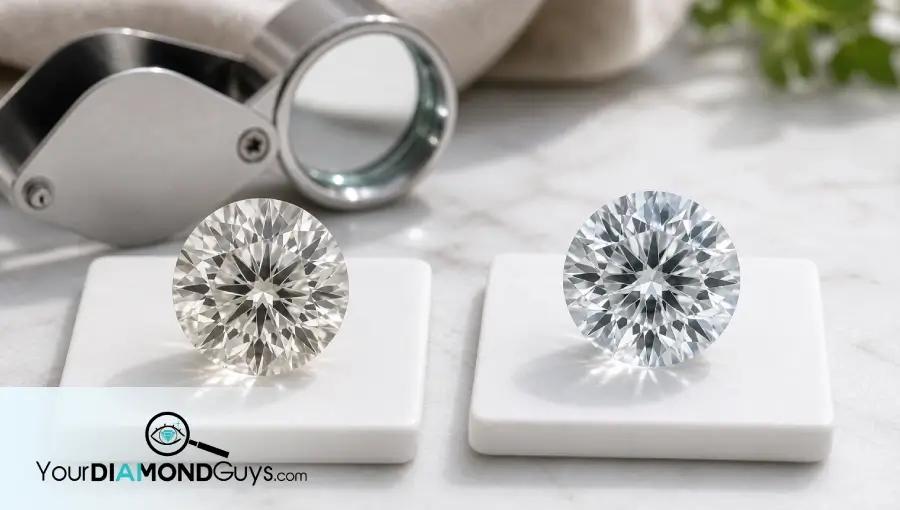
The growth method explains risk. It does not replace your eyes.
By Rob Cornfield, Co-Founder of YourDiamondGuys.com. 35+ years of experience in the global diamond trade. Specialist in diamond cut and light performance.
CVD vs HPHT is the wrong fight if you treat the method as a quality grade. The finished diamond decides.
I care about method.
I do not worship it.
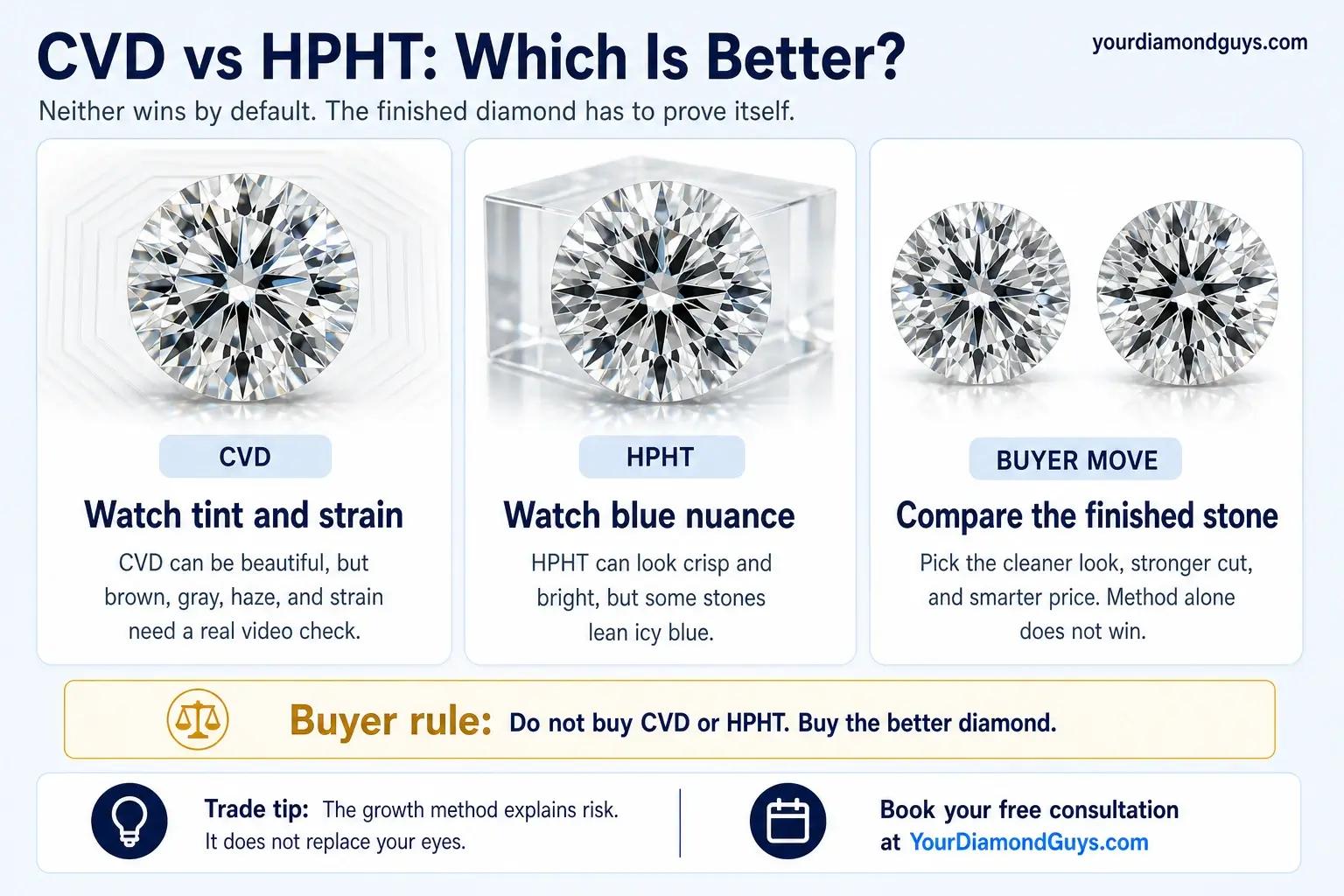
CVD and HPHT both produce strong lab diamonds. They also produce stones with visual problems. The report, tint, transparency, inclusions, cut, and video tell me whether the stone deserves the money.
The Fast Answer
HPHT often gets attention for cleaner color potential. CVD often gets attention because it is common and scalable. Neither label saves a bad diamond.
Here is the real buyer rule.
Use CVD and HPHT to know what to inspect next.
CVD Lab Diamonds
CVD means chemical vapor deposition. The diamond grows from a seed inside a chamber as carbon builds crystal layer by layer.
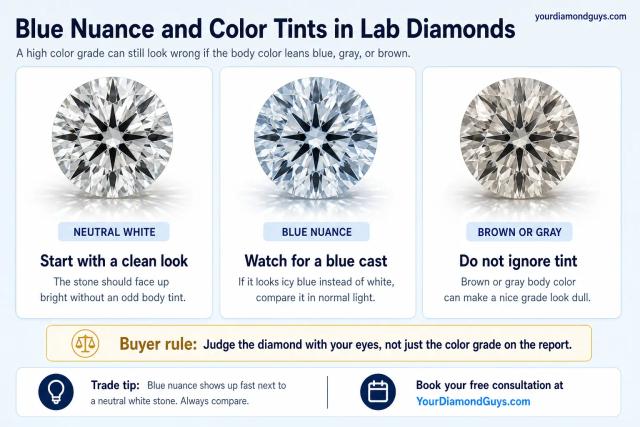
The buyer risks I check first are brown tint, gray tint, strain, transparency weakness, and post growth treatment history.
Not every CVD stone shows those issues.
But when I see a CVD stone with a strange body color or sleepy crystal, I slow down fast.
If you need the plain growth explanation first, read how lab grown diamonds are made.
HPHT Lab Diamonds
HPHT means high pressure high temperature. The lab grows diamond under pressure and heat.
The buyer risks I check first are blue nuance, metallic inclusions, fluorescence, phosphorescence, and report comments.
Some HPHT stones look excellent. Some look too blue. That blue cast can feel icy in a listing and odd on a hand.
The video decides whether it works.
Side By Side Buyer Check
| Question | CVD | HPHT |
|---|---|---|
| Main tint risk | Brown or gray | Blue nuance |
| Inclusion clues | Strain, growth remnants, clouds | Metallic inclusions, growth features |
| Treatment link | Common enough to check | Still worth checking |
| Best proof | White background and side view video | Side view, report comments, glow check |
| Buyer verdict | Judge the individual stone | Judge the individual stone |
That last row matters most.
The method gives you a suspect list. It does not give you the verdict.
Treatment Connects To The Method
Post growth treatment can improve color or appearance. It can also create a value question.
I do not reject a stone only because treatment appears on a report.
I reject hidden stories, weak transparency, ugly body color, and prices that ignore the treatment history.
The post growth treatment guide explains how to read that part without overreacting.
Video Proof Beats Method Claims
A seller can make either method sound wonderful.
That is why I want video.
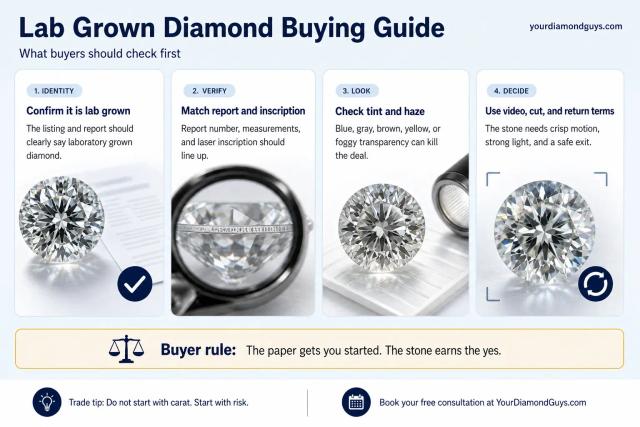
Show me the diamond face up. Show me the side view. Show me it on a white background. Show me whether the facets stay crisp when the stone turns.
If the stone looks hazy, tinted, or flat, I do not care what method the listing praises.
Where The Report Helps
The report can show growth method, comments, treatment language, fluorescence, proportions, measurements, and inscription. For lab grown diamonds, many shoppers see IGI reports, so the IGI report guide is worth reading before you compare stones.
For natural diamonds, start with GIA. For lab grown diamonds, use the report as a starting point and demand visual proof.
My Buyer Recommendation
I would rather buy a strong CVD stone than a weak HPHT stone.
I would rather buy a strong HPHT stone than a weak CVD stone.
That sounds obvious, but buyers forget it when a listing turns the growth method into a sales pitch.
Buy the diamond, not the acronym.
What To Ask Before Buying
- Is the stone CVD or HPHT?
- Does the report mention treatment?
- Does the video show brown, gray, blue, or yellow tint?
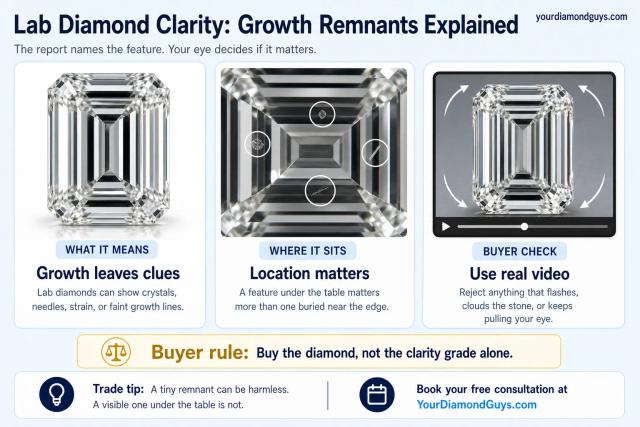
- Are there metallic inclusions or growth remnants?
- Does the stone look transparent and crisp?
- Is the price fair for the actual visual quality?
Book your free consultation if you want Rob or Josh to review the stone before you buy it.
Where I Would Compare CVD And HPHT Listings
Use these sites as comparison tools, not automatic recommendations. For live listing comparison, I would check similar lab diamonds on Ritani and Blue Nile, then judge the report, video, tint, and return terms before the price gets the final vote.
Finding the Perfect Diamond: What to Look for Before You Buy
Questions? Reach out directly for a free consultation, or drop them in the Diamond Buyers Academy community — Rob and I answer personally.
Questions Buyers Ask Us
Related Lab Grown Diamond Guides
Keep the full buying path close. These are the next checks that usually affect this decision.
*Some links on our site may earn us a small commission at NO EXTRA cost to you, helping us keep our content free*