Do Lab Diamonds Get Cloudy? Cleaning vs True Haze
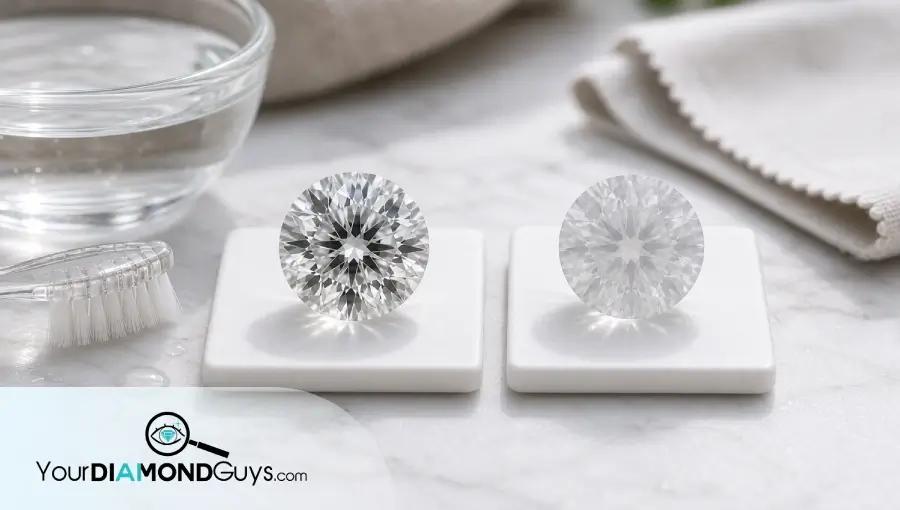
Clean first. If the milkiness stays, get the diamond reviewed.
By Josh Allen, Co-Founder of YourDiamondGuys.com. Fifth generation diamantaire with 30+ years in the global diamond trade. Former supplier to Tiffany & Co., Cartier, and Harry Winston.
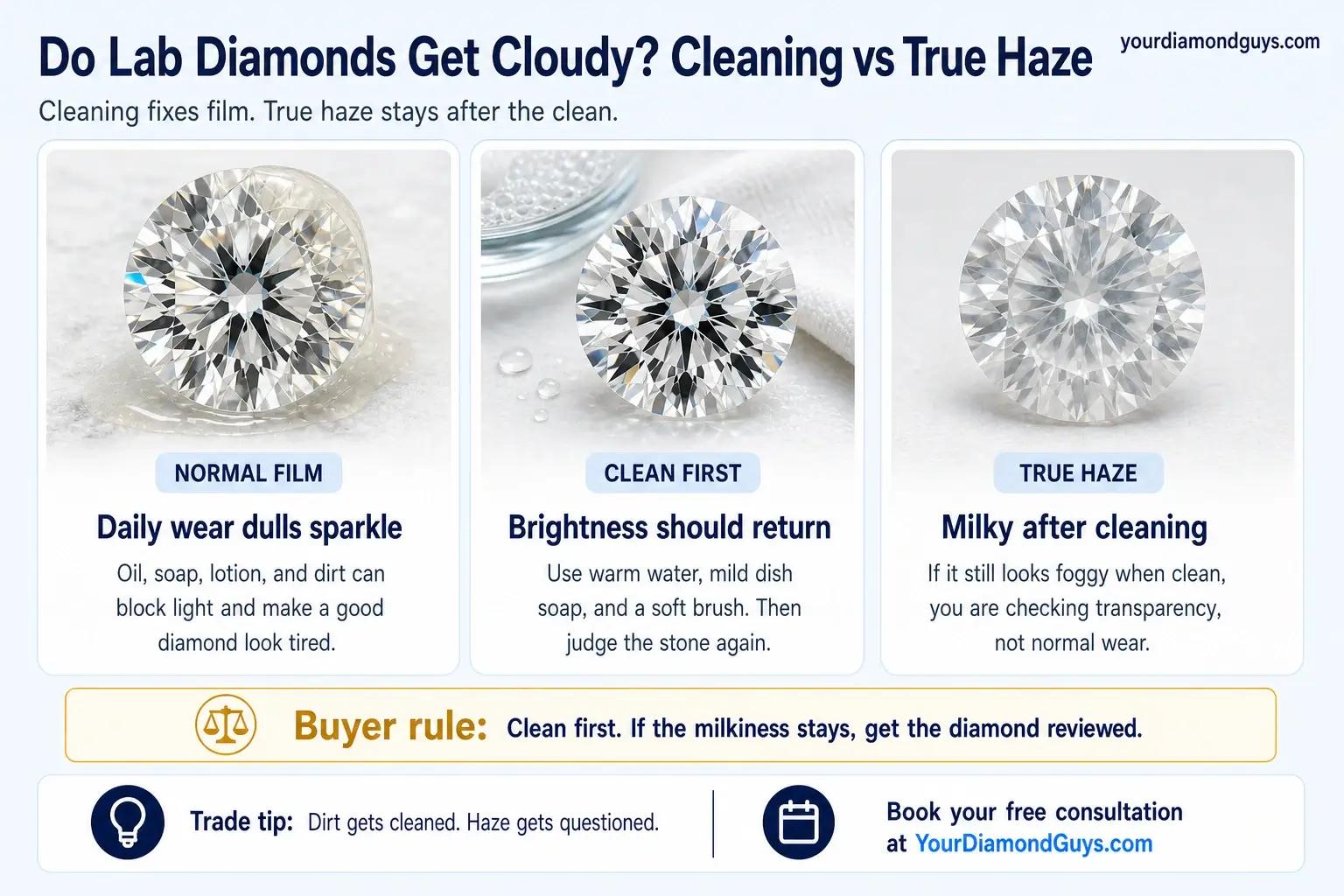
Lab diamonds do not normally get cloudy by turning into a different material, but they can look cloudy from oil, soap, lotion, dirt, or true haze that was already part of the stone.
That difference matters.
One problem cleans off.
The other one does not.
The Fast Buyer Answer
If your lab diamond looked crisp before and now looks dull, start with cleaning.
If it looked foggy from the first video or still looks milky after a proper clean, you are dealing with a transparency problem, not normal wear.
The hazy lab diamond guide covers pre purchase rejection.
Normal Buildup Happens Fast
Rings live hard lives.
Soap, hand lotion, sunscreen, cooking oil, dust, and daily skin oils collect on the diamond and under the setting.
That film blocks light.
The diamond can look cloudy even when the stone itself is fine.
Simple Cleaning Steps
Use warm water, mild dish soap, and a soft toothbrush.
Let the ring soak briefly. Brush gently around the diamond, under the setting, and around the prongs. Rinse carefully and dry with a lint free cloth.
Do not use harsh chemicals.
Do not scrub like you are cleaning tile.
If the setting has delicate materials or the ring has damage, ask a jeweler before cleaning.
When It Is More Than Dirt
True haze looks different.
The diamond lacks crisp internal reflections. Facet edges look soft. The stone looks milky even when clean.
That is not normal buildup.
If the diamond always looked that way, the issue likely existed before you bought it.
Quick Diagnosis Table
| What You Notice | Likely Cause | Buyer Move |
|---|---|---|
| Looks dull after daily wear | Oil and lotion | Clean it |
| Sparkle returns after cleaning | Surface film | Keep normal care routine |
| Still looks milky after cleaning | True haze or transparency issue | Get expert review |
| Looked foggy in original video | Pre existing haze | Revisit return or warranty options |
| Dirt under setting | Normal buildup | Professional cleaning can help |
Check The Old Proof
Pull up the original listing video, report, receipt, and any photos you saved.
Compare how the diamond looked before and after cleaning. If the original video already looked hazy, the problem was not created by daily wear.
The video inspection guide explains what you should look for before buying next time.
When To See A Jeweler
See a jeweler if the ring has loose prongs, visible damage, hard to remove buildup, or cloudy appearance after careful cleaning.
Ask them to clean the ring and inspect the stone.
If the diamond still looks foggy after that, ask whether the issue looks like transparency, clouding, strain, or another clarity related concern.
Policy Can Matter After Purchase
If the diamond looked wrong from the start, return and warranty terms matter.
That is why I want buyers to inspect within the return window and document the stone early.
Use the return policy and warranty checklist before the next purchase.
Trade Insider Moment
A dirty diamond and a hazy diamond do not get the same reaction at the desk.
Dirt gets cleaned.
Haze gets questioned.
That simple split keeps buyers from blaming themselves for a stone that was never crisp.
My Buyer Recommendation
Clean first.
Then judge.
If the sparkle comes back, you had normal buildup. If the diamond stays milky, get it reviewed while you still have policy options.
What To Ask Before Buying Or Keeping
- Did the diamond look crisp in the original video?
- Does cleaning restore brightness?
- Does the stone look milky even when clean?
- Does the report mention clouds, strain, or growth features?
- Is the return window still open?
- Can a jeweler inspect the ring and stone?
Reach out to Rob or me at YourDiamondGuys.com if you want help deciding whether you are seeing dirt or true haze.
Where I Would Compare Cloudiness Risk
Use these sites as comparison tools, not automatic recommendations. For live listing comparison, I would check similar lab diamonds on Ritani and Blue Nile, then judge the report, video, tint, and return terms before the price gets the final vote.
Natural vs Lab-Grown Diamonds: The Real Difference Buyers Should Know in 2026
Questions? Reach out directly for a free consultation, or drop them in the Diamond Buyers Academy community — Rob and Josh answer personally.
Questions Buyers Ask Us
Related Lab Grown Diamond Guides
Keep the full buying path close. These are the next checks that usually affect this decision.
*Some links on our site may earn us a small commission at NO EXTRA cost to you, helping us keep our content free*