Fancy Shapes in Lab Diamonds: Common Visual Traps
If the shape does not look good in motion, move on.
By Rob Cornfield, Co-Founder of YourDiamondGuys.com. 30+ years in the global diamond trade. Specialist in diamond cut and light performance.
Fancy shape lab diamonds need video review because the report does not grade their beauty the way your eyes will judge it.
That is the trap.
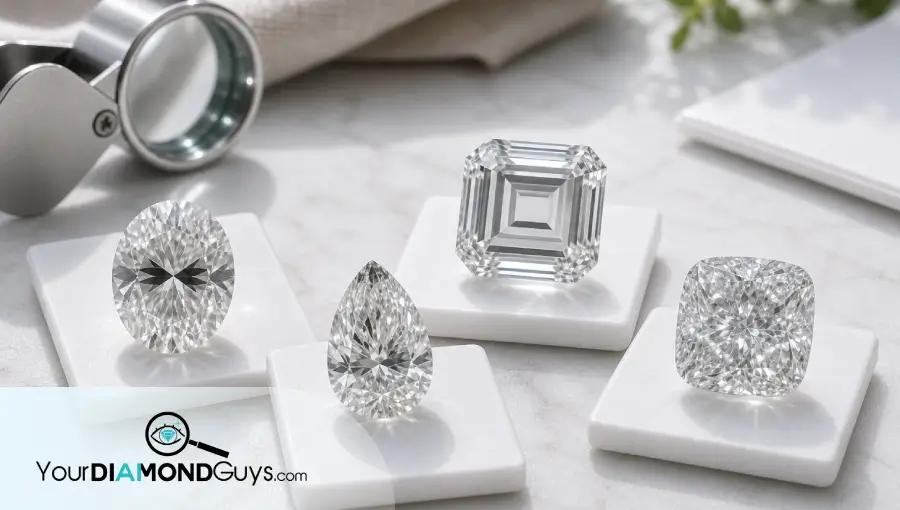
Ovals, pears, marquise, emeralds, Asschers, radiants, and cushions can all look great on paper and weak in motion.
The Fast Buyer Answer
Do not buy a fancy shape lab diamond from specs alone.
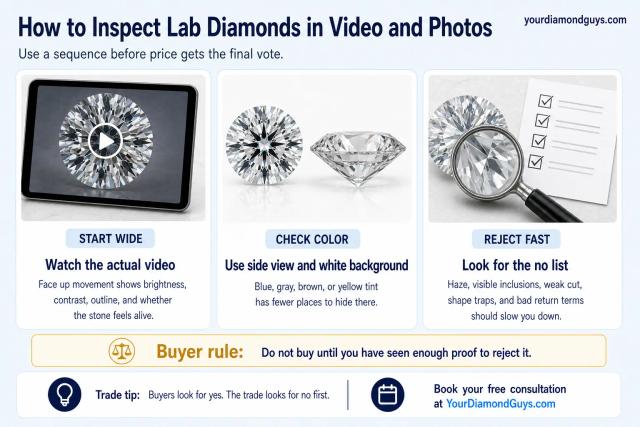
Check bow tie, windowing, mushy facets, outline symmetry, length to width ratio, tint, and transparency in real video.
If the shape looks wrong, the price is not the fix.
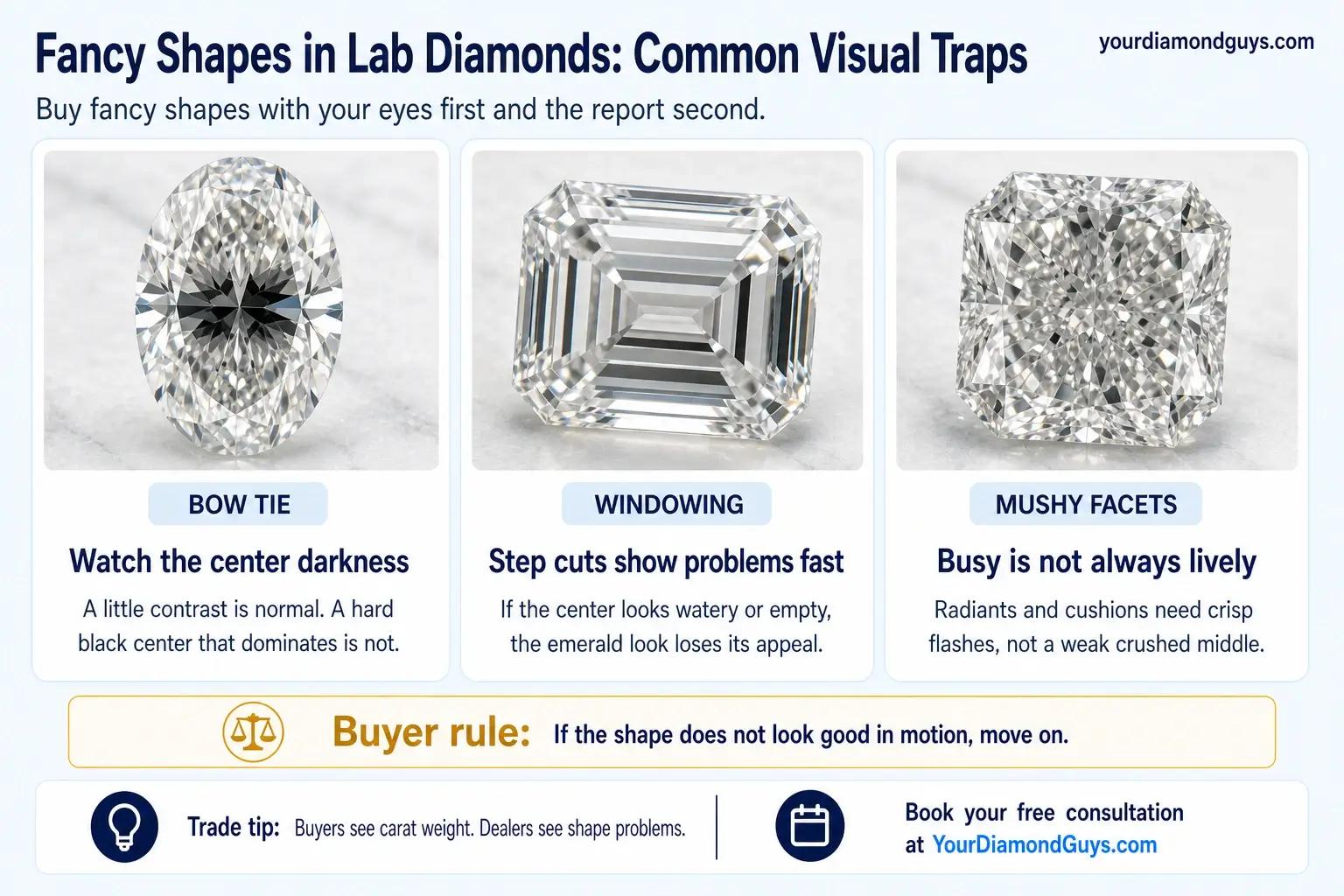
Oval, Pear, And Marquise Bow Tie
Bow tie is the dark band that can run through the center of elongated brilliant shapes.
A little contrast is normal.
A hard, black, distracting bow tie is not.
Oval, pear, and marquise lab diamonds need movement in the video. If the center stays dark while the stone turns, I get cautious.
Step Cut Windowing
Emerald and Asscher cuts show broad flashes instead of busy sparkle.
That clean look is the whole appeal.
It also exposes problems fast.
Windowing means you can see through the stone too easily instead of seeing strong step cut reflections. The diamond looks glassy, watery, or empty in the center.
The broader fancy shape cut guide is helpful if you want the cut language by shape.
Radiant And Cushion Mush
Radiants and cushions can look lively. They can also look like crushed glass in the center.
Some buyers like a crushed ice look. That is style.
But mushy facets with no crisp flashes make the stone look weak. In lab grown inventory, the size and price can distract buyers from this fast.
Outline And Ratio Matter
Fancy shapes need a good outline.
An oval should not look lumpy. A pear should not have one shoulder higher than the other. A marquise should not look crooked or too skinny for the setting. A cushion should not look like a random blob.
The diamond shapes guide helps with broad shape choice, but this page is about rejection rules.
Quick Screening Table
| Shape | Main Trap | Buyer Check |
|---|---|---|
| Oval | Bow tie and uneven outline | Watch center darkness in motion |
| Pear | Bow tie, tip darkness, shoulder imbalance | Check symmetry and point protection |
| Marquise | Bow tie, dark tips, skinny outline | Check ratio and point protection |
| Emerald | Windowing and visible inclusions | Check center transparency |
| Asscher | Lifeless center | Check windmill pattern |
| Radiant | Mushy center | Look for crisp flashes |
| Cushion | Weak shape and busy facets | Check outline and facet texture |
This is where video saves money.
Tint Shows Faster In Some Fancy Shapes
Elongated and step cut stones reveal body color more quickly than many buyers expect.
If a lab diamond shows blue, gray, brown, or yellow tint, the shape can make it louder.
Read the blue nuance and color tint guide before choosing a larger fancy shape lab diamond.
Trade Insider Moment
Fancy shapes get rejected on sight in the trade all the time.
Not because the report is bad.
Because the outline is ugly, the middle is dead, or the bow tie is too strong. Buyers see carat weight. Dealers see shape problems.
My Buyer Recommendation
Buy fancy shapes with your eyes first and the report second.
The report still matters. It just cannot grade bow tie, outline beauty, windowing, or facet flavor the way real video can.
If the shape does not look good in motion, move on.
What To Ask Before Buying
- Can I see the actual 360 video?
- Does the shape have a strong bow tie?
- Does the center look watery or empty?
- Does the outline look balanced?
- Is the length to width ratio right for the setting?
- Does tint show through the body of the stone?
Book your free consultation if you want Rob or Josh to screen a fancy shape with you.
Where I Would Compare Fancy Shape Videos
Use these sites as comparison tools, not automatic recommendations. For fancy shape cut comparison, I would review similar stones on Whiteflash and Brian Gavin Diamonds, then judge outline, contrast, and light return before the price gets a vote.
Choosing the Right Diamond Shape: How to Find the Style That Fits You
Questions? Reach out directly for a free consultation, or drop them in the Diamond Buyers Academy community — Rob and Josh answer personally.
Questions Buyers Ask Us
Related Lab Grown Diamond Guides
Keep the full buying path close. These are the next checks that usually affect this decision.
*Some links on our site may earn us a small commission at NO EXTRA cost to you, helping us keep our content free*