Lab Diamond Fluorescence and Phosphorescence
Reject the bad visual result, not every report note.
By Josh Allen, Co-Founder of YourDiamondGuys.com. Fifth generation diamantaire with 30+ years in the global diamond trade. Former supplier to Tiffany & Co., Cartier, and Harry Winston.
Lab diamond fluorescence and phosphorescence matter only when the glow changes how the stone looks in real life.
Do not panic at the word.
Check the effect.
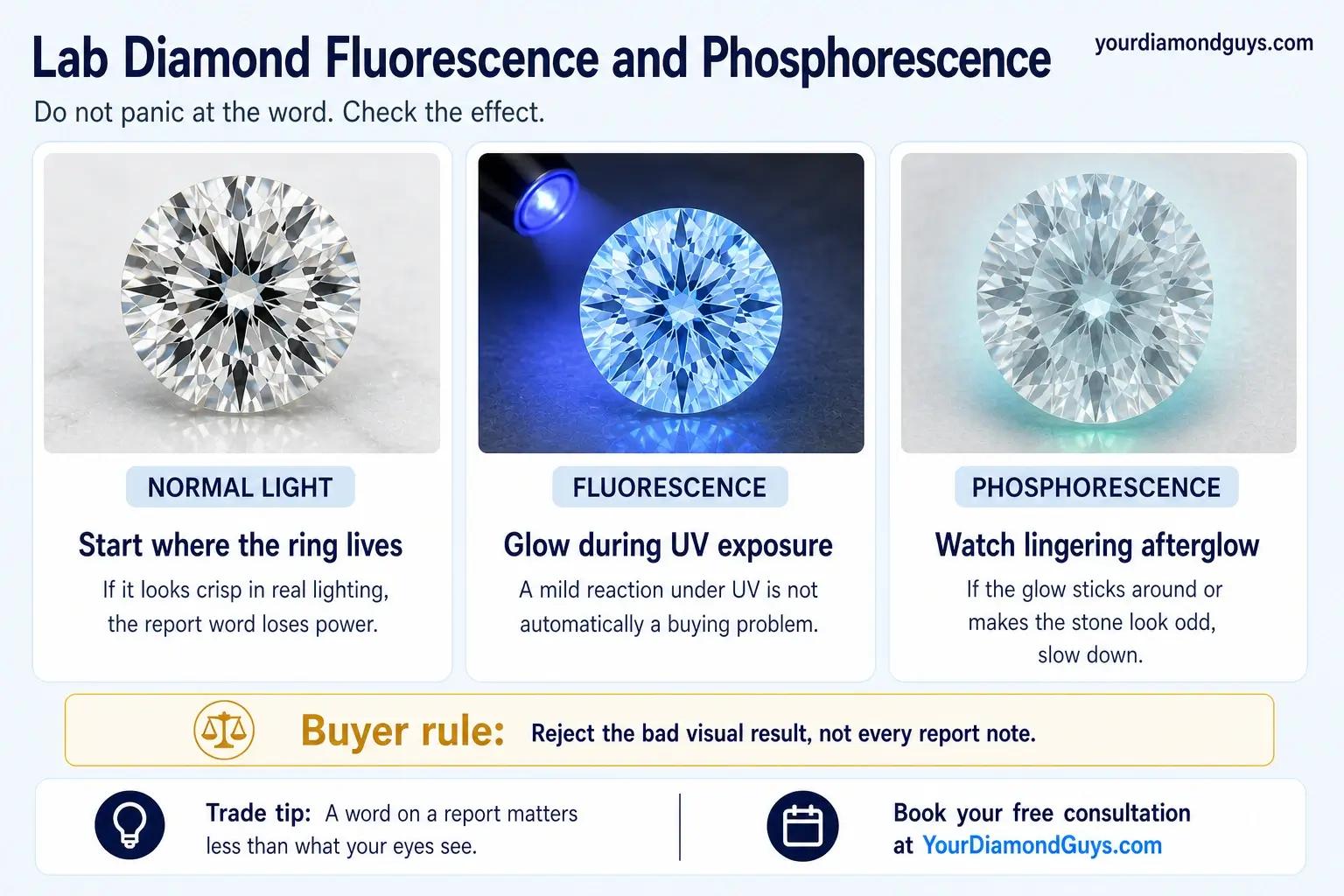
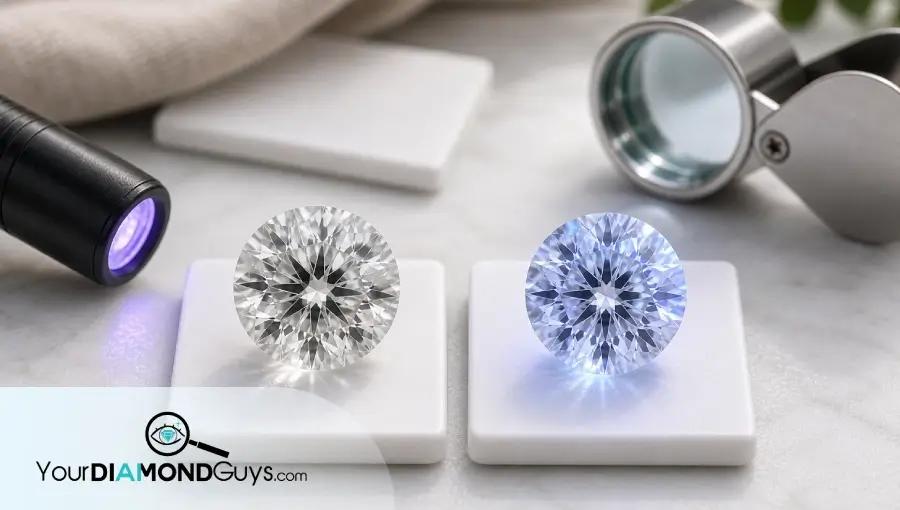
Fluorescence is a reaction under UV light. Phosphorescence is afterglow that continues after the light source is gone. The report can flag the issue, but your eyes decide whether it creates a buying problem.
The Quick Difference
Fluorescence happens during exposure to UV light.
Phosphorescence lingers after exposure.
That lingering glow is the one that surprises buyers because they do not expect a diamond to keep reacting after the light changes.
Some lab diamonds show little to no visible issue. Some show a color response that makes the stone feel odd.
Why Lab Diamonds Get This Question
HPHT lab diamonds get connected to phosphorescence more often in buyer conversations. CVD diamonds can raise their own appearance questions, especially around tint or transparency.
The growth method helps you know what to inspect. It does not give you the answer by itself.
Use the CVD vs HPHT guide if the method is part of your comparison.
What The Report Can Tell You
The report can list fluorescence strength. It can also include comments that deserve a closer look.
I still want video.
A report field cannot tell you whether the glow bothers you in a normal room, outdoors, or under jewelry store lighting. It only points you toward the check.
The IGI lab report guide explains where to slow down on comments.
Buyer Check Table
| What You See | What It Means | Buyer Move |
|---|---|---|
| No visible glow | Clean practical result | Keep reviewing |
| Mild fluorescence only under UV | Usually not a problem | Check normal lighting |
| Lingering afterglow | Phosphorescence question | Ask for a glow video |
| Odd blue or green response | Appearance risk | Compare in daylight |
| Hazy look plus glow | Bigger concern | Move carefully or reject |
Do not make this complicated.
If it looks normal in the light where the ring will be worn, the report word loses power.
How To Check It Before Buying
Ask for video in normal light first.
Then ask for white background video and, if the report raises the question, a short UV reaction check. The seller should show the diamond before, during, and after UV exposure.
You are looking for lingering glow, strange color response, and any milky look that appears worse under certain light.
The video and photo inspection checklist gives you the broader review order.
Do Not Confuse Glow With Tint
Tint and glow are different problems.
Blue nuance, gray tint, brown tint, and yellow body color show up as body color concerns. Fluorescence and phosphorescence involve light reaction.
They can overlap in the buying decision, but they are not the same thing.
If the diamond looks blue in normal lighting, read the blue nuance guide before you blame fluorescence.
Trade Insider Moment
In the trade, a word on a report does not scare us as much as a bad visual result.
I have seen stones with a fluorescence note that looked perfectly fine. I have also seen stones with a glow that made the buyer keep staring for the wrong reason.
That second one is the problem.
My Buyer Recommendation
Do not reject every lab diamond with fluorescence.
Reject diamonds with visible glow behavior that distracts you, makes the body color look strange, or creates a transparency concern.
If the seller cannot provide a clean video check, choose a different stone.
What To Ask Before Buying
- What does the report say about fluorescence?
- Does the diamond show lingering phosphorescence?
- Can I see the stone before and after UV exposure?
- Does it look normal in daylight?
- Does the glow make the body color look strange?
- Is the return policy long enough for an in person check?
Book your free consultation if you want Rob or Josh to review a glow concern with you.
Where I Would Compare Glow Risk
Use these sites as comparison tools, not automatic recommendations. For live listing comparison, I would check similar lab diamonds on Ritani and Blue Nile, then judge the report, video, tint, and return terms before the price gets the final vote.
Fluorescence can be Scary! Find Out
Questions? Reach out directly for a free consultation, or drop them in the Diamond Buyers Academy community — Rob and Josh answer personally.
Questions Buyers Ask Us
Related Lab Grown Diamond Guides
Keep the full buying path close. These are the next checks that usually affect this decision.
*Some links on our site may earn us a small commission at NO EXTRA cost to you, helping us keep our content free*