How to Inspect Lab Diamonds in Video and Photos
Do not buy until you have seen enough proof to reject it.
By Josh Allen, Co-Founder of YourDiamondGuys.com. Fifth generation diamantaire with 30+ years in the global diamond trade. Former supplier to Tiffany & Co., Cartier, and Harry Winston.
Inspect lab diamonds in video and photos by checking identity, tint, haze, inclusions, cut, shape behavior, and return protection before price gets the final vote.
This is the page to keep open while you shop.
Not later.
During.
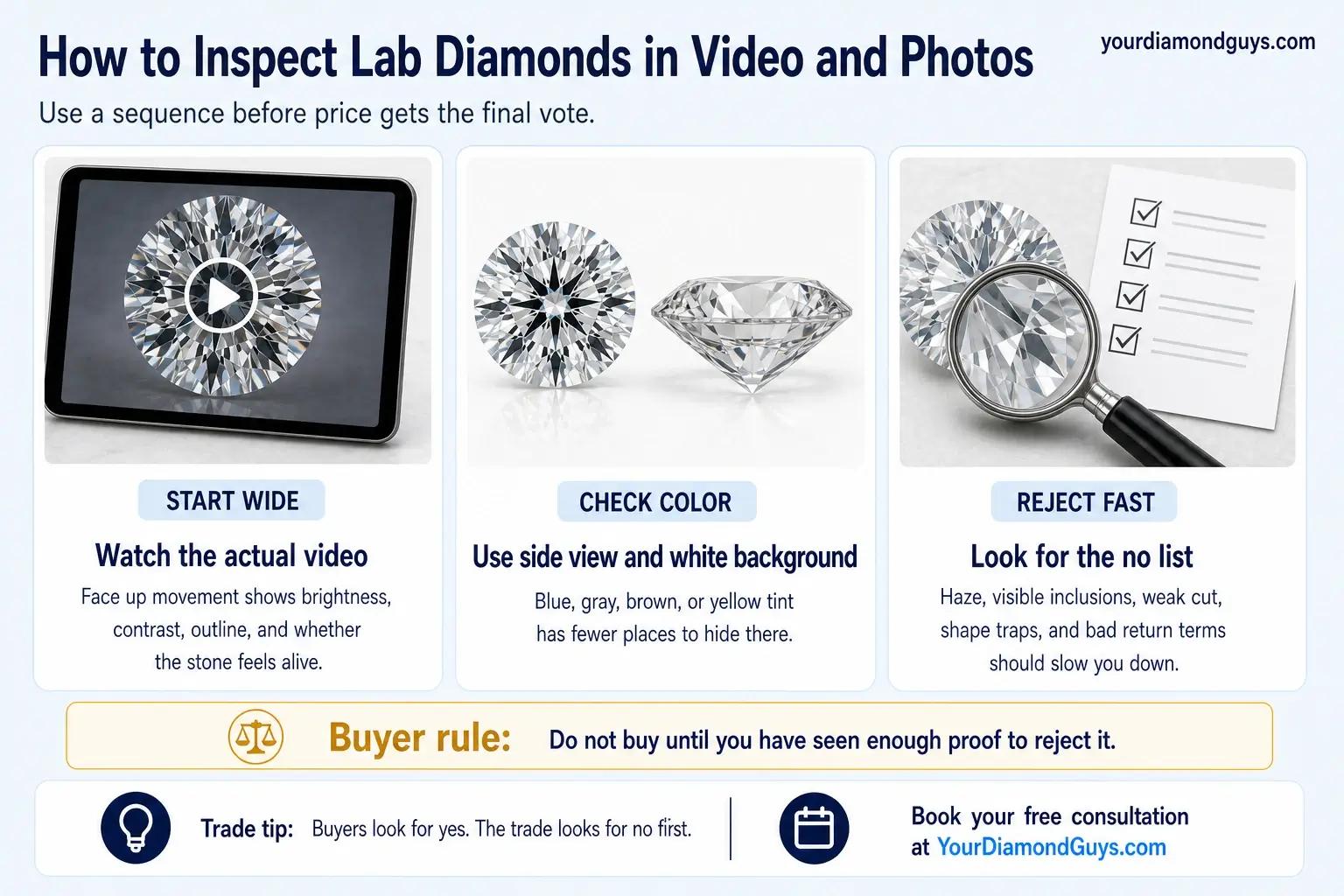
The best online buyers do not stare at one pretty image. They use a sequence.
The Order I Use
Start wide, then zoom in.
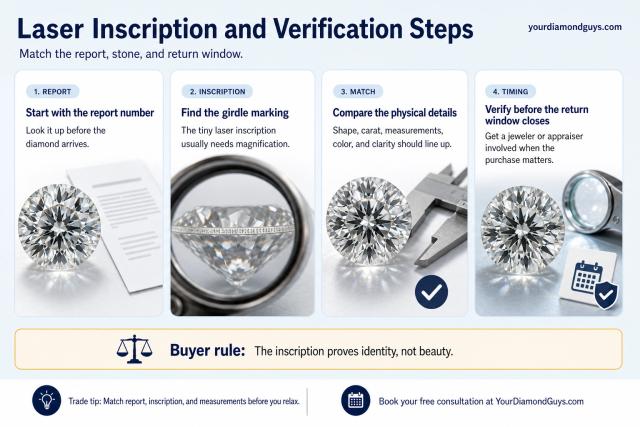
- Confirm the report and listing match.
- Check face up appearance.
- Check side view body color.
- Check white background tint.
- Check transparency and haze.
- Check inclusions and clarity features.
- Check cut performance.
- Check shape specific issues.
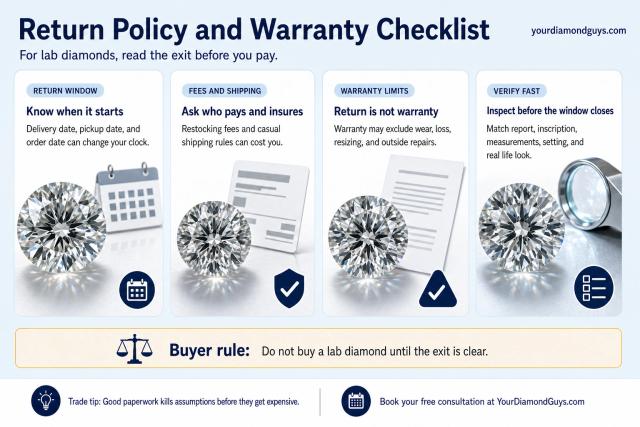
- Check return terms before payment.
That order keeps you from falling in love too early.
Face Up View Comes First
Face up is how the diamond will live on the hand.
Look at brightness, contrast, body color, shape outline, and whether the stone looks alive when it moves.
If the first impression is dull, do not force it.
The lab grown buying guide explains why the stone has to earn the yes.
Side View Shows Body Color
Side view is where tint gets honest.
A lab diamond can look fine face up and still show blue, gray, brown, or yellow body color from the side. That matters more in open settings and larger stones.
If the color feels off, use the blue nuance guide.
White Background Check
White background video removes some of the romance from the listing.
Good.
You want less romance before payment.
Look for neutral color, crisp edges, and clean transparency. If the stone looks foggy, gray, or oddly blue, ask for another video or move on.
Haze And Transparency
Haze is not the same as dirt.
A dirty diamond has surface film. A hazy diamond lacks crisp internal transparency.
In video, true haze makes facet edges look soft. The diamond can look milky, sleepy, or fogged even when the report grade sounds clean.
Use the hazy or milky lab diamond guide for the walk away rules.
Inclusions And Growth Features
Look for visible marks under the table, dark crystals, clouds, growth remnants, strain, or anything that keeps pulling your eye.
Do not panic over every tiny feature.
Ask whether the inclusion is visible, where it sits, and whether the setting can hide it without creating durability concern.
The growth remnants guide covers lab specific clarity.
Cut And Light Performance
For rounds, compare the report proportions against the video.
For fancy shapes, the video matters even more.
Look for dark patches, leakage, weak center brightness, poor contrast, and dull movement. A diamond should not look like it is trying to wake up.
The lab cut quality guide gives you the round proportion targets and cut checks.
Fancy Shape Checks
Fancy shapes need their own screen.
Oval, pear, and marquise diamonds need bow tie review. Emerald and Asscher cuts need windowing review. Radiants and cushions need facet texture review.
The fancy shape visual traps guide gives quick rejection rules by shape.
Trade Insider Moment
On a screen, buyers look for reasons to say yes.
In the trade, we look for reasons to say no first.
That sounds negative until you realize it protects the money. A diamond that survives the no list usually deserves a real conversation.
My Buyer Recommendation
Do not buy a lab diamond unless you have seen enough proof to reject it.
That sounds backwards.
It works.
If the report checks out, the video stays clean, the tint is neutral, the transparency is crisp, the cut performs, and the policy protects you, then the diamond is worth comparing on price.
What To Ask Before Buying
- Can I see the actual 360 video?
- Can I see a white background view?
- Can I see the side view?
- Does the stone show tint or haze?
- Are inclusions visible without magnification?
- What happens if I reject the stone after delivery?
Reach out to Rob or me at YourDiamondGuys.com if you want a second set of eyes before payment.
Where I Would Compare Videos And Photos
Use these sites as comparison tools, not automatic recommendations. For live listing comparison, I would check similar lab diamonds on Ritani and Blue Nile, then judge the report, video, tint, and return terms before the price gets the final vote.
This Mistake Can Cost You Thousands
Questions? Reach out directly for a free consultation, or drop them in the Diamond Buyers Academy community — Rob and Josh answer personally.
Questions Buyers Ask Us
Related Lab Grown Diamond Guides
Keep the full buying path close. These are the next checks that usually affect this decision.
*Some links on our site may earn us a small commission at NO EXTRA cost to you, helping us keep our content free*