Laser Inscription and Verification Steps
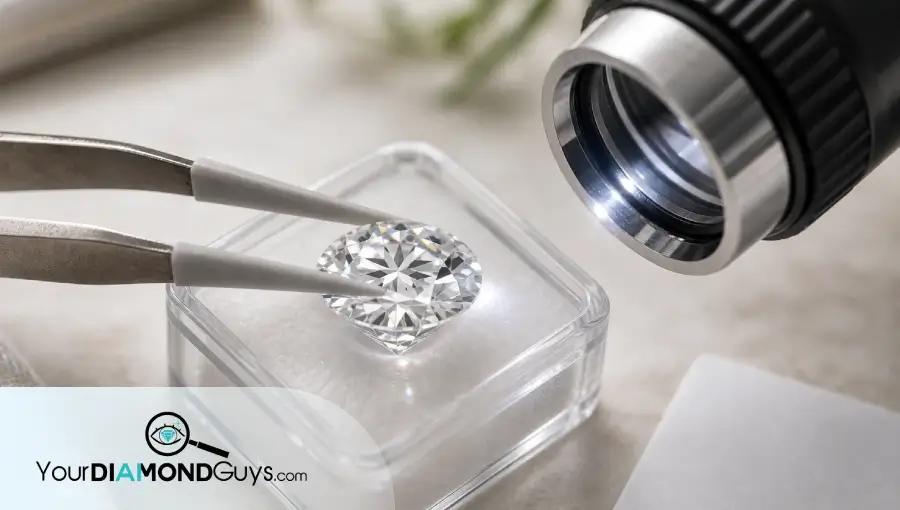
The inscription proves identity, not beauty.
By Josh Allen, Co-Founder of YourDiamondGuys.com. Fifth generation diamantaire with 30+ years in the global diamond trade. Former supplier to Tiffany & Co., Cartier, and Harry Winston.
Lab diamond laser inscription verification helps you confirm the stone in your hand matches the report, listing, and money you just spent.
Do this early.
Not after the return window is gone.
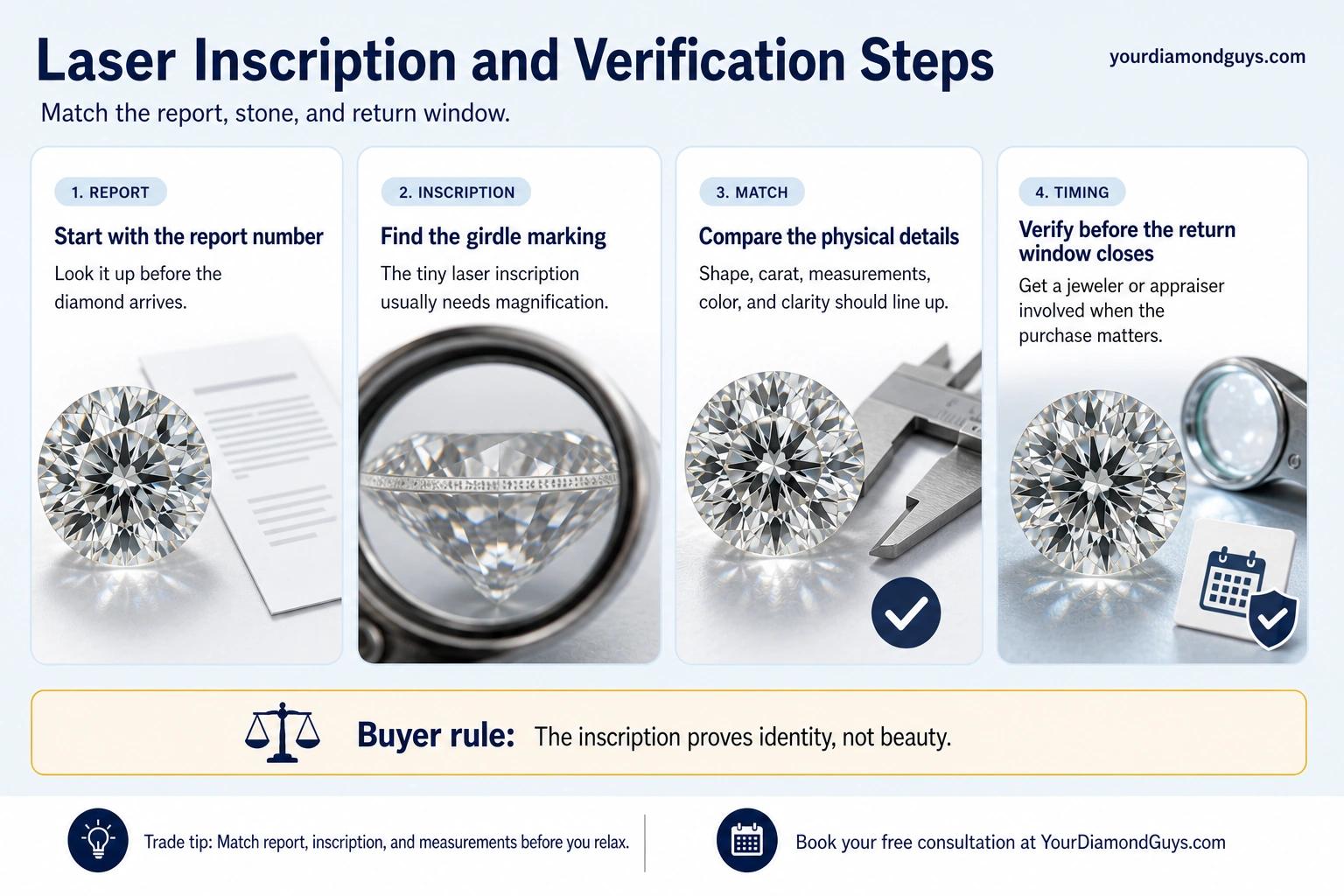
The process is simple, but it matters. Match the report number, inscription, measurements, and visual details before you relax.
What A Laser Inscription Does
A laser inscription is a tiny marking on the diamond girdle. It usually connects the stone to the grading report number.
It does not tell you the diamond is beautiful.
It tells you the identity story can be checked.
Beauty still comes from the actual stone, video, cut, color, clarity, and transparency.
The Verification Order
Use this sequence.
- Check the report number in the listing.
- Look up the report on the grading lab website.
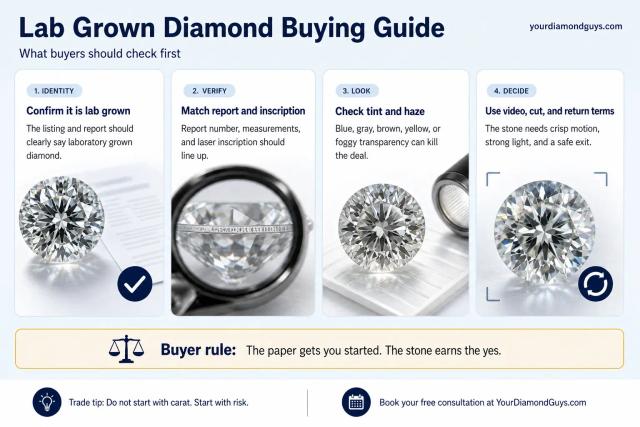
- Confirm the report says laboratory grown diamond.
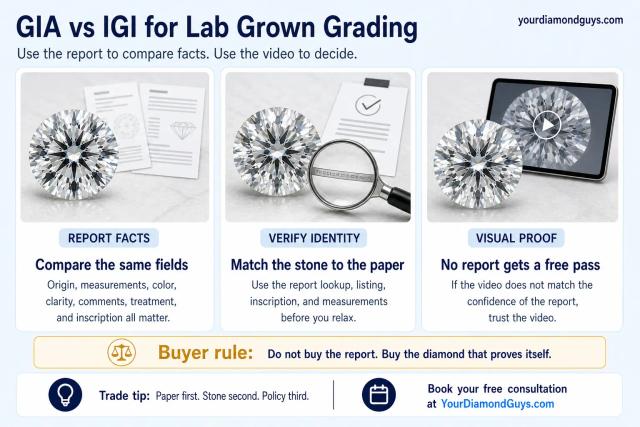
- Compare carat, measurements, shape, color, and clarity.
- Inspect the laser inscription after delivery.
- Ask a jeweler or appraiser to confirm the match when the purchase is significant.
That is not overkill.
That is how you keep the paperwork and diamond tied together.
What To Match
| Item | Why It Matters |
|---|---|
| Report number | Confirms the document tied to the listing |
| Lab grown disclosure | Confirms origin |
| Measurements | Confirms physical identity |
| Shape and carat | Confirms basic match |
| Laser inscription | Connects stone to report |
| Comments | Explains treatment or clarity clues |
The IGI report guide helps you read the report before you verify the stone.
Before You Buy
Ask the seller for the report number.
Then look it up.
Do not wait until the diamond arrives to learn the report is missing, incomplete, or hard to verify.
If the seller cannot provide a report number on a meaningful purchase, I would not get comfortable.
After Delivery
Take the diamond or ring to a jeweler or appraiser within the return window.
Ask them to confirm the inscription and match the measurements to the report. If the diamond is already set, the inspection can be harder, so timing matters.
The return policy and warranty checklist should be handled before payment, not after a problem appears.
What If The Inscription Is Hard To See?
That happens.
The inscription is tiny and often needs magnification. A jeweler can usually find it faster than a buyer at home.
Do not assume a missing visual confirmation means fraud. But do not ignore it either. Get help while you can still return the stone.
Diamond Tester vs Verification
A diamond tester is not the same as identity verification.
A tester can help separate diamond from many simulants. It does not prove the stone matches the report, and it does not prove natural origin.
Read do lab diamonds pass a diamond tester if that question is part of your review.
Trade Insider Moment
In the trade, people match numbers because memory is not a system.
Parcels move. Stones look similar. Reports get printed and reprinted. The boring habit of matching report, inscription, and measurements prevents expensive confusion.
Borrow that habit.
My Buyer Recommendation
Verify before you emotionally own the ring.
The report, inscription, measurements, and inspection should line up. If they do, great. If they do not, you want to know while your options are still open.
What To Ask Before Buying
- What is the report number?
- Can I verify it on the lab website?
- Does the report clearly say laboratory grown diamond?
- Is the laser inscription listed?
- Can I inspect the inscription after delivery?
- What happens if the inscription or measurements do not match?
Reach out to Rob or me at YourDiamondGuys.com if you want help checking a report before payment.
Where I Would Compare Inscription Proof
Use these sites as comparison tools, not automatic recommendations. For live listing comparison, I would check similar lab diamonds on Ritani and Blue Nile, then judge the report, video, tint, and return terms before the price gets the final vote.
Has Your Diamond Been Laser Drilled? Here's How to Tell
Questions? Reach out directly for a free consultation, or drop them in the Diamond Buyers Academy community — Rob and Josh answer personally.
Questions Buyers Ask Us
Related Lab Grown Diamond Guides
Keep the full buying path close. These are the next checks that usually affect this decision.
*Some links on our site may earn us a small commission at NO EXTRA cost to you, helping us keep our content free*