Post Growth Treatments in Lab Diamonds
Do not reject every treatment. Reject hidden treatment and weak appearance.
By Josh Allen, Co-Founder of YourDiamondGuys.com. Fifth generation diamantaire with 30+ years in the global diamond trade. Former supplier to Tiffany & Co., Cartier, and Harry Winston.
Post growth treatment in lab diamonds is not an automatic deal breaker, but hidden or poorly explained treatment should slow you down.
That is the clean buyer answer.
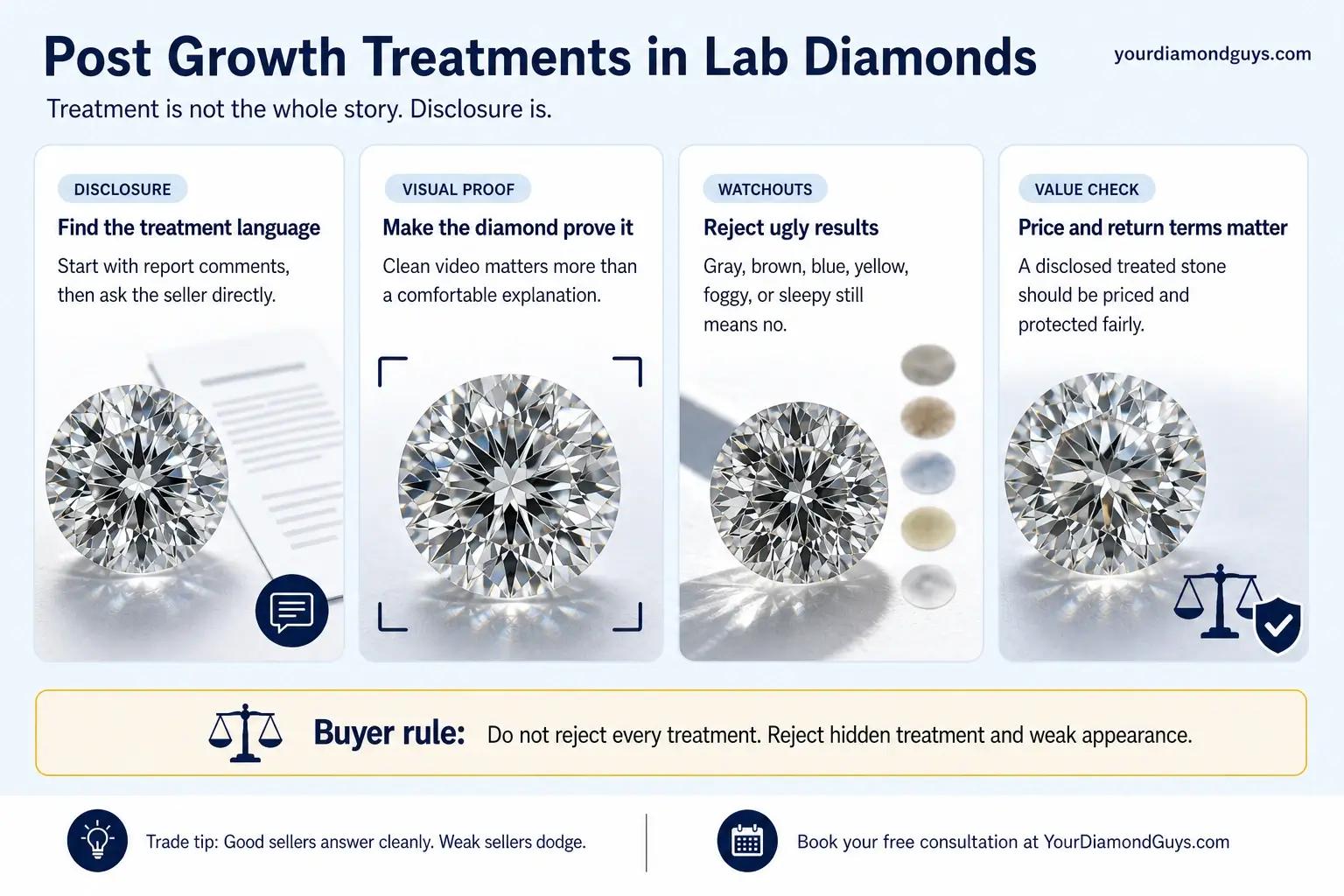
Treatment can improve color or appearance after the diamond grows. The issue is not the existence of treatment by itself. The issue is disclosure, price, transparency, and whether the stone looks right in real video.
What Post Growth Treatment Means
A lab grown diamond forms first. Then it can receive processing after growth to adjust color or improve appearance.
You will see language around post growth treatment, annealing, processing, or treatment disclosure depending on the report and seller.
Do not panic.
Read carefully.
Then compare the video against the story the report tells.
Why Treatment Shows Up
Some lab diamonds grow with body color that the producer wants to improve. Treatment can make the finished stone more marketable.
That is not strange in the lab grown world.
But a treated stone should be priced and presented honestly. If the listing acts like treatment does not matter, I want to know why.
The CVD vs HPHT guide explains how growth method and visual clues can connect.
What To Check On The Report
Look at the comments section first.
Then check growth method, color grade, fluorescence, measurements, and inscription. If the report includes treatment language, save the report and make sure the listing does not hide it.
The IGI lab diamond report guide shows where those details usually matter most.
Treatment Decision Matrix
| Situation | Buyer Reaction |
|---|---|
| Treatment clearly disclosed and video looks clean | Keep reviewing the stone |
| Treatment disclosed but price is too high | Compare harder |
| Treatment language is vague | Ask before buying |
| Seller hides treatment | Walk away |
| Stone looks tinted or hazy after treatment | Reject it |
That last line is important.
Treatment does not excuse a bad looking diamond.
The Visual Checks Matter More Than The Word
I want to see the diamond on a white background. I want face up video. I want side view when body color matters. I want crisp facet edges.
If the diamond looks gray, brown, blue, yellow, foggy, or sleepy, the report language becomes less important.
The stone already gave you the answer.
Use the blue nuance and color tint guide if the body color feels off.
Fluorescence And Glow Can Add Another Question
Treatment conversations often sit near fluorescence and phosphorescence questions.
Fluorescence is a reaction under UV light. Phosphorescence is a lingering afterglow. Neither one automatically ruins a diamond, but visible odd glow deserves a closer look.
The lab fluorescence and phosphorescence guide covers that check.
Trade Insider Moment
In the trade, disclosure changes the tone of the conversation.
A disclosed treated lab diamond can be reviewed fairly. A hidden treated lab diamond makes people stop trusting the seller. That trust break often matters more than the treatment itself.
Good sellers answer cleanly.
Weak sellers dodge.
My Buyer Recommendation
Do not reject every treated lab diamond.
Reject unclear treatment, ugly visuals, bad pricing, and sellers who avoid direct answers.
If the treatment is disclosed, the diamond looks clean, the price reflects the stone, and the return policy protects you, the stone can stay in the running.
What To Ask Before Buying
- Does the report disclose post growth treatment?
- What did the treatment change?
- Does the video show clean body color?
- Does the diamond look transparent and crisp?
- Is the price fair compared with similar untreated stones?
- Can I return it after an in person inspection?
Book your free consultation if you want Rob or Josh to review treatment language before you pay.
Where I Would Compare Treatment Clues
Use these sites as comparison tools, not automatic recommendations. For live listing comparison, I would check similar lab diamonds on Ritani and Blue Nile, then judge the report, video, tint, and return terms before the price gets the final vote.
Stop Trusting Every Diamond Lab!
Questions? Reach out directly for a free consultation, or drop them in the Diamond Buyers Academy community — Rob and Josh answer personally.
Questions Buyers Ask Us
Related Lab Grown Diamond Guides
Keep the full buying path close. These are the next checks that usually affect this decision.
*Some links on our site may earn us a small commission at NO EXTRA cost to you, helping us keep our content free*