Return Policy and Warranty Checklist for Lab Diamonds
Do not buy a lab diamond until the exit is clear.
By Rob Cornfield, Co-Founder of YourDiamondGuys.com. 30+ years in the global diamond trade. Specialist in diamond cut and light performance.
A lab diamond return policy and warranty checklist protects you when the report, video, setting, sizing, or real life look does not match expectations.
This is not the fun part.
It is the part that saves you.
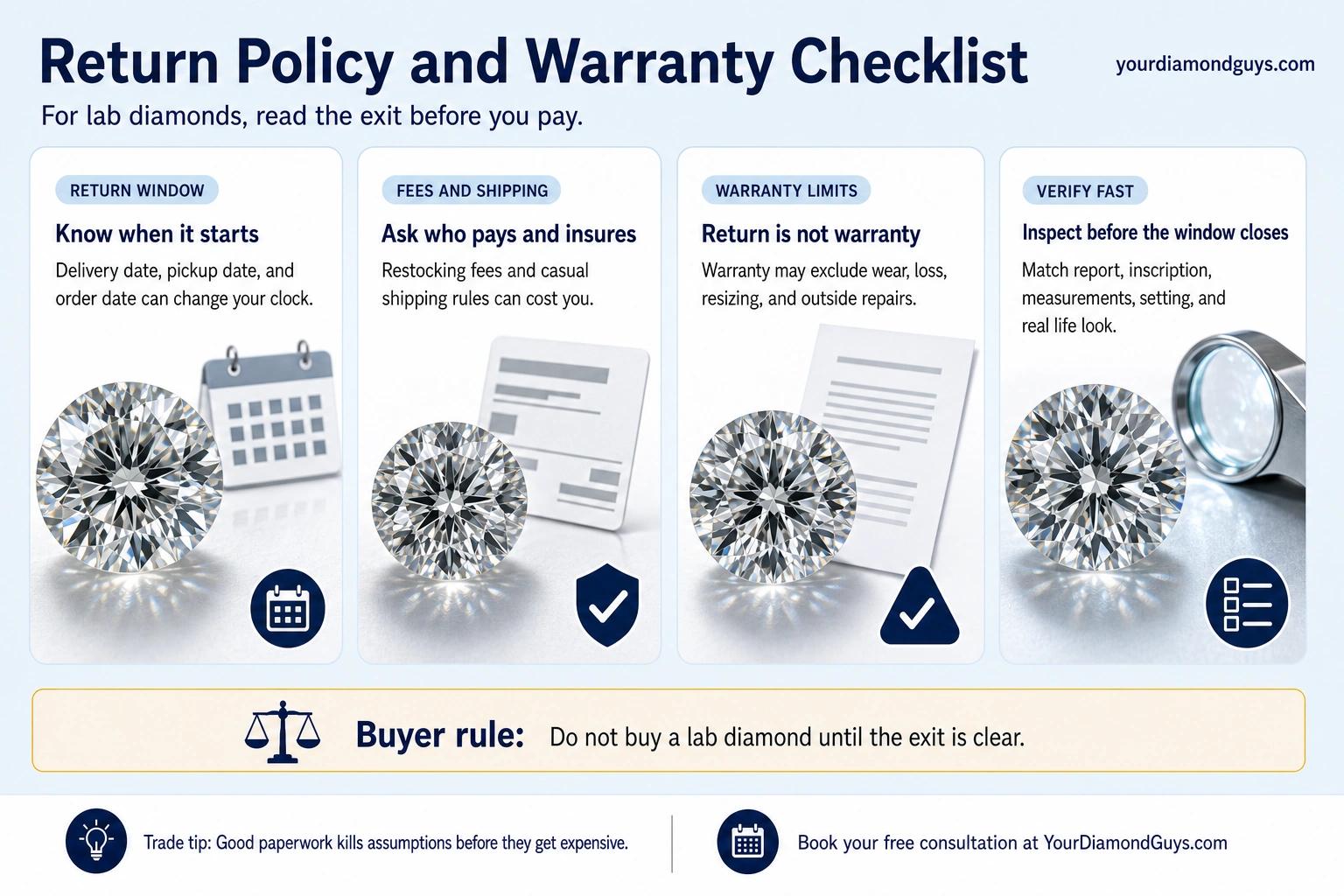
Before you pay, know exactly how long you have to inspect the stone, what fees apply, who pays shipping, and what the warranty excludes.
The Fast Buyer Answer
Buy only when the return policy gives you enough time to verify the diamond after delivery.
That means report match, inscription check, visual inspection, setting review, and any appraisal work you want done.
If the policy is tight or confusing, the diamond needs to be nearly perfect on proof before payment.
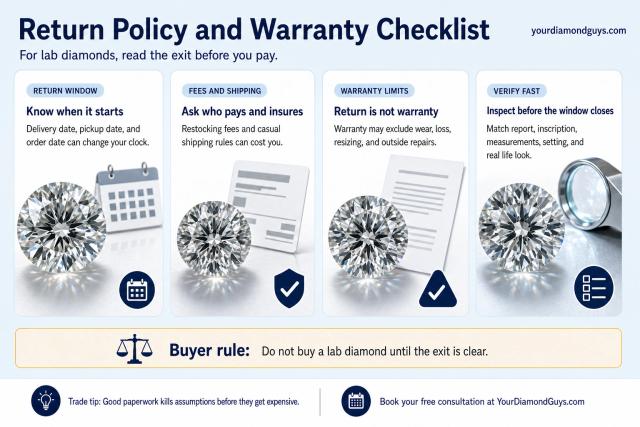
Return Window
The return window is your inspection window.
Ask when it starts. Order date, ship date, delivery date, or ring pickup date can create different outcomes.
Then ask what condition the item must be in for return. Custom settings, resizing, engraving, final sale language, and special orders can change the rules.
Fees And Shipping
Restocking fees matter.
Insured return shipping matters.
Signature requirements matter.
If the ring costs real money, casual shipping language is not enough. You need to know who pays, who insures, and what happens if a package is delayed or damaged.
Warranty Is Not The Same As Return
A return policy lets you undo the purchase.
A warranty covers certain issues after you keep it.
Those are different protections.
Warranty terms often exclude normal wear, loss, theft, center stone damage, resizing from another jeweler, and repairs done outside the seller network.
Read it before the ring is on the finger.
Buyer Checklist
| Protection Item | Ask Before Payment |
|---|---|
| Return window | When does it start and end? |
| Restocking fee | Is any fee charged? |
| Shipping | Who pays and insures the return? |
| Setting work | Does resizing affect returns? |
| Warranty | What is covered and excluded? |
| Upgrade policy | Is lab grown included? |
| Documentation | What paperwork must I keep? |
That checklist should be boring.
Boring is good here.
Verification Belongs Inside The Window
Match the report number, inscription, measurements, and diamond identity before the return period ends.
Use the laser inscription verification guide for the identity steps.
If the seller makes verification hard, that is a problem.
Upgrade And Resale Terms
Lab grown resale expectations need a reality check.
If future flexibility matters, get upgrade or trade in terms in writing. Do not rely on a friendly sentence from a salesperson.
The resale and upgrade guide explains that part in plain language.
Trade Insider Moment
A lot of buyer problems do not come from the diamond.
They come from assumptions.
The buyer assumed resizing was covered. The buyer assumed return shipping was insured. The buyer assumed an upgrade applied to lab grown. Good paperwork kills assumptions before they get expensive.
My Buyer Recommendation
Do not buy a lab diamond until the exit is clear.
A good seller should make the policy easy to understand. If the stone arrives and does not match the proof, you need enough time and enough policy protection to act.
What To Ask Before Buying
- How many days do I have to return it?
- When does the return window start?
- Are there restocking fees?
- Who pays insured return shipping?
- Does resizing affect the return?
- What does the warranty exclude?
- Does the upgrade policy apply to lab grown diamonds?
Reach out to Rob or me at YourDiamondGuys.com if you want help reading the policy before you pay.
Where I Would Compare Protection Options
Use these insurance links as comparison tools, not automatic recommendations. For protection comparisons, I would review BriteCo and Lavalier for coverage, exclusions, appraisal rules, and claim process before choosing a policy.
Thinking About Buying a Diamond Online? Watch This
Questions? Reach out directly for a free consultation, or drop them in the Diamond Buyers Academy community — Rob and Josh answer personally.
Questions Buyers Ask Us
Related Lab Grown Diamond Guides
Keep the full buying path close. These are the next checks that usually affect this decision.
*Some links on our site may earn us a small commission at NO EXTRA cost to you, helping us keep our content free*