Fluorescence In Natural Diamonds
By Rob Cornfield, Co-Founder of YourDiamondGuys.com. 35+ years of experience in the global diamond trade. Specialist in diamond cut and light performance.
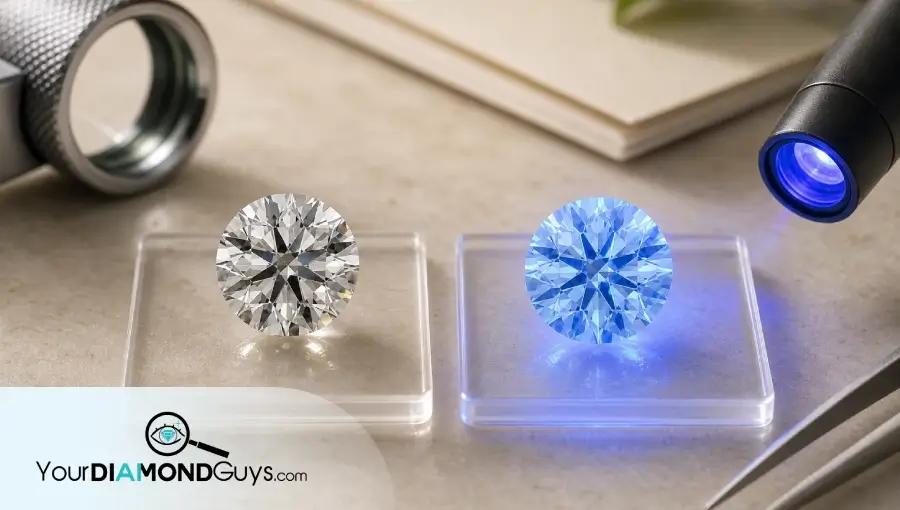
Natural diamond fluorescence is not automatically bad.
Haze is bad. Milkiness is bad. A discount that hides a visual problem is bad.
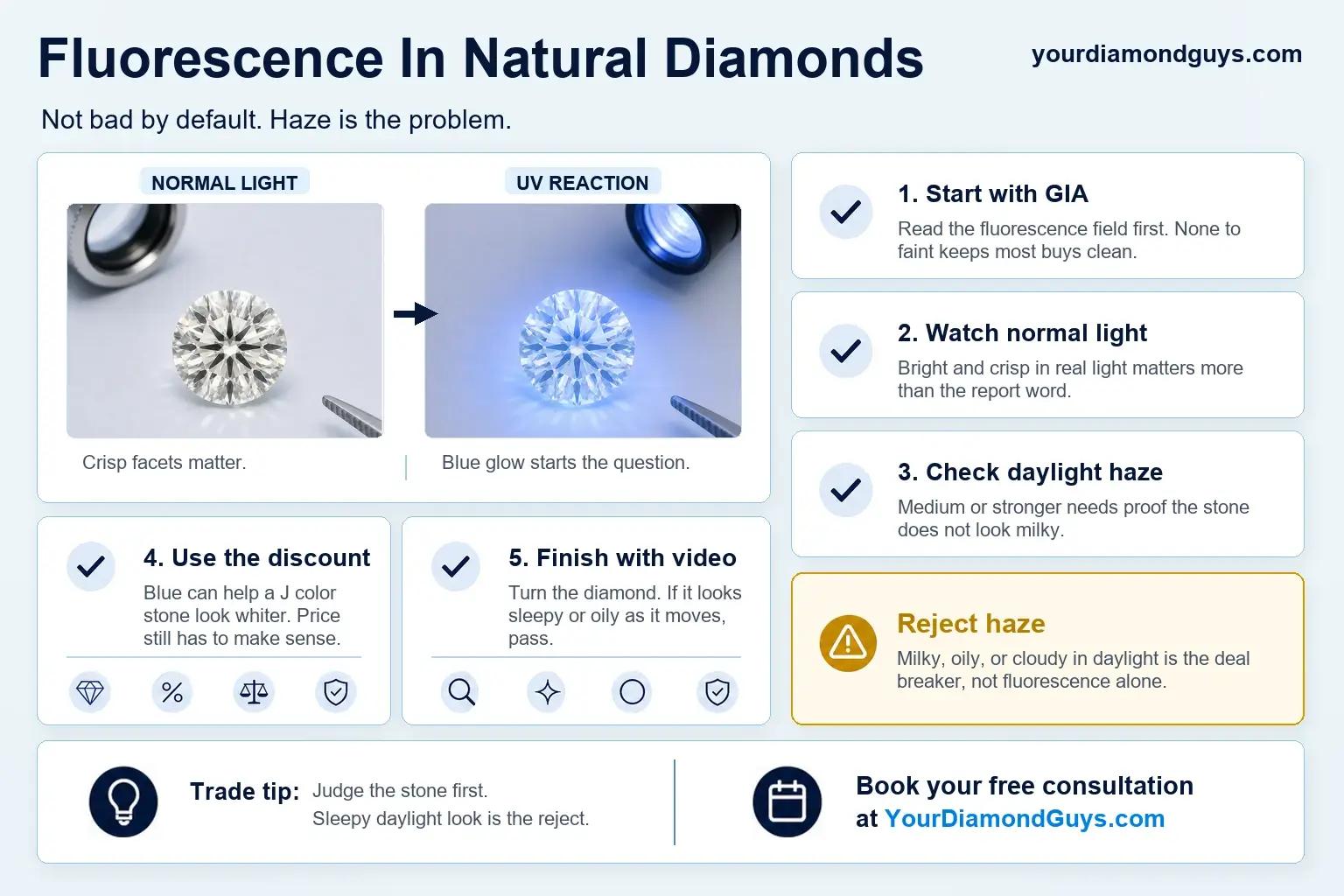
For natural diamonds, start with GIA and check the fluorescence field. For most buyers, none to faint keeps the decision clean.
Dealers do not reject fluorescence by reflex. They reject the stone when fluorescence hurts transparency or makes the diamond look sleepy.
When Fluorescence Helps
Blue fluorescence can make some lower color diamonds face up a touch whiter in certain lighting. That is where the bargain conversation starts.
The stone still has to look crisp. Use the fluorescence and color guide when the question is color interaction.
When Fluorescence Hurts
Medium, strong, and very strong fluorescence need daylight checks, transparency checks, and video review. The issue is not the word fluorescence. The issue is haze or a milky look.
Use realistic diamond lighting, not just jewelry store spotlighting, before accepting a discounted stone.
The Buyer Filter
Here is the practical screen.
| GIA Fluorescence | Buyer Read | My Move |
|---|---|---|
| None | Cleanest decision | Safe default |
| Faint | Usually simple | Still check video |
| Medium | Potential value | Check daylight and haze |
| Strong | Risk and discount both rise | Inspect closely |
| Very strong | Specialist review | Do not buy blind |
My Buyer Recommendation
I want none to faint for most buyers. I will consider stronger fluorescence only when the diamond stays crisp, bright, and correctly priced.
Reach out to Rob or me at YourDiamondGuys.com, or book your free consultation. We will look at the actual stone with you.
How This Fits Into A Real Buying Decision
A buyer sees a J color diamond with medium blue fluorescence and a discount. That can work. But only after checking the actual stone in normal light and making sure the diamond does not look oily or cloudy.
Mistakes I Would Avoid
- Do not reject every fluorescent diamond without looking.
- Do not accept strong fluorescence because the price looks good.
- Do not judge fluorescence under only one light source.
- Do not confuse a dirty diamond with true haze.
A Practical Example
I have seen faint fluorescence mean nothing in real life. I have also seen strong fluorescence make a clean report look hazy in daylight. The report word starts the check. The stone finishes it.
What To Ask Before You Buy
- What fluorescence strength appears on the GIA report?
- Does the stone look hazy in daylight?
- Is the discount enough for the extra question?
- Does the color grade benefit from the fluorescence or suffer from it?
Where I Would Compare Fluorescence Proof
Use these sites as comparison tools, not automatic recommendations. I would compare similar fluorescence grades on Blue Nile and Ritani, then look for daylight proof, transparency, and a fair price before calling it a deal.
Fluorescence can be Scary!
Questions? Reach out directly for a free consultation, or drop them in the Diamond Buyers Academy community — Rob and Josh answer personally.
Questions Buyers Ask Us
*Some links on our site may earn us a small commission at NO EXTRA cost to you, helping us keep our content free*