Inclusions In Natural Diamonds: Character Or Risk?
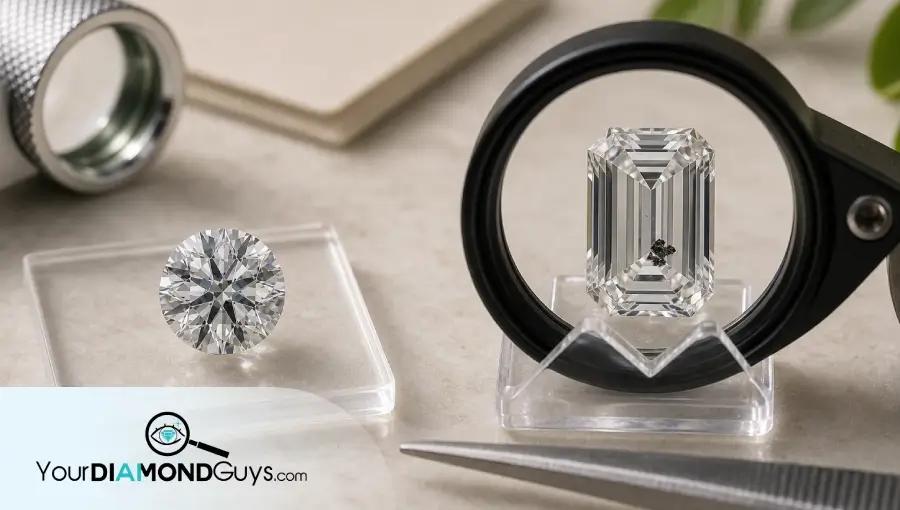
By Rob Cornfield, Co-Founder of YourDiamondGuys.com. 35+ years of experience in the global diamond trade. Specialist in diamond cut and light performance.
Not every natural diamond inclusion is a deal breaker.
Some are tiny fingerprints of the stone. Others are durability or visibility problems hiding behind a friendly clarity grade.
For natural diamonds, start with GIA. Then look past the grade and ask what the inclusion is, where it sits, and whether the shape makes it easier to see.
In the trade, we do not judge inclusions by name alone. Type, location, size, relief, and setting plan all matter.
The Inclusion Types I Treat Carefully
Bruise, chip, cavity, knot, etched channel, and indented natural are the words that make me slow down. They deserve a closer look because they can affect durability, edge safety, or the way the diamond handles wear.
A feather near the girdle in a pointed shape gets a different reaction than a tiny pinpoint near the edge of a round brilliant.
Shape Changes Inclusion Visibility
Use the shape color and clarity visibility guide before treating a clarity grade as universal. Emerald and Asscher cuts show more. Round brilliants hide more.
The color versus clarity guide helps decide whether clarity deserves more budget than color in the specific stone.
The Buyer Filter
This table separates character from risk.
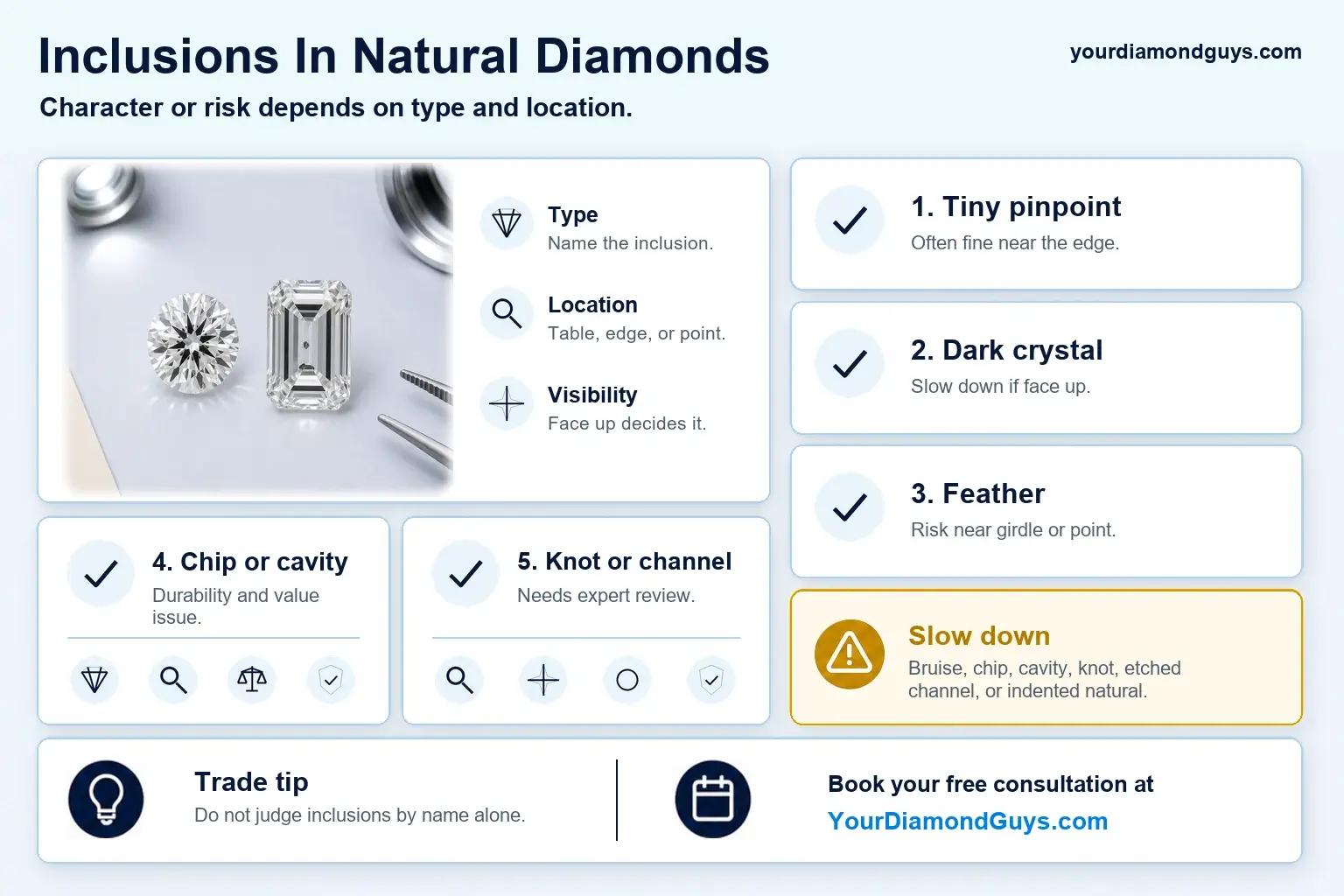
| Inclusion Situation | Usually Fine | Slow Down |
|---|---|---|
| Tiny pinpoint near edge | Often harmless | If clustered and hazy |
| Small crystal off table | Often acceptable | If dark and visible face up |
| Feather | Sometimes fine | If it reaches girdle or point |
| Chip or cavity | Rarely casual | Durability and value issue |
| Knot or etched channel | Needs expert review | Do not ignore |
My Buyer Recommendation
Buy eye clean, not blind. I want safe inclusion type, safe location, clean transparency, and a setting plan that does not pretend risk disappears.
Reach out to Rob or me at YourDiamondGuys.com, or book your free consultation. We will look at the actual stone with you.
How This Fits Into A Real Buying Decision
A buyer considering an SI1 oval should not ask only whether the stone is eye clean. Ask where the inclusion sits, whether the bow tie draws attention to it, and whether the setting protects weak spots.
Mistakes I Would Avoid
- Do not judge clarity from the grade alone.
- Do not ignore inclusion location.
- Do not hide a risky inclusion with a prong and call the decision solved.
- Do not compare step cuts and round brilliants with the same clarity tolerance.
A Practical Example
A VS2 emerald cut with a visible dark crystal can bother me more than an SI1 round with a tiny white inclusion near the edge. The grade is not the whole story.
What To Ask Before You Buy
- What type of inclusion is it?
- Where is it located?
- Can I see it in normal viewing distance?
- Does the inclusion affect durability, transparency, or light return?
Where I Would Compare Inclusion Visibility
Use these sites as comparison tools, not automatic recommendations. I would compare inclusion visibility on Whiteflash and Blue Nile, then judge the actual video, transparency, and location of the marks before the clarity grade gets the final vote.
Lab Grown vs Natural Diamond — They Look Identical. Here's Why One Costs Thousands More.
Questions? Reach out directly for a free consultation, or drop them in the Diamond Buyers Academy community — Rob and Josh answer personally.
Questions Buyers Ask Us
*Some links on our site may earn us a small commission at NO EXTRA cost to you, helping us keep our content free*