Which Diamond Shapes Show Color the Most?
By Rob Cornfield, Co-Founder — YourDiamondGuys.com Rob has over 30 years of experience in the global diamond trade, specializing in diamond cut and light performance.
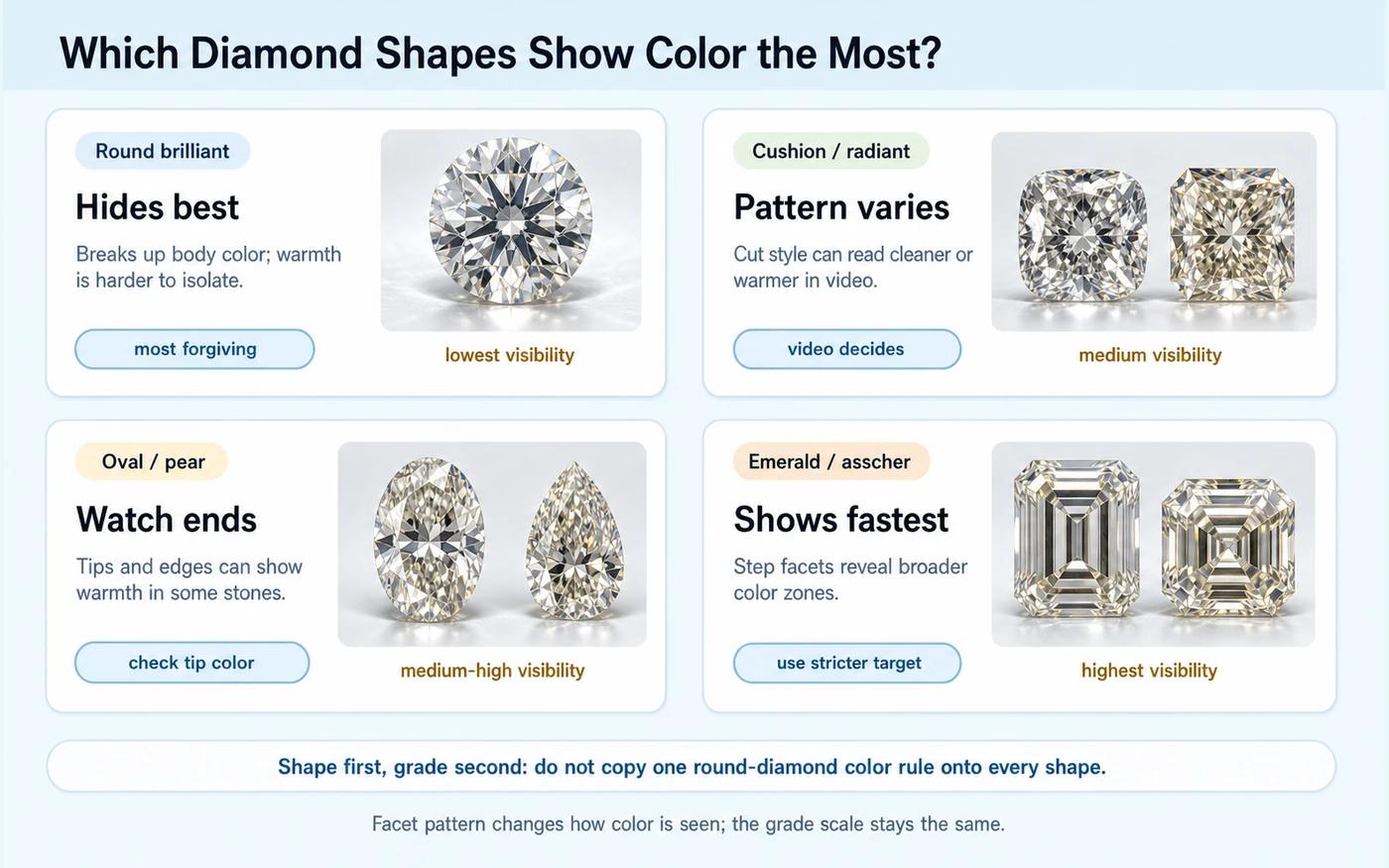
Rounds hide color best. Step cuts show it fastest. Ovals, pears, cushions, and radiants need video because the pattern changes everything.
Most buyers compare color grades without thinking about shape. That is a mistake. Shape and facet pattern decide how much color your eye actually sees.
The GIA color scale stays the same, but your eye does not read every shape the same way.
A round is forgiving. An emerald cut is honest. That is the kind of thing the trade knows before the client ever sees the certificate.
How I Would Shop It
Shape changes color visibility, so compare the main diamond color guide with diamond shapes before setting one color target for every diamond.
What Changes The Call
Facet pattern is the practical reason shape matters. Brilliant style facets break up body color. Step cuts show broader flashes and larger transparent areas.
Elongated shapes also need attention at the ends, where color can pool visually near tips or corners.
| Factor | Why It Matters | Buyer Move |
|---|---|---|
| Round brilliant | Usually hides color best | G to H is a strong starting point |
| Emerald or Asscher | Shows body color faster | F to G is safer for white metal |
| Oval, pear, marquise | Warmth can collect near tips | G to H or better if color sensitive |
| Cushion or radiant | Depends on facet pattern | Compare actual videos |
Where I Start
Use a stricter range for step cuts and elongated stones, then loosen only when the actual video proves the warmth is controlled.
How To Check It In Video
- Check the ends of ovals and pears.
- Look through the middle of step cuts.
- Do not copy a round diamond color rule onto every shape.
How This Plays Out
The final color target should change by shape. A round can be forgiving. An emerald cut, asscher cut, or elongated stone can need a tighter range.
Mistakes I Would Avoid
- Do not pay for a color grade you cannot see in the finished ring.
- Do not judge color from one studio photo.
- Do not ignore cut quality when judging face up whiteness.
A Practical Example
A buyer can love J color in a round brilliant, then dislike J color in an emerald cut. That is not inconsistent. The emerald cut gives the eye a clearer view of body color.
What To Ask Before You Buy
- What shape am I buying?
- Does the shape have open facets?
- Do the tips show warmth?
- Can I compare one grade higher in the same shape?
If you want Josh or me to look at the stone with you, book your free consultation at YourDiamondGuys.com.
Where To Compare Live Listings
For shape comparisons, keep the shape fixed. I would look at similar stones on Brilliant Earth and Blue Nile before deciding the color target.
Choosing the Right Diamond Shape?
Not all diamond shapes show color the same way. Some shapes can hide warmth better, while others may make color more noticeable, especially in lower color grades.
Watch the video below to learn how diamond shape affects visible color, so you can choose the right shape and color grade with more confidence.
Questions? Reach out directly for a free consultation, or drop them in the Diamond Buyers Academy community — Rob and I answer personally.
Frequently Asked Questions
Round brilliant. It breaks up body color better than most shapes.
Emerald and asscher cuts. They are open and honest.
They can, especially near the ends.
Some do. Some do not. The video decides.
Pick the shape first. Then set the color target.
*Some links on our site may earn us a small commission at NO EXTRA cost to you, helping us keep our content free*