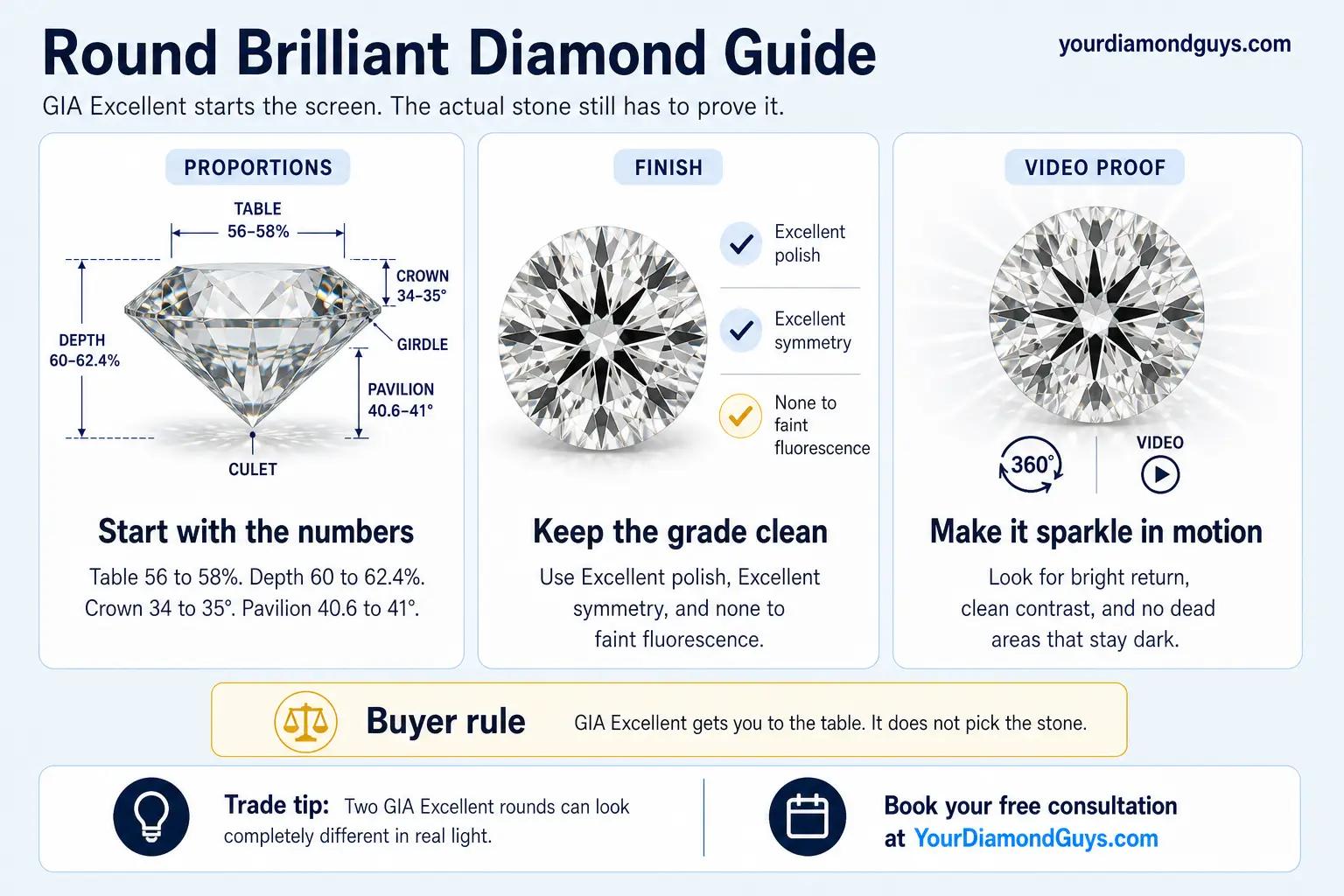
Round Brilliant Diamond Guide
Use this when you want the most predictable sparkle, then check GIA Excellent, proportions, spread, polish, symmetry, and video.
Free expert guidance by email or video chat.
No pressure, No sales pitch. Just honest help from diamond experts.
By Josh Allen, Co-Founder of YourDiamondGuys.com. Fifth generation diamantaire with 30+ years in the global diamond trade. Former supplier to Tiffany & Co., Cartier, and Harry Winston.
Diamond shape is the first visual decision, but it is not just style. Shape changes sparkle, face up size, color visibility, clarity visibility, durability, setting choice, and how hard the diamond is to buy well.
Most buyers pick the shape they like, then treat every other decision the same way. That is where the trouble starts. A round brilliant, oval, emerald, cushion, and marquise do not hide problems the same way.
For natural diamonds, start with GIA. The report gives the first facts worth trusting, but the actual images and video still decide whether the diamond earns the money.
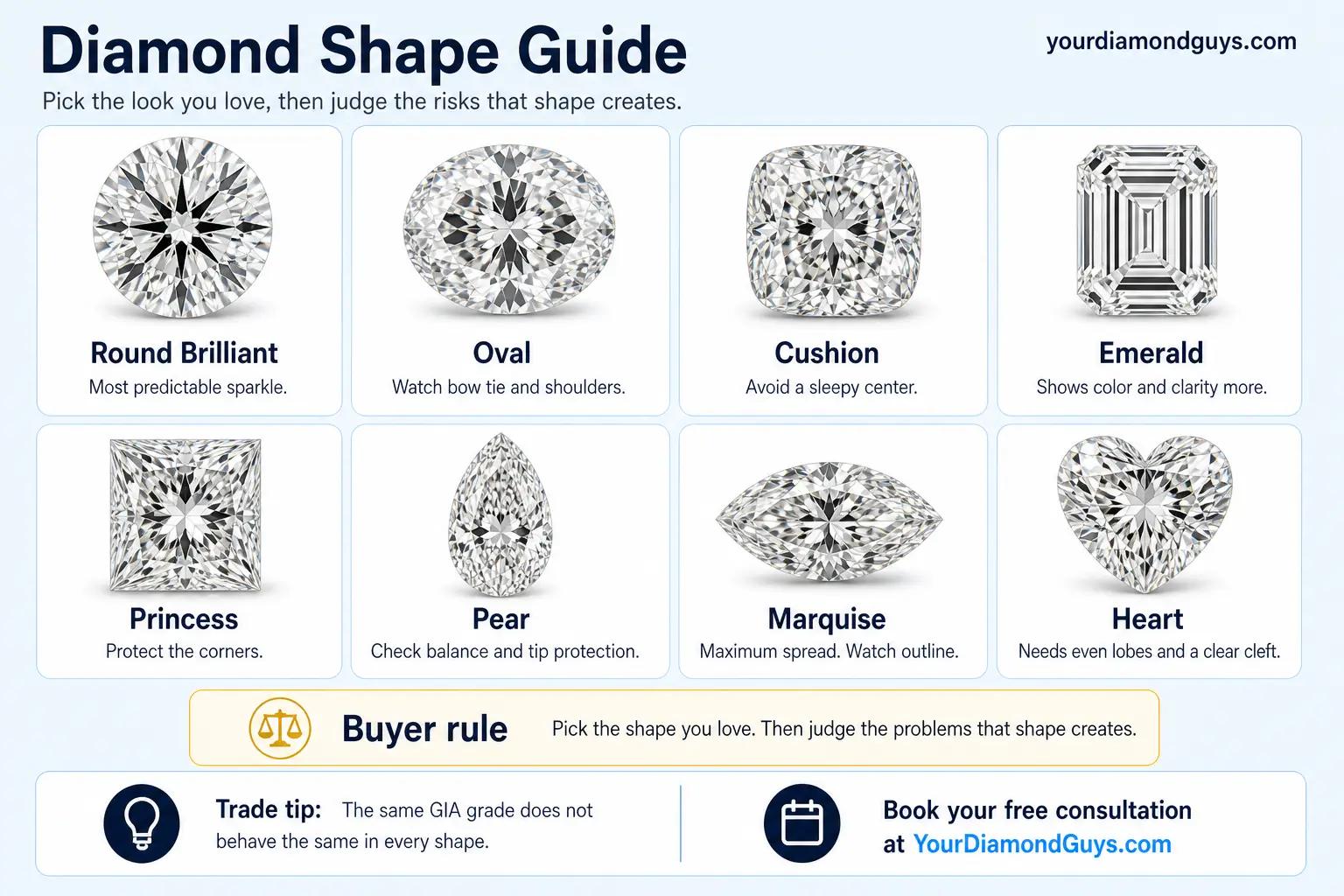
On a dealer desk, shape sorts the conversation fast. A round gets judged by stricter proportion rules. An oval gets watched for bowtie. An emerald gets checked for windowing before anyone gets excited about the price.
| Check | Buyer Meaning |
|---|---|
| Sparkle style | Round, cushion, oval, pear, marquise, princess, and radiant shapes can give more active sparkle. |
| Quiet flashes | Emerald, Asscher, and baguette shapes show broader step cut flashes instead of constant glitter. |
| Face up size | Oval, pear, and marquise shapes usually look larger for the carat when the depth is not hiding weight. |
| Durability | Points and corners need better setting protection than rounded shapes. |
| Color and clarity | Step cuts show more, brilliant cuts hide more, and mixed cuts sit in the middle. |
This guide is the hub. Use it to pick the shape direction first, then move into the specific guide for that shape or risk.
If you already know you want an oval, go straight to bowtie, shoulders, and ratio. If you want an emerald or Asscher, go straight to windowing, color, and clarity. If you want a pointed shape, go straight to durability and setting protection.
This page is the starting point for the whole diamond shape cluster. Start with the broad shape choice here, then move into the guide that matches the risk you are actually trying to avoid.
Use this when you want the most predictable sparkle, then check GIA Excellent, proportions, spread, polish, symmetry, and video.
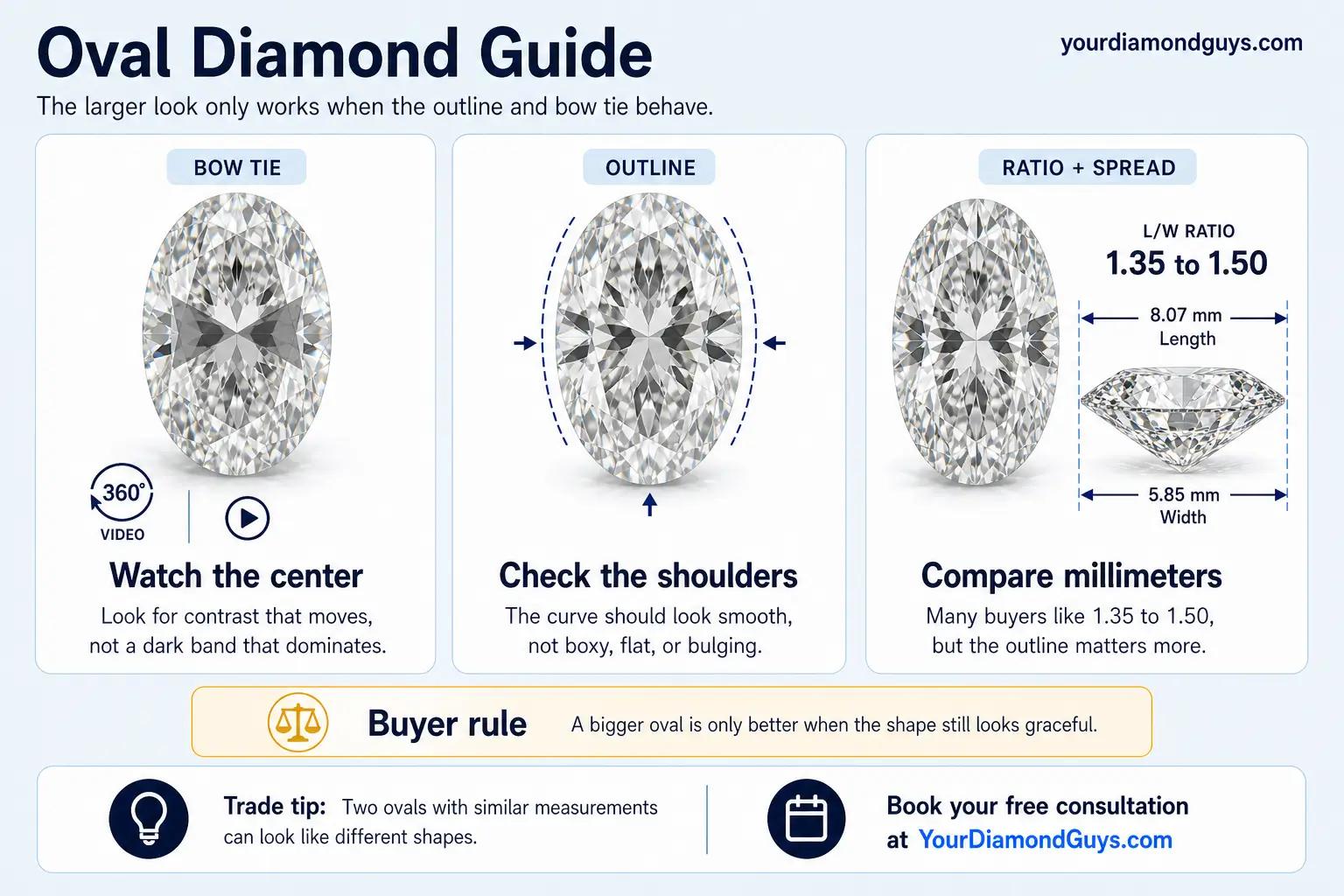
Start here for an elongated look. The big checks are bowtie, shoulder shape, length to width ratio, spread, and video.
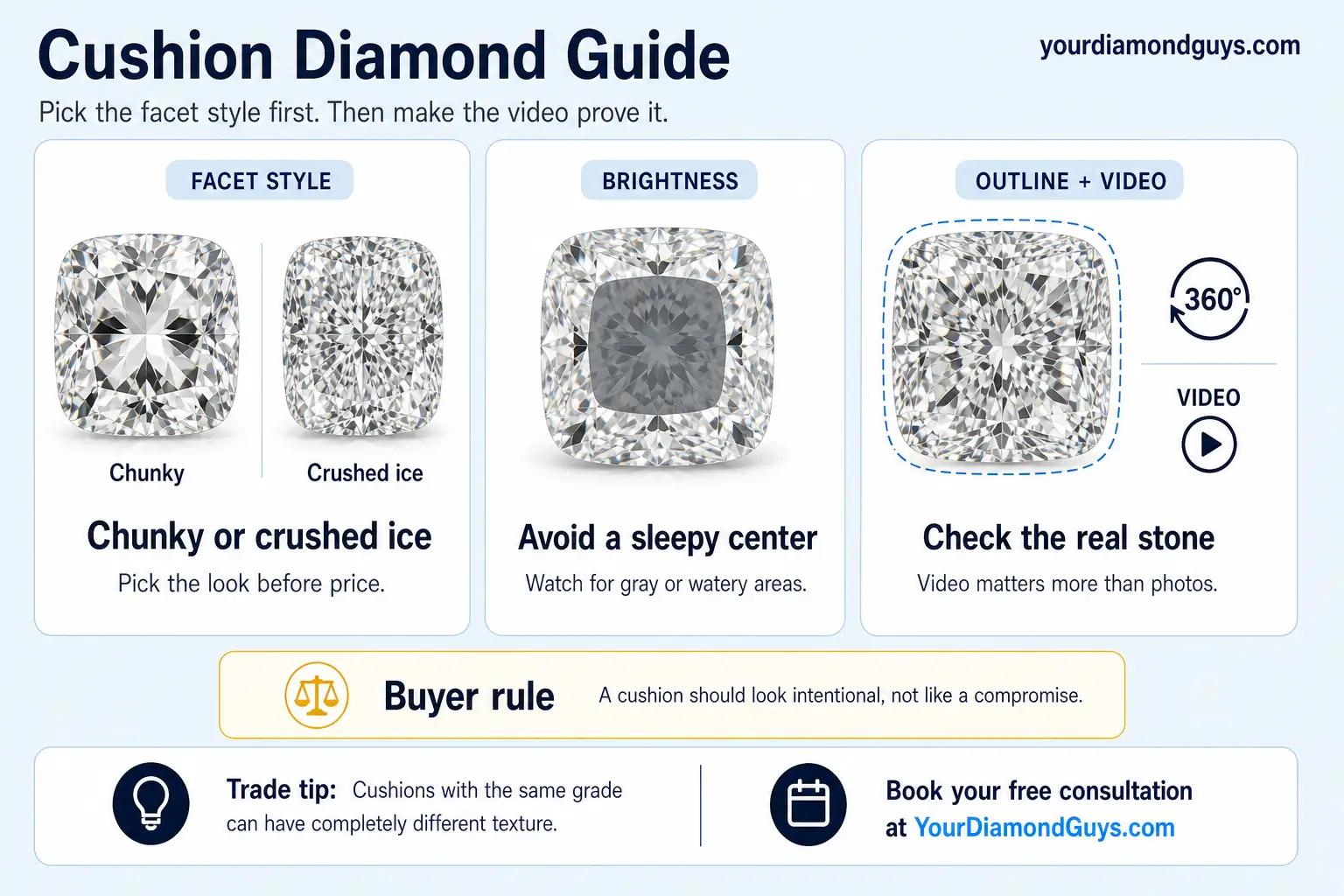
Use this before buying a cushion. Facet style, brightness, outline, and sleepy centers decide whether the stone earns attention.
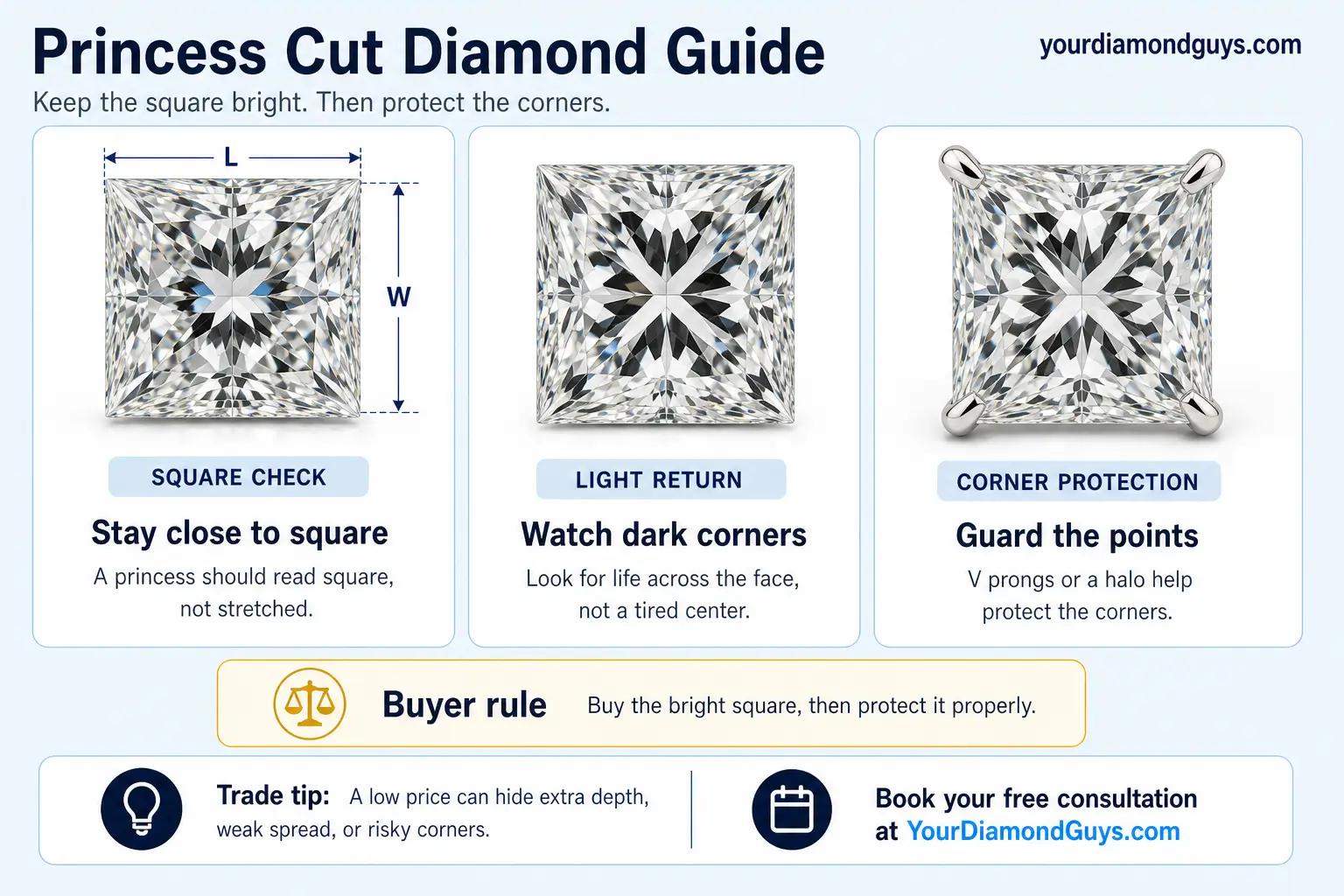
Use this for square sparkle. Check the ratio, corners, light return, setting protection, and whether the center looks alive.
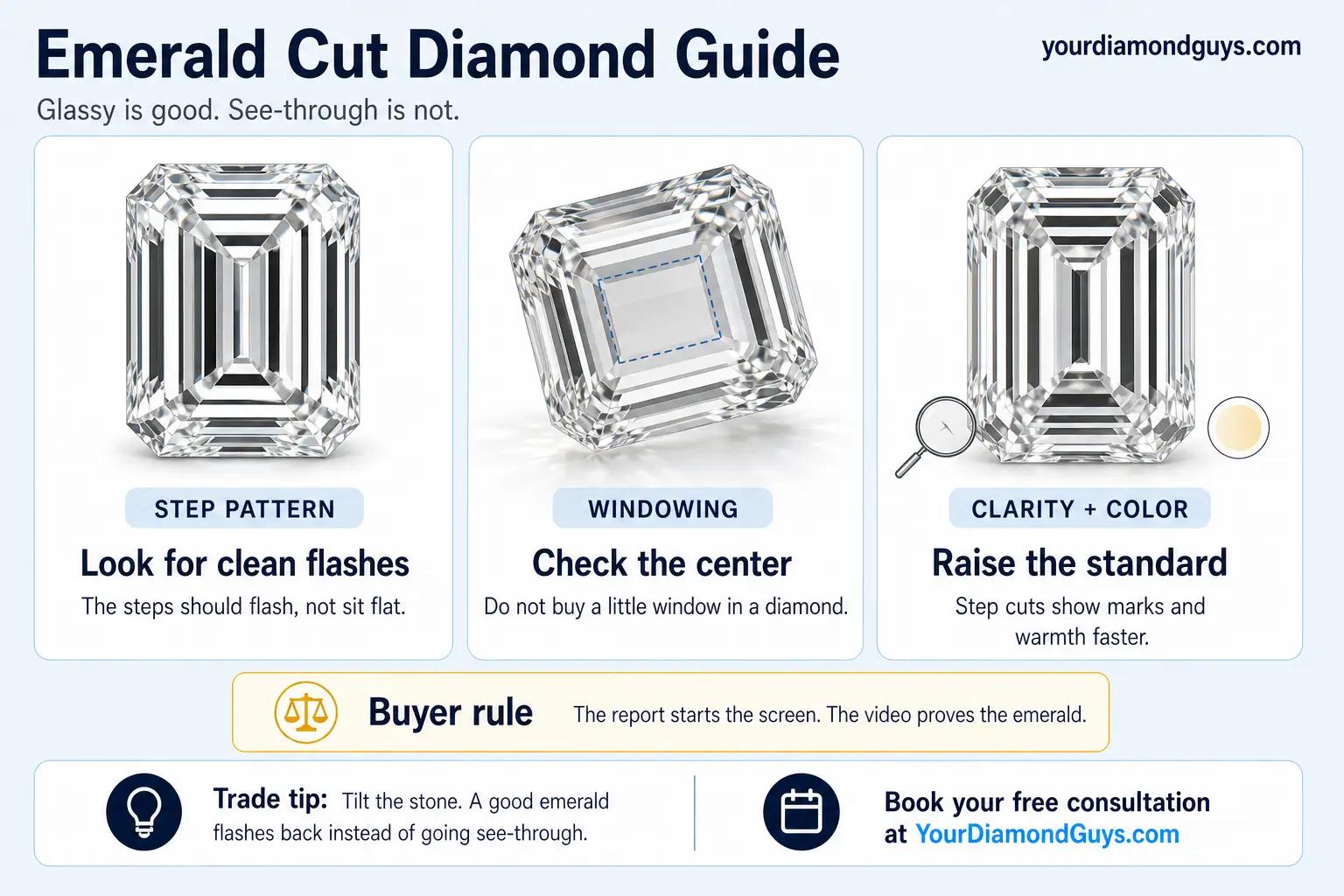
Start here for the clean step cut look. Windowing, color, clarity, and pattern balance matter more than a busy sparkle claim.
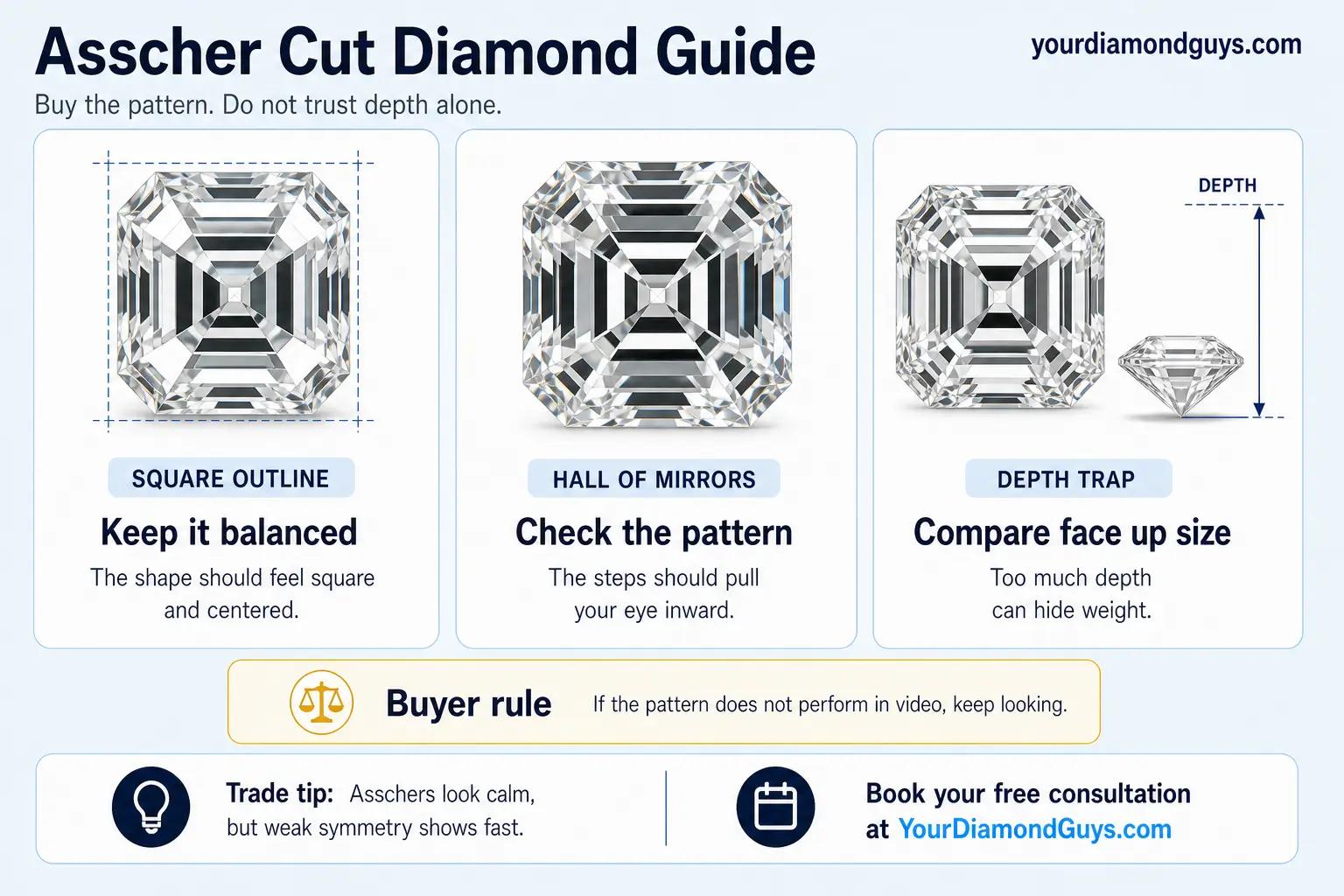
Use this for square step cuts. The trade checks are face up size, depth, hall of mirrors pattern, color, and clarity.
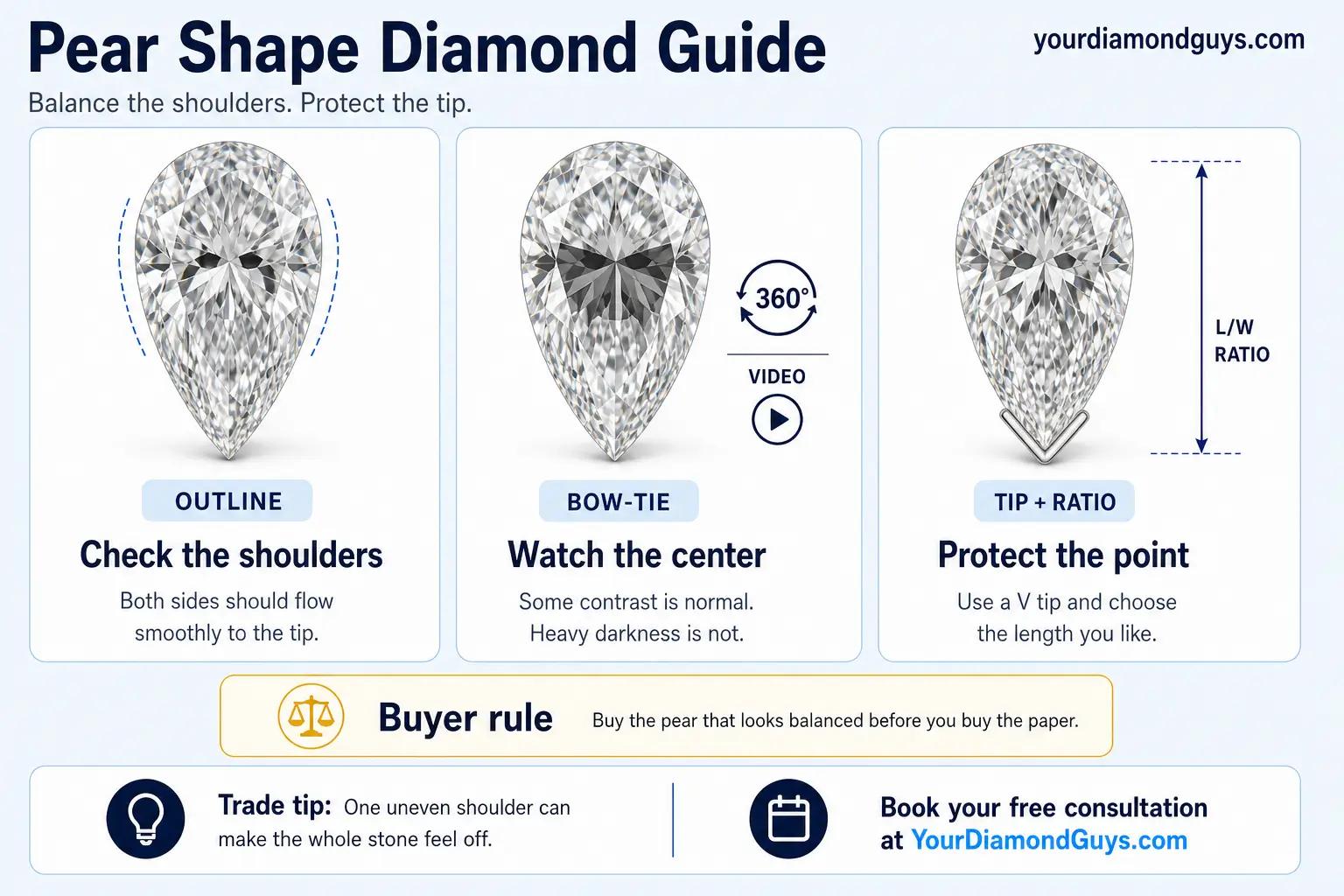
Start here for finger length and personality. Watch the shoulders, bowtie, point protection, symmetry, and ratio.
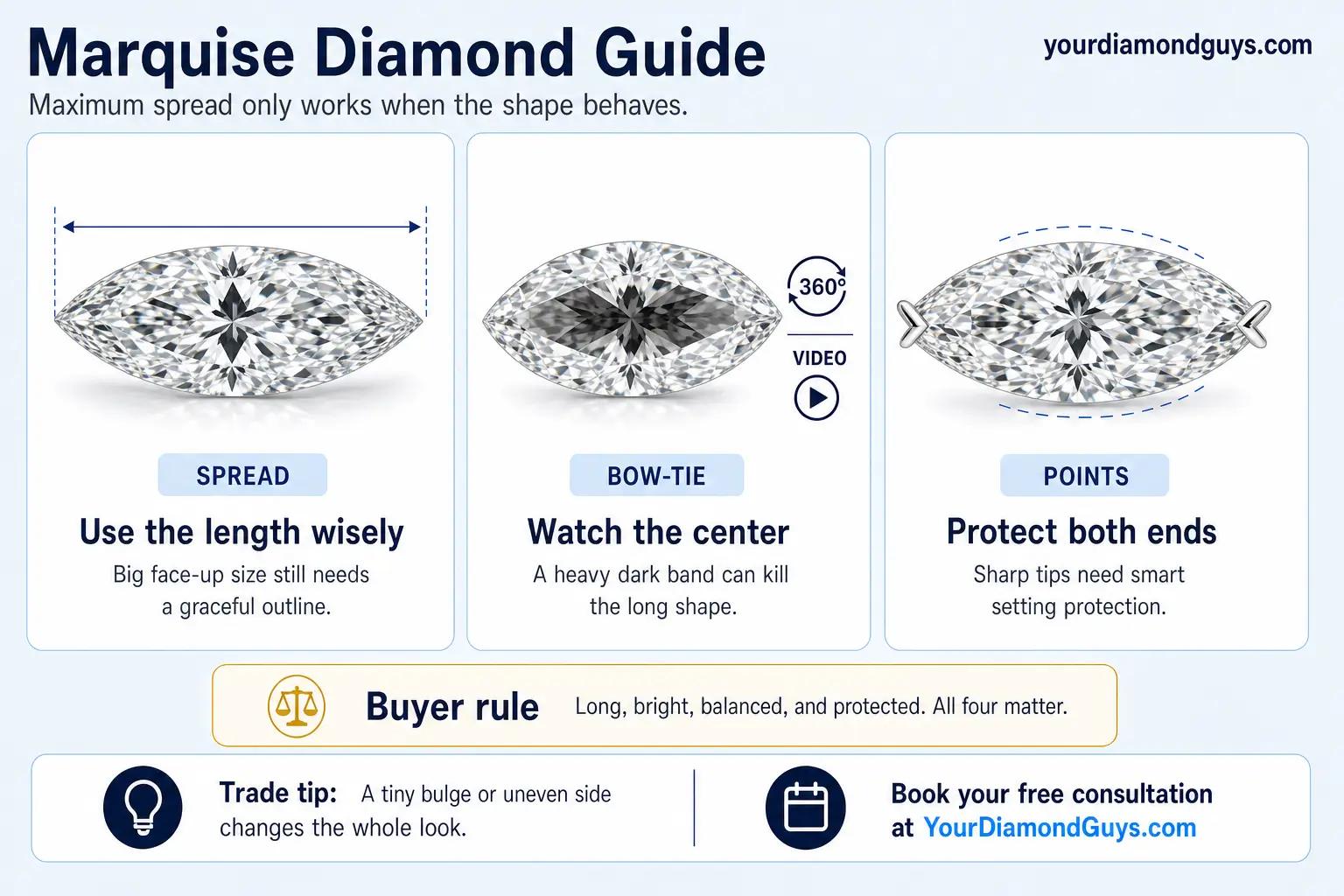
Use this when spread is the goal. Bowtie, outline shape, belly balance, tip protection, and real measurements decide the buy.
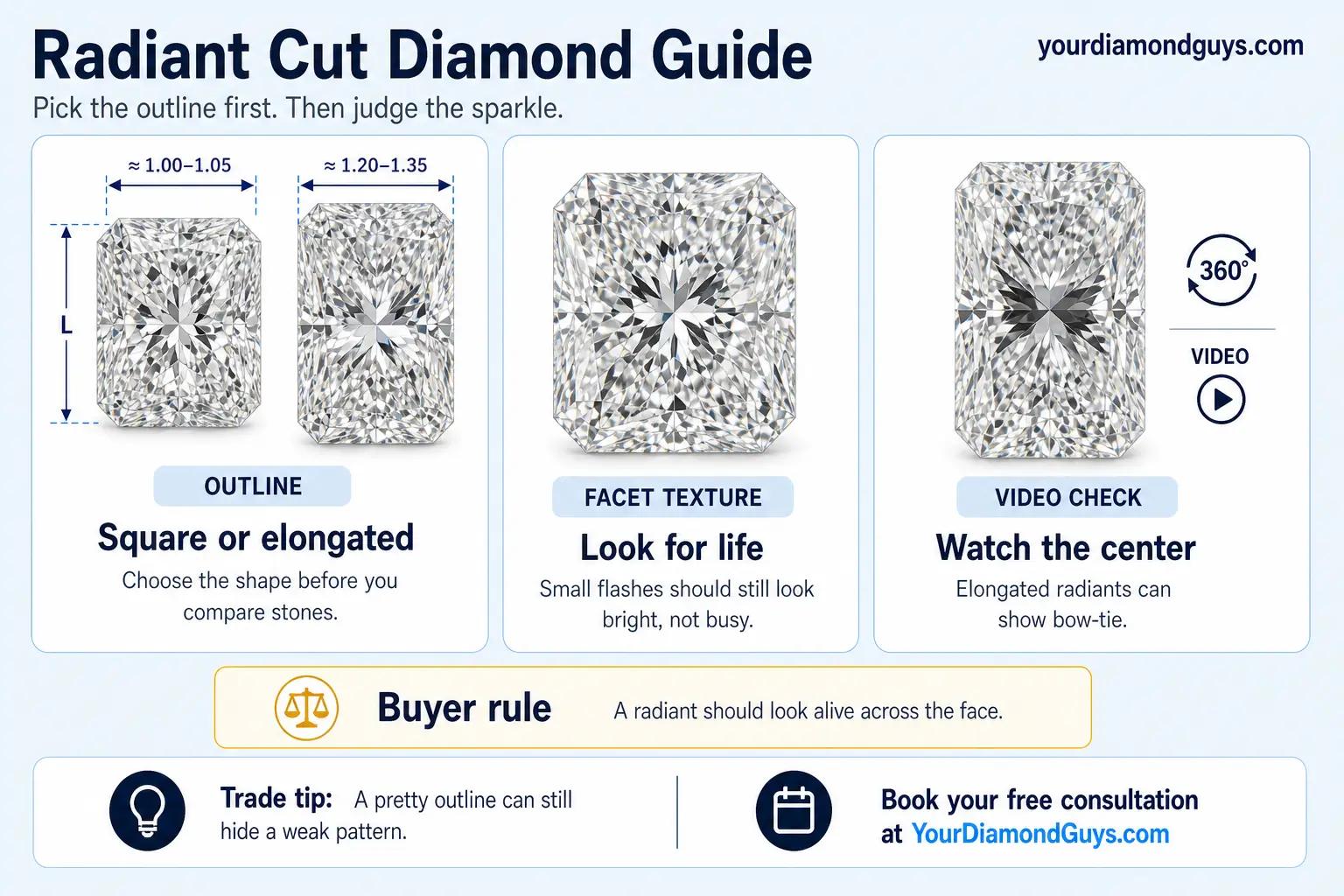
Use this for clipped corners and bright mixed cut sparkle. Check facet texture, ratio, color visibility, and video before price.
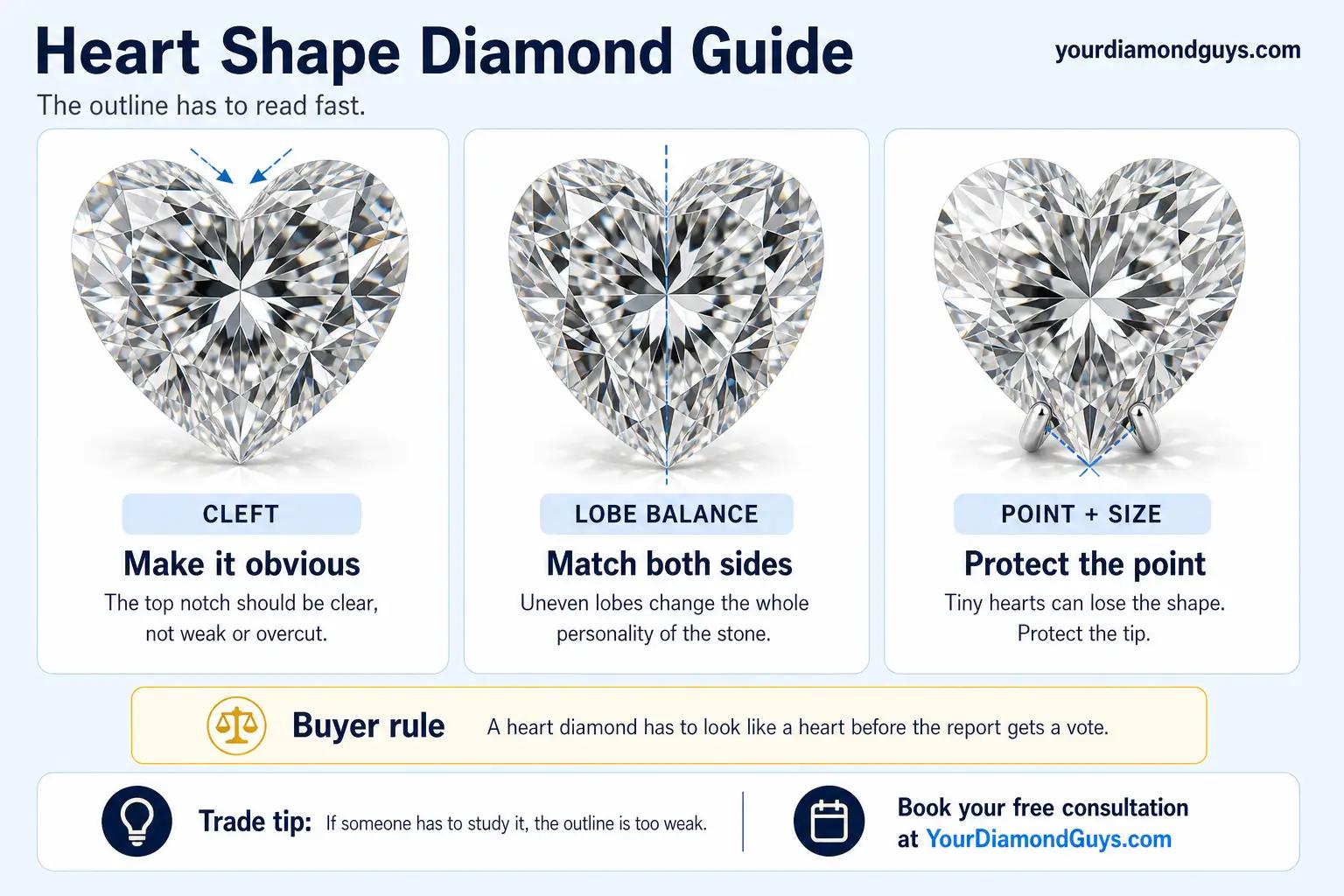
Start here for a heart shape that reads clearly. The cleft, lobes, outline, size, and point protection do the heavy lifting.
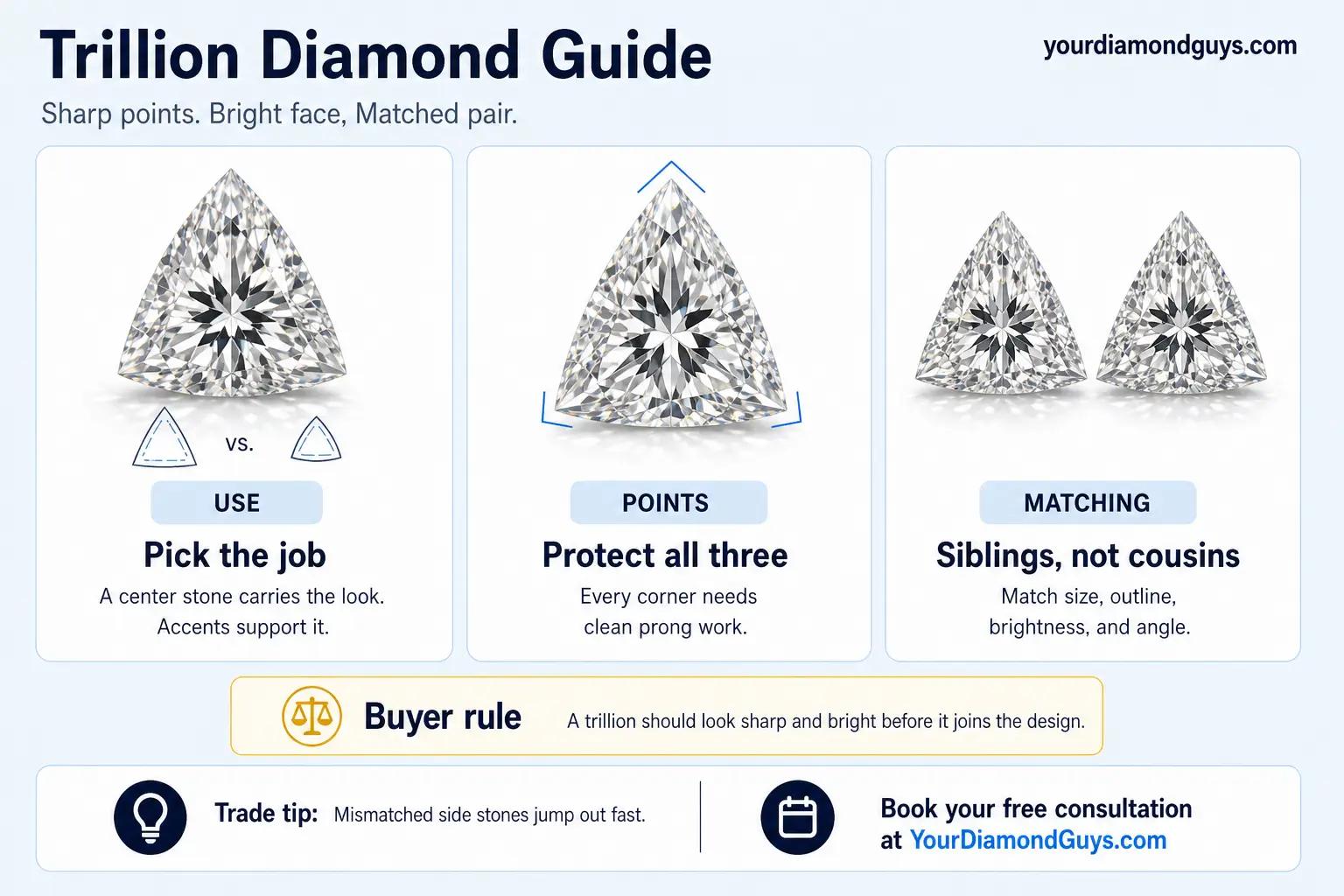
Use this for bold centers or side stones. Check point durability, symmetry, matching, spread, and whether the corners are protected.
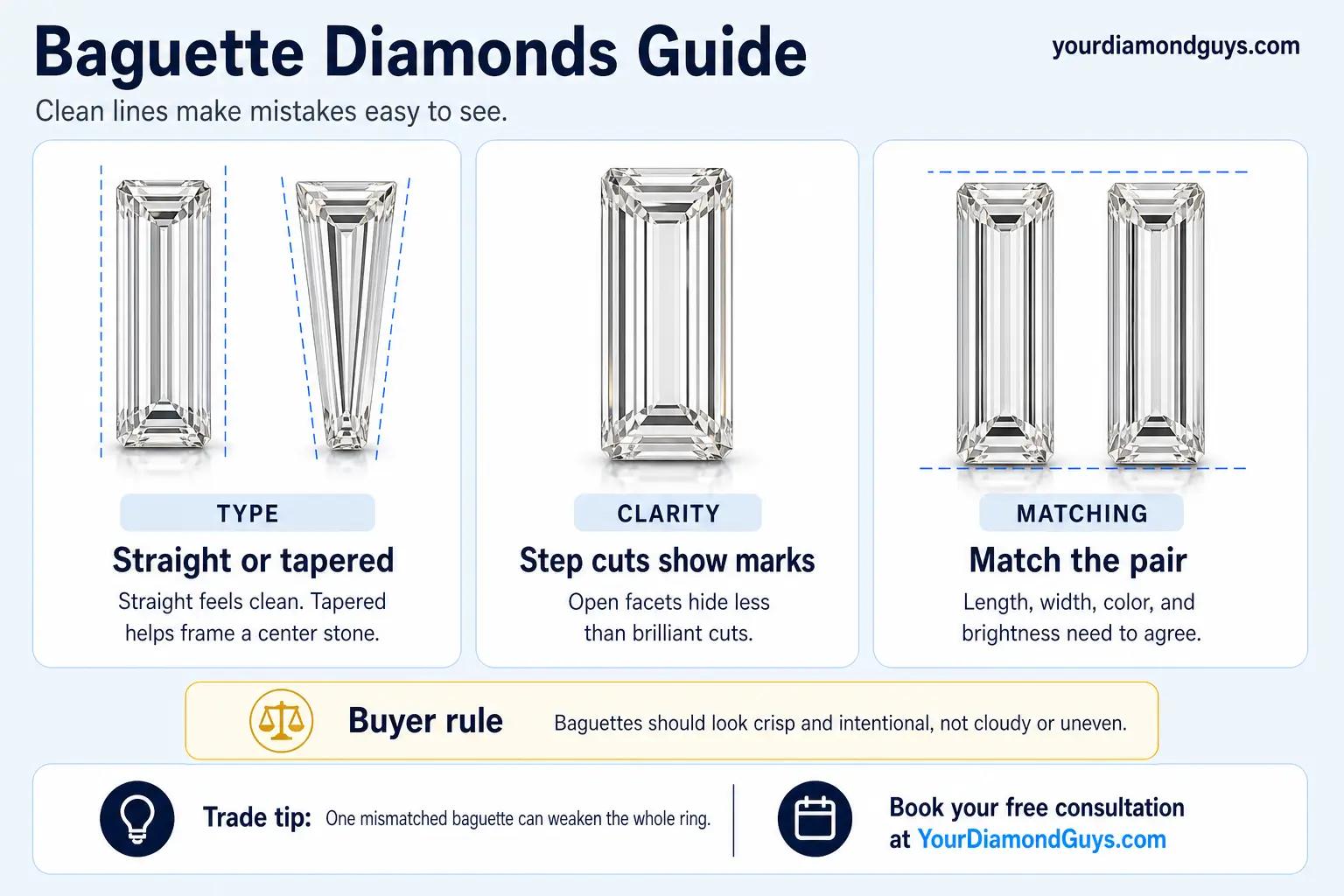
Use this for clean accent geometry. Matching, clarity, color, straight versus tapered shape, and step cut transparency matter most.
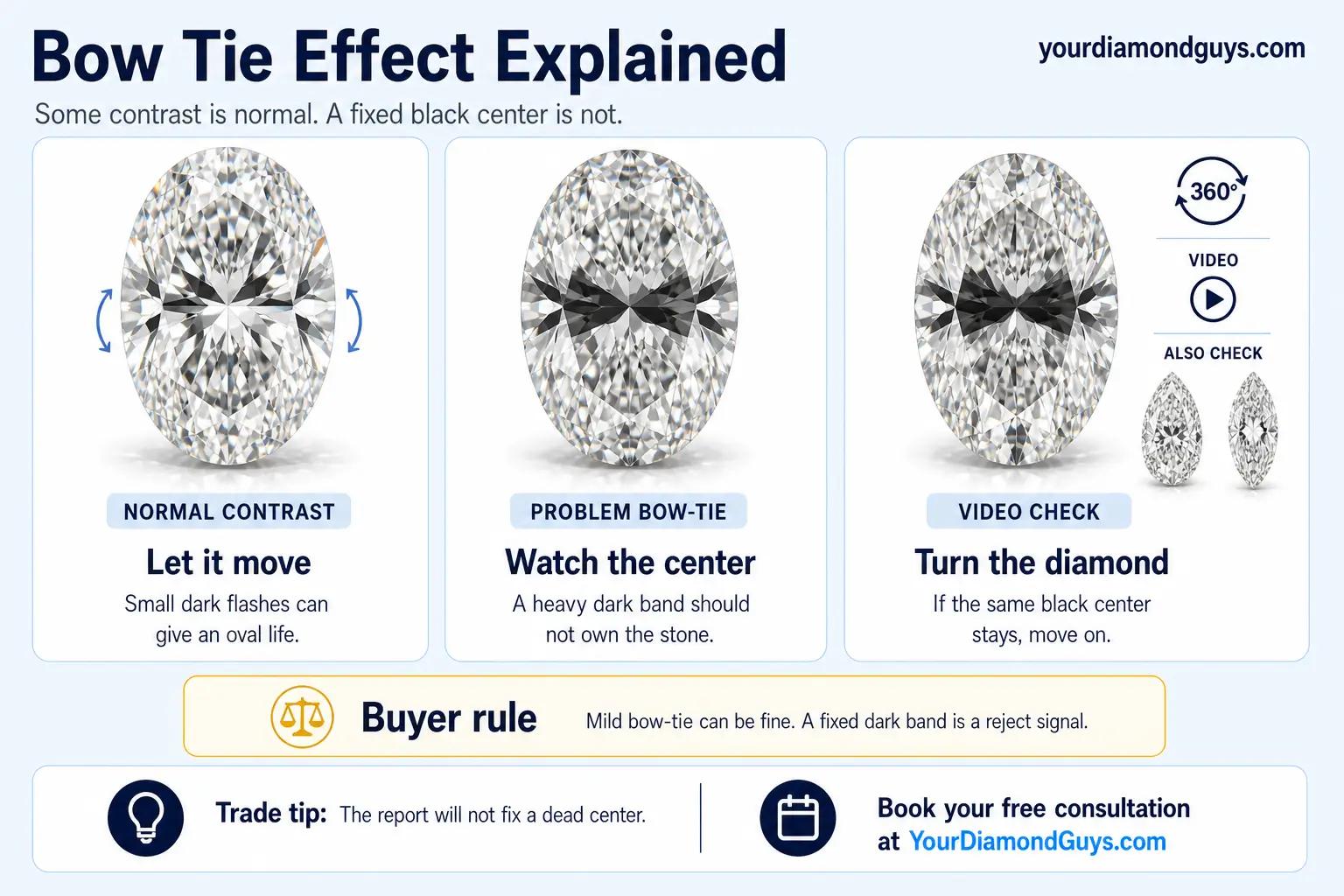
Use this before buying oval, pear, marquise, or radiant shapes. Some contrast is normal. A dead center is the problem.
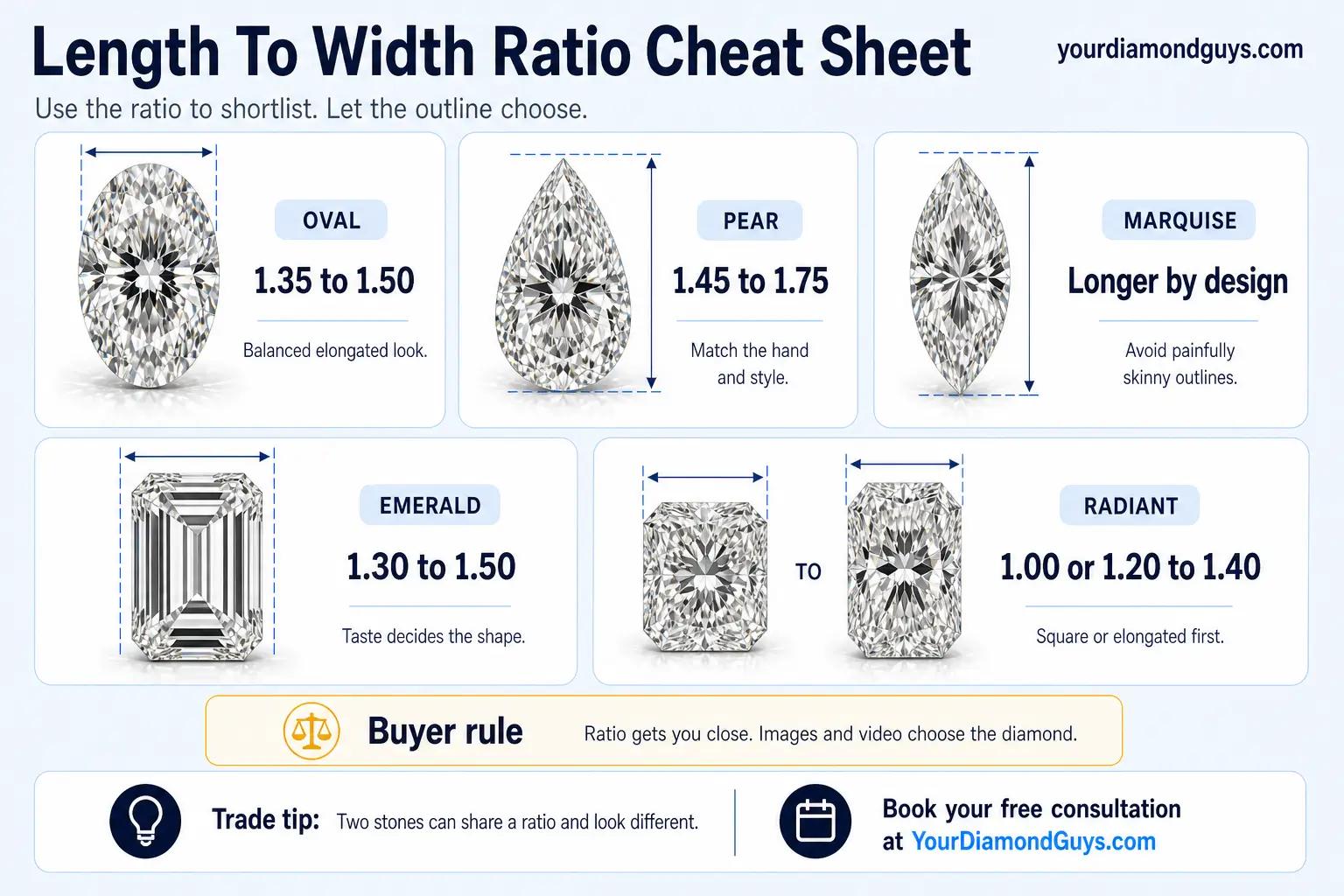
Use this to choose the shape personality. Ratio changes outline, finger coverage, setting fit, and how balanced the diamond feels.
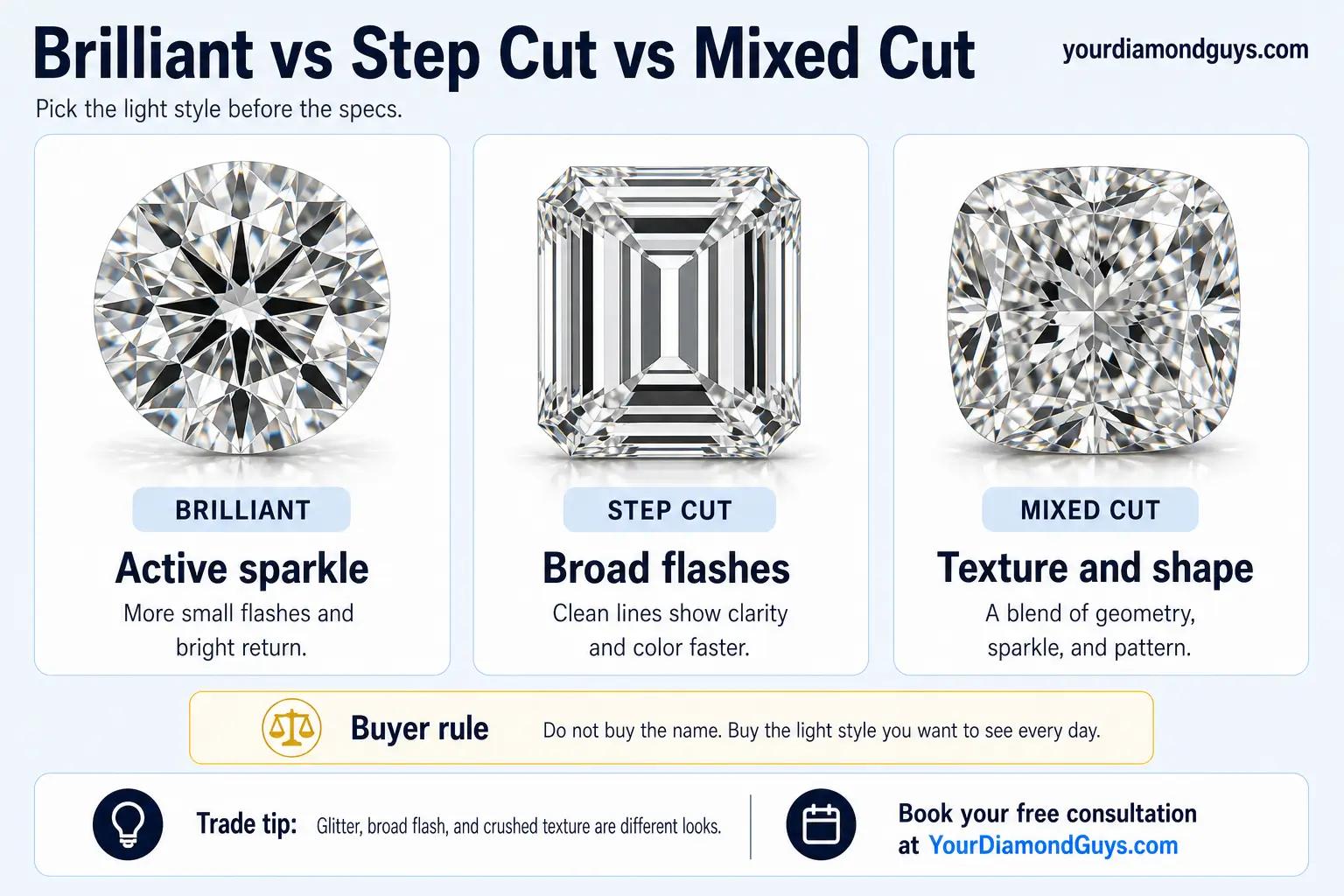
Use this when sparkle style is the real question. Brilliant cuts, step cuts, and mixed cuts show beauty in different ways.
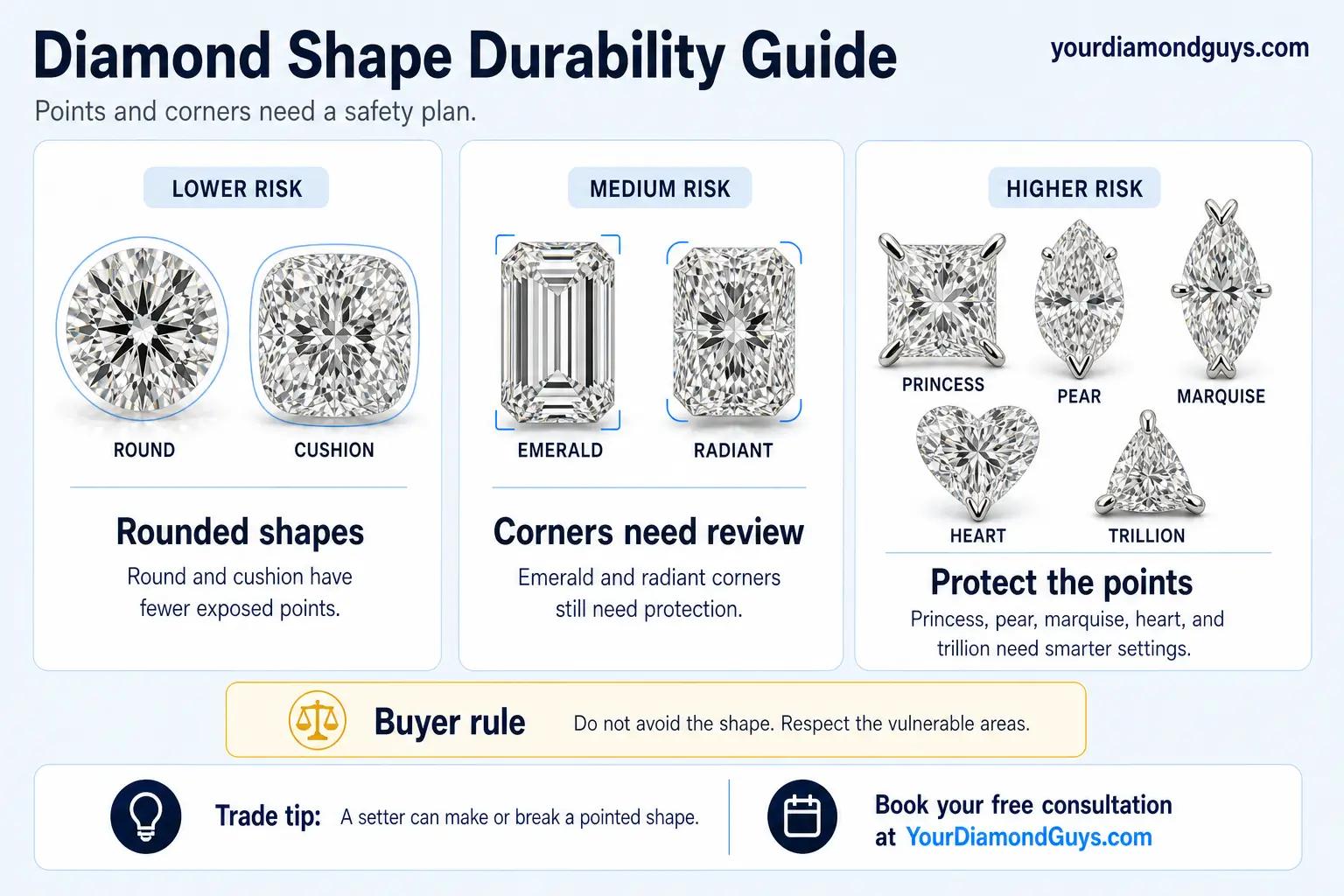
Use this before choosing a daily wear stone. Points, corners, girdle condition, and setting protection change the risk fast.
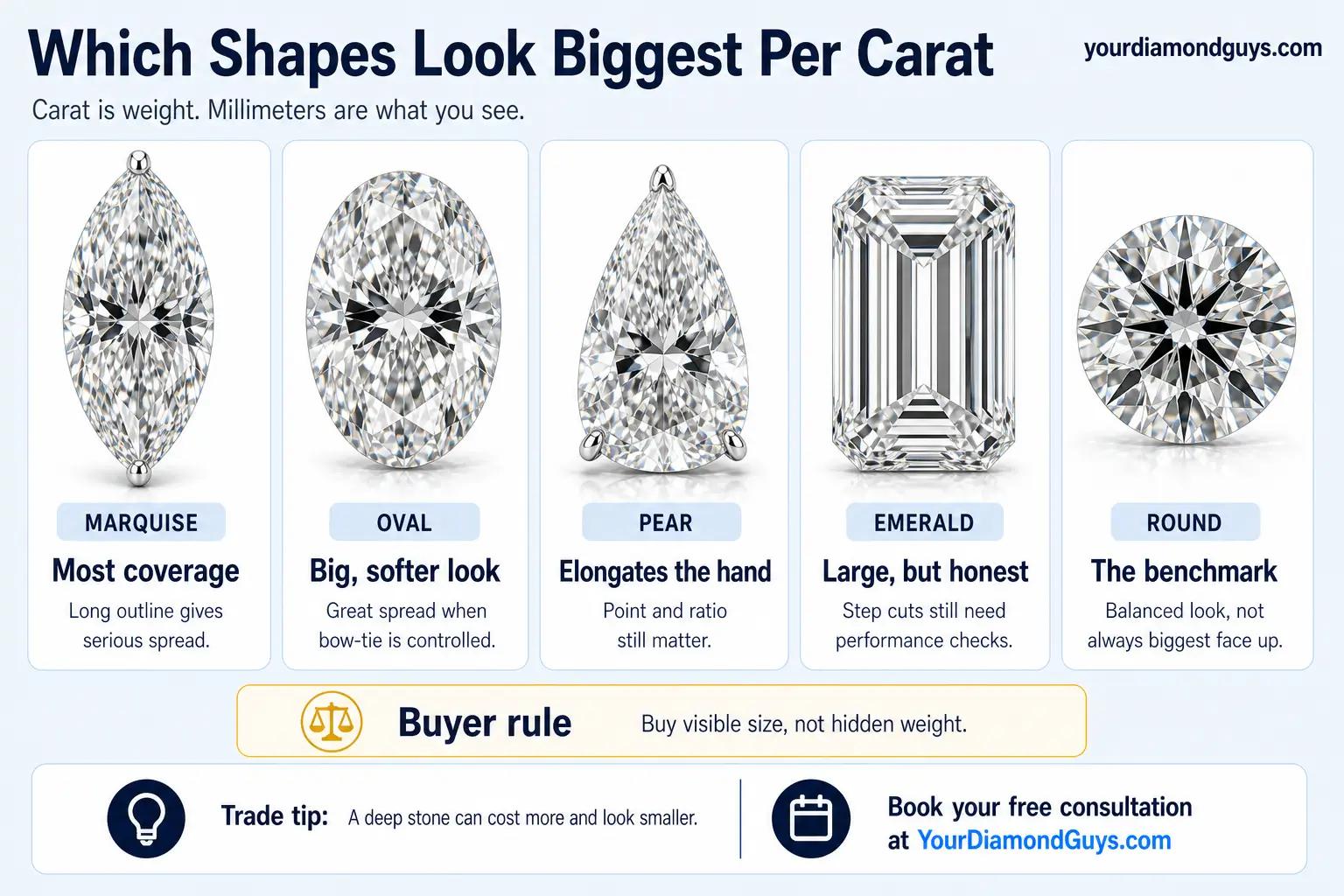
Use this when size is the pressure point. Spread, depth, outline, and millimeter measurements matter more than carat alone.
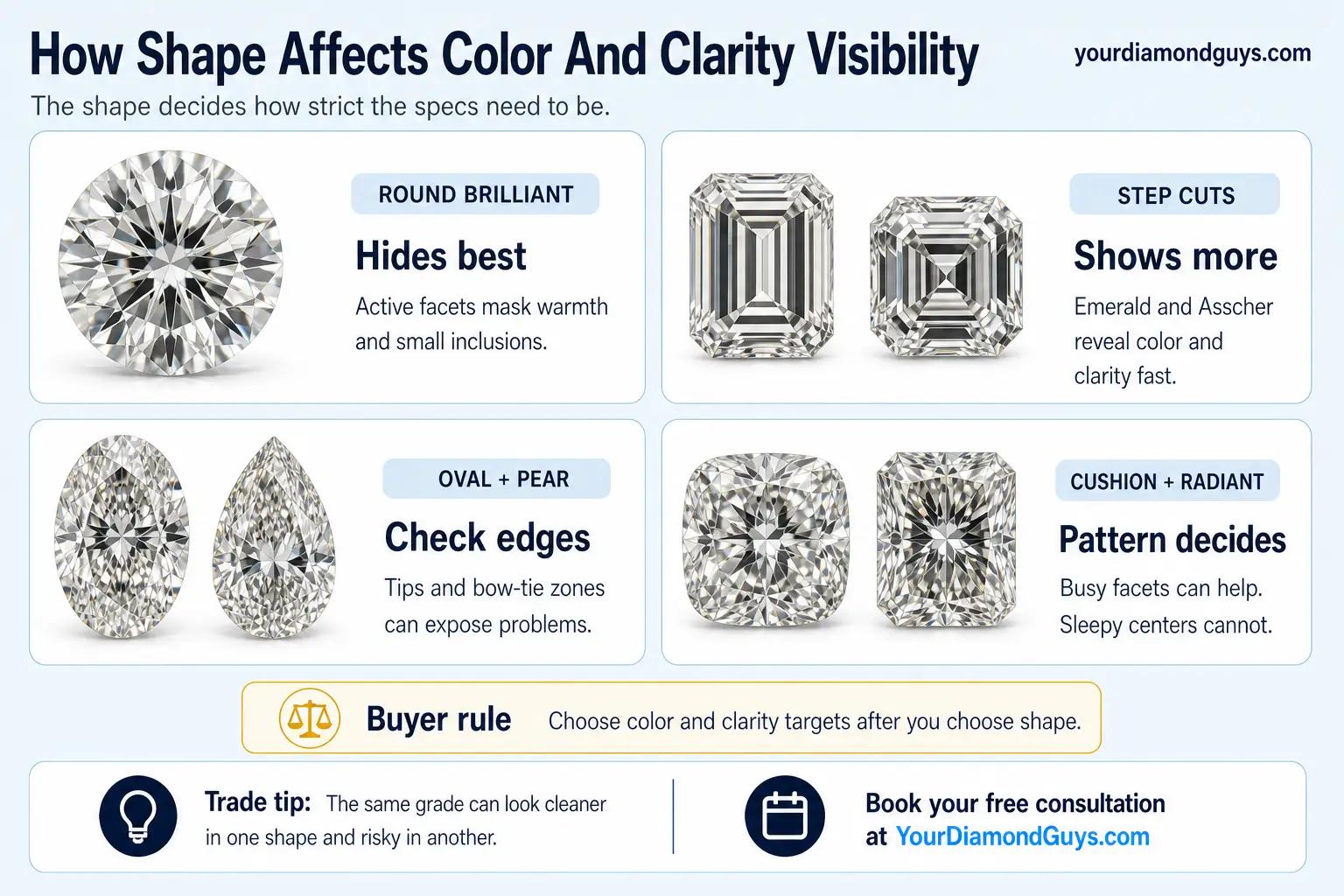
Use this before setting color and clarity targets. Step cuts show more. Brilliant cuts hide more. Mixed cuts sit between them.
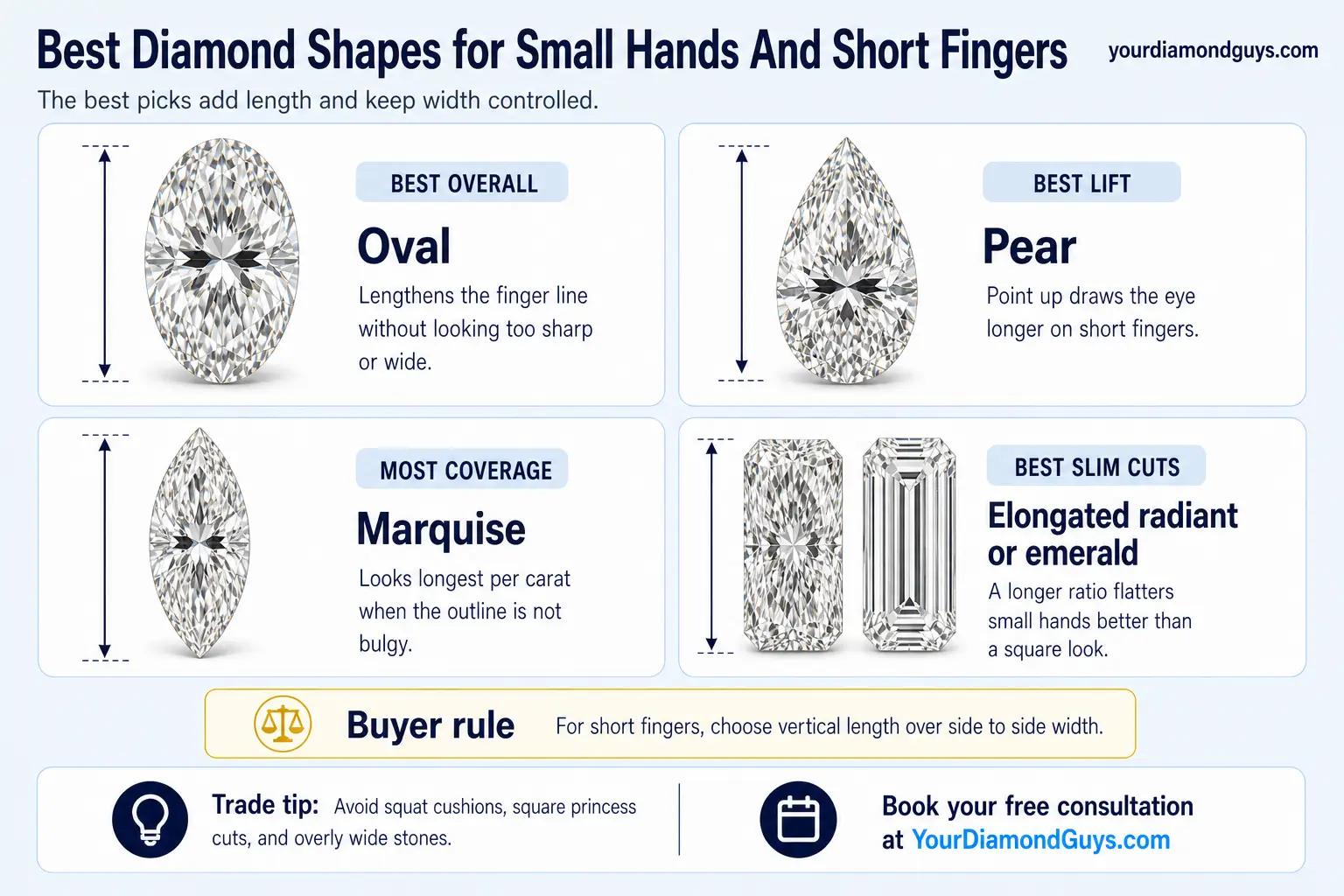
Use this when hand coverage matters. Shape, ratio, setting width, and finger length decide whether the diamond feels balanced.
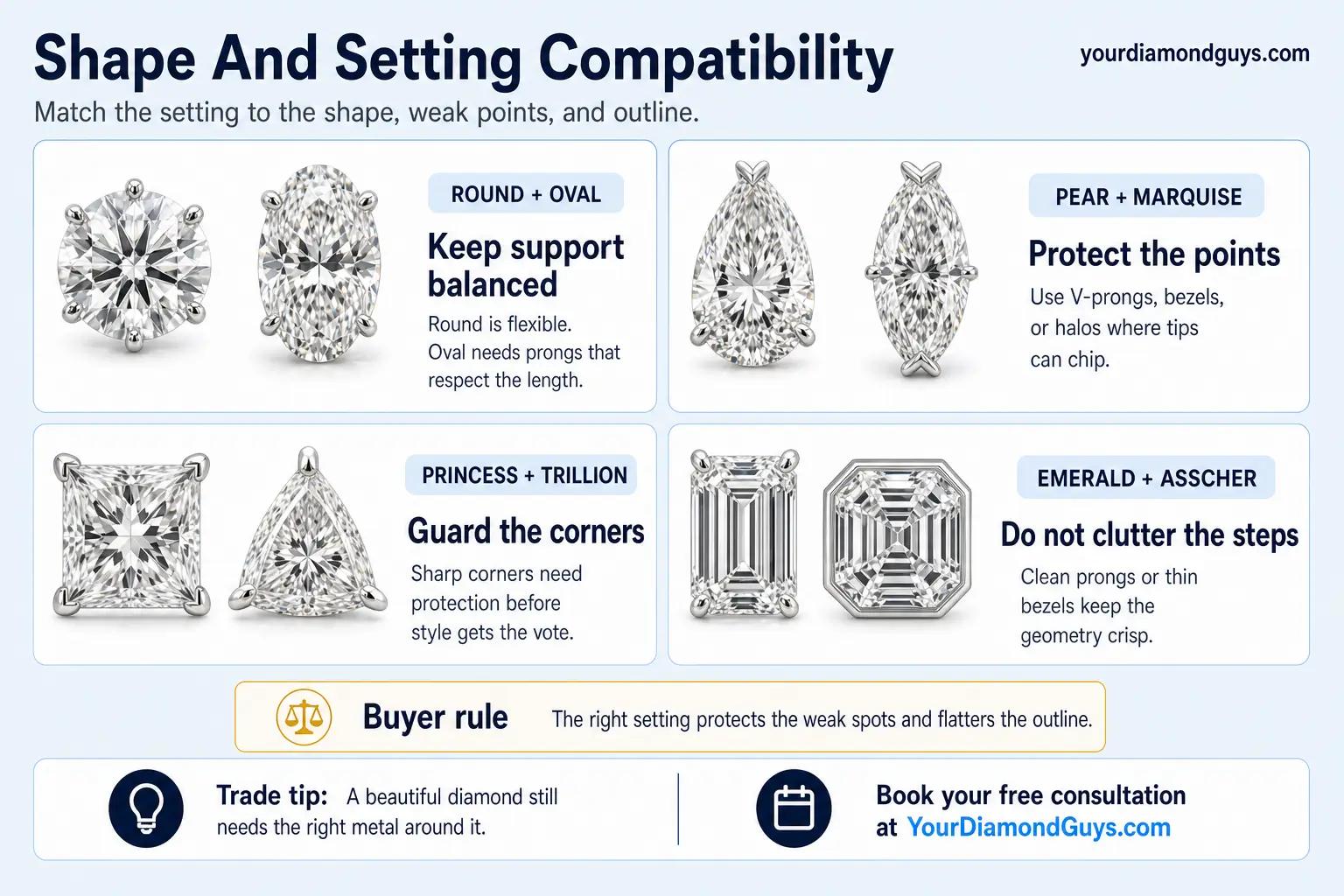
Use this before picking the mounting. The setting should flatter the outline and protect the weak spots, not just look pretty.
Do not let a chart choose the shape before your eye gets a vote. A diamond has to feel right on the hand. Then the trade checks start.
If you like bright sparkle, start with round brilliant, oval, pear, marquise, cushion, radiant, or princess. If you like clean flashes and a calmer look, start with emerald, asscher, or baguette accents.
Use this as the first pass. It will not choose the diamond for you, but it will point you to the right deeper guide.
| Shape | Best For | Main Watchout |
|---|---|---|
| Round brilliant | Most predictable sparkle | Weak GIA Excellent stones still exist |
| Oval | Bigger look with soft outline | Bowtie and uneven shoulders |
| Cushion | Soft square or romantic feel | Sleepy center or wrong facet style |
| Princess | Modern square sparkle | Dark corners and vulnerable points |
| Emerald | Clean, glassy step cut look | Windowing, color, and clarity visibility |
| Asscher | Square hall of mirrors look | Small face up look and dull patterning |
| Pear | Finger lengthening with personality | Shoulder balance, bowtie, and tip protection |
| Marquise | Maximum finger coverage | Heavy bowtie, lumpy outline, exposed points |
| Radiant | Bright clipped corner rectangle or square | Busy crushed pattern and color visibility |
| Heart | Romantic statement shape | Weak cleft, uneven lobes, small size |
| Trillion | Sharp accent or bold center | Point durability and matching |
| Baguette | Clean accent geometry | Step cut clarity and matching |
Every shape has a trap. Ovals can carry a bow tie effect. Cushions can look sleepy. Princess cuts can lose light in the corners. Emerald cuts can window. Marquise cuts can look huge and still feel awkward if the outline is lumpy.
That is why this pillar page should send buyers into the right guide instead of pretending every shape uses the same checklist.
A cut style by shape decision comes before the spec decision. Brilliant shapes give more active sparkle. Step cuts give broader flashes. Mixed cuts sit between those worlds.
This is not a better or worse question. It is a taste question first, then a quality question. A buyer who wants constant glitter should not force themselves into an emerald cut just because it looks elegant online.
looks biggest per carat matters because carat is weight, not size. Marquise, oval, and pear shapes usually spread larger across the finger, while deep stones can hide weight where you cannot see it.
Compare measurements in millimeters. A diamond can have a bigger number on the report and a smaller look on the hand.
shape affects color clarity is where a lot of buyers save or waste money. Round brilliants hide warmth and small inclusions better. Emerald, Asscher, and baguette stones show more because the facets are open.
That means the same G color or SI1 clarity does not behave the same in every shape. Shape decides how strict the rest of the grading conversation needs to be.
shape setting compatibility is not decoration. It is protection and proportion. Pears, marquise, princess, heart, and trillion shapes need more attention around points and corners.
A setting should make the shape look intentional and protect the places most likely to get hit. If it only looks pretty in a rendering, it has not finished the job.
Pick the shape you love, then judge it by the problems that shape creates. That is how you avoid buying the prettiest name and the wrong stone.
The right diamond shape should make sense from three angles: it looks good to your eye, it passes the trade checks for that shape, and the setting supports it instead of fighting it.
Reach out to Rob or me at YourDiamondGuys.com, or book your free consultation. We will look at the actual stone with you. No sales pitch.
Diamond Shape Guide does not sit alone. Shape changes the way cut, color, clarity, size, and setting choices behave once the diamond is on a hand.
Use fancy shape cut guide, shape color visibility, inclusions by shape as the next checks when this page raises a question. That keeps the buyer inside the right decision path instead of jumping from one isolated spec to another.
A shape page should make the next buying move obvious. If the page is about bowtie, the next move is video review. If the page is about step cuts, the next move is clarity, color, and windowing. If the page is about points or corners, the next move is setting protection.
Say a buyer brings two diamonds for diamond shape guide. One has cleaner looking paper. The other has the better shape behavior for the actual problem this page covers. I would slow down and judge the second stone seriously if the video, measurements, and price support it.
The paper is not the prize. The actual diamond is. That is the trade habit buyers need to borrow before they spend real money.
Use these sites as comparison tools, not automatic recommendations. I would compare broad shape inventory on Ritani and finished ring styles on Brilliant Earth, then judge the actual diamond by the report, video, outline, spread, and price.
Questions? Reach out directly for a free consultation, or drop them in the Diamond Buyers Academy community — Rob and I answer personally.
Choose the shape you like on the hand, then use that shape's risk checklist. The best shape is the one that fits your eye, budget, setting, and tolerance for tradeoffs.
Round brilliant is the safest answer for balanced sparkle when the cut is strong. Fancy shapes can sparkle beautifully too, but they need more visual review.
Marquise, oval, and pear usually give strong face up size for the carat. The spread only helps when the outline looks good and the depth is not hiding weight.
Round brilliant is usually the easiest because the cut system and proportion targets are more standardized. Fancy shapes need more video and outline review.
Emerald, Asscher, and baguette shapes usually show inclusions more because step cuts have open facets. Round brilliants hide small inclusions better.
Round is usually the safest shape because it has no points or sharp corners. Pointed shapes can still work well when the setting protects them.
*Some links on our site may earn us a small commission at NO EXTRA cost to you, helping us keep our content free*