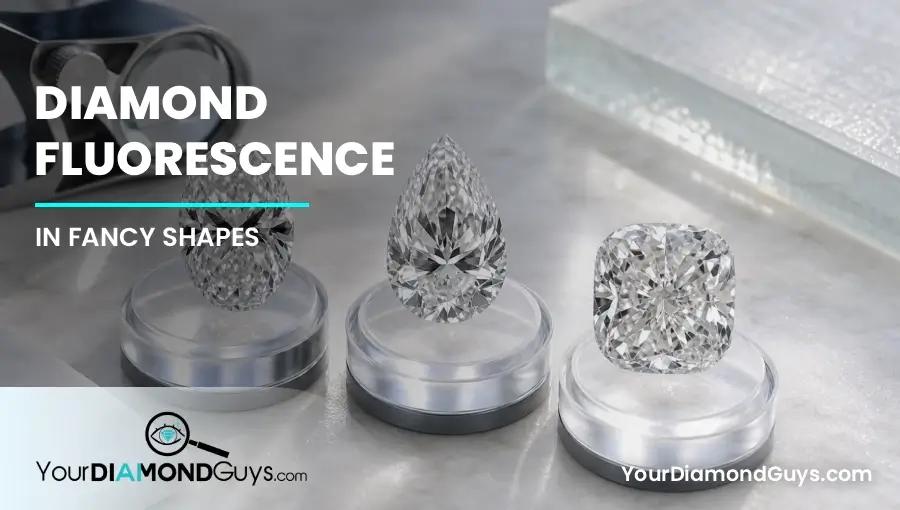
Diamond Fluorescence In Fancy Shapes
By Rob Cornfield, Co-Founder of YourDiamondGuys.com. 30+ years in the global diamond trade. Specialist in diamond cut, sourcing, and light performance.
Fancy shapes lack one universal GIA cut grade. The video already carries more weight. Add Medium or stronger fluorescence and the lighting proof needs to become even more disciplined.
I have seen two ovals with the same table, depth, color, and fluorescence look like different species. One had clean shoulders and active contrast. The other had a dead middle and mushy ends. Numbers did not make them twins.
Shape does not turn fluorescence into a new property. GIA emphasizes that fluorescence usually has no widely noticeable effect on diamond appearance, but fancy cut patterns make uneven color, softness, and weak contrast easier to misread.
What Should You Know First About Diamond Fluorescence In Fancy Shapes?
For ovals, pears, marquises, and elongated radiants, judge the bow tie and end zones before and after UV exposure. For cushions and radiants, inspect crushed areas for soft texture. For any large table, pause face up and check whether facet boundaries remain sharp.
Stronger fluorescence does not fix a poor fancy cut. It also does not automatically hurt a good one. Shape specific video decides both questions.
Use Diamond Fluorescence 101 for the base UV rule, then add the shape-specific contrast checks here.
Bow Tie Shapes Need A Stable Center
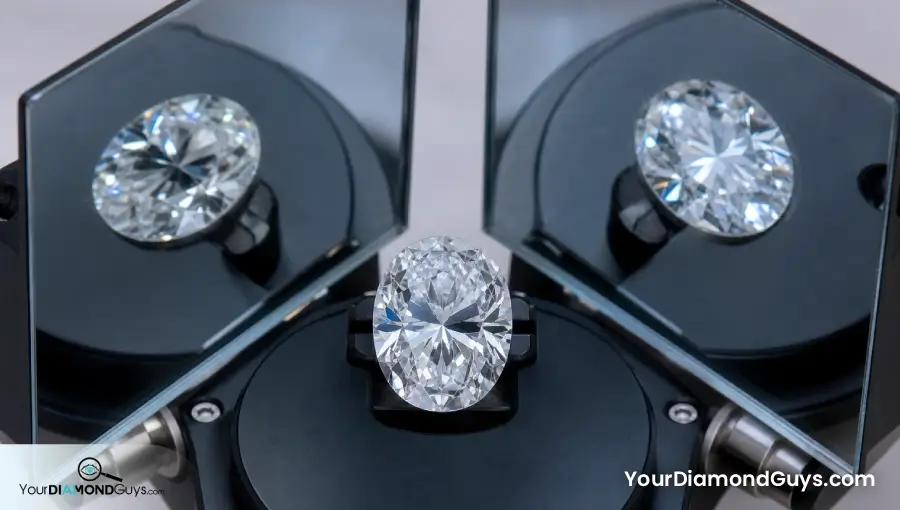
Ovals, pears, marquises, and some radiants can show a bow tie across the center. A balanced bow tie adds contrast. A dead bow tie stays black or flat through movement.
Haze reduces separation between the bow tie and surrounding bright facets. Strong blue under daylight can change the color impression across that same center. Inspect pattern and reaction as separate layers.
Use the bow tie effect guide to decide whether the center switches normally before fluorescence enters the discussion.
Large Tables Expose Transparency
A large table gives a broad window into the center. Softness under that area becomes easy to see, especially when the main facets do not create enough contrast.
Pause the video straight face up. Check the sharpness of facet junctions beneath the table. Then tilt 10 to 15 degrees and see whether the center comes alive or remains washed out.
The fancy shape cut guide keeps outline, spread, symmetry, leakage, and pattern ahead of the fluorescence label.
Crushed Areas Can Hide Softness
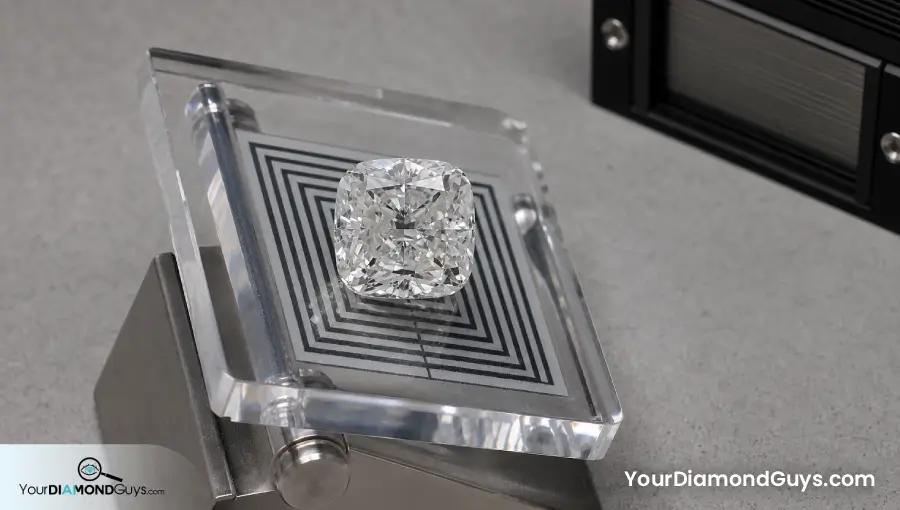
Radiants and cushions can carry fine splintery facets, especially near the ends or corners. Normal crushed texture contains many small flashes. Poor crushed texture turns into gray mush that never resolves.
A fluorescent blue cast can color those areas outdoors. True haze can soften them further. Compare high resolution indoor and daylight clips at the same angle.
The milky diamond video checklist helps you decide whether the texture belongs to the facet design or to reduced transparency.
| Shape family | Main visual trap | Fluorescence check |
|---|---|---|
| Oval, pear, marquise | Persistent bow tie and weak ends | Compare center contrast indoors and outdoors |
| Radiant | Mushy crushed zones and bow tie | Pause table and corner areas in matched light |
| Cushion | Crushed texture versus broad chunky facets | Check whether edges stay crisp as UV rises |
| Princess | Dark corners and hidden depth | Inspect center, corners, and side view |
| Heart | Dark cleft and uneven lobes | Compare symmetry and blue distribution face up |
Color Benefit Changes By Shape
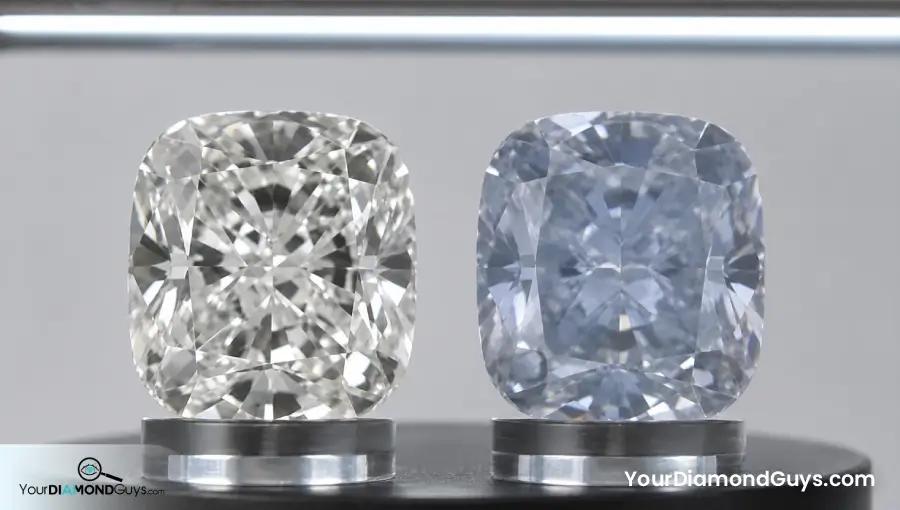
Blue fluorescence can cool yellow body color under UV rich light. Brilliant faceting can distribute that impression. Elongated ends and thick body areas can still hold visible warmth.
Do not assume a J color oval gets the same help as a J color round. Compare the shoulders, tips, center, and side profile. The guide to fluorescence helping color sets the color logic.
Yellow or white fluorescence deserves closer review because the color relationship becomes less familiar. Use the fluorescence color guide before assigning value.
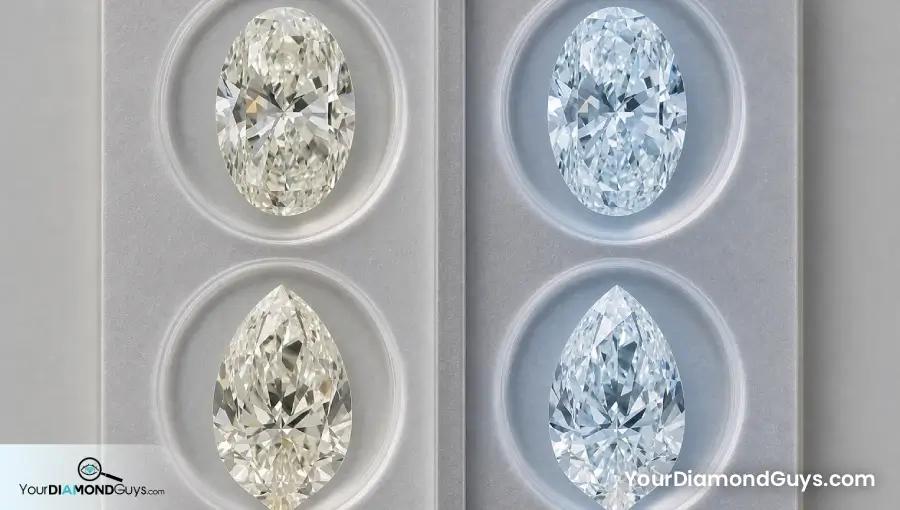
Fancy Shape Approval Order
Start with outline and ratio. Then inspect spread, symmetry, bow tie, windowing, crushed texture, and transparency in neutral indoor light.
Add shaded daylight and direct sunlight when fluorescence is Medium or stronger. Check whether the original pattern remains readable. Finish with price only after the shape and reaction pass.
Step cuts need a stricter path. Use the emerald and Asscher fluorescence guide. For the rest, the buy or skip tree gives a clean final route.
How Does Diamond Fluorescence In Fancy Shapes Affect A Real Buying Decision?
I approve fancy shape cut first because fluorescence cannot repair a bad outline, dead bow tie, watery center, or mushy end.
Once the pattern works, fluorescence becomes an environmental appearance check. If the stone stays crisp and the blue reaction suits the color, the report field can create value rather than risk.
What Does A Real Diamond Fluorescence In Fancy Shapes Example Look Like?
Two GIA graded J color ovals carry Medium blue fluorescence. Oval A has a mild bow tie that switches cleanly, balanced shoulders, and crisp ends indoors and outside. Oval B has a black center and foggy crushed ends in every clip.
Oval A can use the blue reaction as a daylight bonus. Oval B fails on cut and transparency before fluorescence earns a vote.
Which Diamond Fluorescence In Fancy Shapes Mistakes Should You Avoid?
- Blaming fluorescence for a bow tie.
- Using table and depth as a fancy shape beauty grade.
- Calling normal crushed texture haze without checking motion.
- Assuming blue fluorescence cools every zone evenly.
- Buying from one fast front lit video.
What Should You Ask About Diamond Fluorescence In Fancy Shapes Before Buying?
- Does the bow tie switch or stay dead?
- Do facet edges remain crisp under the table?
- Are the ends, corners, and shoulders equally transparent?
- Does daylight change color without softening the pattern?
- Can I see a slow straight and tilted view at locked exposure?
Affiliate disclosure: Some retailer links are affiliate links. If you buy through one, Your Diamond Guys may earn a commission at no extra cost to you.
Where Can You Compare Evidence For Diamond Fluorescence In Fancy Shapes?
Use Whiteflash and Brian Gavin Diamonds as proof libraries, not automatic recommendations. Compare shape specific cut data, bow tie behavior, contrast, and transparency for elongated and mixed cuts, then judge whether the actual fancy shape earns its premium in normal light and daylight. The actual diamond has to earn the yes.
What Is The Buyer Recommendation On Diamond Fluorescence In Fancy Shapes?
Do not let fluorescence explain a fancy shape problem it did not create. Approve outline, pattern, and transparency first.
Keep the fluorescent stone when those features stay strong in indoor and outdoor light. Skip any stone whose pattern becomes harder to read.
Return to the diamond fluorescence guide to place diamond fluorescence in fancy shapes inside the complete report, appearance, testing, and buyer decision system.
If you want another set of eyes on the stone, book your free consultation with Your Diamond Guys.
Fluorescence Isn't Always Bad
Questions? Reach out directly for a free consultation, or drop them in the Diamond Buyers Academy community — Rob and Josh answer personally.
Questions Buyers Ask Us
*Some links on our site may earn us a small commission at NO EXTRA cost to you, helping us keep our content free*