Diamond Fluorescence In Emerald And Asscher Cuts
By Rob Cornfield, Co-Founder of YourDiamondGuys.com. 30+ years in the global diamond trade. Specialist in diamond cut, sourcing, and light performance.
Broad steps, an open table, and long sight lines expose body color, inclusions, windowing, and transparency. A Strong fluorescent round can look crisp while a step cut with the same report description demands a slower review.
We judge step cuts by whether the hall of mirrors stays clean as the stone moves. If the steps blur into one gray sheet, the report numbers stop mattering.
Step cuts do not change the science of fluorescence. GIA explains that fluorescence is usually harmless but rare extremely strong reactions can look hazy or oily, but their broad open facets make any transparency loss easier to see.
What Should You Know First About Fluorescence In Emerald And Asscher Step Cuts?
None and Faint keep a step cut search simple. Medium blue can work, especially in a warmer color, when transparency stays sharp. Strong and Very Strong need face up, 10 to 15 degree tilt, 30 to 45 degree tilt, end view, side profile, shaded daylight, and direct sunlight checks.
Reject the stone when broad steps turn foggy, the center becomes oily, or daylight makes the pattern less readable. Do not confuse windowing with haze.
The base Diamond Fluorescence 101 UV reaction and transparency test still applies, but step cuts expose softness faster than brilliant cuts.
Why Step Cuts Expose Transparency
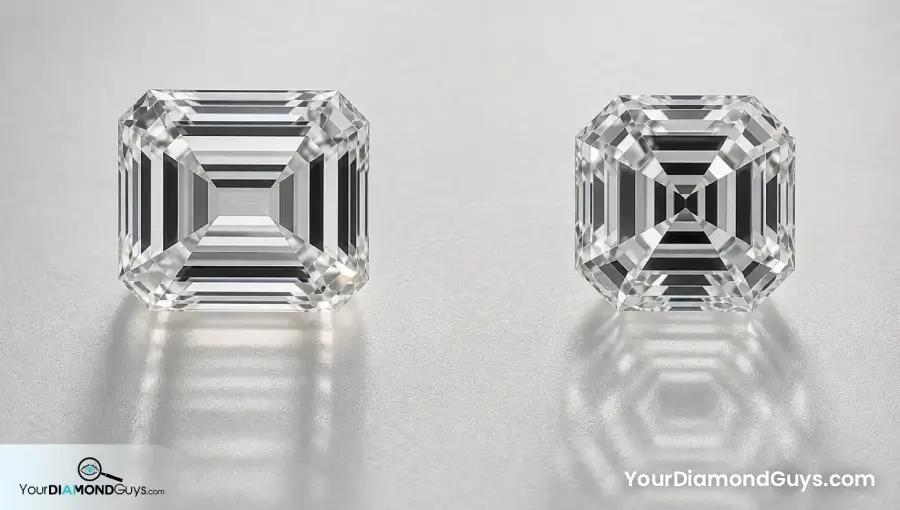
Emerald and Asscher cuts use long step facets instead of dense brilliant faceting. Those facets create broad flashes and dark mirrors. The viewer looks farther into the crystal.
Haze scatters those clean sight lines. A small loss of transparency can soften several steps at once. Brilliant facets can break the same softness into smaller flashes that are harder to isolate.
The step cut windowing guide separates broad background transparency from a fogged crystal. Windowing is an optical path. Haze is reduced clarity of the path.
Use Exact Viewing Positions
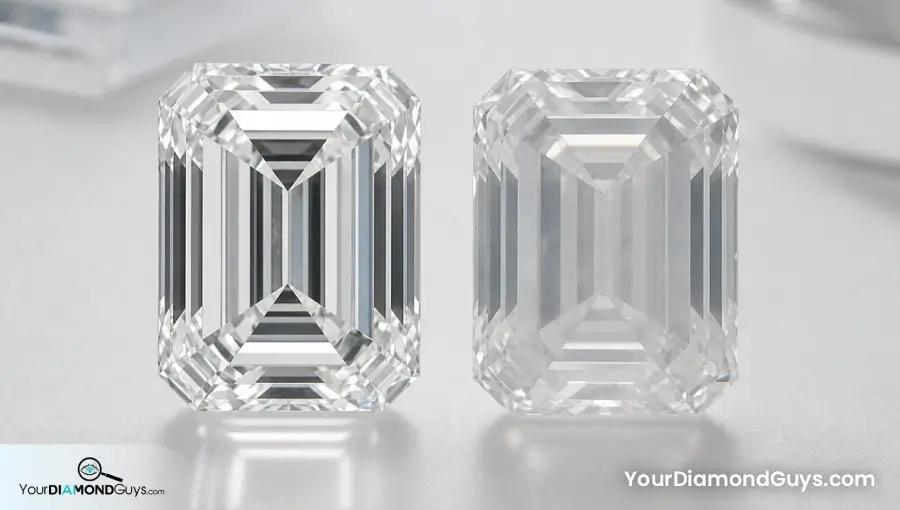
Start straight face up at zero degree tilt. Pause and inspect the table, center steps, corners, and windmills. Look for crisp boundaries and balanced extinction.
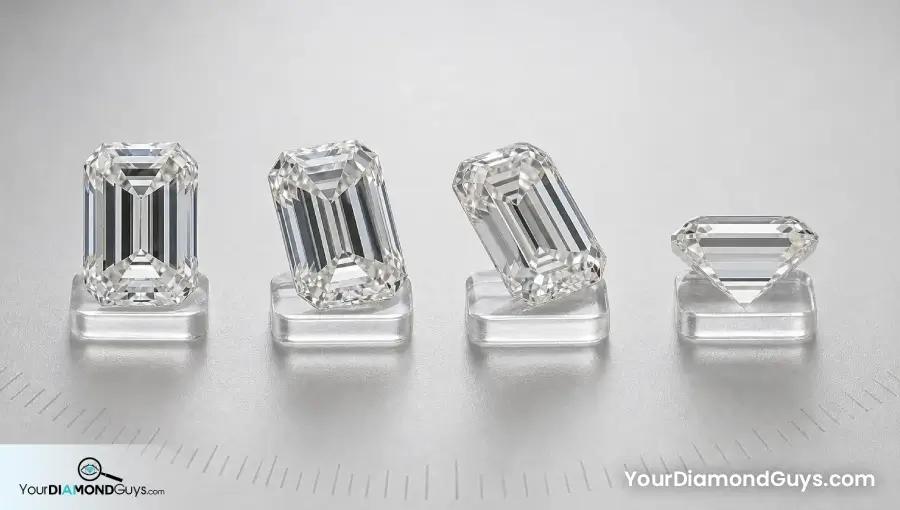
Tilt 10 to 15 degrees to make the main steps switch. Then tilt 30 to 45 degrees to inspect whether the center opens into a window or the steps stay organized. View both ends because emerald cuts can carry uneven brightness or color.
Finish with a 90 degree side profile. Side view reveals body color, depth, girdle, open gallery exposure, and whether a broad cloudy zone crosses the stone.
| View | What it reveals | Transparency warning |
|---|---|---|
| Zero degree face up | Central hall of mirrors and table | Soft boundaries across several steps |
| 10 to 15 degree tilt | Step switching and contrast | Steps smear rather than switch |
| 30 to 45 degree tilt | Windowing, depth, and extinction | Fog remains while reflections change |
| End view | Uneven color and end brightness | One end stays cloudy or dead |
| 90 degree side profile | Body color and internal zones | Broad veil through the depth |
Intensity Rules Need More Caution Here
None and Faint remove one variable. Medium blue can create a useful cooler daylight face in I through M colors, but the open facets make any softening easy to notice.
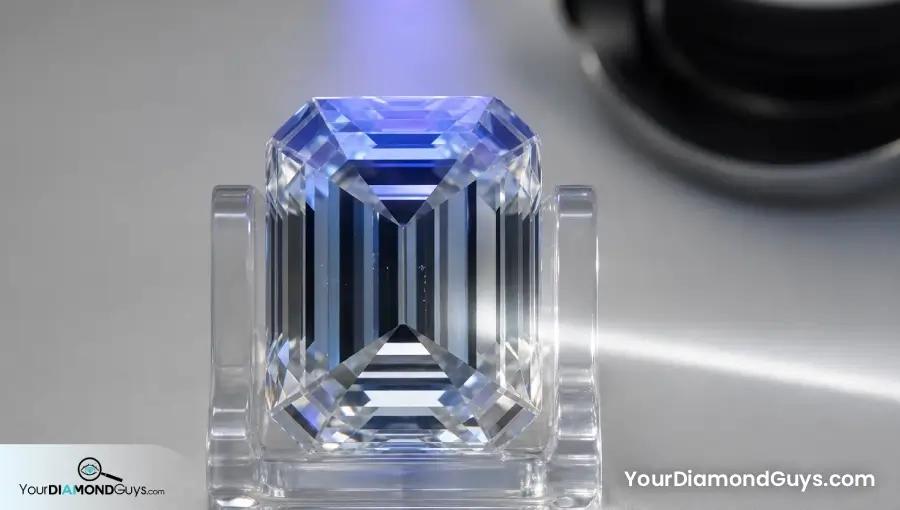
Strong and Very Strong are not automatic rejects. They are evidence heavy choices. I want a clean indoor baseline and matched outdoor clips before keeping either.
Use the fluorescence decision tree with the step cut branch. The threshold for weak proof should be lower because the shape depends on transparency.
Read Clarity And Fluorescence Together
Step cuts show inclusions more readily, so buyers often choose VS clarity or better. The label still does not guarantee transparency. Clouds, graining, and strain can soften broad facets.
Check the report clues for transparency risk and the milkiness versus haze guide. A cloud heavy stone with Medium fluorescence carries two separate questions.
For natural emerald and Asscher diamonds, start with GIA. Then inspect the actual report and stone. Do not use IGI as an equal natural diamond substitute.
Emerald And Asscher Need Slightly Different Reads
An emerald cut stretches the steps along a rectangle. Inspect both long sides and ends for balance. The emerald cut guide covers ratio, windmills, corners, and hall of mirrors quality.
An Asscher concentrates the pattern into a square with deeper concentric steps. Inspect the center for a dark sink, uneven windmills, and depth that hides size. The Asscher cut guide covers that architecture.
In both shapes, daylight color and transparency matter more as carat increases. Large open facets magnify both beauty and mistakes.
How Does Fluorescence In Emerald And Asscher Step Cuts Affect A Real Buying Decision?
I choose step cut transparency before I chase a fluorescence discount. A clean 1.80 carat emerald with Faint fluorescence beats a hazy 2.00 carat stone with a cheaper price every time.
Medium blue can be smart in a warmer step cut if the indoor color already works and the daylight pattern stays sharp. Stronger intensity needs a buyer who has seen every angle.
What Does A Real Fluorescence In Emerald And Asscher Step Cuts Example Look Like?
A GIA graded J color emerald has Medium blue fluorescence. At zero degrees the steps are crisp. At 15 degrees they switch cleanly. At 45 degrees a moderate window appears, but no fog. In daylight the stone looks slightly cooler.
A second J emerald has Strong blue fluorescence and a broad center veil that worsens outdoors. The first can be a value play. The second loses the reason to buy a step cut.
Which Fluorescence In Emerald And Asscher Step Cuts Mistakes Should You Avoid?
- Judging a step cut from straight face up video only.
- Calling normal windowing milkiness.
- Using VS clarity as a transparency guarantee.
- Letting blue fluorescence rescue body color that looks wrong indoors.
- Approving Strong fluorescence without end and side views.
What Should You Ask About Fluorescence In Emerald And Asscher Step Cuts Before Buying?
- Can I see zero, 15, 45, and 90 degree views?
- Do the broad steps switch cleanly or smear?
- Does haze change between indoor light and daylight?
- Do clouds, graining, or strain appear on the report?
- Can I inspect both ends and the full side profile?
Affiliate disclosure: Some retailer links are affiliate links. If you buy through one, Your Diamond Guys may earn a commission at no extra cost to you.
Where Can You Compare Evidence For Fluorescence In Emerald And Asscher Step Cuts?
Use Whiteflash and Brian Gavin Diamonds as proof libraries, not automatic recommendations. Compare emerald and Asscher cut data, windowing, contrast, and transparency at multiple angles, then judge whether the step pattern stays crisp before and during ultraviolet exposure. The actual diamond has to earn the yes.
What Is The Buyer Recommendation On Fluorescence In Emerald And Asscher Step Cuts?
Be stricter with step cuts. Transparency is the design, not a bonus.
None to Faint keeps the search easy. Medium can work with proof. Strong and Very Strong need every angle and every light before approval.
Return to the diamond fluorescence guide to place fluorescence in emerald and Asscher step cuts inside the complete report, appearance, testing, and buyer decision system.
If you want another set of eyes on the stone, book your free consultation with Your Diamond Guys.
Advanced Diamond Cut: Fluorescence & Light Performance
Questions? Reach out directly for a free consultation, or drop them in the Diamond Buyers Academy community — Rob and Josh answer personally.
Questions Buyers Ask Us
*Some links on our site may earn us a small commission at NO EXTRA cost to you, helping us keep our content free*