Natural Versus Lab Grown Diamond Fluorescence And Glow
By Rob Cornfield, Co-Founder of YourDiamondGuys.com. 30+ years in the global diamond trade. Specialist in diamond cut, sourcing, and light performance.
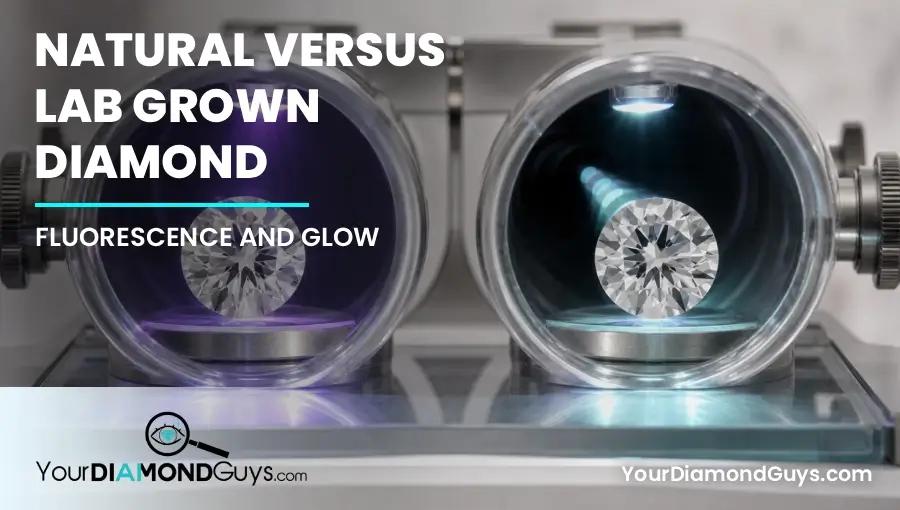
Natural, CVD grown, and HPHT grown diamonds can show different fluorescence patterns and afterglow behavior. The overlap is too large for a flashlight test to identify origin safely.
On the sourcing side, a glow has never outranked a verified laboratory file. In a laboratory, trained people compare wavelengths, patterns, spectra, and growth structures. On a kitchen table, you see one color through one lamp.
Glow behavior gives a laboratory useful clues, not a consumer verdict. GIA research explains that natural and lab grown diamonds often respond differently to long wave and short wave UV, and notes that phosphorescence is uncommon in natural diamonds but frequent in many HPHT grown stones.
What Should You Know First About Natural And Lab Grown Diamond Glow Behaviors?
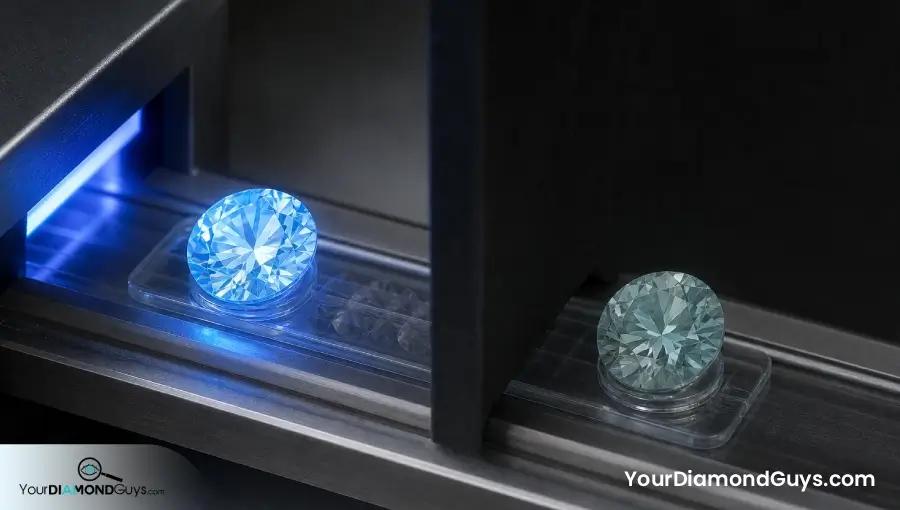
Fluorescent natural diamonds commonly respond more strongly to long wave than short wave UV and usually emit blue. Many lab grown diamonds respond more strongly to short wave or deep UV. HPHT grown diamonds can show blue green phosphorescence after the UV source stops.
These are tendencies with exceptions. Verify origin through a recognized grading report, inscription, and professional testing. Use home UV only as an appearance and reaction check.
Start with Diamond Fluorescence 101 to separate fluorescence from a glow that lingers after the UV source stops.
Natural Diamond Fluorescence Patterns
About one third of natural diamonds show some long wave UV fluorescence in published GIA data. Blue dominates because of the N3 optical center.
Natural fluorescent diamonds usually react more strongly to long wave UV than to short wave UV. Phosphorescence, which continues after the lamp turns off, is uncommon in most natural diamonds.
For a natural purchase, start with GIA. Then use the Fluorescence 101 guide to judge whether the reported reaction matters to appearance.
HPHT Grown Diamonds Can Show Afterglow
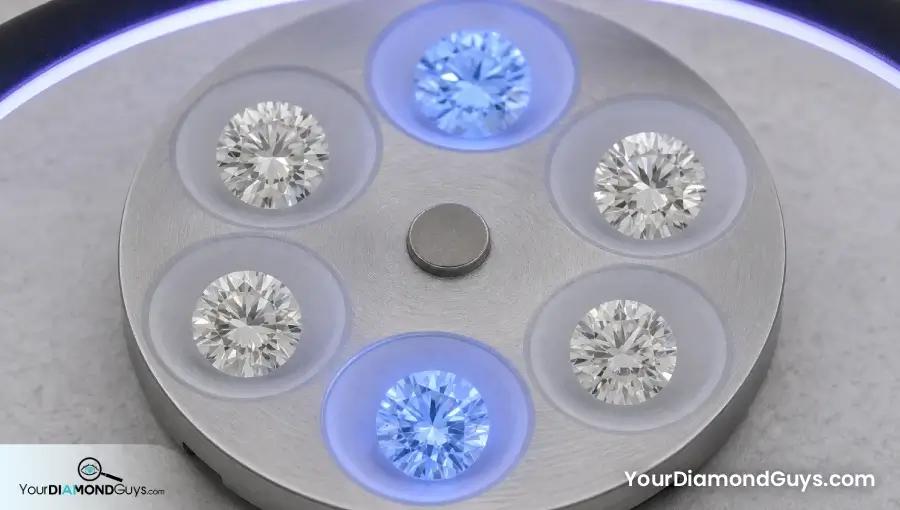
HPHT growth can produce features that create strong short wave reactions and blue green phosphorescence. The afterglow can last seconds or longer after excitation stops.
That behavior is a useful screening clue, not an origin certificate. Rare natural diamonds, including some type IIb material, can phosphoresce. Some lab grown stones do not show an obvious afterglow in a basic test.
A report and inscription remain the buyer tools. A laboratory can add spectroscopy, deep UV imaging, and growth pattern analysis.
CVD Grown Diamonds Add More Variation
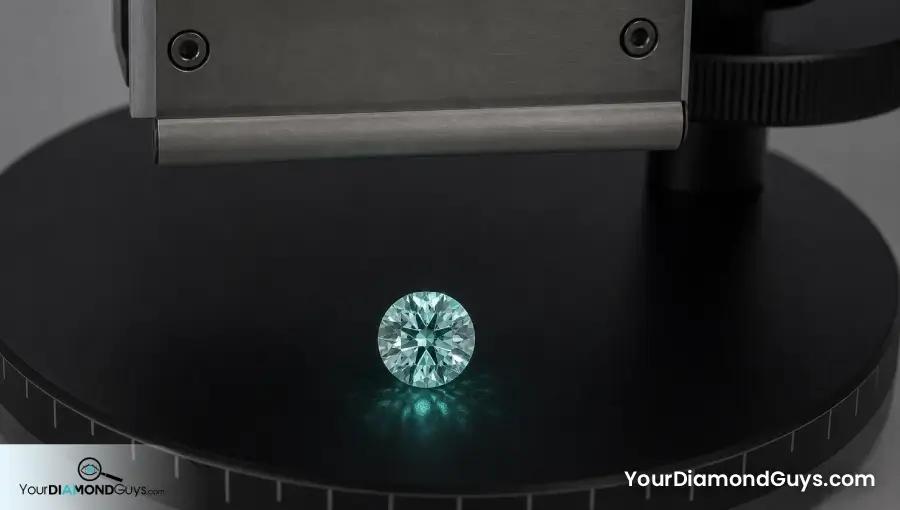
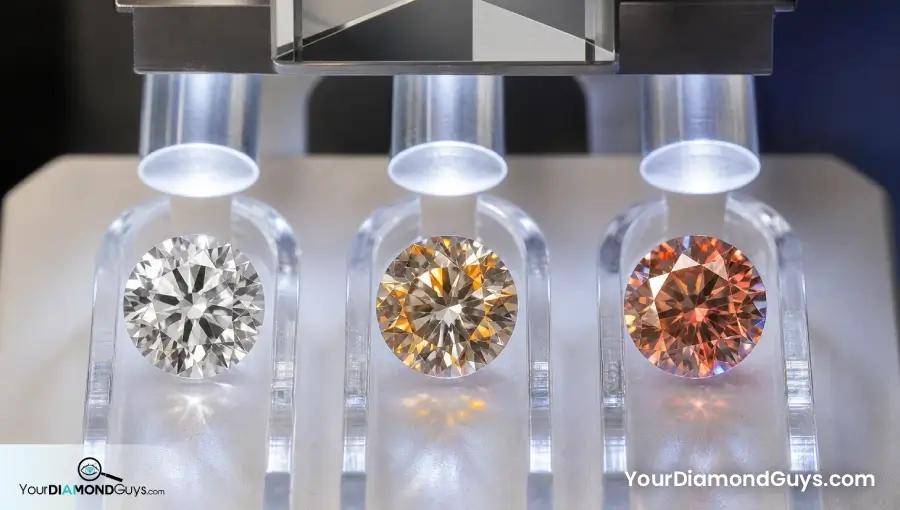
CVD grown diamonds can show weak or absent long wave fluorescence, orange or red reactions from certain defects, and responses changed by post growth treatment.
Growth recipes evolve. Treatment can alter color and defect populations. Old blanket rules fail because the category is not one uniform material.
Use the main lab grown diamond buying guide when the decision includes growth method, tint, treatment, price, resale, and disclosure beyond glow.
| Diamond category | Common laboratory clue | Buyer limitation |
|---|---|---|
| Natural | Often stronger long wave response, usually blue | Some do not fluoresce and rare stones phosphoresce |
| HPHT grown | Short wave response and blue green afterglow can be strong | Not every HPHT stone shows an obvious home reaction |
| CVD grown | Variable weak, orange, red, or treatment related response | Recipes and treatments create overlap |
| Any category | Deep UV pattern and spectroscopy add identification power | Home lamps cannot reproduce the full lab workflow |
Fluorescence And Phosphorescence Are Different
Fluorescence lasts while the ultraviolet source supplies energy. Phosphorescence continues after that source stops. Record the timing rather than calling both effects glow.
The at home UV test shows how to switch the lamp off and watch for an afterglow safely. A positive reaction tells you to verify the report. A negative reaction proves nothing about origin.
The fluorescence color guide covers reaction hue. Color alone is even less conclusive than timing.
How To Verify What You Are Buying
Open the original grading report. Confirm the origin statement, growth method when reported, treatments, measurements, grades, fluorescence, comments, and inscription.
Match the girdle inscription with magnification. Verify the report number on the laboratory site. The GIA versus IGI reporting guide explains why the fluorescence fields can use different language.
When the reaction and document conflict, stop. Ask the grading laboratory or an independent gemologist to inspect the stone. The report clue guide helps you save the exact evidence.
How Does Natural And Lab Grown Diamond Glow Behaviors Affect A Real Buying Decision?
Origin comes from laboratory identification. Appearance comes from the actual stone. Keep those two decisions separate.
A lab grown diamond with visible afterglow can still be beautiful. A natural diamond with Medium blue fluorescence can still be beautiful. The report tells you what you own. The lighting test tells you whether you like it.
What Does A Real Natural And Lab Grown Diamond Glow Behaviors Example Look Like?
A buyer points a long wave flashlight at a diamond and sees no reaction. That result cannot tell whether the stone is natural, CVD grown, or HPHT grown.
A second stone shows blue green afterglow after short wave exposure. That raises an HPHT grown clue, but the buyer still verifies the report, inscription, and laboratory data before making any origin claim.
Which Natural And Lab Grown Diamond Glow Behaviors Mistakes Should You Avoid?
- Calling every blue fluorescent diamond natural.
- Calling every phosphorescent diamond lab grown.
- Using no reaction as proof of anything.
- Ignoring wavelength, timing, pattern, and treatment.
- Replacing a grading report with a consumer flashlight.
What Should You Ask About Natural And Lab Grown Diamond Glow Behaviors Before Buying?
- Does the report state natural or laboratory grown origin?
- Does it identify CVD or HPHT growth and any treatment?
- What wavelength activated the observed reaction?
- Does the glow stop immediately or continue?
- Does the girdle inscription match the verified report?
Affiliate disclosure: Some retailer links are affiliate links. If you buy through one, Your Diamond Guys may earn a commission at no extra cost to you.
Where Can You Compare Evidence For Natural And Lab Grown Diamond Glow Behaviors?
Use Ritani and Blue Nile as comparison tools, not automatic recommendations. Compare natural and lab grown listings with verified origin, report data, and controlled glow video, then judge appearance, fluorescence, phosphorescence, price, and return protection without treating glow as an origin test. The actual diamond has to earn the yes.
What Is The Buyer Recommendation On Natural And Lab Grown Diamond Glow Behaviors?
Use fluorescence and phosphorescence as clues. Use a recognized grading laboratory to identify origin.
When your home observation conflicts with the report, pause the purchase and get professional verification. Interesting glow is not enough evidence for an expensive conclusion.
Return to the diamond fluorescence guide to place natural and lab grown diamond glow behaviors inside the complete report, appearance, testing, and buyer decision system.
If you want another set of eyes on the stone, book your free consultation with Your Diamond Guys.
Natural vs. Lab-Grown Diamonds: The Real Difference in 2026
Questions? Reach out directly for a free consultation, or drop them in the Diamond Buyers Academy community — Rob and Josh answer personally.
Questions Buyers Ask Us
*Some links on our site may earn us a small commission at NO EXTRA cost to you, helping us keep our content free*