Diamond Cut Premium vs Steep Deep Discounts
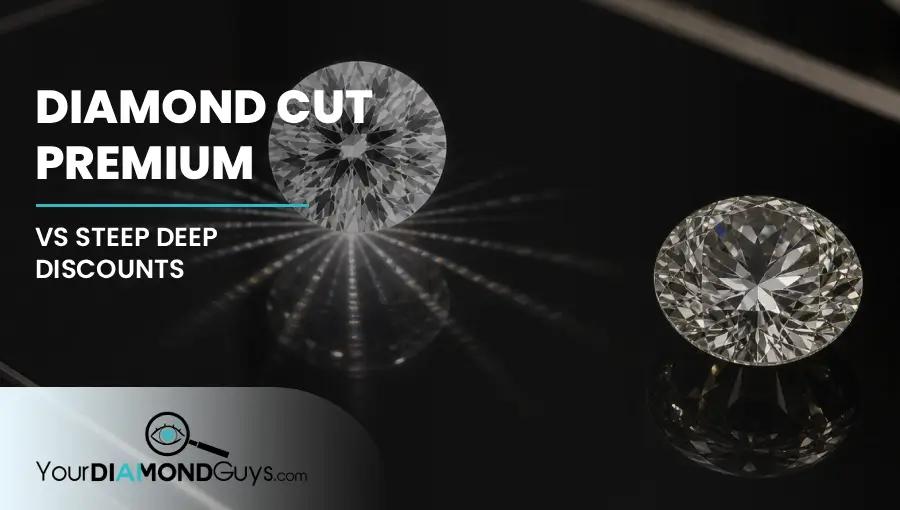
Good cut math gives the diamond a chance to look alive. The video still has to prove it.
By Rob Cornfield, Co-Founder of YourDiamondGuys.com. Diamond sourcing authority with deep trade experience in cut quality, light performance, proportions, inclusions, and proof based diamond review.
A discount on a round diamond is only exciting after you know why it exists.
Sometimes the seller found a sharp price. Sometimes the diamond is too deep, too steep, leaky, small for the weight, or flat in motion.
That is the part buyers miss. The price looks lower because the trade already knows the stone has a problem.
Cut Premium Means Light, Not Bragging Rights
A real cut premium buys performance.
It should buy brightness, fire, balance, spread, symmetry, and a diamond that keeps returning light as it moves. It should not buy a fancy phrase or a certificate line by itself.
For natural round diamonds, start with GIA. Then use the report as a filter, not a finish line.

F VS2 round reference, Ideal cut, Excellent polish and symmetry, about 60.7 percent depth.

H SI2 round reference, Good cut, Very Good polish, Fair symmetry, about 63.8 percent depth.
What Steep Deep Means In Buyer Language
Steep deep usually means the angles and depth are working against the diamond.
The stone can hold too much weight below the girdle, face up smaller than it should, and leak light instead of sending it back to your eye. You still pay for carat weight. You just do not see all of it from the top.
The diamond weighs more than it looks because depth stole face up spread.
Light escapes through the bottom or sides instead of returning through the crown.
The lower price often reflects a weaker make before you ever see the stone.
The Round Diamond Numbers I Start With
Numbers narrow the field. They do not pick the winner.
| Cut Factor | Buyer Friendly Starting Range | Why It Matters |
|---|---|---|
| Table | 56 to 58 percent | Keeps the top view balanced and avoids a flat glassy look. |
| Depth | 60 to 62.4 percent | Protects spread and helps keep weight where you can see it. |
| Crown angle | 34 to 35 degrees | Supports fire and crown life without pushing the diamond too steep. |
| Pavilion angle | 40.6 to 41 degrees | Controls light return. A bad pavilion pairing ruins plenty of pretty reports. |
| Finish | Excellent polish and symmetry | Removes avoidable finish problems from the decision. |
| Fluorescence | None to faint | Keeps the pricing and transparency conversation cleaner. |
After that, I want video. I want the stone moving. A still image can flatter a diamond that dies when it turns.
GIA Excellent Is A Starting Filter
The report says Excellent.
The stone can still leak.
That happens because GIA Excellent is a range, not a guarantee of top performance. Some stones sit in a better pocket. Others sit near the edge of the grade and trade softer because the market can see the difference.
Trade tip: Dealers do not pay the same for every GIA Excellent round. The report gets the stone in the room. The make decides how hard people fight for it.
Why Steep Deep Diamonds Look Like Deals
The listing math can look tempting.
Same carat. Same color. Same clarity. Lower price. That sounds like value until you check the spread and light return.
A deep 1.50 carat round can face up closer to what buyers expect from a smaller stone. A steep pavilion can make the center go gray or dark. A weak crown and pavilion pairing can steal fire. The discount is not random. It is a reaction.
What A Cut Premium Should Actually Buy
Pay more only when the diamond gives you more.
| Premium Claim | Proof I Want | Rob Read |
|---|---|---|
| Better sparkle | Clean video with strong light return in motion. | Brightness should stay alive, not just flash once. |
| Better proportions | Report data in the safer table, depth, crown, and pavilion lanes. | The numbers should make sense together. |
| Better spread | Millimeter measurements that fit the carat weight. | Do not pay for hidden weight. |
| Better finish | Excellent polish and Excellent symmetry. | Finish should support the cut, not excuse it. |
| Better value | Comparable stones showing the premium is normal for the make. | A premium should survive comparison. |
How To Spot A Discount Warning
Discounts have causes.
Some causes are fine. A market shift, a seller model, or a clean buying opportunity can create a real value. But when the discount comes from weak make, you need to price the diamond like a weak make.
- Check whether the depth goes past 62.4 percent.
- Look for crown and pavilion pairings outside the safer lane.
- Compare millimeter spread against similar carat weights.
- Watch the video for gray zones, watery areas, and dead center behavior.
- Check symmetry and polish. I want Excellent and Excellent for premium round buys.
- Use the price per carat calculator after you know the cut is worth comparing.
- Read the overgraded diamonds guide if the specs feel too convenient.
Carat Weight Can Distract You
Carat weight is a scale number. It is not face up size.
This is where steep deep diamonds hurt buyers. The stone carries weight in depth, the listing shows the bigger carat number, and the top view does not deliver the size you expected.
Before you pay for the bigger carat, compare millimeters. Then compare video. A smaller well cut diamond can look brighter and more balanced than a larger stone that is carrying weight in the wrong place.
That is also why shape pricing matters. Read the diamond price by shape guide before comparing carat weight across different outlines.
When I Pay The Premium
I pay the premium when the diamond proves it.
GIA natural report. Strong cut data. Excellent polish. Excellent symmetry. None to faint fluorescence. Good spread. Bright video. No dead center. No awkward obstruction. No discount story doing the heavy lifting.
That is a clean buying lane.
When I Pass On The Discount
I pass when the price is the best thing about the diamond.
| Problem | What It Means | Buyer Move |
|---|---|---|
| Too much depth | You pay for weight you do not see well. | Compare spread against better cut stones. |
| Bad angle pairing | Light return loses discipline. | Ask for proportion data and video. |
| Weak symmetry | The diamond can look less balanced in motion. | Do not pay premium money for weak finish. |
| Gray or dead center | The stone fails the eye test. | Move on unless the price fully reflects it. |
| Discount without explanation | The seller wants the price to distract you. | Ask why the stone trades lower. |
My Buyer Rule
Do not buy a discount caused by bad light return. A better cut costs more because it gives you brightness, spread, and life you can actually see.
A cut premium is not about being fancy. It is about buying the part of the diamond everyone sees every day.
Price follows beauty when buyers know what they are looking at.
These Rare Diamond Cuts Will Make Your Ring Stand Out!
Where I Would Compare Cut Performance
Use these sites as proof libraries, not automatic recommendations. I would compare performance evidence on Whiteflash and Brian Gavin Diamonds, then decide whether the actual diamond earns the cut premium. The proof matters more than the listing title.
Questions? Reach out directly for a free consultation, or drop them in the Diamond Buyers Academy community — Rob and Josh answer personally.
Questions Buyers Ask Us
More Diamond Pricing Guides
Keep the next step close. These guides connect the pricing math, seller model, quality risk, total cost, and resale expectation behind this buying decision.
Want Rob To Check The Cut?
Send us the report, measurements, video, and price. Rob or Josh can help you see whether the premium is justified or the discount is warning you.
*Some links on our site may earn us a small commission at NO EXTRA cost to you, helping us keep our content free*