What we like
- A clear route from ring style to center stone.
- The ability to move and examine the diamond in the viewer we tested.
- Choice across ring styles and price points.
Diamond retailer review
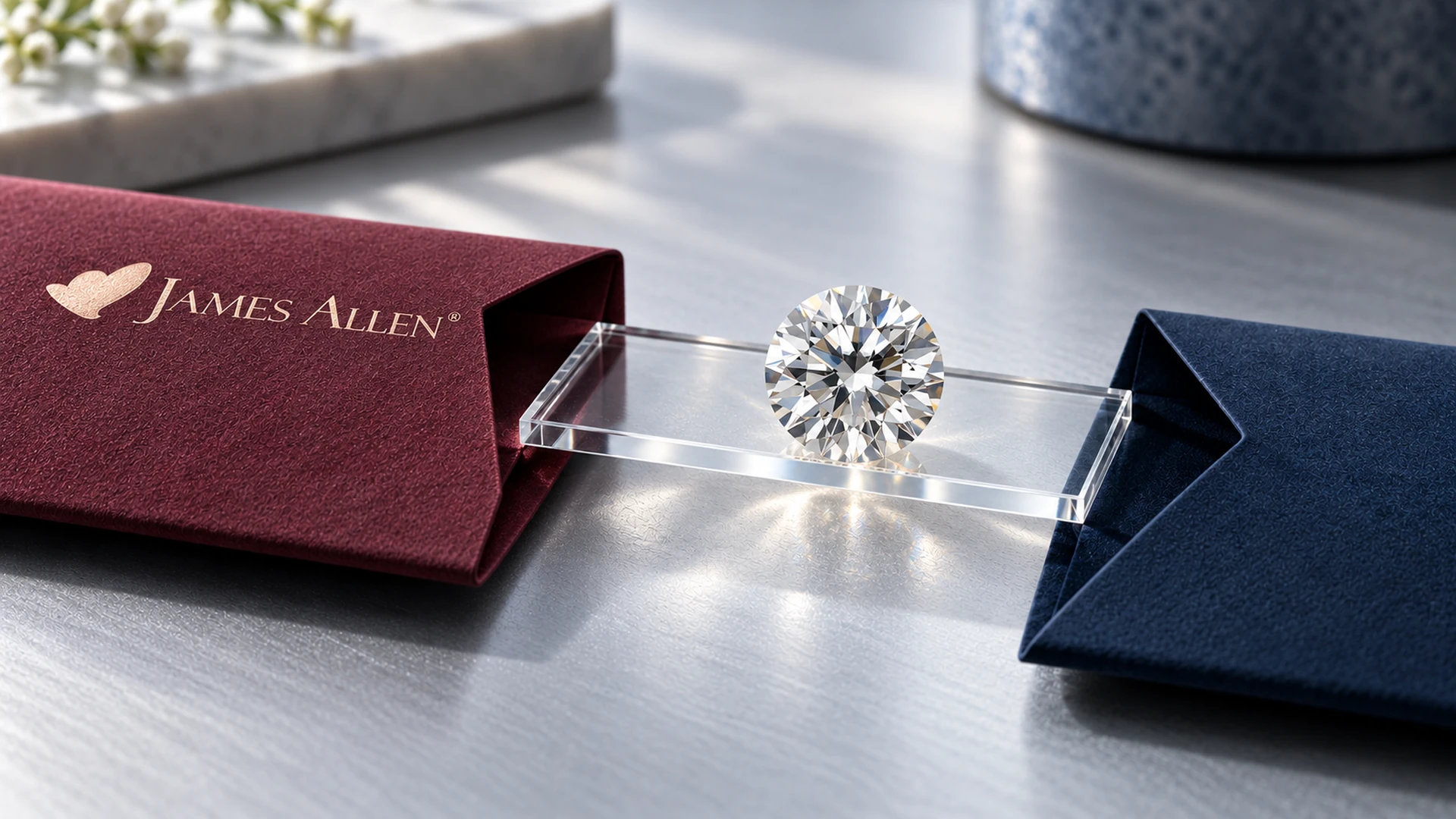
James Allen won us over with ring designs and a diamond video we could control. The chat needed more detail. Here is what to check when buying the collection through Blue Nile.
Book your free consultationRetailers can pay us a commission on qualifying referrals at no extra cost to you. Read how referrals work.
Our verdict
The video let us stop exactly where we wanted. That was James Allen’s strongest tool in our shopping test. We could return to a mark, look again and ask about it. The ring designs gave us plenty of choices too.
The advice behind the screen needed more detail. A helpful agent and a sharp video do not add up to a physical inspection. Before paying, I would ask who had actually examined the stone.
If you want to hand over the whole diamond decision, get a specific inspection answer first. The viewer helps you ask better questions. It does not answer all of them.
Our rating
Engagement rings
Start with the ring your partner actually wants. James Allen’s design led shopping made that easy: choose a style, explore the metal, then work on the center stone. You do not need to pick a diamond first and hope the right ring appears later.
The current James Allen ring category includes Rope and Cable solitaires, pavé designs and hidden halo settings. Use its style, metal, width and ring size filters to get past the designs you would never buy.
Prefer the Rope solitaire or a hidden halo? Open those settings and compare the details. Confirm the center shape and dimensions each accepts, the band width, the metal and the finished height. The sample diamond in a setting photograph is not the diamond you are ordering.
Ask whether a straight wedding band will sit beside it, how resizing works and whether the design fits daily wear. Small accent stones also mean more parts to maintain. Get those answers while you can still change the design.
Diamond selection
Choose natural or lab grown first. Then choose the shape and a comfortable total ring budget. James Allen made those first steps straightforward, but a long results list still needed sorting. Quantity gave us options. It did not tell us which stone to buy.
For a natural diamond, start with GIA. Match the report number, measurements and grades to the listing. For a lab grown diamond, confirm that the listing and report identify it as laboratory grown. Compare it with other lab grown stones, and ask which return and upgrade terms cover that purchase.
Rob’s starting screen is a table of 56 to 58 percent, depth of 60 to 62.4 percent, crown angle of 34 to 35 degrees, and pavilion angle of 40.6 to 41 degrees. Add Excellent polish and symmetry and none to faint fluorescence. These are Rob’s screening preferences. They are not GIA’s cut grade boundaries. The angles must work together, and the stone still needs a good visual assessment.
Swipe the diagram to read every label.
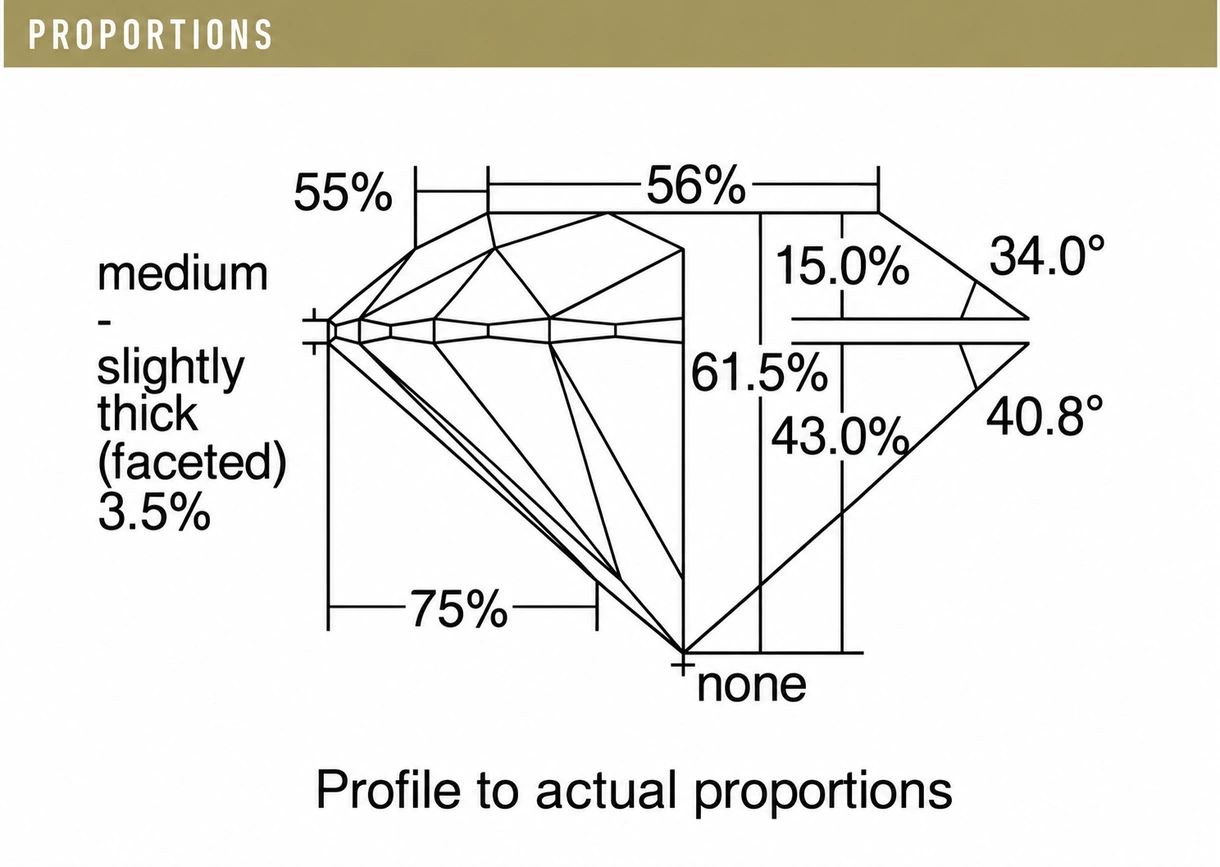
The diagram shows a 56 percent table, 61.5 percent depth, 34 degree crown angle and 40.8 degree pavilion angle. Match those fields to your candidate’s report when applying Rob’s round diamond screen. These measurements help you narrow the list; they do not prove light performance.
Adapted from GIA natural diamond sample report 2231120907, proportions diagram. Educational example. GIA source
Do not apply round proportions to an oval or another fancy shape. GIA’s oval guide explains that an oval does not receive the overall cut grade used for standard round brilliants. Look at the outline, brightness across the stone and the dark band through its middle as it moves. Excellent polish and symmetry do not settle those questions.
Need help finding the report fields? Our GIA report guide walks through them. Keep that report beside the actual diamond view rather than treating the two as separate shopping tasks.
Price and value
We liked the prices in our shopping assessment. That gives you a reason to compare, not a permanent cheapest seller. Start with the amount for the finished ring.
The current ring category labels its listed amounts as setting prices. The center stone adds to that amount. A less expensive setting can leave more room for the diamond, but changing from a solitaire to a pavé design changes the comparison before you touch the stone.
| Compare | What to keep consistent |
|---|---|
| Diamond | Origin, shape, visible measurements, color, clarity and the quality of the cut evidence. |
| Setting | Design, metal, band dimensions, accent stones and the work included in the quote. |
| Total cost | Center stone, setting, tax, delivery and any optional protection or service charges. |
| Buying terms | Return eligibility, resizing arrangements and benefits that cover the exact purchase. |
I would rather pay for cutting you can see than a clarity increase you cannot. Compare the two stones without magnification, then look at the reports and images to understand the difference. Equal grades and equal carat weight do not make them equal diamonds.
If the James Allen design costs more than another Blue Nile setting, compare the construction and details you want. Our Blue Nile review covers the wider store. Pick the ring you like at a price you are comfortable paying.
360 degree diamond video
James Allen’s interactive viewer let us move the diamond back and forth instead of waiting for another rotation. That mattered when a mark flashed into view for a second. We could return to it and look again.
Use any current listing with a moving view the same way. Watch the whole stone first. Then pick a question: an inclusion under the table, a dark area that stays dark, or something at the edge. Zoom helps you find it. It also makes tiny features look much larger than they do in a ring.
Swipe the diagram to read every label.
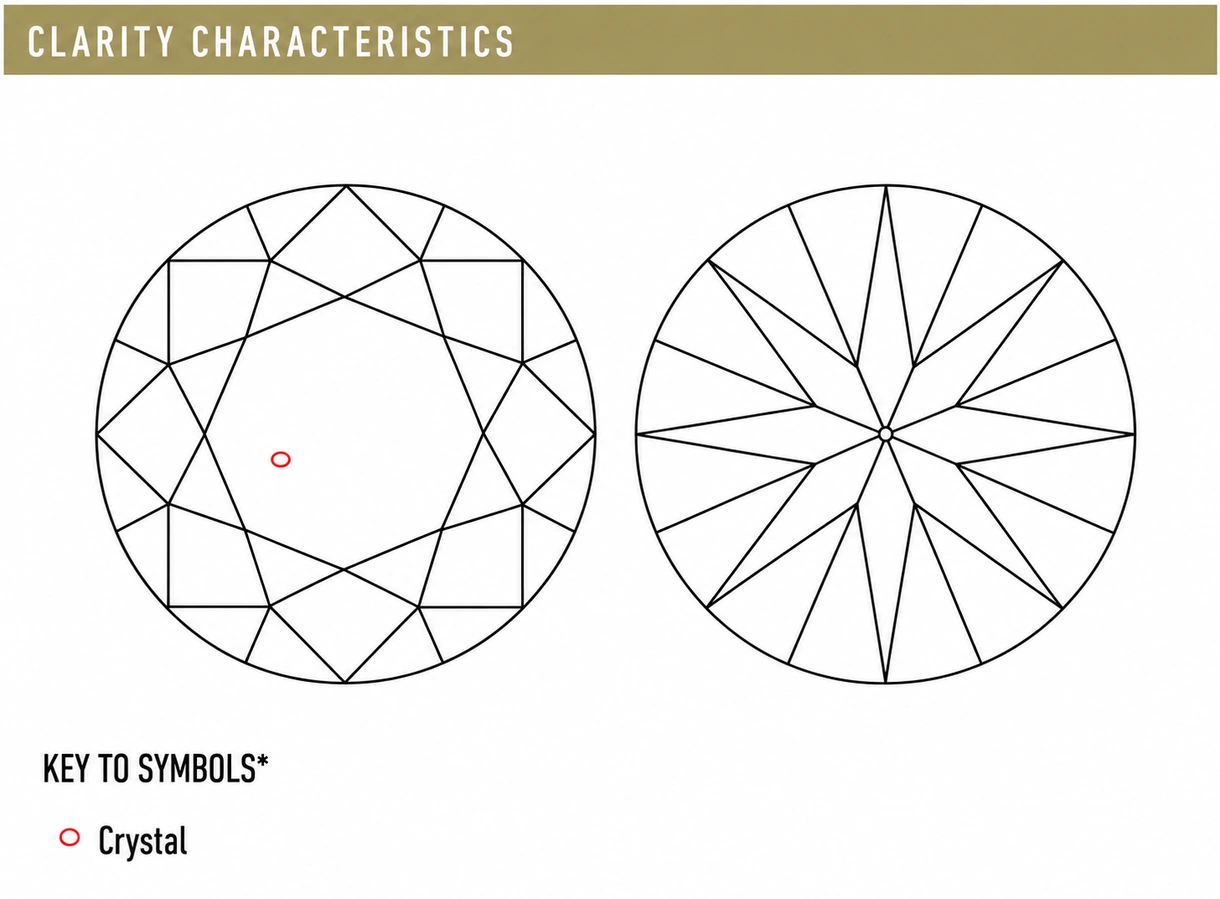
The red circle marks a crystal in the crown view on the left. The right view shows the pavilion. Use the diagram to connect the report symbol with a feature in the video. A plot helps with location; it does not prove visibility without magnification.
Adapted from GIA natural diamond sample report 2231120907, clarity plot. Educational example. GIA source
If the report names a bruise, chip, cavity, knot, etched channel or indented natural, ask where it sits and whether it raises a durability concern. A clean looking view from above cannot settle a surface or edge question. Have a qualified person inspect any unresolved concern before buying.
Customer service
The representative found the diamond we were viewing without a long exchange of links and stock numbers. That was convenient. We wanted a more critical assessment once the conversation turned to the stone itself.
The diamond was off site, and the agent was using the same images we were. My first question would be: “Has someone physically inspected this stone, or are we both looking at the video?” That tells you how much weight to give the answer.
For an oval, watch the middle as the stone moves. Does the bow tie keep drawing your eye? Some contrast belongs in the pattern. Ask for a moving view in ordinary light, rather than judging one frozen dark frame.
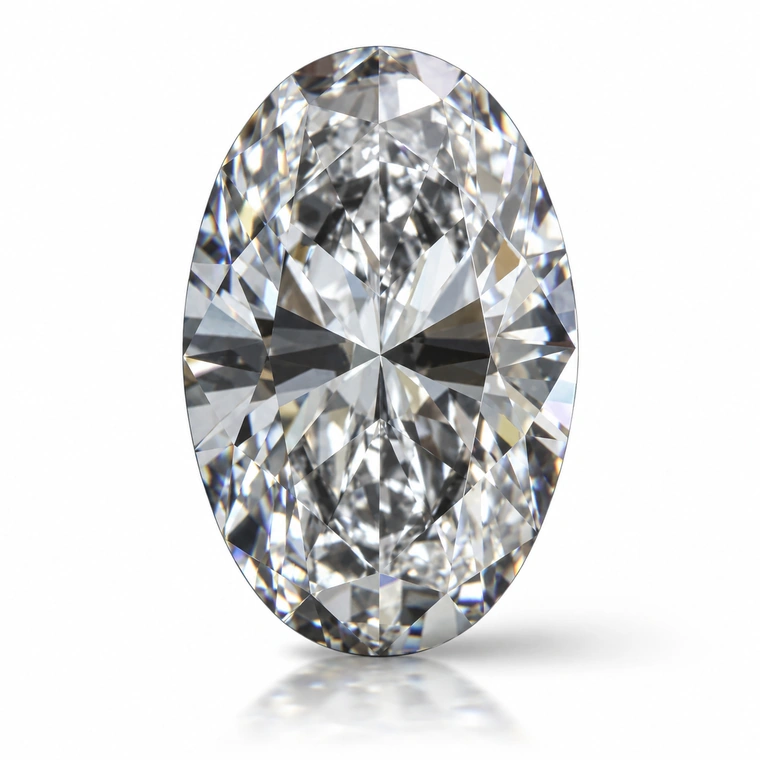
The dark band crosses this oval’s middle. Point to the same area in your listing when asking about a bow tie. Watch it in motion and ordinary light. One still frame does not tell you how distracting it will be.
True Hearts diamonds
I would pay for better cutting when I can see and explain the difference. True Hearts is James Allen’s premium cut name. Put the stone beside another well cut choice before deciding what the premium buys.
For a round, request its grading report and clear hearts and arrows views, where available. Hearts and arrows describe optical symmetry. Light performance images answer another part of the question, how the diamond handles light. An attractive pattern on a collection page does not prove either for your stone.
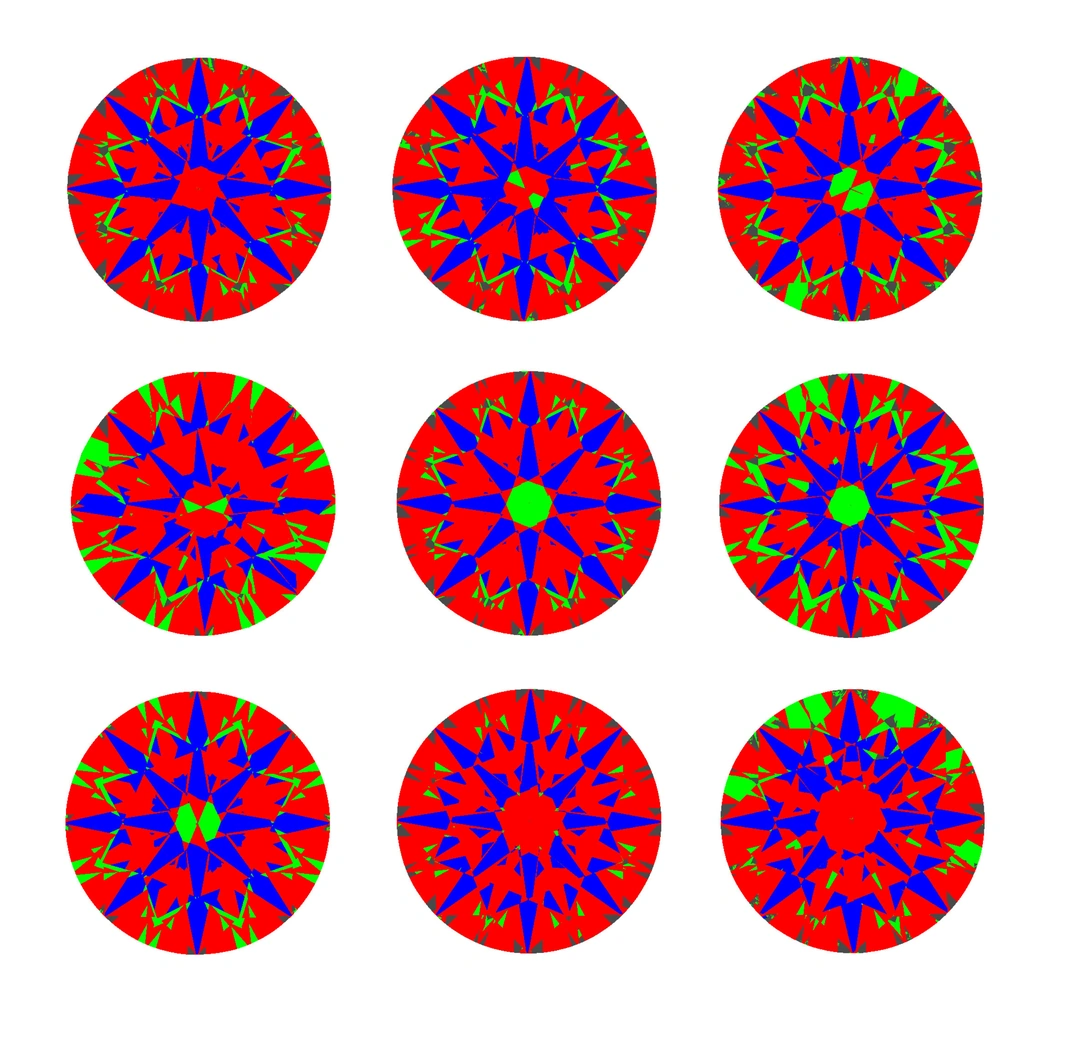
All nine of these GIA examples qualify for the supplemental AGS Ideal report, yet their patterns differ. Red marks the brightest return, green less bright return, blue contrast and gray leakage. These are not True Hearts stones. Ask for your diamond’s ASET map and separate Hearts and Arrows views.
GIA training module, AGS Ideal report, page 8. Nine qualifying ASET examples. © GIA. GIA source
For a princess or cushion, ask for evidence suited to that cutting style. Confirm current True Hearts availability with the seller. Do not assume every James Allen setting includes a True Hearts center, or that the name guarantees a particular stone’s appearance.
Returns and purchase terms
Blue Nile’s current return policy gives eligible items 30 days from shipment. They must return in original, unworn condition with the required packaging and documents. A return authorization is required, and the policy limits complimentary returns to two per customer each year.
Exclusions include custom orders, engraved items, items resized after the initial purchase, upgrade purchases, clearance and final sale items. Confirm eligibility before personalizing the ring. Plan from the shipment date, not the proposal date, and leave time to send it back if it fails your inspection.
Before paying, get the expected dispatch date, the resizing arrangements and the warranty that applies to your chosen ring. If support cannot answer an important stone question, a return window does not make that uncertainty disappear.
James Allen owners
Blue Nile’s James Allen FAQ says existing purchases, warranties and diamond upgrade benefits remain supported. It also explains account transfer or merging, and help retrieving saved designs.
Have your original email, invoice and report ready. Ask support which program covers your purchase, what it requires and how to arrange service before shipping jewelry. For an upgrade, confirm the credit and replacement requirements in writing before selecting a new diamond.
The FAQ lists 1 800 242 2728 and [email protected]. That team handles account access and service authorization. Rob or I can help with the diamond selection questions.
Buyer questions
Yes, if the ring designs appeal to you. We rated the standalone shopping experience 4.7 out of 5. The collection now sells through Blue Nile, so check the tools and terms on the listing you are buying.
JamesAllen.com now takes shoppers to Blue Nile. You can browse the James Allen collection there. For a ring you already own, Blue Nile also handles James Allen account and service questions.
Pricing was competitive in our assessment, but there is no permanent winner. Compare the complete ring price after matching the diamond’s origin, visible size, quality and evidence. Remember that a listed setting price excludes the center stone.
Choose the origin you want before comparing listings. For a natural stone, start with GIA. For a lab grown stone, make sure the report clearly identifies its origin. Compare within that category, and confirm the service and upgrade rules for your purchase.
No. It helps you locate something worth asking about, but zoom changes how large it looks. Get an inspection answer for the exact stone at normal viewing distance. Ask for another view if the video leaves a question unresolved.
Only when the cutting difference earns the extra money. I want the stone’s report, optical images and a comparison with another diamond I like. The True Hearts name cannot make that choice for me.
Check the current Blue Nile terms for your order. Eligible items have a 30 day window from shipment, with condition and documentation requirements. Engraving, customization and other listed exclusions can remove return eligibility. Settle that before making changes.
Blue Nile’s James Allen FAQ says yes. Have support confirm the program attached to your order and the instructions for using it. Keep the invoice and report, and get service authorization before shipping the ring.
Sources
The official retailer pages support the current buying and service details. GIA references support the report diagrams, bow tie example and optical maps shown above.