Prongs, Bezels, and Size Illusions
By Josh Allen, Co-Founder of YourDiamondGuys.com. Fifth generation diamantaire with 30+ years in the global diamond trade. Former supplier to Tiffany & Co., Cartier, and Harry Winston.
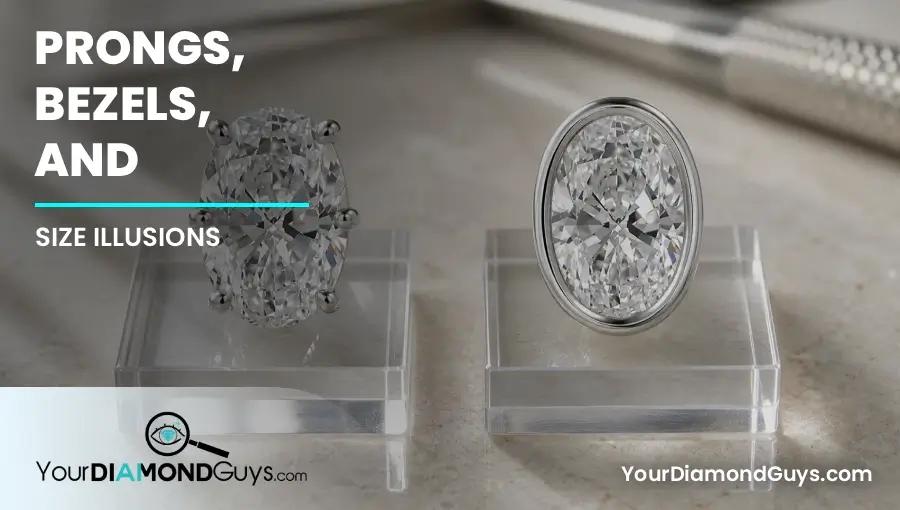
Here is the setting detail buyers miss, prongs and bezels can make the same diamond look larger, smaller, softer, or safer.
The center stone does not sit in a vacuum.
Metal frames it.
That metal changes how the eye reads size, shape, and even color.
For natural diamonds, I start with GIA because the report gives you the carat weight, measurements, and first facts worth checking before you compare stones.
I have seen buyers obsess over a tenth of a carat, then choose a heavy bezel that makes the diamond look smaller. The setting can undo the size decision.
How This Fits Your Buying Decision
This is the metal frame layer inside the diamond carat size and finger coverage guide. Prongs and bezels can protect the stone, show the outline, or make the center look smaller.
Prongs Usually Show More Diamond
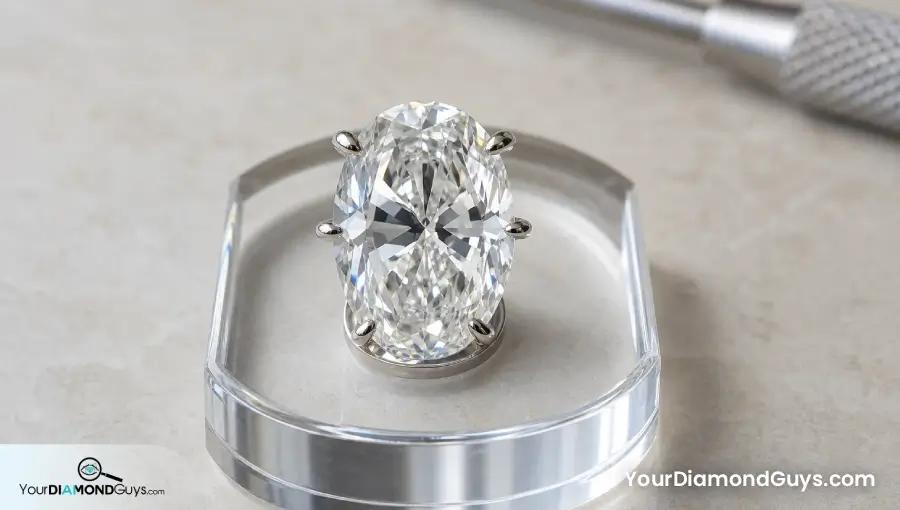
Prongs expose more of the center stone. Thin, well shaped prongs can help the outline stay visible and let more light reach the diamond.
Claw prongs can make a round, oval, pear, or cushion look a little sharper and more refined.
Bezels Add Protection And Visual Weight
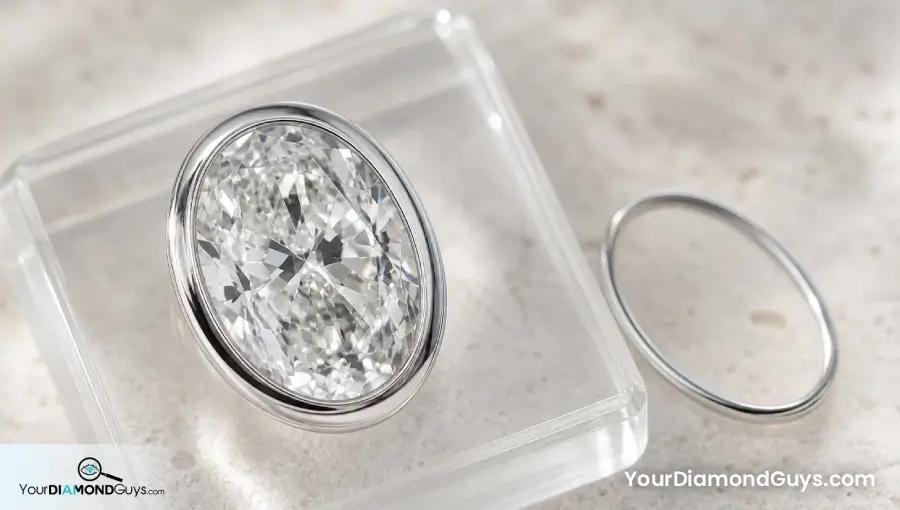
A bezel wraps metal around the diamond. That can protect the edge and create a clean modern look.
The tradeoff is size perception. A thick bezel can make the center read smaller because your eye sees more metal and less diamond.
| Setting Detail | Size Effect | Best Use |
|---|---|---|
| Thin prongs | Shows more diamond | Most classic size focused rings |
| Claw prongs | Sharpens outline | Ovals, pears, cushions, rounds |
| Heavy prongs | Can cover the edge | Only when protection matters |
| Thin bezel | Adds outline and protection | Modern practical designs |
| Thick bezel | Can shrink the center visually | Bold style choice |
Metal Color Changes The Edge
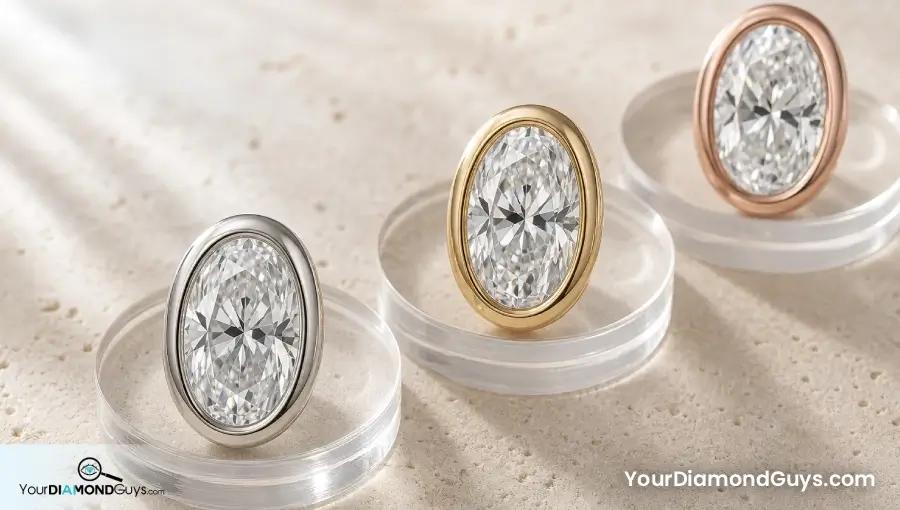
White metal blends with the diamond outline. Yellow or rose gold can create warmer contrast around the stone.
That contrast can look beautiful, but it can also make the exact edge of the diamond read differently.
Protection Matters For Points And Corners
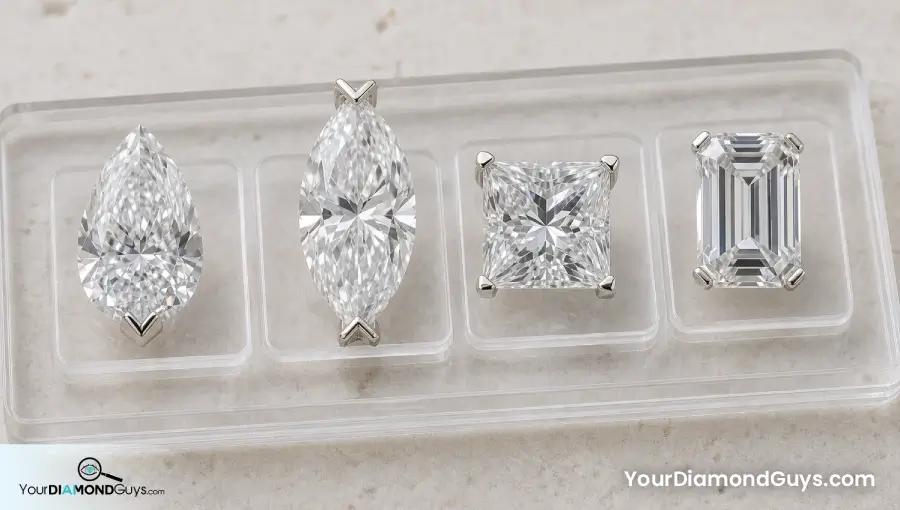
Pear, marquise, princess, and emerald cut corners need smart protection. The right prong protects without swallowing the shape.
This matters even more when the wearer has an active lifestyle.
Height Changes The Look Too
A higher setting can make a diamond look more prominent from the side. A lower setting can feel more practical and secure.
Height does not change millimeters, but it changes presence.
The Metal Frame Shortlist
I would shortlist prongs and bezels by asking what the metal is supposed to do. If the goal is maximum visible diamond, delicate prongs usually win. If the goal is protection and a clean modern frame, a bezel deserves a look.
The detail that matters is thickness. Thin prongs can disappear in a good way. Heavy prongs can cover the edge. A thin bezel can frame the diamond nicely. A thick bezel can turn the ring into a metal design with a diamond inside it.
A Prong vs Bezel Example
A 1.25 carat oval in delicate prongs can look long and open. The same oval in a thick bezel can look smaller but more protected.
Neither choice is wrong.
The mistake is choosing protection when you wanted visual size, or choosing delicate prongs when the lifestyle needs more security.
Setting Detail Mistakes I Would Avoid
- Do not choose heavy prongs that cover too much diamond.
- Do not choose a thick bezel when maximum size is the goal.
- Do not leave pear or marquise tips under protected.
- Do not choose height only for drama if daily wear matters.
- Do not forget that metal color changes the outline.
Questions To Ask About Prongs And Bezels
- Does this setting show the diamond outline clearly?
- Does the center stone need extra edge protection?
- Are the prongs too bulky for the stone size?
- Will the setting height fit daily wear?
- Does the metal color support the diamond color and style?
Where To Compare Setting Details
Use settings and protection links as comparison tools, not automatic recommendations. I would compare ring styles on Brilliant Earth and protection details on BriteCo, then decide what fits the center stone, the hand, and the way the ring gets worn.
My Buyer Recommendation
Choose prongs when visual size and open outline matter most.
Choose a bezel when protection and style matter more. Just make sure the metal does not steal the center stone you paid for.
Reach out to Rob or me at YourDiamondGuys.com, or book your free consultation. We will look at the actual stone with you. No sales pitch.
The GIA 59% Table Illusion: Why Identical Specs Look Night and Day
Questions? Reach out directly for a free consultation, or drop them in the Diamond Buyers Academy community — Rob and Josh answer personally.
Questions Buyers Ask Us
More Diamond Size Guides Worth Reading
These are the guides I would read next if you are still comparing size, shape, setting style, or value.
Halo vs Solitaire Size
See when a setting adds visual spread and when it just adds maintenance.
Band Width and Proportion
Use band width to control how large the same center stone reads.
Active Lifestyle Size Guide
Choose a size and setting that still works for daily wear.
Best Size for Small Hands
Keep petite hand proportion, setting height, and shape balance honest.
Best Size by Ring Size
Translate carat and millimeters into real finger coverage on the hand.
*Some links on our site may earn us a small commission at NO EXTRA cost to you, helping us keep our content free*